
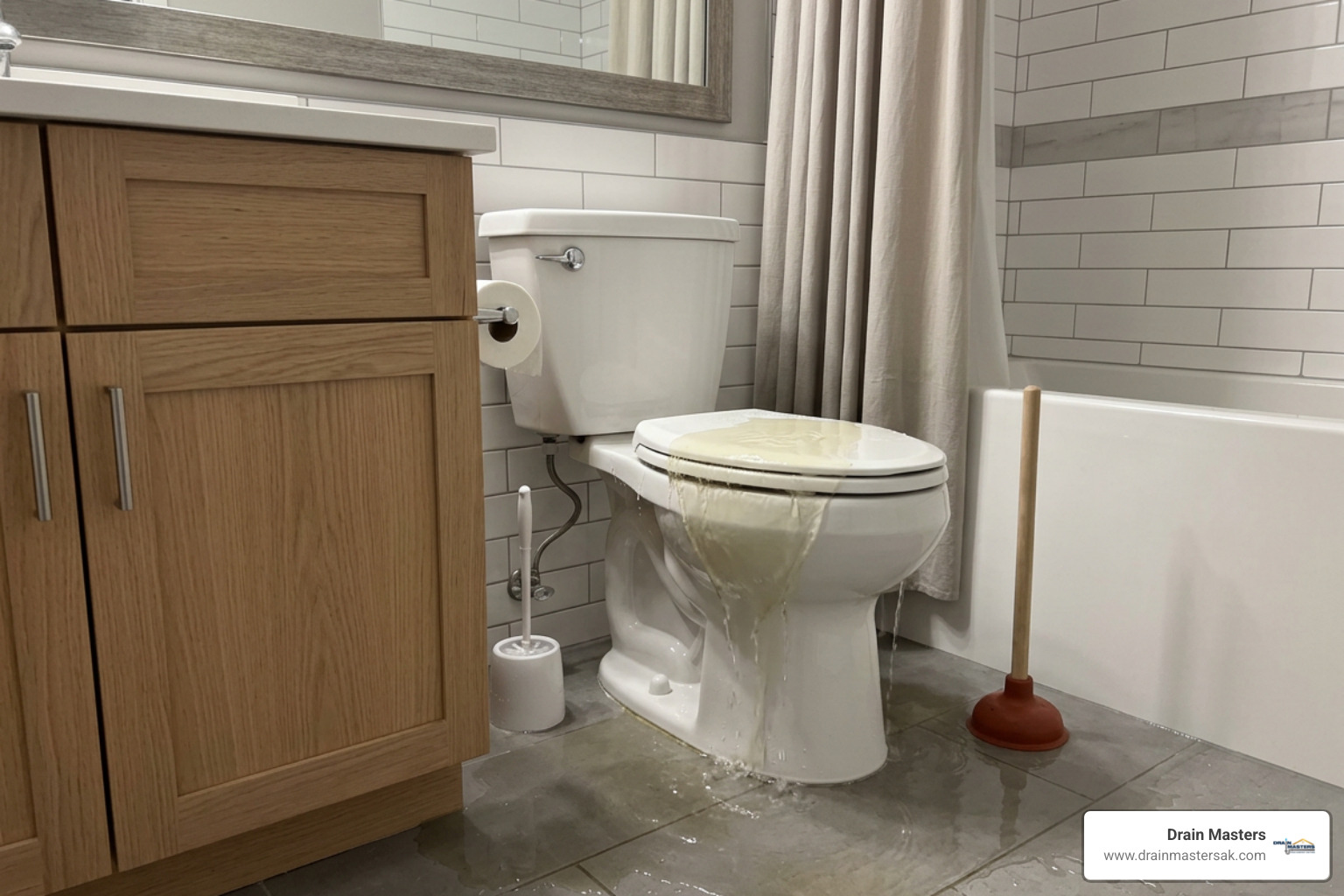
What to Do When You Have a Plumber Toilet Clogged Emergency
A clogged toilet is one of the most stressful plumbing problems a homeowner can face. The good news? Most clogs clear quickly with the right steps.
Here is what to do right now:
- Stop flushing. A second flush is how most bathroom floods happen.
- Shut off the water. Lift the tank lid and push the flapper down, or turn the shutoff valve clockwise behind the toilet.
- Try a flange plunger. Use firm, steady strokes. This clears roughly 95% of clogs.
- No plunger? Pour a few tablespoons of dish soap into the bowl, followed by hot tap water. Wait 15 minutes, then flush.
- Still blocked? Use a closet auger to reach deeper into the drain.
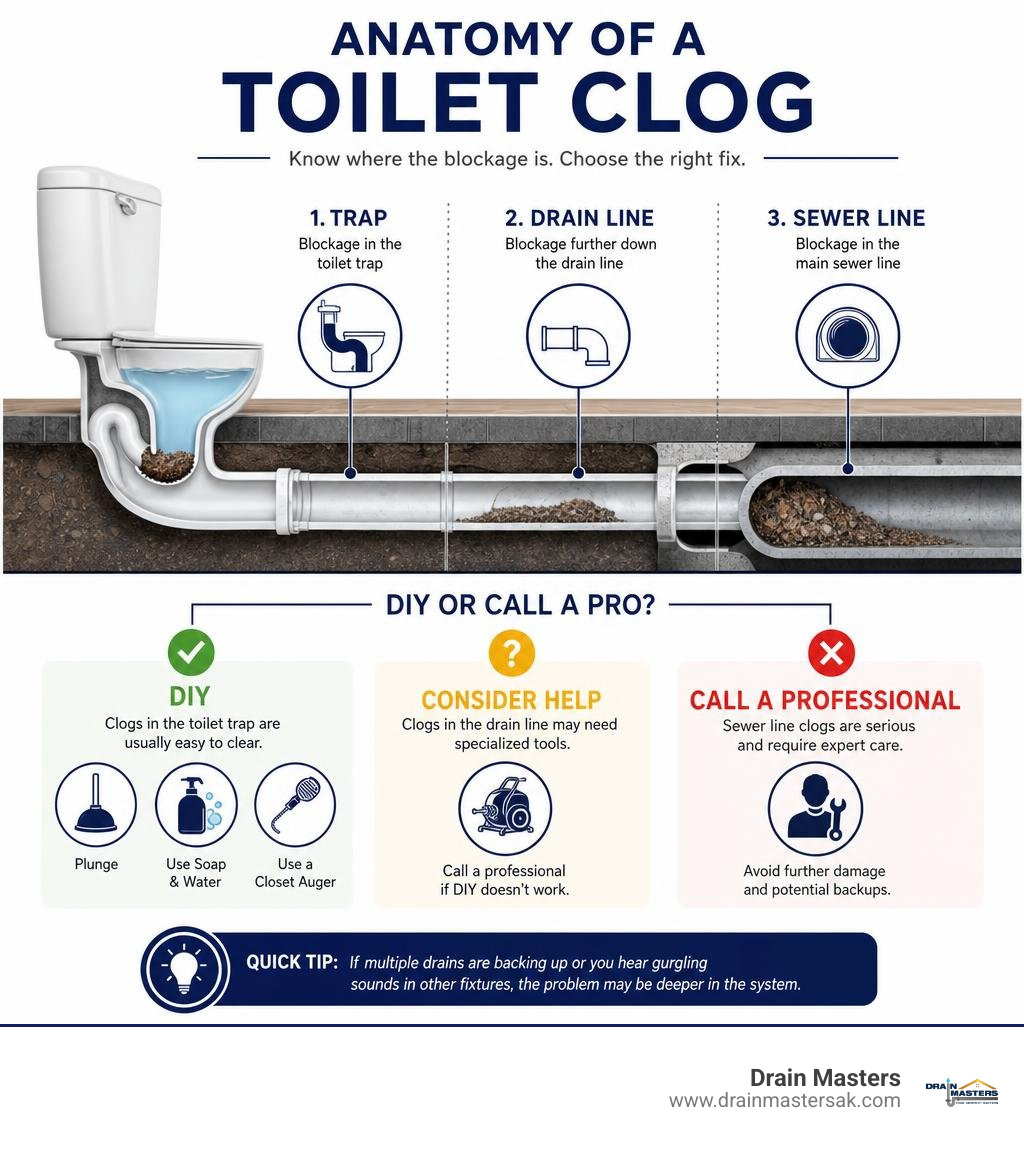
- Call a plumber if multiple drains are backing up, you hear gurgling in other fixtures, or DIY methods fail after a few solid attempts.
Clogged toilets are among the most common household plumbing calls. With around 480,000 plumbers across the U.S. handling them regularly, you are definitely not alone.
Most clogs happen right at the toilet trap, the curved section of porcelain just below the bowl. Something gets stuck there and blocks the flow. That is usually good news, because trap clogs are almost always fixable without a service call.
But sometimes the problem runs deeper, literally. A clog further down the drain line or in the main sewer requires professional tools and diagnosis.
This guide walks you through every step, from stopping an overflow to knowing when to put down the plunger and pick up the phone.
I am Debra Blouin, General Manager of Drain Masters in Anchorage, AK, and with over two decades of experience overseeing plumbing and drain service operations, I have seen how quickly a plumber toilet clogged situation can go from minor inconvenience to major damage when the wrong steps are taken. Let us walk through exactly what to do, in the right order.
If you are dealing with other plumbing issues around your home, you can read our helpful guide on unblocking your household drains to keep everything flowing smoothly.
Common Causes of a Clogged Toilet
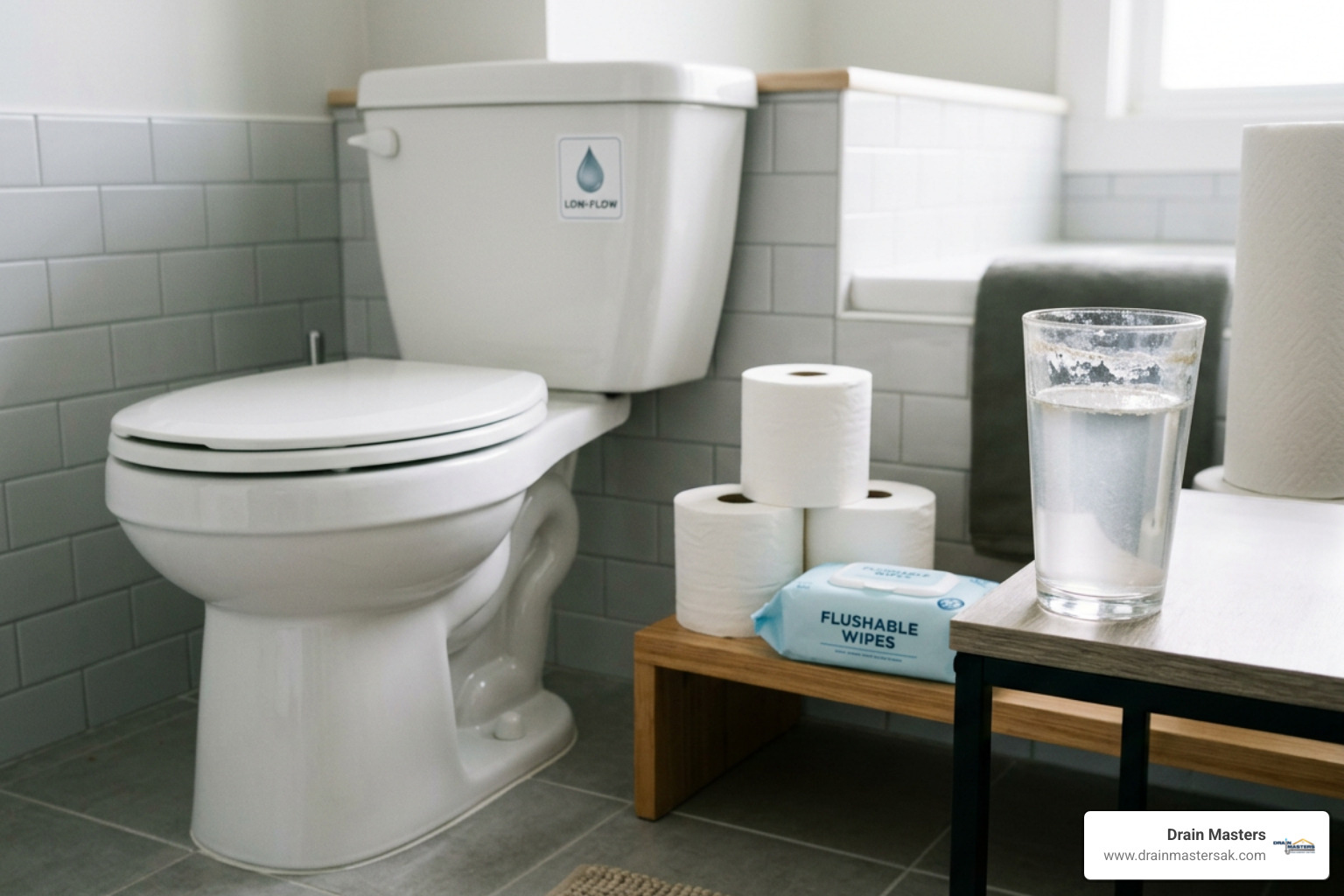
When your toilet suddenly refuses to drain, it can feel like a sudden betrayal. However, most blockages do not happen overnight. They are often the result of gradual accumulation or a single, ill-advised flush. Understanding what is happening inside your pipes is the first step toward clearing out stubborn blockages before they cause a major mess in your bathroom.
Over our years of servicing homes in Anchorage, AK, we have found that the vast majority of toilet clogs stem from a handful of repeat offenders. By identifying these culprits, you can adjust your household habits and keep your waste lines flowing smoothly.
Flushing Non-Flushable Items
The modern convenience of disposable products has created a major headache for residential wastewater systems. Many products marketed as convenient or even “flushable” simply do not break down in water the way toilet paper does.
- Baby Wipes and Wet Wipes: Even if the packaging boldly claims they are flushable, they are not. These wipes are made of synthetic fibers that do not disintegrate, meaning they catch on the slightest rough spot inside your pipes and form a tough, impenetrable barrier.
- Paper Towels and Facial Tissues: These are designed to be strong and absorbent when wet. Because they do not dissolve rapidly, they quickly pack together inside the toilet trapway.
- Feminine Hygiene Products: Tampons and pads are engineered to absorb liquid and expand. When flushed, they act like a sponge inside your drain, expanding to fill the entire diameter of the pipe.
- Dental Floss: It might seem harmless because it is thin, but dental floss is essentially synthetic string. It does not break down, and it easily wraps around other debris in the pipe, acting like a net that catches toilet paper and waste.
Excess Toilet Paper and Low-Flow Models
Even when you are only flushing safe materials, quantity and water volume play massive roles in how well your toilet functions.
Using too much toilet paper at once is one of the most common reasons a toilet backs up. Ultra-soft, multi-ply toilet papers are luxurious, but they are also incredibly thick. When saturated, they expand significantly. If a large clump is flushed all at once, it can easily wedge itself in the narrow, curved toilet trap.
This problem is often compounded by the type of toilet installed in your home. Early low-flow toilets, particularly those manufactured in the 1990s, were designed to save water by using only about 1.6 gallons (or 6 liters) per flush compared to older models that used up to 5 gallons. Unfortunately, these early designs often lacked the velocity and engineering required to push waste completely through the trapway. If you have an older low-flow toilet and a busy household, you are likely dealing with a weak flushing force that makes clogs a regular occurrence.
How to Safely Stop a Toilet from Overflowing
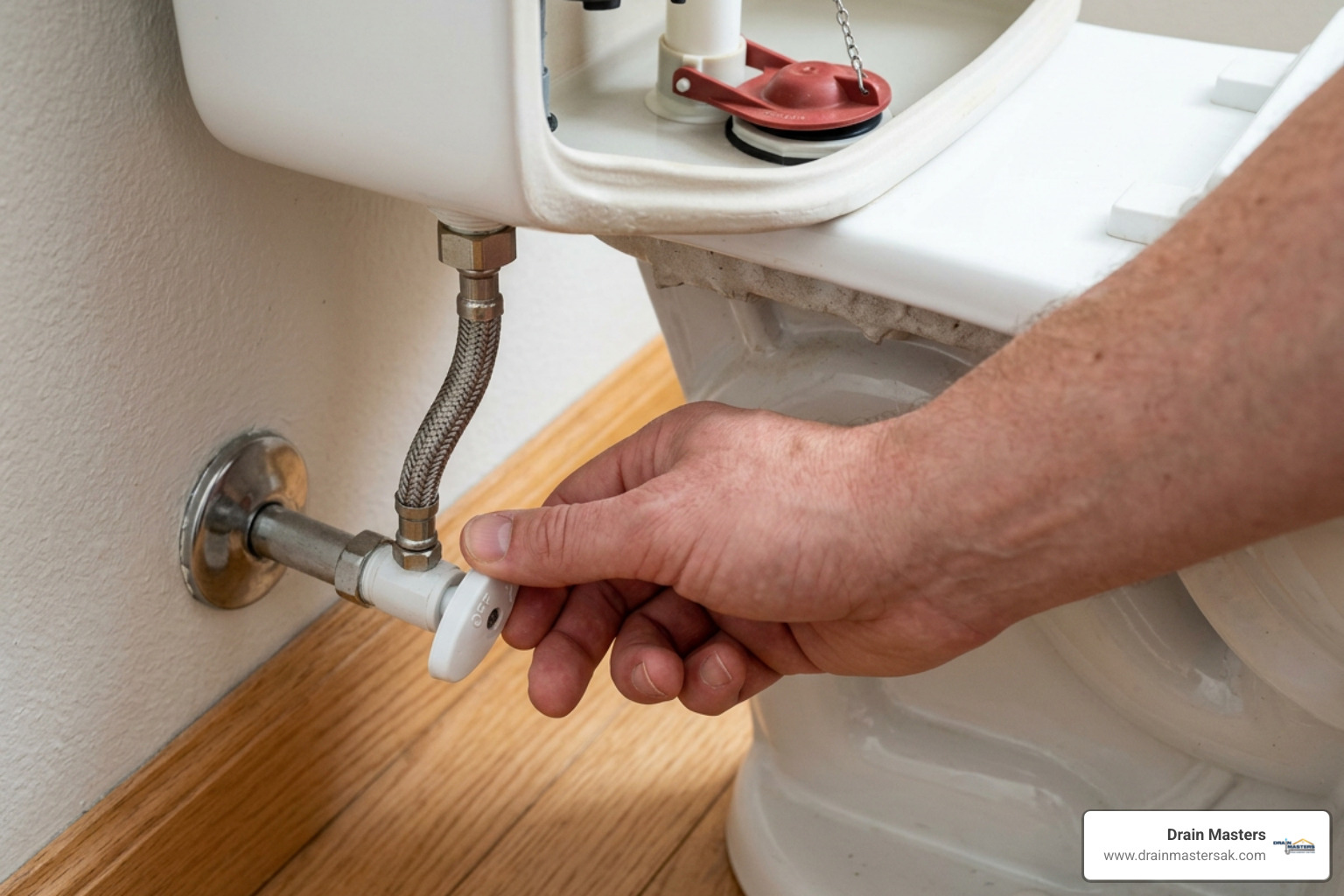
There is nothing quite like the rising tide of toilet water to induce immediate, cold-sweat panic. When you flush and the water level keeps climbing toward the rim, every second counts. Knowing how to stop the water flow immediately can save you from a ruined floor, contaminated drywall, and an incredibly unpleasant cleanup.
If you see the water rising, do not stand there waiting to see if it stops. Take these emergency steps immediately:
- Remove the Tank Lid: Quickly lift the heavy ceramic lid off the toilet tank and set it carefully on the floor.
- Close the Flapper Valve: Look inside the tank. You will see a rubber seal (the flapper) at the bottom, which is likely raised. Reach in (don’t worry, the water inside the tank is clean) and press the flapper firmly down over the drain hole. This stops water from continuing to empty from the tank into the toilet bowl.
- Secure the Float: If the water is still entering the tank and threatening to spill over the overflow tube, lift up on the float cup or float ball. Holding the float up tricks the tank into thinking it is fully refilled, which shuts off the incoming water supply.
- Locate the Shutoff Valve: With your other hand, or once the flapper is secured, locate the metal valve on the wall or floor directly behind the toilet. Turn this handle clockwise (to the right) until it stops. This cuts off the fresh water supply to the toilet entirely.
Once the water supply is safely shut off, the immediate danger of a flood has passed. You can now take a deep breath and prepare to clear the blockage.
Best DIY Methods to Unclog a Toilet
Once you have stabilized the water level, it is time to roll up your sleeves. Fortunately, you do not always need to call in a professional immediately. There are several highly effective DIY methods you can try first to resolve a plumber toilet clogged situation on your own.
The Flange Plunger Technique
Not all plungers are created equal. If you are using a standard, flat-bottomed cup plunger (the kind designed for flat sink drains), you will struggle to get a good seal in a toilet bowl. For toilets, you must use a flange plunger. This type of plunger has an extended rubber sleeve or “horn” on the bottom that folds out to fit directly into the curved opening of the toilet drain.
To plunge like a pro, follow this guide on properly plunging a toilet:
- Check the Water Level: Your plunger needs to be fully submerged in water to work. If the bowl is empty, add a little water. If it is full to the brim, bail some out into a bucket so you don’t splash dirty water everywhere.
- Seat the Plunger: Insert the plunger at an angle so the cup fills with water rather than trapping a pocket of air. Fit the flange securely into the drain opening to create a tight, airtight seal.
- The Motion: Start with a gentle push downward to expel any remaining air. Then, pull up and push down vigorously in a straight, up-and-down motion. The upward pull is just as important as the downward push because it loosens the clog.
- Repeat: Perform 15 to 20 solid, controlled strokes before breaking the seal. If the water suddenly rushes down the drain, you have successfully cleared the blockage!
Using a Closet Auger for Deeper Blockages
If plunging does not do the trick, the clog might be wedged further down the trapway. This is where a closet auger (also known as a toilet snake) comes in. Unlike standard drain snakes, which have exposed metal coils that can permanently scratch and ruin your toilet’s porcelain, a closet auger features a protective rubber or plastic sleeve to safeguard the bowl.
To use an auger safely, follow these tips on clearing out tough blockages quickly:
- Pull the auger handle all the way up so the cable is retracted inside the protective tube.
- Place the curved, rubber-coated end of the tube into the bottom of the toilet bowl, pointing directly down the drain.
- Slowly push the handle down while cranking it clockwise. The metal cable will snake through the trapway.
- If you feel resistance, you have hit the clog. Continue cranking and gently pushing to break up the organic waste or hook onto the foreign object.
- Once the blockage yields, pull the cable back up, remove the tool, and test the drain with a flush.
The Hot Water and Dish Soap Method
If you do not have a plunger or an auger on hand, you can try a gentler, chemical-free alternative. This method works incredibly well for “soft” clogs caused by organic waste and excessive toilet paper.
Pour about half a cup of liquid dish soap directly into the toilet bowl and let it settle for 10 minutes. The soap acts as a lubricant, coating the pipes and the clog itself. Next, pour a bucket of hot tap water into the bowl from about waist height. The physical weight of the falling water combined with the lubricating soap and heat can dissolve and push the clog through. For more detail on non-plunger tricks, check out these other ways to clear a bowl without a plunger to clear a stubborn bowl.
Note: Never use boiling water, as the extreme temperature differential can crack your toilet’s fragile porcelain bowl.
When to Call a Professional Plumber Toilet Clogged
While DIY efforts are highly successful for simple trap clogs, there comes a point where continuing to plunge or snake can cause more harm than good. Recognizing when a clog is beyond your control can save you from damaging your fixtures or pushing a blockage deeper into your plumbing system.
Toilet Trap Clog vs. Main Sewer Line Blockage
How do you know if your problem is isolated to your toilet or if it is a symptom of a larger, systemic failure? The key lies in observing the other fixtures in your home.
If only one toilet is struggling to drain, the clog is almost certainly located within that specific toilet’s trapway or the immediate branch line. However, if you notice gurgling sounds coming from your bathtub or shower drain when you flush, or if water backs up into lower-level sinks, you are likely dealing with a main sewer line blockage.
When your main sewer line is blocked, wastewater has nowhere to go, causing it to back up into the lowest drains in your home. In these cases, DIY plunging is completely ineffective. If you suspect a deeper main line issue, you will want to read up on dealing with sewer line issues in Alaska to understand the unique structural and climatic challenges our local sewer systems face.
Why You Should Avoid Chemical Drain Cleaners
When faced with a stubborn clog, it is incredibly tempting to run to the hardware store and grab a bottle of chemical drain cleaner. We strongly advise against this.
First, chemical drain cleaners rely on heavy caustic reactions to generate heat and dissolve blockages. When poured into a toilet, the chemical mixture sits in the bowl and trapway. The intense heat generated can cause thermal shock, cracking the delicate porcelain of your toilet bowl.
Second, these chemicals can easily eat through the wax ring sealing the base of your toilet, leading to hidden sewer gas and water leaks. Finally, if the chemical fails to clear the clog, you are left with a bowl full of highly toxic, caustic water. When a professional plumber eventually arrives, they run the risk of chemical burns while trying to clear the line.
When a Plumber Toilet Clogged Situation Requires Hydro Jetting
For persistent, recurring clogs, a standard drain snake might only punch a temporary hole through the blockage rather than clearing it completely. In these instances, a professional sewer camera inspection is the best way to see exactly what is causing the issue.
If the inspection reveals heavy grease buildup, scale accumulation, or invasive tree roots, we often recommend hydro jetting. This advanced technique uses high-pressure water streams to scrub the interior walls of your pipes clean, restoring them to like-new condition. Learn more about how we can help by clearing pipes with high-pressure water to keep your plumbing system running flawlessly for years to come.
How to Prevent Future Toilet Clogs
Preventing toilet clogs is far easier, and much less stressful, than clearing them. By establishing clear household rules and performing basic regular maintenance, you can keep your bathroom running smoothly.
| Item Type | Safe to Flush? | Action Required / Impact on Pipes |
|---|---|---|
| Human Waste & Toilet Paper | Yes | Dissolves quickly; designed for standard residential plumbing. |
| Flushable Wipes | No | Throw in trash; does not break down and catches on pipe walls. |
| Paper Towels & Tissues | No | Throw in trash; retains strength when wet, causing rapid blockages. |
| Feminine Products | No | Dispose of in a wastebasket; expands in water and blocks pipes. |
| Dental Floss | No | Throw in trash; wraps around other debris to form tough clogs. |
| Fats, Oils, & Grease | No | Cool and scrape into trash; solidifies inside pipes and traps waste. |
To make prevention seamless, keep a small, lidded wastebasket next to every toilet in your home so family members and guests are not tempted to flush non-flushable items. If you find your family using excessive amounts of toilet paper, consider a bidet installation. Bidets significantly reduce paper usage, which practically eliminates paper-related clogs while improving personal hygiene.
Essential Tools and Safety Precautions
Before you attempt any DIY plumbing repair, it is critical to protect yourself and your home. Sewage contains harmful bacteria, pathogens, and viruses, making safety and sanitation your top priorities.
Always gather the following tools before starting:
- Heavy-Duty Rubber Gloves: Choose long gloves that extend up your forearms to prevent skin contact with contaminated water.
- Eye Protection: Splash-resistant safety glasses protect your eyes from accidental splashes during vigorous plunging or augering.
- A Bucket and Old Towels: Lay towels around the base of the toilet to catch drips, and keep a bucket nearby to hold dirty tools or bailed water.
- Wet/Dry Vacuum: If an object like a toy or toothbrush has fallen into the toilet, never plunge it, as this pushes it further into the drain. Instead, use a wet/dry utility vacuum (with the paper filter removed) to suck the water and the object back up out of the drain.
Resolving a Plumber Toilet Clogged Emergency Safely
If your toilet does overflow, do not panic, but act quickly to sanitize the area. Keep children and pets away from the bathroom until it is thoroughly cleaned.
Wear your protective gear and use disposable paper towels to soak up standing water. Once the liquid is removed, disinfect the entire floor, the base of the toilet, and any tools you used with an enzyme-based cleaner or a bleach-and-water solution. If you ever feel overwhelmed by the mess or suspect that wastewater has seeped into your subfloor or drywall, always call for professional backup to prevent mold and structural rot.
Frequently Asked Questions about Clogged Toilets
Why is my toilet clogged but still slowly draining?
A toilet that slowly drains usually indicates a partial blockage in the trapway or immediate drain line. While some water can seep past the obstruction, organic waste and toilet paper are caught. It is best to clear a partial clog immediately, as it will inevitably catch more debris and become a complete blockage at a worse time.
Can I use a regular drain snake in a toilet?
No, you should never use a standard metal plumbing snake in a toilet. The exposed metal coil will permanently scratch, scrape, and grey-streak the delicate porcelain of your toilet bowl. Always use a dedicated closet auger, which features a protective rubber sleeve designed to prevent porcelain damage.
Will baking soda and vinegar unclog a toilet?
Baking soda and vinegar can help clear mild, organic clogs, but they do not generate enough pressure to clear a heavy physical obstruction. To try this method, pour one cup of baking soda into the bowl, followed by two cups of white vinegar. Let the mixture fizz for 30 minutes, then pour in a bucket of hot tap water.
Is it safe to leave a clogged toilet overnight?
If the water level in the bowl is stable and not overflowing, it is generally safe to leave it overnight. Sometimes, a “soft” clog consisting of toilet paper and organic waste will naturally break down and soften under water pressure, allowing it to clear easily with a few plunges the next morning.
Should I pour boiling water down the toilet?
No, you should never pour boiling water down a toilet. The extreme heat can cause thermal shock, which can instantly crack the fragile ceramic or porcelain bowl, leading to an expensive replacement. Always stick to hot tap water instead.
How do I know if my main sewer line is clogged?
Signs of a main sewer line clog include multiple slow-draining fixtures throughout your home, gurgling sounds coming from your bathtub or shower when you flush the toilet, or water backing up into lower-level drains. This is a system-wide issue that requires professional diagnostic tools.
Are flushable wipes actually safe for toilets?
Despite what the packaging claims, flushable wipes do not dissolve in water like toilet paper. They remain intact as they travel through your pipes, catching on rough spots, roots, and pipe joints, which quickly leads to severe sewer line blockages.
Can hard water cause my toilet to clog frequently?
Yes. Over time, hard water minerals like calcium and magnesium build up inside your toilet’s rim jets and siphon jet. This restricts the flow of water during a flush, reducing the overall flushing power and making clogs much more likely to occur.
What should I do if my toilet overflows?
If your toilet begins to overflow, immediately turn the metal shutoff valve behind the toilet clockwise to cut off the water supply. If you cannot turn the valve, remove the tank lid, reach inside, and press the rubber flapper valve firmly down over the drain to stop water from entering the bowl.
How much does it cost to have a plumber clear a clogged toilet?
The cost to clear a clogged toilet can vary depending on the severity of the blockage, its location in the plumbing system, and whether emergency after-hours service is required. Simple trapway augering is generally affordable, while deeper main line blockages requiring camera inspections or hydro jetting will naturally cost more.
Conclusion
A clogged toilet does not have to ruin your day. By staying calm, stopping the water flow immediately, and using the proper tools and techniques, you can easily resolve most minor clogs on your own. However, when the blockage is stubborn, recurring, or accompanied by gurgling drains, it is always best to leave it to the professionals.
We have spent over two decades serving our neighbors in Anchorage, AK. As a family-owned local business, we pride ourselves on providing upfront pricing, utilizing advanced plumbing tools, and completing over 4,000 successful jobs every single year. Whether you need a simple toilet clearing or a comprehensive sewer camera inspection, our team is always ready to help. If your DIY efforts have hit a wall, the experts at Drain Masters are here to help you schedule professional sewer and drain services to get your home flowing smoothly again!