
Why Fast Drain Clearing Matters in Every Home
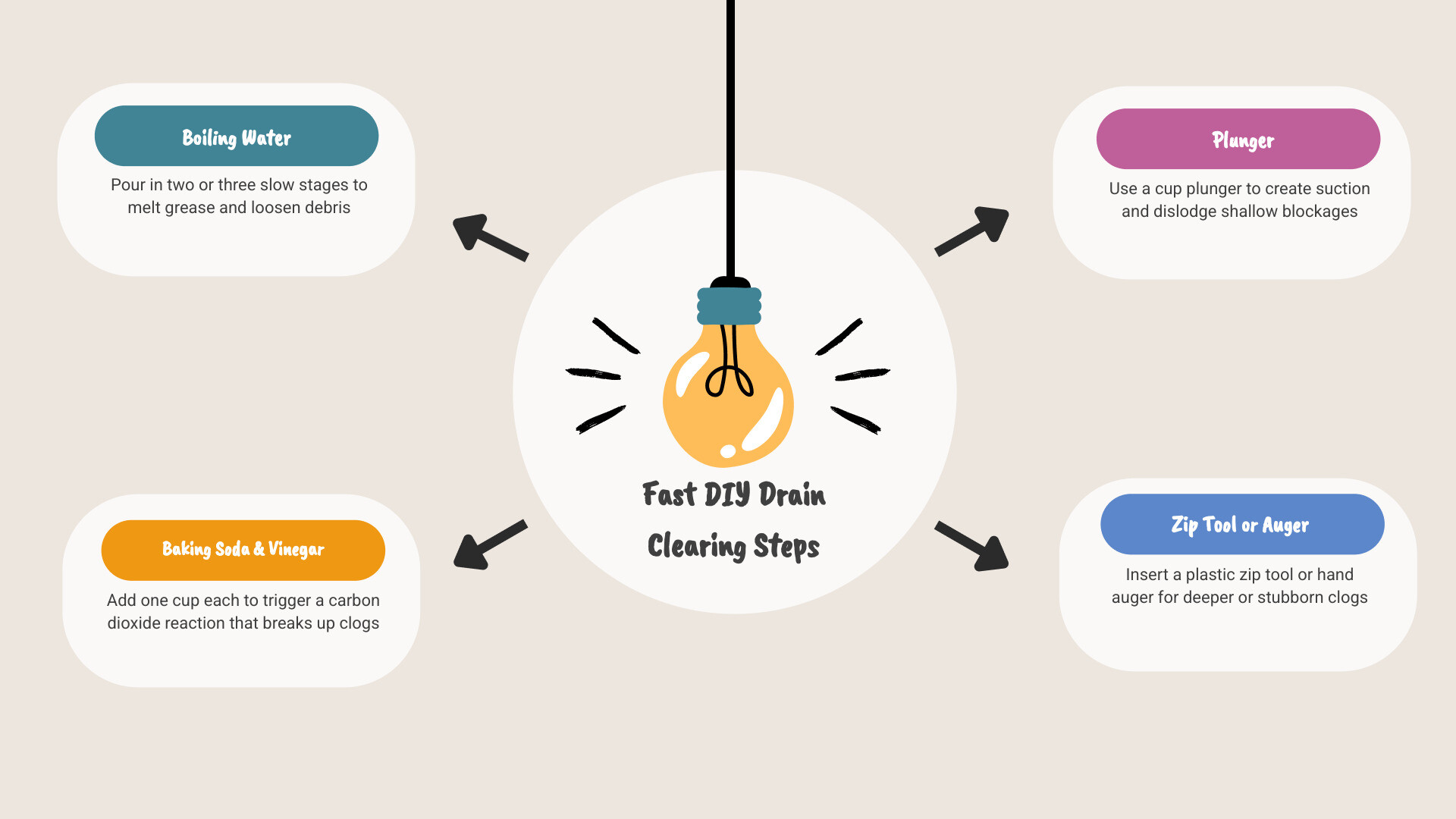
Drain clearing is the essential process of removing a physical blockage from a household pipe to restore normal water flow and prevent property damage. If you are currently facing a plumbing emergency and need a quick answer, here is a reliable sequence that works for most minor issues:
- Pour boiling water down the drain in two or three slow stages to melt grease.
- Add one cup of baking soda, followed immediately by one cup of white vinegar.
- Cover the drain opening and wait 10 to 15 minutes for the reaction to work.
- Flush the system again with a large pot of hot water.
- Use a standard plunger if the water is still moving slowly.
- Try a plastic zip tool or a manual hand auger for deeper hair clogs.
- Call a professional if the blockage returns frequently or if multiple drains are affected.
Few household problems are as immediately frustrating as standing water in a kitchen sink or a shower that refuses to drain. What starts as a minor nuisance can quickly escalate into a full backup, bringing foul odors and potential water damage into your living space. In Anchorage, AK, where the harsh sub-arctic winters put extra stress on residential plumbing systems, these blockages can escalate faster than many homeowners expect. The extreme temperature fluctuations can cause pipes to shift or grease to solidify more rapidly, making drain clearing a top priority for local maintenance.
The good news is that most common clogs can be handled quickly if you have the right approach. Knowing when to grab a plunger and when to call a professional is the difference between a five-minute fix and a multi-thousand dollar repair. I am Debra Blouin, General Manager of Drain Masters Anchorage, and with over two decades of hands-on experience in drain clearing and plumbing services, I have seen every type of blockage imaginable. In this comprehensive guide, I will walk you through everything you need to know to clear a drain fast and keep your pipes flowing smoothly year-round.
Understanding the Basics of Drain Clearing
When water stops flowing, your first instinct is often to get it moving again by any means necessary. However, understanding the mechanics of your plumbing system can help you choose the right tool for the job. Most people use the terms clearing and cleaning interchangeably, but in the professional plumbing industry, they represent two very different levels of service and long-term results.

At its core, drain clearing is about pipe restoration on a functional level. It involves breaking up or removing a specific obstruction so that water can pass through the pipe once more. Whether you are using a plunger or a hand-cranked snake, you are performing a blockage removal. While this is often enough to solve a minor issue, it does not always address the underlying health of the pipe walls. You can learn more about the technical differences between clearing and cleaning to better understand what your home specifically requires for long-term reliability.
The Difference Between Clearing and Cleaning
Think of drain clearing as a form of temporary relief. When a plumber uses a standard drain snake, the goal is to punch a hole through the clog or pull out the specific hairball that is stopping the flow. This is highly effective for getting your sink back in action immediately, but it often leaves a significant amount of residue behind on the pipe walls. This residue acts like a magnet for future debris, which is why some clogs seem to return every few months.
Drain cleaning, on the other hand, is a full restoration of the interior diameter of the pipe. Using advanced methods like hydro jetting, we scour the walls of the pipe to remove every trace of grease, scale, and sludge. This is why drain snakes help clear clogs but do not necessarily leave the pipe in a like-new condition. Clearing gets the water moving; cleaning ensures it stays moving for years to come by removing the sticky buildup that catches new debris.
When to Choose Drain Clearing
You should opt for drain clearing when you are dealing with minor clogs in fixture drains, such as a single bathroom sink, a kitchen disposal, or a bathtub. If the rest of the house is draining perfectly and only one specific sink is acting up, a simple clearing service is usually the most cost-effective and immediate relief available. These types of issues are often found in the branch lines, which are the smaller pipes that lead from your individual sinks and tubs to the main sewer line. Our team specializes in branch and fixture drain clearing for Anchorage, AK, homeowners who need a fast fix for localized problems without the need for more invasive measures.
Identifying Common Causes of Household Blockages
To clear a drain effectively, it helps to know exactly what you are fighting against. Most clogs do not happen overnight: they are the result of weeks or months of gradual buildup. In Anchorage, AK, we are still seeing the same primary culprits in local homes that we have seen for the last 20 years. Understanding these causes can help you prevent future issues and choose the right drain clearing method.

The most common causes include FOG (fats, oils, and grease), hair buildup, soap scum, and foreign objects. Each fixture in your home has its own unique set of enemies. For a deeper dive into the physics of how these clogs form and how they impact your plumbing, you can read about the common causes of clogged drains we encounter most frequently in residential settings.
Kitchen Sink Obstructions
The kitchen is the heart of the home, but it is also the primary site for grease-related blockages. Even if you do not pour liquid fat directly down the drain, small amounts from plates and pans can solidify inside the cold pipes. Over time, these fats catch food scraps and coffee grounds, creating a thick, paste-like obstruction that is resistant to simple water pressure. Unlike hair clogs, which can often be pulled out with a tool, grease clogs often require a combination of hot water and mechanical force to break apart. Different fixtures require different approaches, which is why we categorize clogs by fixture type to provide the most accurate and efficient solutions for our clients.
Bathroom and Laundry Room Issues
In the bathroom, hair is the undisputed king of clogs. When hair combines with soap residue, it creates a waterproof mat that is incredibly difficult to flush away. This mat acts as a filter, catching more soap scum and skin cells until the pipe is completely sealed. In the laundry room, the primary issue is often lint and synthetic fibers from clothing, which can accumulate in the trap or the standpipe. Occasionally, foreign objects like small toys, jewelry, or even dental floss find their way into these drains, requiring professional drain clearing to retrieve them without damaging the porcelain or the internal piping. These items can become lodged in the P-trap, creating a permanent obstruction that only a professional snake or disassembly can resolve.
Step-by-Step DIY Methods for Fast Relief
If you have a slow drain, you do not always need to call a plumber immediately. There are several safe, effective DIY methods you can try at home to restore flow. We always recommend starting with the least invasive options first to protect your plumbing and the environment. However, if these methods do not work after two attempts, it is a sign that the blockage is either too deep or too solid for consumer-grade solutions.
The Science Behind Natural Drain Clearing Solutions
Many homeowners swear by the baking soda and vinegar method, and there is a real scientific reason why it works for minor organic buildup. Baking soda is a base (sodium bicarbonate), while vinegar contains acetic acid. When you mix the two, they create a chemical reaction that produces carbon dioxide gas and water. The bubbling action of the carbon dioxide helps to physically loosen debris from the pipe walls. When followed by a flush of boiling water, the added heat and pressure help to move the loosened material through the system. This method is particularly effective for soap scum and light organic buildup in bathroom sinks. For more information on maintaining your home’s water efficiency while keeping pipes clear, you can visit the EPA WaterSense website.
Mechanical DIY Tools
When natural remedies are not enough, you may need a bit of mechanical help. Using the right tool for the right fixture is critical to avoid damaging your pipes:
- Cup Plunger: This is best for flat surfaces like kitchen sinks and bathtubs. Ensure there is enough water to cover the rubber cup to create a proper airtight seal.
- Flange Plunger: This is specifically designed with an extra fold of rubber to fit into the hole of a toilet. It provides the necessary suction to move clogs through the trapway.
- Plastic Zip Tools: These are inexpensive, barbed plastic strips that are excellent for reaching into a bathroom drain to pull out hair clogs without removing the stopper.
- Hand Augers: A small, manual version of a professional plumber’s snake that can reach a few feet into the pipe to break up a clog. Be careful not to scratch the porcelain of your toilet or sink.
If you are unsure whether a task is safe for a homeowner to perform, check out our guide on DIY vs professional drain clearing to avoid accidental pipe damage or personal injury. Always wear gloves and eye protection when working on plumbing, as pressurized water can splash back unexpectedly.
When to Call a Professional for Drain Clearing
There comes a point where DIY efforts can actually make a plumbing problem worse. If you have tried plunging and natural remedies without success, it is time to call in the experts. Professional drain clearing is necessary when you experience recurring clogs, multiple backups at once, or strange gurgling sounds coming from your pipes when other fixtures are in use. These symptoms often point to a problem deeper in the system that a standard plunger cannot reach.
Signs of a Main Sewer Line Problem
If water is backing up into your bathtub when you flush the toilet, or if you notice foul odors coming from multiple drains simultaneously, you likely have a main sewer line issue. This is much more serious than a simple sink clog. A blockage in the main line can lead to a full sewage backup into your home, which is a significant health hazard and can cause extensive property damage to flooring and drywall. In these cases, you need sewer main clearing to restore the primary exit route for your home’s waste. You can find more details on how to handle clogged drain emergencies on our blog to help you stay calm during a crisis.
Risks of Using Chemical Cleaners
We strongly advise against using liquid chemical drain cleaners found in big-box stores. While they are marketed as an easy fix, they often contain harsh acids or bases that generate intense heat through an exothermic reaction. This heat can warp PVC pipes or cause older metal pipes to corrode and leak. Furthermore, if the chemical does not clear the clog, you are left with a sink full of toxic, caustic water that makes it dangerous for a plumber to work on the system later. If you suspect your pipes are already damaged or if you have used chemicals recently, look for the signs your drain needs repair before the situation worsens. Professional help is always necessary if safety concerns arise or if specialized tools like motorized augers are required.
Professional Techniques for Long-Term Results
When we arrive at your home in Anchorage, AK, we bring advanced tools that go far beyond what you can find at a local hardware store. Our goal is not just to poke a hole in the clog, but to provide a lasting solution that restores your peace of mind. Professional drain clearing involves a systematic approach to diagnose and resolve the root cause of the issue.
Advanced Equipment for Professional Drain Clearing
We use motorized augers with various cutting heads that can slice through thick tree roots and heavy grease. Unlike manual snakes, these machines have the torque and length to reach clogs deep within your system, even hundreds of feet from the entry point. For comprehensive results, we often recommend professional drain cleaning as part of a regular maintenance routine to prevent these deep clogs from forming in the first place.
The Power of Hydro Jetting
One of the most effective tools in our arsenal is hydro jetting. This process involves sending a specialized nozzle into your pipes that blasts water at up to 4000 PSI. This high pressure scours the pipe walls, removing grease, mineral scale, and even small tree roots that have intruded through pipe joints. It is the gold standard for blasting clogs away and restoring your pipes to nearly original condition. You can explore our hydro jetting services to see if this is the right fit for your recurring issues, especially if you live in an older home with cast iron or clay pipes.
Video Camera Inspections
To take the guesswork out of drain clearing, we use waterproof sewer cameras. We feed a high-definition camera into the line to see exactly what is causing the blockage and where it is located. This allows us to check the structural integrity of your pipes and ensure there are no cracks, collapses, or bellies that would cause the clog to return. Understanding the value of professional drain repair starts with seeing the problem for yourself on our monitor. This transparency ensures you only pay for the repairs you actually need.
Proactive Maintenance to Prevent Future Clogs
The best way to handle a clogged drain is to prevent it from ever forming. Simple changes in your daily habits and a consistent maintenance schedule can save you hundreds of dollars in plumbing bills over the life of your home. In a climate like Anchorage, AK, being proactive is essential to avoid mid-winter plumbing disasters when the ground is frozen.
Routine Cleaning Schedules
We recommend a bi-annual maintenance routine for most households. This can be as simple as a monthly hot water flush or using enzyme-based cleaners that eat away at organic buildup without damaging your pipes. To keep your system running smoothly, check out our home drain cleaning tips that are proven to work in our unique local environment. Consistent care is the only way to truly stop recurring clogs from disrupting your daily life and causing unnecessary stress.
Protecting Your Sewer System
Be mindful of what goes down your drains every single day. Never pour cooking grease, fats, or coffee grounds into the kitchen sink: even with a garbage disposal, these items will eventually cause a blockage. In the bathroom, use high-quality drain screens to catch hair and soap chunks before they enter the pipes. Finally, remember that your toilet is not a trash can; only human waste and toilet paper should ever be flushed. Even products labeled as flushable wipes often do not break down and are a leading cause of main line backups. Following these repeat clog fixes will protect your sewer system and your wallet for years to come.
Frequently Asked Questions about Drain Clearing
What is the difference between drain clearing and drain cleaning?
Drain clearing is a reactive service designed to remove a specific blockage and restore water flow immediately. Drain cleaning is a proactive and thorough process that uses high-pressure water to remove all debris and buildup from the interior walls of the pipe.
Are chemical drain cleaners safe for my plumbing system?
Chemical cleaners are generally not recommended because they can cause heat damage to plastic pipes and accelerate corrosion in older metal pipes. They are also hazardous to the environment and can cause chemical burns to plumbers who must service the drain later.
How often should I have my drains professionally cleared in Anchorage, AK?
For most residential properties, a professional inspection and cleaning every 1 to 2 years is sufficient. However, if you have an older home or large trees near your sewer line, you may require annual service to manage root intrusion and pipe shifting.
What are the signs that my main sewer line is clogged?
Common signs include multiple fixtures backing up at the same time, sewage smells coming from floor drains, and gurgling sounds in the toilet when you run the sink or shower. You might also see water pooling in your yard near the sewer cleanout.
Does the baking soda and vinegar method actually work for clogs?
This method is effective for minor organic buildup and regular maintenance. The chemical reaction helps loosen soap scum and light debris, but it is rarely powerful enough to clear a major obstruction, grease cap, or tree root intrusion.
What is hydro jetting and when is it necessary for a home?
Hydro jetting uses high-pressure water to scrub the entire interior of a pipe. It is necessary for heavy grease buildup, recurring clogs that snakes cannot fully remove, or when you want to restore your pipes to their original flow capacity.
Why do my drains make a gurgling sound when I use the sink?
Gurgling usually indicates a venting issue or a partial blockage in the line. It means air is being trapped and forced through standing water as it tries to escape, which is often an early warning sign of a developing clog.
Can tree roots be removed from a drain without digging up the yard?
Yes, in many cases tree roots can be cleared using specialized mechanical cutters or hydro jetting from the inside of the pipe. If the pipe is structurally sound, this avoids the need for expensive excavation and landscaping repairs.
Is a plunger effective for all types of household clogs?
Plungers are excellent for soft clogs like toilet paper or minor sink obstructions near the drain opening. They are not effective for solid objects, heavy grease buildup, or clogs located deep in the main sewer line far from the fixture.
How can I prevent grease from clogging my kitchen pipes?
Always wipe greasy pans with a paper towel before washing them in the sink. Collect cooking oil in a separate container and dispose of it in the trash rather than pouring it down the drain, even if you have a garbage disposal.
Conclusion
Living in Anchorage, AK, means dealing with unique plumbing challenges, but a clogged drain should not be a source of constant stress. Whether you are dealing with a stubborn kitchen sink or a concerning main line backup, taking fast action is the key to preventing a minor nuisance from becoming a major disaster. As a family-owned business with over 20 years of experience and more than 4,000 jobs completed annually, we understand exactly what it takes to keep your home running smoothly.
If you have tried DIY methods and the water still will not move, do not risk damaging your pipes with harsh chemicals or excessive force. Our team offers upfront pricing and advanced diagnostic tools to get your plumbing back in peak condition. Whether you need a simple fix or a comprehensive cleaning, the experts at Drain Masters are here to provide the professional help you deserve. Schedule professional drain clearing today and let us take the stress out of your plumbing problems.