
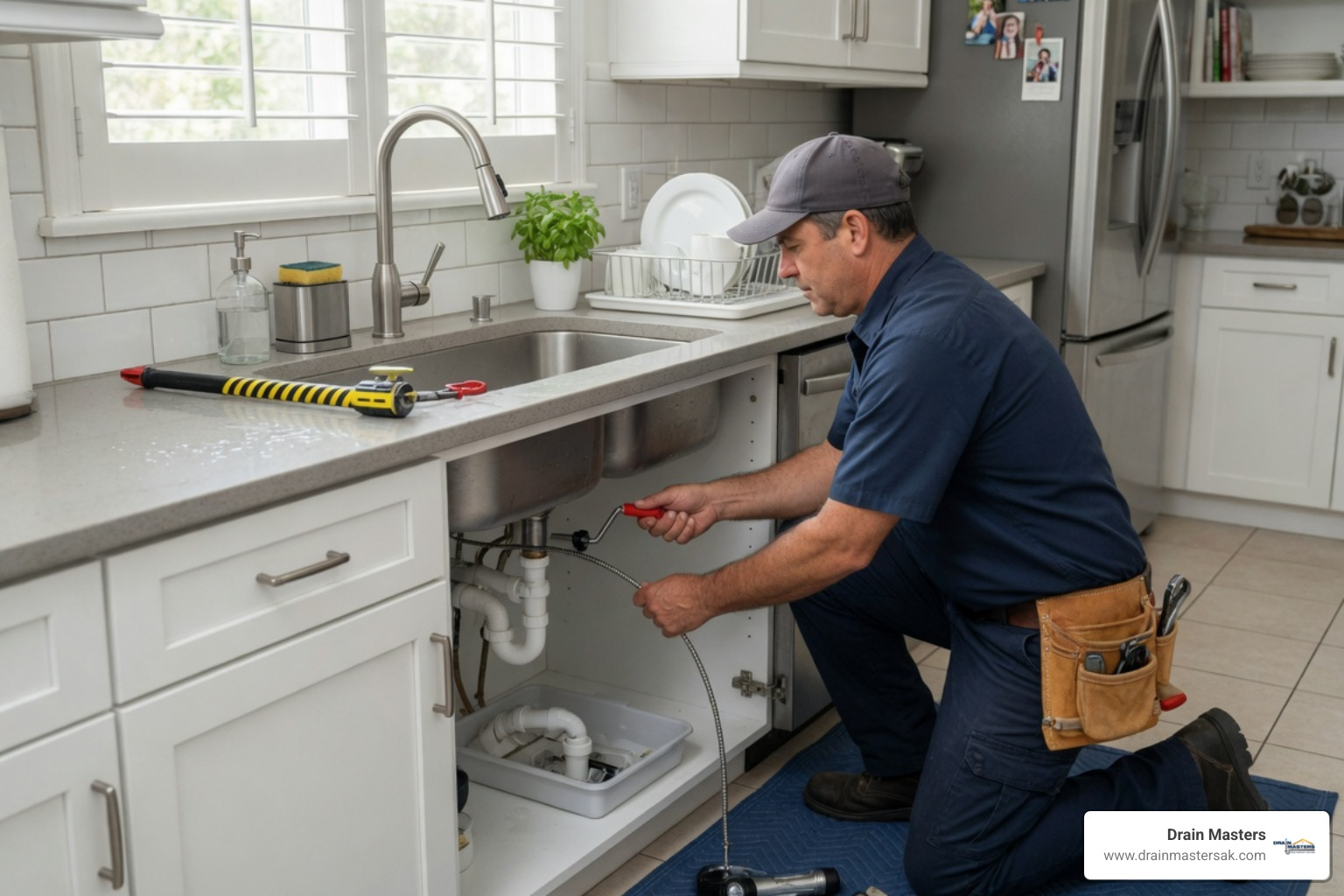
What Blocked Drain Plumbers Do (And When You Actually Need One)
When you need blocked drain plumbers, here is what you need to know right away:
When to call a blocked drain plumber:
- Water is backing up into sinks, tubs, or toilets
- Multiple drains are slow or blocked at once
- You smell sewage inside or near your home
- Plunging and hot water have not worked
- The same drain keeps blocking every few weeks
What blocked drain plumbers do:
- Inspect the line, often with a camera, to find the real problem
- Clear the blockage with a drain snake or high-pressure water jetting
- Check pipe condition and explain repair options if needed
- Give you an upfront estimate before work begins
Safe DIY options for minor clogs: A plunger, hot water flush, or baking soda and vinegar rinse can sometimes help a single slow drain. Stop and call a professional if sewage appears, odors are strong, or multiple drains are affected.
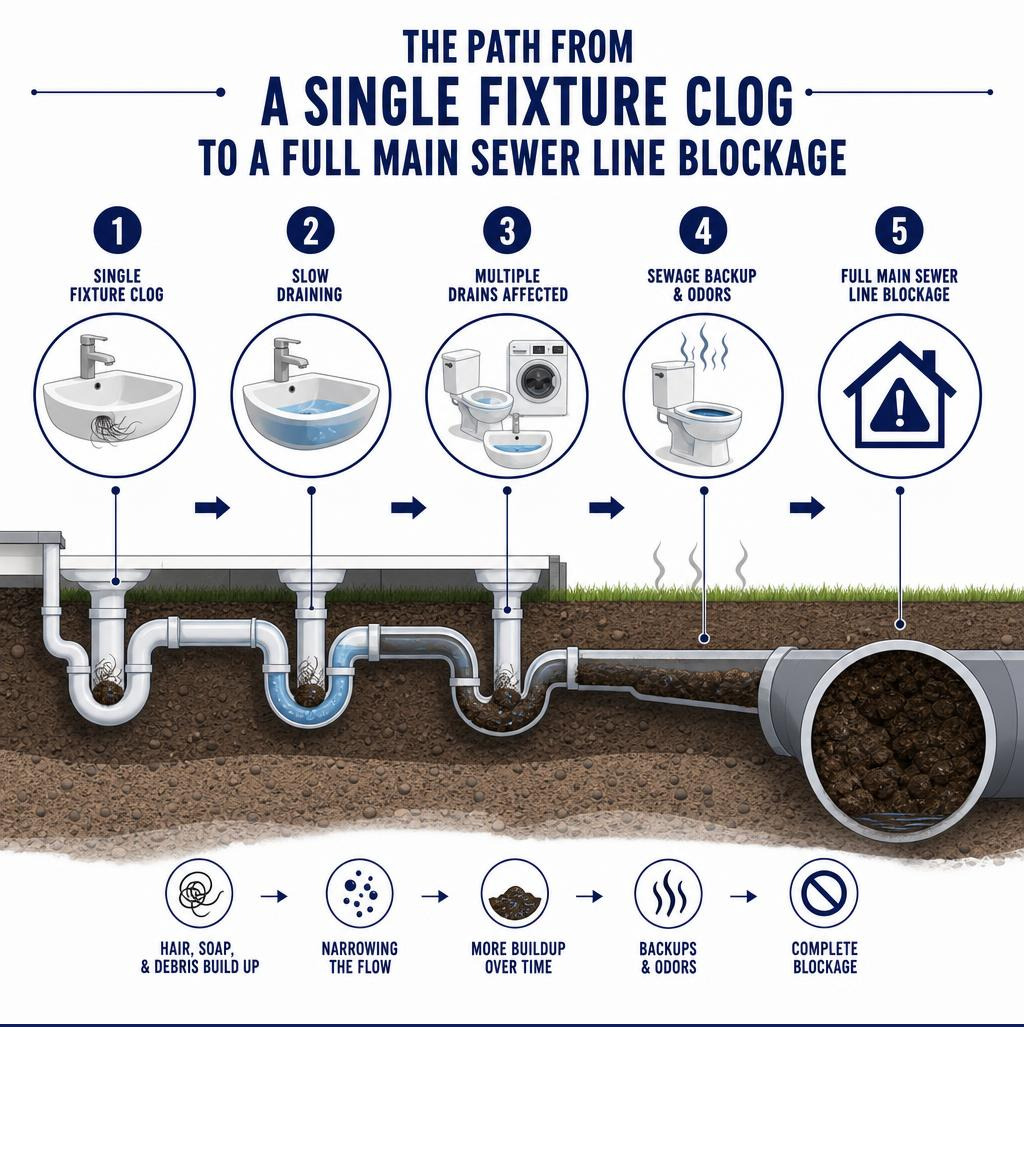
Most drain emergencies start small: a sink that drains slower each week, a gurgle after flushing, or a faint smell near a floor drain. These are early warnings that buildup, roots, or pipe damage may be developing.
For Anchorage, AK homeowners, cold winters, freeze-thaw ground movement, and aging infrastructure can turn a simple clog into a bigger sewer issue. Knowing when to try safe DIY steps and when to bring in professional drain help can save time, money, and stress.
This guide covers five practical ways to deal with an active blocked drain, plus prevention habits that reduce future problems. Whether the issue is hair in a shower drain or roots in a main sewer line, the goal is to act early and safely.
I am Debra Blouin, General Manager of Drain Masters, a family-owned plumbing, drain, and sewer company in Anchorage, AK. After more than two decades working with blocked drain plumbers and helping local homeowners solve these problems, I have seen how much easier repairs become when the warning signs are handled early.
1. Read the Warning Signs Before Water Backs Up
A blocked drain rarely starts as a dramatic bathroom flood. More often, the plumbing gives small clues first. Maybe the shower drains slowly, the toilet bubbles after laundry runs, or the floor drain starts to smell bad.
Those clues matter. The earlier you notice them, the easier it is to prevent a sewer backup. For a deeper look at early symptoms, we explain what to watch for when a drain starts acting up so homeowners know which signs should not be ignored.
Common Signs of a Blocked Drain or Sewer Line
Watch for these warning signs:
- A sink, tub, or shower draining slower than usual
- Gurgling or bubbling sounds from pipes
- Bad odors near sinks, toilets, tubs, or floor drains
- A toilet that bubbles when another fixture is used
- Water pooling around floor drains
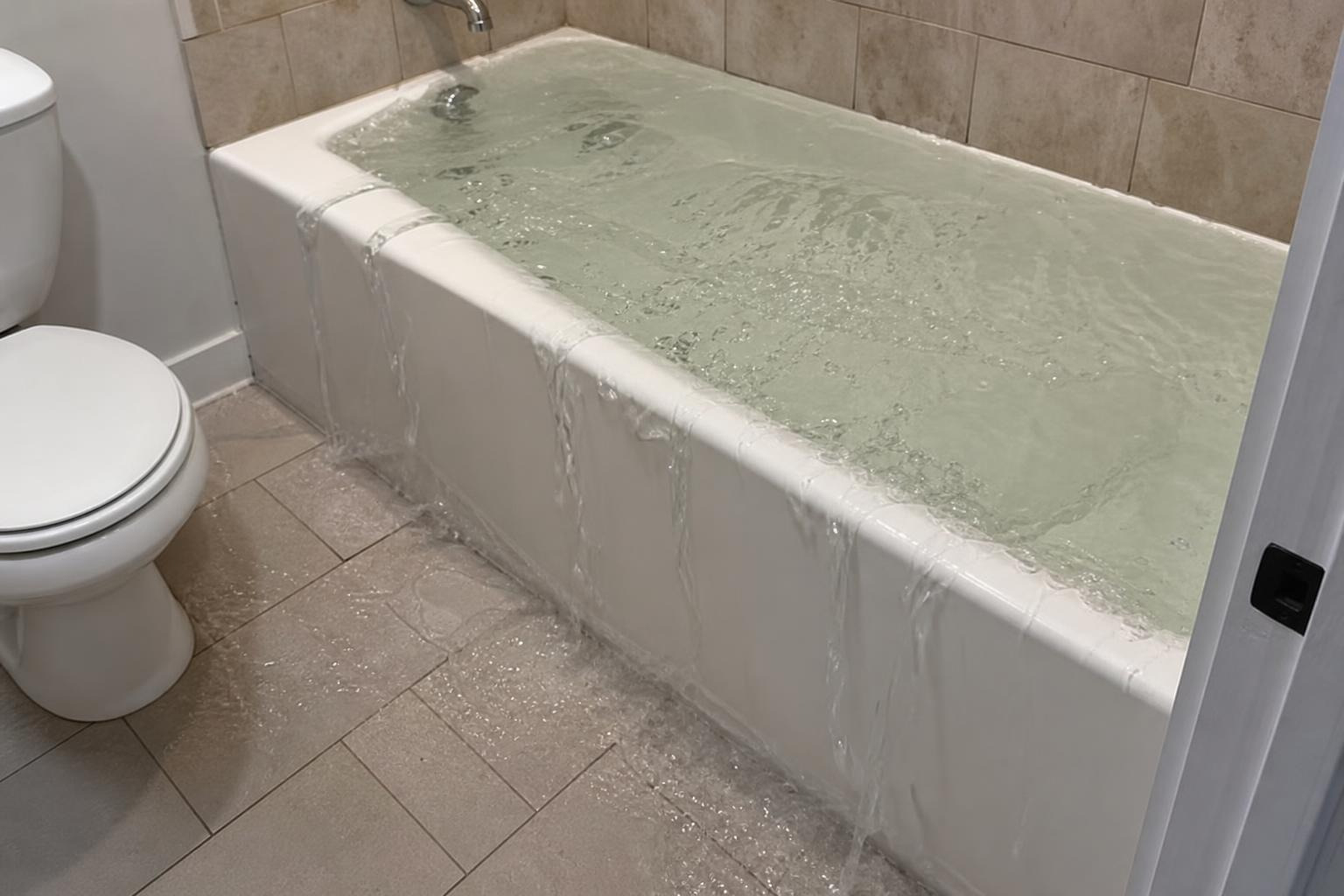
- Water backing up into a tub, shower, or basement drain
- Recurring clogs in the same fixture
- Multiple drains slowing down at once
- Sewage smells inside or near the home
- Washing machine discharge backing up elsewhere
One slow bathroom sink may be a local clog from hair or soap. Several slow drains at the same time may point to the main sewer line.
A good rule: one drain is often local; multiple drains may be serious.
What Causes Blocked Drains in Homes and Businesses?
Blocked drains can come from daily habits, aging pipes, weather, or unexpected objects. Around Anchorage, AK, common causes include:
- Hair and soap scum in showers and tubs
- Grease, fats, and oils in kitchen drains
- Food scraps and coffee grounds
- Wipes, paper towels, and sanitary products
- Small toys, jewelry, and foreign objects
- Tree roots entering older sewer lines
- Mineral scale and sediment buildup
- Corroded, shifted, or damaged pipes
- Pipe movement caused by freeze-thaw cycles
- Commercial grease trap problems
- Leaves, mud, and debris in stormwater systems
Kitchen drains often clog when grease cools and grabs food particles. Bathroom drains often clog from hair and soap residue. Sewer lines often clog from roots, sagging pipe sections, or years of buildup.
When a Small Clog Becomes an Emergency
A blocked drain becomes an emergency when wastewater or sewage comes back into the property. That can damage flooring, drywall, and belongings, and it can create health risks.
Call for urgent help if you notice:
- Raw sewage backing up into a tub, toilet, or floor drain
- An overflowing toilet that will not stop
- Basement drain backup
- Strong sewer odors
- Wastewater spreading across floors
- Multiple fixtures backing up at once
If this happens, stop using water immediately. Do not run sinks, showers, laundry, dishwashers, or toilets. If safe, turn off water to the affected fixture or the main shutoff, and keep people and pets away from wastewater.
For more guidance, read our guide on what to do during a drain emergency. The EPA also explains why sewer overflows can create public health and environmental concerns in its sanitary sewer overflow guidance.
2. Try Safe, Low-Risk DIY Fixes for Minor Fixture Clogs
Some clogs are simple: hair near a tub stopper, soap buildup in a sink, or a toilet clog from too much paper. These may respond to basic DIY steps.
The key is knowing where DIY stops. A plunger is fine. Harsh chemicals are not the best plan, especially if a plumber may need to open the line later.
For fixture-specific tips, we put together a practical guide to handling clogs in different fixtures.
What You Can Try Before Calling
If only one fixture is slow and there is no sewage smell or backup, try these low-risk options:
-
Use a plunger
- Use a cup plunger for sinks and tubs.
- Use a flange plunger for toilets.
- Keep enough water in the fixture to cover the plunger cup.
-
Remove visible debris
- Pull hair from the shower or tub drain.
- Remove and clean the drain stopper if accessible.
- Wear gloves.
-
Flush with hot water
- Hot tap water can help loosen soap scum or light grease.
- Avoid boiling water if you have older or fragile pipes.
-
Try baking soda and vinegar
- Pour baking soda into the drain.
- Add vinegar and let it fizz.
- Flush with hot water after several minutes.
- This may help light buildup, but it will not fix roots or a deep sewer clog.
-
Clean the P-trap
- For sink clogs, the curved pipe under the sink may hold debris.
- Place a bucket underneath before loosening anything.
- If the trap is corroded, stuck, or leaking, stop and call a plumber.
-
Use a small hand auger carefully
- A basic hand auger may help with shallow clogs.
- Do not force it.
- Stop if the cable gets stuck or the resistance will not move.
What Not to Pour Down a Drain
Avoid pouring or flushing:
- Chemical drain cleaners
- Grease, fats, and cooking oils
- Paint, solvents, or harsh acids
- Coffee grounds
- Wipes, even if labeled flushable
- Paper towels
- Feminine hygiene products
- Cotton swabs
- Cat litter
- Food scraps
- Large amounts of boiling water into fragile piping
Chemical cleaners are especially risky. They can damage pipes, create fumes, harm the environment, and make the job more dangerous if the line has to be opened later.
When DIY Stops Being Safe
Stop DIY work and call a professional when:
- More than one drain is slow or blocked
- Sewage odor is present
- A toilet bubbles or overflows
- Water backs up into tubs, showers, or floor drains
- The clog keeps returning
- The drain does not move at all
- You suspect tree roots
- You have older pipes
- Standing wastewater is present
A deep clog needs professional tools and diagnosis. Repeated plunging may only push the problem farther down the line. If you are unsure whether the problem is simple or serious, our article on when it makes sense to bring in a plumber explains when expert help can prevent bigger damage.
3. Get the Line Diagnosed With Cameras, Locators, and Professional Testing
The most painless drain repair is the one based on facts. Guessing wastes time. Digging in the wrong spot wastes money. Clearing a clog without knowing why it happened can mean seeing us again in a few weeks. We like our customers, but not enough to make recurring sewer clogs a social tradition.
Professional diagnosis helps identify the exact location, cause, and condition of the pipe.
How Plumbers Locate Blockages
Professional blocked drain plumbers use several methods to find the problem:
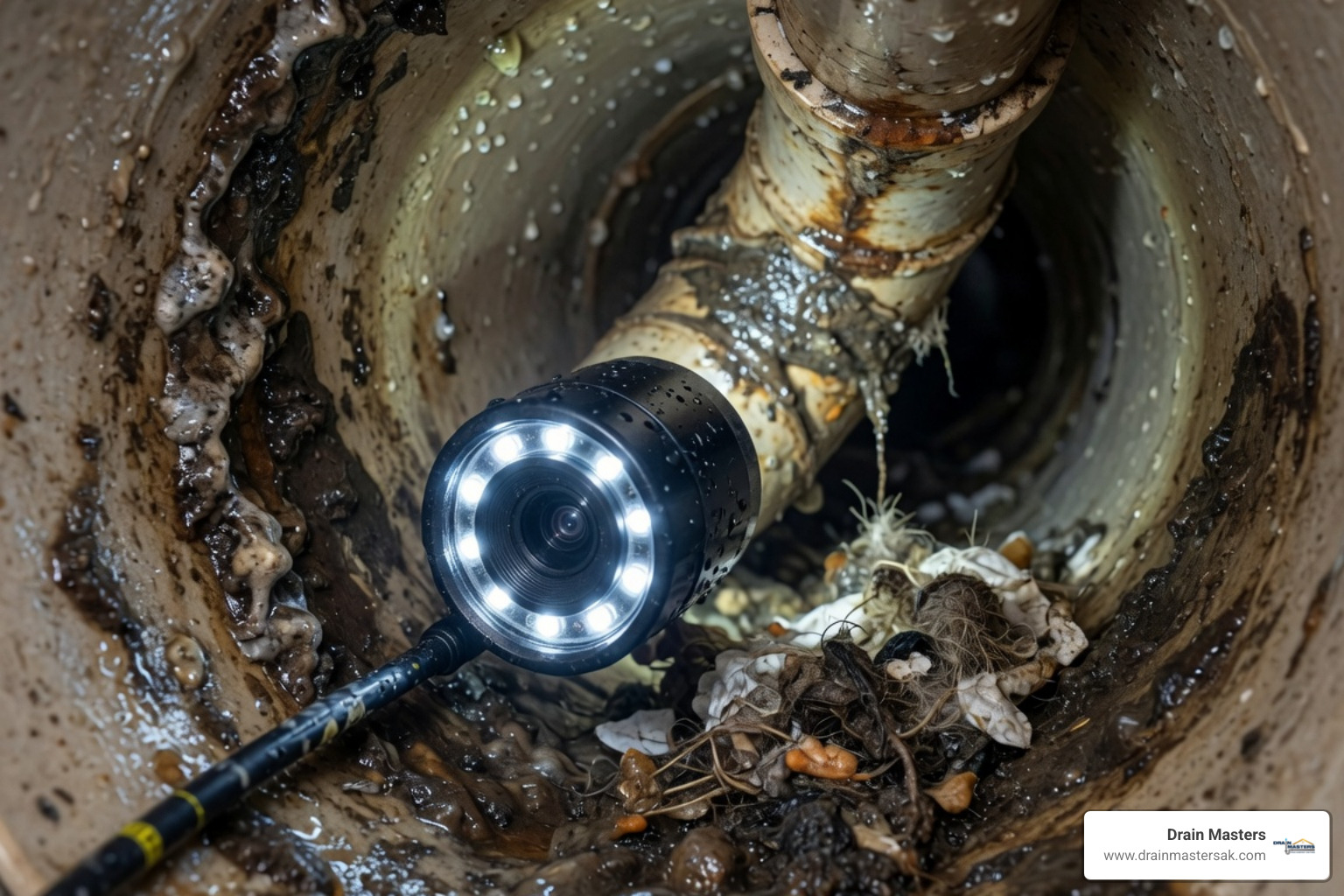
- Video camera inspection: A small waterproof camera is sent through the pipe to view buildup, roots, cracks, bellies, corrosion, or collapsed sections.
- Electronic locating: A locator helps identify where the camera head is underground.
- Cleanout access testing: Plumbers may inspect through a cleanout to reach the main sewer line.
- Fixture isolation: We test individual fixtures to see whether the clog is local or affects the main line.
- Water flow testing: Controlled water flow helps show where drainage slows or stops.
- Trap inspection: Sink and fixture traps may be checked for localized debris.
- Dye or smoke testing: In some cases, these tests help identify leaks, cross-connections, or venting issues.
In many sewer calls, the camera tells the story. Roots, pipe offsets, sagging sections, or heavy grease buildup are much easier to solve when we can see what is happening.
Why Diagnosis Prevents Repeat Clogs
Diagnosis matters because the first clog is only a symptom. The real question is why it happened.
A camera inspection can help determine:
- Whether the pipe is blocked or damaged
- The exact location of the issue
- Whether tree roots are present
- If the pipe has cracks, corrosion, or offset joints
- Whether hydro-jetting is safe
- Whether repair or relining may be needed
- Whether excavation can be avoided
- What documentation may be useful for insurance or property records
This is especially helpful in Anchorage, AK, where older lines, long service runs, ground movement, and cold conditions can make sewer problems harder to diagnose from the surface.
Drain Clearing vs. Drain Cleaning
These terms sound similar, but they are not always the same.
Drain clearing means opening the blockage so water can move again. This may be enough for a simple toilet clog or a small obstruction.
Drain cleaning goes farther. It removes buildup from the pipe walls, such as grease, sludge, soap scum, mineral scale, and roots. It is often better for recurring clogs or lines with heavy buildup.
Think of clearing like poking a hole through snow so you can walk through. Cleaning is like shoveling the whole path. Both have a place, but one lasts longer when buildup is the real problem.
We explain this difference in more detail in our guide to why a cleaned drain can last longer.
4. Compare Snaking, Hydro-Jetting, and Pipe Relining Before You Choose
Once the problem is found, the next step is choosing the right solution. The best method depends on the type of clog, pipe condition, access, and whether the pipe itself is damaged.
Here is the simple comparison.
| Method | Best For | How It Works | Main Limitation |
|---|---|---|---|
| Drain snaking | Simple local clogs | A cable breaks through or pulls out the blockage | May not clean pipe walls fully |
| Hydro-jetting | Grease, sludge, roots, recurring clogs | High-pressure water scours the inside of the pipe | Requires professional use and pipe condition check |
| Pipe relining | Cracked or root-damaged pipes | A liner creates a new inner surface inside the pipe | Not right for fully collapsed sections |
Drain Snaking: Best for Simple, Local Clogs
Drain snaking uses a flexible cable, also called an auger, to break through or retrieve a blockage.
It works well for:
- Hair clogs
- Soap buildup
- Small toilet blockages
- Local sink or tub clogs
- Minor branch line obstructions
Snaking is often quick and effective when the clog is close to the fixture. It can restore flow without major disruption.
The limitation is that snaking may only punch a path through buildup. If grease or sludge is coating the pipe walls, the drain may slow again later. That does not mean snaking is bad. It means it has a specific job.
Hydro-Jetting: Best for Grease, Sludge, Roots, and Recurring Clogs
Hydro-jetting uses high-pressure water to clean the inside of the pipe. Instead of just breaking a hole through the blockage, it washes the pipe walls.
Hydro-jetting can help with:
- Grease buildup
- Sludge
- Soap scum
- Mineral scale
- Small roots
- Commercial kitchen drain buildup
- Main sewer line clogs
- Recurring blockages
A camera inspection should usually happen before hydro-jetting, especially in older pipes. We want to make sure the pipe can handle the cleaning and that there is not a collapsed section.
Hydro-jetting is a professional-only service. The pressure is powerful, and using it incorrectly can damage plumbing or cause injury. When done properly, it is one of the most effective ways to clear stubborn buildup. Learn more about how high-pressure cleaning helps stubborn clogs.
Pipe Relining and Sewer Repair: Best When the Pipe Is Damaged
Sometimes the clog is not the real problem. The pipe is.
If roots keep entering the same spot, or a camera shows cracks, offsets, corrosion, or damaged joints, drain cleaning may only provide temporary relief. In that case, repair may be the smarter long-term option.
Pipe relining is a trenchless repair method that installs a new liner inside the damaged pipe. It can seal cracks, reduce root entry, and restore flow without digging up large sections of yard, driveway, or landscaping.
Pipe relining may help when there are:
- Cracks
- Root entry points
- Offset joints
- Small gaps
- Repeated blockages
- Aging sewer lines
However, if a pipe is fully collapsed or severely misaligned, excavation or replacement may be necessary. If you are deciding between repair and replacement, our guide on choosing the right sewer line fix can help you understand what matters.
5. Call Blocked Drain Plumbers When the Problem Is Deep, Recurring, or Urgent
Some drain problems are not worth wrestling with. If the clog is deep, keeps coming back, or involves sewage, it is time to call blocked drain plumbers.
At Drain Masters, we help homeowners and businesses in Anchorage, AK with drain cleaning, sewer repair, plumbing services, and video inspections. We use advanced tools, explain what we find, and provide upfront pricing before work begins. Our team handles thousands of jobs every year, from flushed toys to serious main sewer backups.
What Blocked Drain Plumbers Do During an Emergency
During a blocked drain or sewer emergency, a professional plumber may:
- Ask what fixtures are affected and when the backup started
- Tell you to stop using water if a sewer backup is suspected
- Help identify shutoff valves if needed
- Inspect affected fixtures and cleanout access
- Protect floors and nearby areas when possible
- Avoid unnecessary contact with wastewater
- Use professional tools to locate the blockage
- Clear the line with a snake, auger, or hydro-jetting when appropriate
- Perform camera inspection if needed
- Check pipe condition after flow is restored
- Explain whether repair, cleaning, or monitoring is recommended
- Document findings when helpful
- Recommend cleanup or sanitation steps if wastewater entered the home
The goal is not just to make water disappear. The goal is to restore safe drainage and reduce the chance of another backup.
Questions to Ask Blocked Drain Plumbers Before Booking
Before hiring a plumber, ask practical questions:
- Are you licensed and insured?
- Do you provide drain and sewer camera inspections?
- Can you explain the likely cause before starting major work?
- Do you offer upfront estimates?
- Do you handle emergency drain and sewer calls?
- What equipment might be used?
- Is hydro-jetting safe for my pipe condition?
- What happens if roots or pipe damage are found?
- Do you clean up the work area?
- What repair options are available if the line is damaged?
- How do you help prevent recurring clogs?
A reliable plumber should answer clearly, without pressure or scare tactics. You should understand what is happening, what it may cost in general terms, and what choices you have.
How Much Does Drain Clearing or Sewer Repair Typically Cost?
Pricing can vary depending on:
- Whether the clog is in one fixture or the main sewer line
- How difficult the blockage is to access
- Whether camera inspection is needed
- Whether the service is scheduled or urgent
- Whether roots are involved
- Whether the pipe is damaged
- Whether cleaning, relining, excavation, or replacement is required
A simple fixture clog is very different from a main sewer blockage with root intrusion or damaged pipe. The most important step is getting a clear explanation and an upfront estimate before work begins.
Avoid choosing only by the lowest price. A quick temporary opening may cost less today but more later if the real problem is missed.
6. Prevent Future Blockages With Simple Maintenance Habits
The easiest clog to fix is the one that never forms. Prevention does not have to be complicated. Small habits make a big difference.
Kitchen, Bathroom, and Laundry Prevention
In the kitchen:
- Scrape food into the trash before rinsing dishes
- Put grease into a container, not the drain
- Use sink strainers
- Avoid coffee grounds in drains
- Run water long enough to move waste through the line
- Be careful with garbage disposal use
In the bathroom:
- Use hair catchers in showers and tubs
- Clean drain screens regularly
- Avoid flushing wipes
- Do not flush paper towels or hygiene products
- Rinse soap residue from drains with warm water
In the laundry area:
- Check lint traps and filters
- Watch for slow utility sink drainage
- Avoid sending debris-heavy water into drains
- Call for help if the washing machine causes water to back up elsewhere
Sewer, Stormwater, and Cold-Climate Prevention
Anchorage, AK brings its own drain and sewer challenges. Cold temperatures can make grease thicken faster. Freeze-thaw ground movement can stress buried lines. Snowmelt and seasonal debris can overwhelm stormwater areas.
Helpful prevention steps include:
- Keep exterior drains clear of leaves, mud, and debris
- Monitor low areas where water pools during snowmelt
- Know where your sewer cleanout is located
- Schedule preventive inspection for older sewer lines
- Watch for signs of tree root intrusion
- Do not ignore recurring slow drains
- Consider annual drain cleaning if you have a history of clogs
- Address small backups before winter when access may become harder
Long service lines and older infrastructure can hide problems for a while. A camera inspection is often the best way to understand the condition of your sewer line.
Residential vs. Commercial Drain Prevention
Homes and businesses have different drain risks.
For residential properties, the biggest issues are usually hair, grease, wipes, food waste, roots, and aging pipes.
For commercial properties, prevention may include:
- Grease trap maintenance
- Floor drain cleaning
- Public restroom checks
- Staff training on what not to flush
- Tenant education
- Scheduled maintenance
- Documentation for safety practices
- Fast response planning to protect business continuity
A clogged drain at home is stressful. A clogged drain at a business can interrupt customers, employees, and operations. Preventive maintenance is usually less disruptive than emergency service.
Frequently Asked Questions About Blocked Drains and Plumbing Help
1. What are the most common signs that I need a drain plumber?
Common signs include slow drains, gurgling sounds, bad odors, bubbling toilets, standing water, recurring clogs, and water backing up into tubs, showers, sinks, or floor drains. Multiple slow drains can mean the issue is in the main sewer line.
2. What causes blocked drains and sewer lines?
Common causes include hair, soap scum, grease, food waste, wipes, foreign objects, tree roots, mineral buildup, pipe corrosion, sediment, storm debris, or collapsed pipes. Cold weather and ground movement can also contribute to sewer problems.
3. Can I unblock a drain myself?
You can try safe DIY methods for a minor clog in one fixture. A plunger, hot water flush, drain screen cleaning, or P-trap cleaning may help. Avoid chemical drain cleaners and stop if sewage appears or the clog returns.
4. When should I call a professional instead of trying DIY fixes?
Call a professional if multiple drains are slow, sewage smells are present, a toilet overflows, wastewater backs up, plunging fails, the same clog returns, roots are suspected, pipes are old, or water is spreading.
5. How do plumbers diagnose a blocked drain?
Plumbers may use a drain camera, cleanout access, pipe locating equipment, water flow testing, fixture isolation, and trap inspection. Video inspection is especially helpful because it shows the blockage and pipe condition.
6. What is the difference between snaking and hydro-jetting?
Snaking uses a cable to break through or remove a clog. Hydro-jetting uses high-pressure water to clean pipe walls. Snaking suits simple clogs, while hydro-jetting is better for grease, sludge, roots, and repeat blockages.
7. What is pipe relining?
Pipe relining is a trenchless sewer repair method that installs a new liner inside a damaged pipe. It can seal cracks, reduce root entry, strengthen the line, and restore flow with less digging than excavation.
8. How much does it cost to clear a blocked drain?
The cost depends on the clog location, severity, access, equipment, camera inspection needs, emergency timing, and whether pipe damage is involved. Ask for an upfront written estimate before work begins.
9. What should I do if sewage backs up into my home?
Stop using water immediately. Do not flush toilets, run sinks, use showers, start laundry, or run the dishwasher. Avoid contact with wastewater, keep people and pets away, and call an emergency plumber right away.
10. How do I choose reliable blocked drain plumbers?
Look for licensed and insured plumbers with drain and sewer experience. Ask about camera inspections, upfront pricing, emergency availability, cleanup practices, hydro-jetting safety, repair options, and how they help prevent repeat clogs.
Conclusion
Blocked drains are stressful, but fixing them does not have to be painful. Start by reading the warning signs. Try safe DIY steps only when the clog is minor and limited to one fixture. If the problem is deep, recurring, smelly, or urgent, call professionals with the right tools to diagnose and clear it safely.
As a family-owned company serving Anchorage, AK for more than 20 years, Drain Masters brings advanced equipment, video inspections, upfront pricing, and experience from about 4,000 annual plumbing, drain, and sewer jobs. For a stubborn clog, sewer backup, or preventive inspection, book sewer and drain service today.