When a Sewer Problem Becomes an Emergency in Anchorage
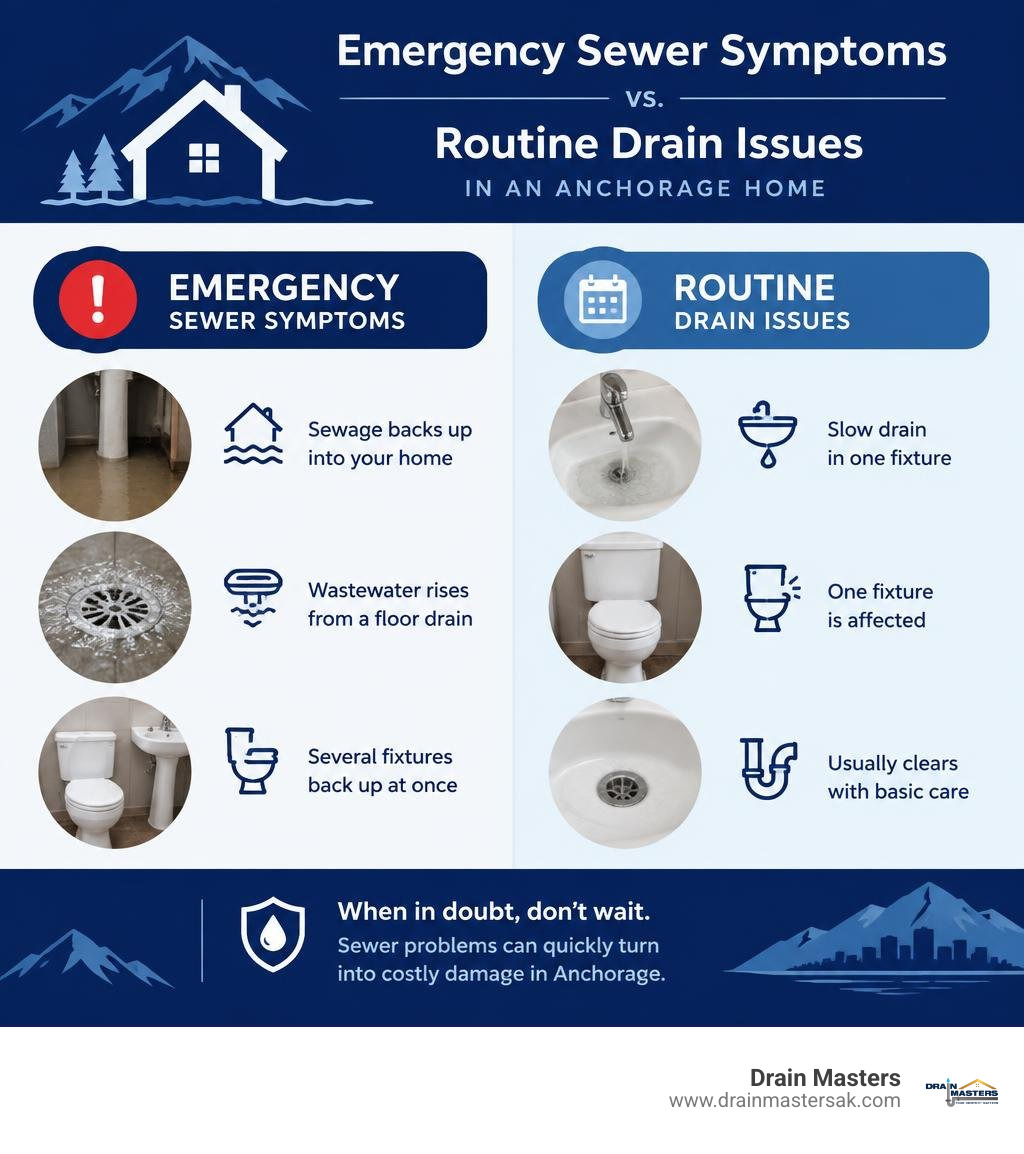
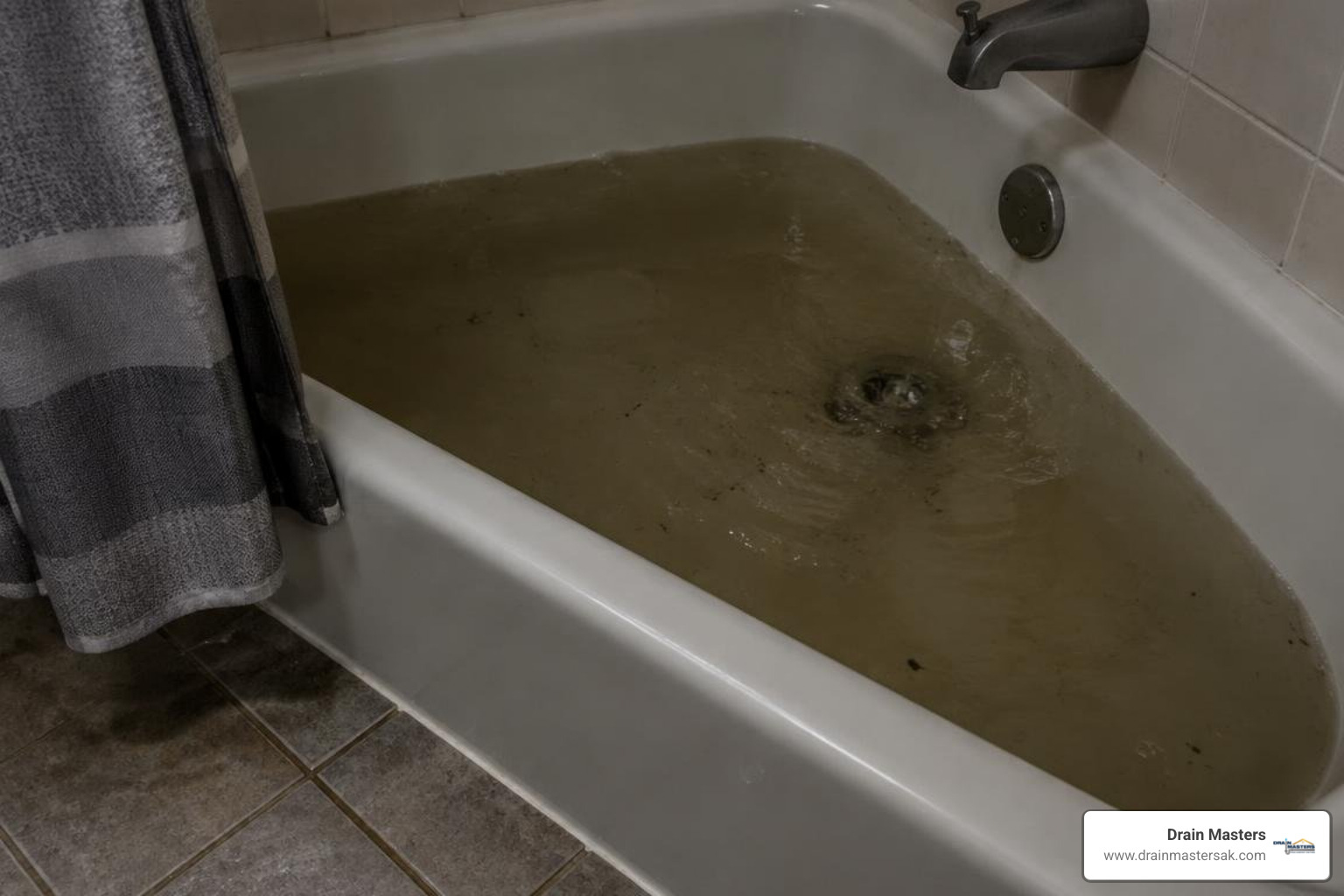
Call for emergency sewer repair in Anchorage, AK, if sewage backs up into your home, wastewater rises from a floor drain, or several fixtures back up at once. Stop using sinks, toilets, and appliances that drain water immediately. Keep people and pets away from wastewater, and contact an experienced sewer professional right away. If sewage is discharging from a municipal street manhole or neighboring properties are experiencing identical issues simultaneously, notify Anchorage Water and Wastewater Utility as soon as possible.
A slow drain in a single fixture is an inconvenience, but a whole-house backup can cause severe structural damage and expose your living space to hazardous biological waste. Subsurface soil dynamics in Anchorage, AK, such as active frost heaving, shifting glacial till, and deep ground freezing, place immense strain on underground lateral pipes. These harsh local conditions make it difficult to determine the root cause of a sewer emergency without high-definition diagnostic equipment.
Drain Masters is a family-owned team in Anchorage, AK, with more than twenty years of hands-on experience in plumbing and sewer rehabilitation. Our technicians understand the infrastructure challenges Alaskan homeowners encounter and begin wastewater restoration by pinpointing hidden subterranean failures before recommending long-lasting structural repairs.
Critical Signs You Need Emergency Sewer Repair
Underground sewer pipes rarely collapse or obstruct completely without warning. For property owners across Anchorage, AK, understanding the subtle and overt indicators of an escalating sewer failure can mean the difference between a standard pipe clearing and thousands of dollars in water mitigation and structural rebuilding. Homeowners can also learn what a camera inspection can reveal about hidden pipe damage in this guide to what a sewer camera can tell you about your pipes.
The most critical indicator of a compromised main sewer lateral is reverse wastewater flow. When you run an upstairs appliance, such as a washing machine or dishwasher, and water pushes upward through a basement floor drain, utility sink, or first-floor bathtub, your main sewer line is obstructed or structurally broken. Gravity directs wastewater toward the lowest available exit point, which means lower-level plumbing fixtures will exhibit symptoms first.
In addition to visible standing wastewater, monitor your home for these severe warning signs:
- Persistent sewer gas smells: A continuous odor of rotten eggs or damp sulfur inside living areas, crawl spaces, or basements indicates cracked pipe walls, unseated toilet wax rings, or broken mechanical vent seals allowing dangerous sewer gases to vent indoors.
- Simultaneous gurgling across multiple fixtures: If flushing a main-floor toilet produces bubbling sounds in your shower drain or causes water to fluctuate in adjacent fixtures, displaced air cannot vent through your plumbing stack due to a downstream blockage in your main lateral.
- Soggy or sunken patches in your yard: If an isolated strip of grass appears unusually green, spongy, or damp along your lateral line during warmer months, wastewater is likely escaping through fractured joints directly into surrounding soil.
- Widespread slow drainage throughout the home: When every sink, tub, and toilet drains sluggishly regardless of local snaking, the restriction exists deep within the primary sewer lateral.
- Indentations or sinkholes near foundations: Severe underground pipe collapses wash away supporting soils over time, creating sudden depressions along paved driveways, walkways, or foundation perimeters.
Whenever wastewater threatens living spaces or nears electrical panels, you must secure immediate assistance. A detailed sewer camera inspection allows technicians to navigate optical lenses through the interior of the line, identifying whether the problem stems from grease buildup, aggressive tree root penetration, pipe bellies, or joint shearing.
Immediate Steps Before Emergency Anchorage Sewer Repair Arrives
Taking deliberate, safety-first actions during the initial moments of a sewer backup reduces personal health hazards and protects your home:
- Shut off your main water supply: Turn the handle or gate valve on your primary municipal water shutoff. Halting incoming water prevents accidental fixture usage and stops automatic appliances from adding volume to an already overloaded drainage system.
- Isolate electrical systems around standing water: Never step into standing water in a flooded basement or crawl space. If wastewater reaches baseboard heaters, electrical outlets, or floor-mounted mechanical equipment, switch off the corresponding circuit breakers from a dry location, or contact your power utility for help.
- Stop using all plumbing fixtures: Notify everyone in the household not to flush toilets, run faucets, run showers, or wash dishes until the pipe obstruction is resolved.
- Improve indoor air circulation: Open exterior windows if seasonal temperatures allow, and seal interior doorways leading to contaminated rooms to prevent toxic sewer gases and moisture from circulating through your HVAC system.
- Keep people and pets out of contaminated rooms: Raw wastewater contains dangerous bacteria, viruses, and biohazards. Keep children and family pets far away from affected carpets, baseboards, and floor drains.
After securing your property, reach out to an experienced emergency plumber who can clear the stoppage and inspect the line.
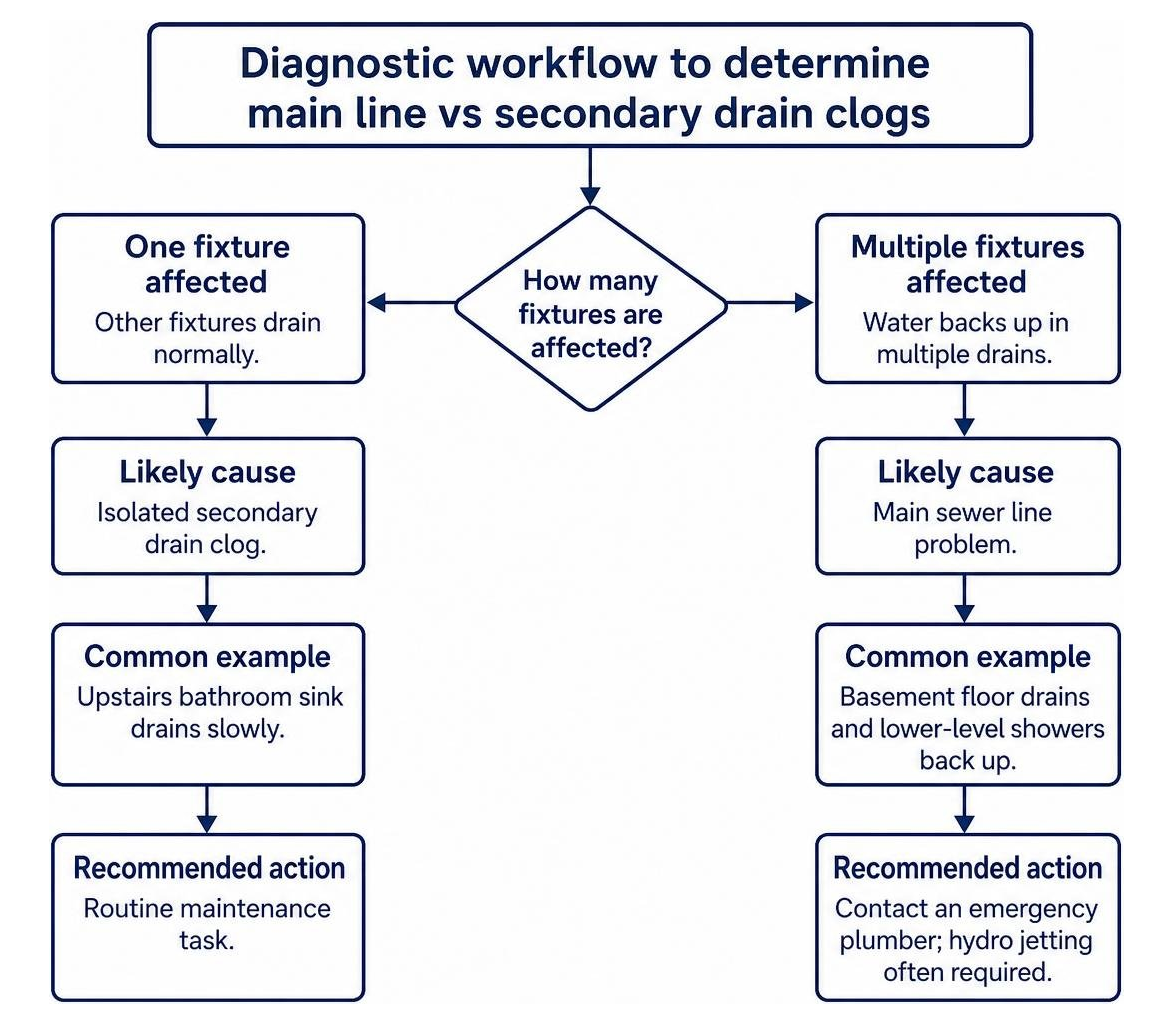
Main Line Clog vs. Secondary Drain Line Clog
Distinguishing between a localized branch line obstruction and a full main lateral failure helps you gauge the urgency of the problem:
- Secondary Branch Line Issue: This type of obstruction is isolated to a single fixture. If hair or soap residue clogs an upstairs vanity drain, your downstairs toilet and kitchen sink will continue to drain freely. These isolated clogs can typically be resolved during standard business hours with routine snaking.
- Primary Main Sewer Lateral Failure: Because your primary lateral carries total discharged wastewater from all internal fixtures to the city main, an obstruction in this pipe halts drainage for your entire property. Running water anywhere inside the house forces dirty water out of the lowest basement drains.
When multiple drains exhibit simultaneous failure, utilizing high-pressure hydro jetting is frequently the most effective method to clear heavy sludge, congealed grease, and invading tree roots before structural repairs begin.
What Causes Sudden Sewer Line Emergencies in Anchorage?
Subterranean sewer pipes in Anchorage, AK, endure intense geographic and climatic forces rarely encountered in other regions. Several distinctive subsurface factors accelerate pipe wear and cause abrupt lateral failures across the municipality:
- Frost heave and severe thermal cycling: As water within soil freezes, it expands with tremendous force, lifting and shifting ground layers. When the spring thaw arrives, the ground settles unevenly. This recurring cycle exerts intense shear stress on buried pipe connections, cracking brittle cast iron and displacing clay tile segments.
- Glacial till and permafrost settlement: The soil composition across Anchorage, AK, features dense glacial silt, gravel pockets, and occasional permafrost lenses. Localized settling in these soil profiles creates pipe bellies or sags, where standing water gathers, catches solid waste, and causes repeated blockages.
- Aggressive subarctic root intrusion: Resilient native trees, such as paper birch, balsam poplar, and white spruce, develop extensive lateral root systems seeking underground moisture. Roots detect microscopic moisture escaping from pipe joints, penetrating hairline cracks and forming dense root balls inside the pipe interior.
- Aging legacy pipe materials: Historic neighborhoods in Anchorage, AK, frequently rely on original vitrified clay, bituminous fiber, or unlined cast iron pipes installed several decades ago. These materials eventually reach the end of their operational lifespan, suffering from interior corrosion, wall thinning, and structural collapse.
- Grease coagulation in cold ground: Low subterranean ground temperatures chill wastewater rapidly. Cooking fats, oils, and grease poured down kitchen drains solidify against cold lateral walls, accumulating into rock-hard obstructions that restrict normal flow.
Understanding these regional risks allows homeowners to take timely precautions against severe ground freezing and shifting soil.
Subsurface Climate Factors and Sewer Burial Depths
To safeguard subterranean piping from prolonged sub-zero air temperatures, the Municipality of Anchorage enforces strict building and plumbing standards. Gravity sewer laterals must maintain a minimum burial depth of 8 feet, with certain pressure lines requiring up to 10 feet of cover. Furthermore, municipal engineering codes require standard 4-inch gravity sewer laterals to maintain a minimum slope of 2.08 percent to promote self-scouring velocity.
Even with deep burial, intense cold snaps can penetrate deep into disturbed backfill around foundations. If an underground line shifts or cracks from frost movement, wastewater leaks into surrounding soil, washing away stability and threatening foundation footers.
Private Lateral vs. Municipal Sewer Responsibility
Determining maintenance responsibilities during a sewer backup depends on where the physical failure occurs relative to property boundaries:
- Private Service Lateral (Homeowner Responsibility): The property owner owns and maintains the sewer service lateral from the interior foundation wall of the house all the way to its physical tap at the municipal sewer main under the street. Property owners bear full financial responsibility for cleaning, thawing, repairing, and replacing this private pipe.
- Public Sewer Main (Municipal Responsibility): The Anchorage Water and Wastewater Utility maintains public collection mains running beneath public roadways and municipal utility easements. If an issue originates within the main collection header, municipal utility workers are dispatched to address the public infrastructure.
Property owners can review the AWWU’s sewer service FAQs for official utility guidelines and emergency reporting steps.
Anchorage Sewer Repair: Choosing Between Trenchless and Traditional Methods
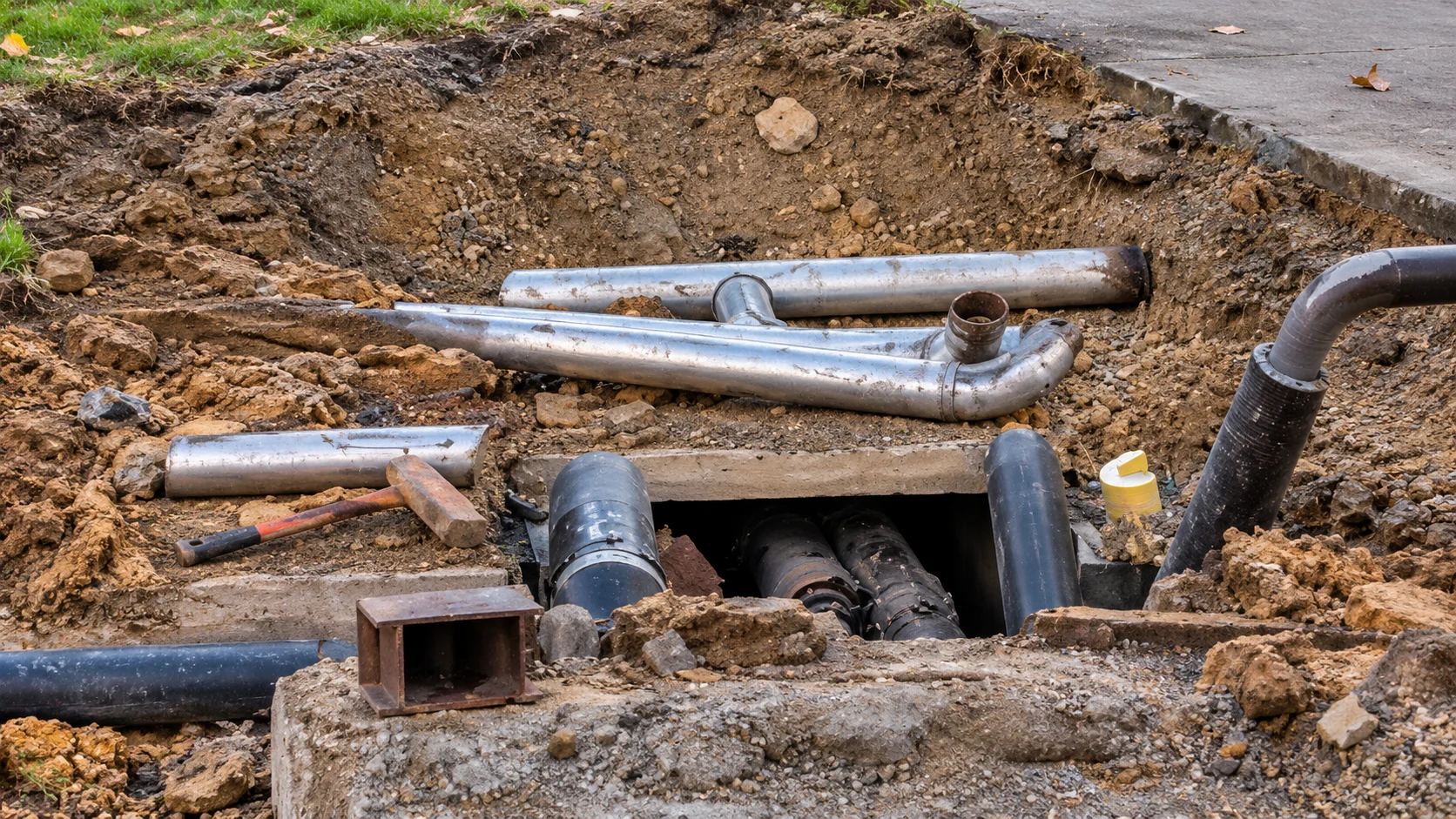
When a sewer lateral suffers structural failure, homeowners previously had no alternative to extensive, disruptive yard excavation. Modern no-dig pipe rehabilitation technologies now provide durable, non-invasive solutions that preserve mature trees, paved driveways, and custom hardscaping.
| Feature / Factor | CIPP Pipe Lining | Pipe Bursting | Traditional Open-Trench Excavation |
|---|---|---|---|
| Primary Mechanism | Epoxy-saturated liner cured inside host pipe | Pulls new HDPE pipe while bursting old host pipe | Backhoe excavation to dig up and replace old pipe |
| Surface Disruption | Minimal using existing cleanout points | Minimal requiring small entry and exit pits | Extensive full-length trenching across yard |
| Best Application | Cracked, leaking, or root-damaged lines | Collapsed, sheared, or undersized pipes | Severe bellies, reverse slope, complete line crush |
| Durability | Multi-decade jointless structural renewal | High-strength seamless polyethylene line | High with new pipe, but disturbs surrounding soil |
| Anchorage Soil Impact | Bypasses frozen, rocky surface layers | Bypasses surface frost and rocky till | High excavation labor due to deep 8-10 foot depths |
CIPP Lining and Pipe Bursting Solutions
Trenchless rehabilitation uses specialized equipment to rebuild or replace damaged sewer pipes from existing access points:
- Cured-In-Place Pipe (CIPP) Lining: Technicians introduce a flexible, resin-impregnated felt liner into the existing host pipe through a cleanout access point. Once positioned, the liner is expanded using compressed air or water and cured into place. This process creates a smooth, seamless, joint-free interior pipe that halts root intrusion and seals structural cracks without disturbing surface soils. Localized pipe patches can also target isolated fractures without relining the full length.
- Pipe Bursting: When a pipe has collapsed completely or requires increased diameter, pipe bursting provides an ideal solution. A high-powered pneumatic bursting head is pulled through the old line, fracturing the degraded clay or cast iron outward into surrounding soil while immediately drawing a continuous, seamless High-Density Polyethylene (HDPE) pipe into place behind it.
Property owners who want to restore their plumbing without destroying driveways or landscaping frequently opt for trenchless sewer repair to achieve long-term durability.
When Full Pipe Replacement Is Unavoidable
Trenchless approaches work exceptionally well in many situations, but certain pipe conditions require traditional open-trench excavation. If a sewer lateral has suffered a severe ground collapse, contains substantial backfall (where wastewater is forced uphill due to soil shifting), or exhibits extreme sags from permafrost settlement, physical excavation is necessary to re-grade the bedding material and establish proper gravitational slope.
Deep open-trench excavation in Anchorage, AK, requires heavy machinery, certified shoring boxes, and experienced operators capable of navigating frozen topsoil and rocky glacial till safely. For failures that require excavation or structural rehabilitation, Drain Masters provides comprehensive sewer repair services tailored to the condition of the line.
Step-by-Step Sewer Restoration Process and Pricing
Restoring a damaged sewer line involves a methodical, multi-step engineering process designed to eliminate blockages, correct structural faults, and verify line integrity:
- High-Definition Video Camera Inspection: Technicians guide a specialized, self-leveling fiber-optic camera down your cleanout. This camera maps the exact depth, physical location, and internal condition of the line, identifying root penetration, offset joints, cracks, or foreign obstructions.
- Mechanical Cleaning and High-Pressure Washing: Technicians use specialized mechanical cutting blades or high-velocity water jets to eliminate grease, scale, and invading tree roots, ensuring the pipe walls are clean and ready for lining or repair.
- Targeted Structural Repair: Depending on the diagnostic findings, technicians perform localized spot repairs, pull a continuous CIPP liner, execute a pipe burst, or excavate and replace failed sections with modern pipe materials.
- Final Post-Repair Verification: A secondary video inspection is completed to confirm continuous structural alignment, smooth joint transitions, and unobstructed flow toward the municipal collection main.
Average Costs and Regulations for Anchorage Sewer Repair
The total investment required to rehabilitate a sewer lateral in Anchorage, AK, depends on several specific site variables. These include the physical burial depth of your pipe (routinely 8 to 10 feet), the total linear footage, ground frost depth, accessibility obstacles such as concrete driveways, and whether trenchless lining or open-trench excavation is selected. Localized drain cleanings and minor spot repairs represent smaller investments, whereas complex full-length structural replacements requiring heavy excavation represent larger infrastructure projects.
All sewer repairs in Anchorage, AK, must adhere strictly to local plumbing codes. Replacements require building permits, official municipal inspections, adherence to grade standards, and the placement of continuous metallic tracer wire alongside non-metallic pipes to assist future utility locating crews.
To make essential sewer replacements manageable, property owners can look into flexible financing solutions designed for home utility upgrades.
Preventive Strategies to Avoid Future Sewer Emergencies
Implementing consistent maintenance habits helps you avoid sudden sewer line backups and costly emergency repairs. If recurring stoppages continue after a clearing, this explanation of why a sewer line can keep clogging can help you recognize when a professional evaluation is needed:
- Dispose of personal wipes and hygiene items in the trash: Even products marketed as flushable do not break down in cold sewer systems. Wipes combine with congealed grease to create dense blockages.
- Keep fats, oils, and cooking grease out of sinks: Always allow cooking oils and pan grease to cool before placing them in the household trash. Pouring hot grease down kitchen drains coats cold underground pipes.
- Schedule annual drain maintenance: Regular inspections and hydro jetting remove scale and minor root growth before they develop into full structural clogs.
- Protect vulnerable plumbing from freezing air: Ensure crawl space vents are insulated, heat trace cables remain functional, and foundation penetrations are sealed against drafts.
Frequently Asked Questions About Anchorage Sewer Emergencies
How do I know if my sewer problem in Anchorage is a true emergency?
A true emergency occurs when raw sewage backs up into your home, wastewater rises from basement floor drains, or multiple plumbing fixtures bubble and overflow at the same time. These situations pose immediate health hazards and require professional attention.
Why are sewer lines in Anchorage buried deep?
Anchorage municipal code requires gravity sewer lines to be buried at a minimum depth of 8 feet, and 10 feet for pressure lines, to place them below the winter frost line and prevent seasonal freezing.
What is the difference between trenchless sewer lining and pipe bursting?
Trenchless CIPP lining inserts an epoxy-saturated sleeve inside an existing structurally sound pipe, creating a jointless pipe-within-a-pipe. Pipe bursting pulls a heavy-duty cutting head through a severely damaged or collapsed pipe, fracturing the old line while simultaneously pulling a new, seamless HDPE pipe in its place.
Who is responsible when a sewer line backs up in Anchorage?
The property owner is responsible for repairing and maintaining the private service lateral from the home all the way to its connection at the municipal sewer main. The local utility is responsible for public collection mains located in streets and municipal easements.
Can a main sewer pipe freeze during an Anchorage winter?
Yes. Although pipes are buried deep, severe cold snaps combined with improper slope, frost heave shifting, drafts in unheated crawl spaces, or slow wastewater trickles can cause ice dams to form inside sewer laterals.
How much does sewer line repair typically cost in Anchorage?
Costs vary depending on pipe depth, accessibility, the extent of structural damage, and whether trenchless methods or open-trench excavations are used. Minor repairs and clearings require less labor than complete sewer lateral replacements.
What causes clay and cast iron sewer pipes to fail in Alaska?
Older clay and cast iron pipes degrade over decades from interior corrosion, shifting soil caused by frost heave, ground settlement near permafrost layers, and tree roots penetrating vulnerable pipe joints.
How does hydro jetting resolve sewer main clogs before repair?
Hydro jetting utilizes specialized nozzles that spray high-pressure water forward and backward through the pipe, slicing through dense tree roots, scouring away grease buildup, and clearing debris so repair liners can bond securely.
Do I need a permit for sewer repair in Anchorage?
Yes. Structural sewer repairs, sewer taps, and pipe replacements require permits and inspections under Municipality of Anchorage building and plumbing codes to ensure correct pipe materials, slopes, and tracer wire installations.
How long does trenchless sewer pipe lining last?
High-quality CIPP epoxy lining creates a structural, seamless barrier designed to resist corrosion, chemical degradation, and root intrusion for decades under standard residential usage.
Conclusion
When a sewer backup threatens your property, prompt action limits water damage and shields your household from harmful biological hazards. Whether you are dealing with aggressive root intrusion, frost heave joint separation, or an unexpected main line collapse, working with qualified professionals helps restore your drainage network safely and durably. At Drain Masters, our family-owned team brings more than twenty years of local expertise, responsive service and advanced diagnostic tools to every project. For urgent help or a thorough assessment, contact our professional sewer repair technicians to schedule an on-site camera inspection today.