
What a Sewer Camera Inspection Service Actually Does (And Why It Matters)
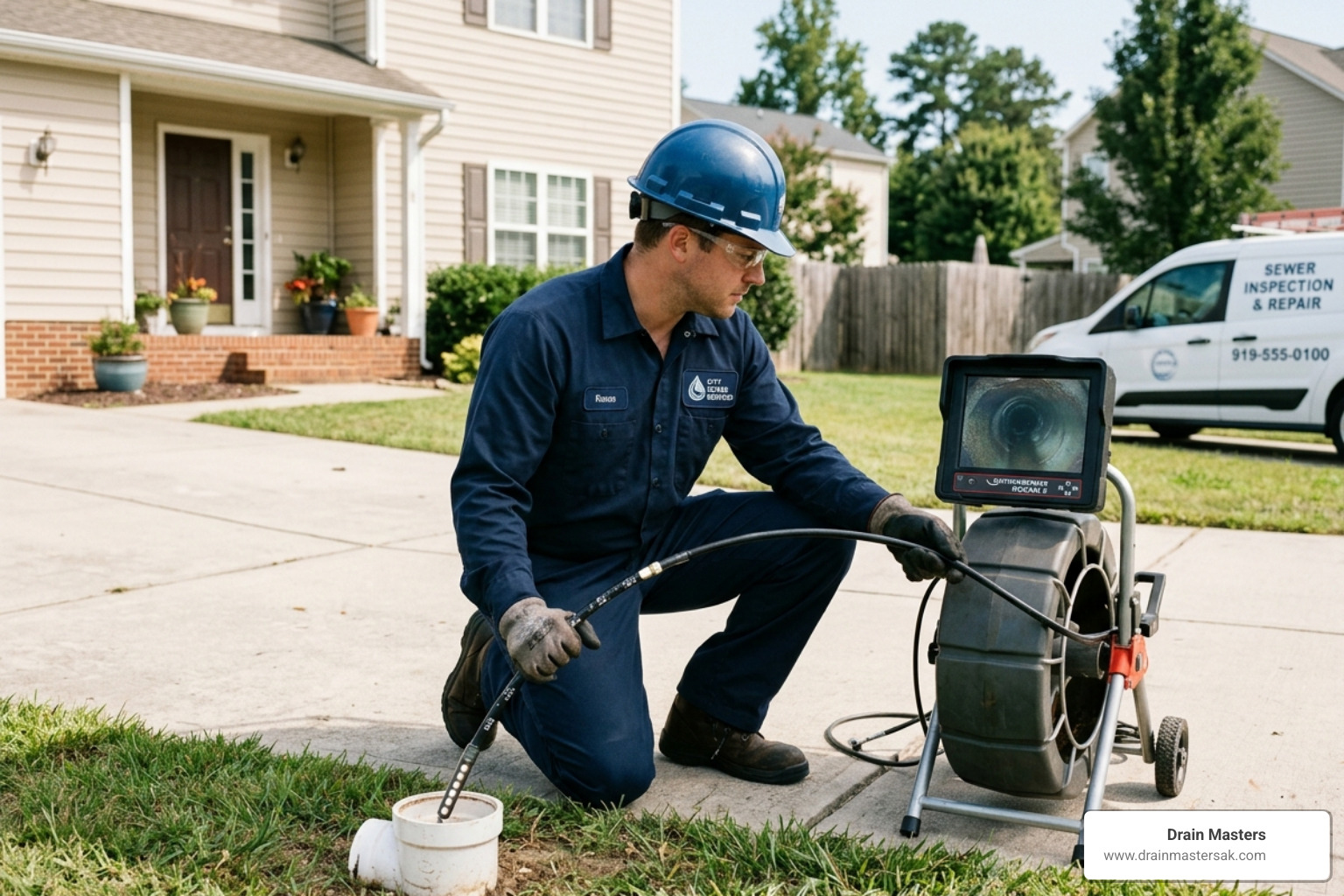
A sewer camera inspection service uses a waterproof, high-definition camera on a flexible cable to travel through your pipes and show exactly what’s happening inside, with no digging required.
Here’s what you need to know at a glance:
| Question | Quick Answer |
|---|---|
| What is it? | A camera is fed into your pipes to give a live, real-time video view of the interior |
| What does it find? | Clogs, cracks, root intrusion, corrosion, collapsed sections, and misaligned pipes |
| How long does it take? | Usually 30 to 60 minutes for most residential lines |
| How much does it cost? | Pricing varies based on the line length, access point, and complexity of the inspection |
| Is it safe for pipes? | Yes, completely non-invasive, with no cutting or drilling |
| When should you get one? | Recurring clogs, slow drains, bad odors, before buying a home, or every 18 to 24 months for maintenance |
One minute your drains seem slow. The next, you’re dealing with a full sewer backup and standing water. That’s the problem with underground pipes because you can’t see what’s wrong until it’s already a crisis.
A video pipe inspection changes that. Instead of guessing or digging up your yard, a trained technician can pinpoint the exact problem and location in under an hour.
The Drain Masters team brings more than two decades of sewer and drain experience to every sewer camera inspection service. The team helps homeowners identify small pipe problems before they become expensive emergencies. This guide explains how the process works, what it can find, and when an inspection may help.
What is a Sewer Camera Inspection Service and How Does It Work?
At its core, a sewer camera inspection service is like giving your plumbing system a colonoscopy. Drain Masters technicians use advanced inspection technology to see into areas that are otherwise impossible to reach without heavy machinery.
The process begins with a high-definition, waterproof HDR (High-Dynamic-Range) camera head. This camera is mounted on a flexible fiber-optic cable that is sturdy enough to push through long stretches of pipe but flexible enough to navigate the twists and turns of your home’s waste system. As the technician feeds the cable into a plumbing cleanout or an accessible drain, the camera transmits a real-time video feed to a high-resolution monitor.
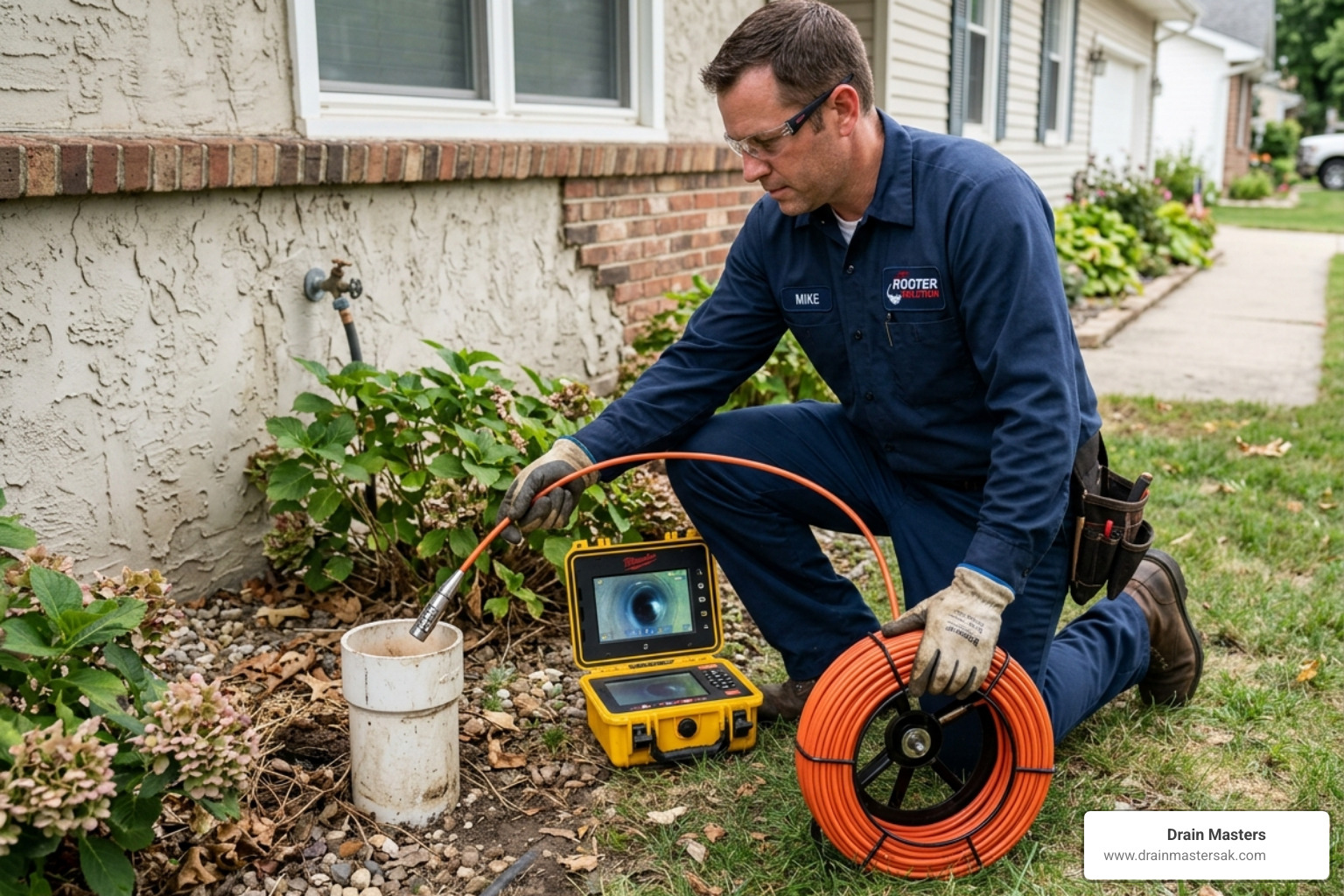
One of the coolest parts of modern inspection technology is something called Sonde technology. The camera head is equipped with a high-frequency signal transmitter. While the camera is underground, the team uses a digital locator wand on the surface to pick up that signal. This allows the team to pinpoint the camera’s exact position and depth within a small margin of error. If the inspection identifies a break 12 feet underground and 40 feet from the home, the team can mark the appropriate repair area.
This level of precision is why an in-depth sewer camera inspection is the gold standard for modern diagnostics. We can navigate pipes ranging from 2 inches to 36 inches in diameter, capturing up to 50 feet or more of sewer line in a single pass. For larger commercial lines, we even use robotic crawlers that can travel over 1,600 feet. If you want a general overview of how underground utility locating works, the background on utility locating offers helpful context.
When recurring drain problems point to a hidden line issue, Drain Masters’ sewer camera inspection service can provide a clear view before a repair plan is recommended.
Common Issues Detected by Video Pipe Inspections
If you’ve ever wondered what’s actually causing that “glug-glug” sound in your drains, a camera inspection provides the answer. In Anchorage, our unique soil conditions and cold winters can put a lot of stress on underground infrastructure.
Here are the most common “villains” we unmask during a sewer camera inspection service:
- Invasive Tree Roots: This is the number one issue we see. Roots are naturally drawn to the moisture and nutrients inside sewer lines. They can enter through tiny cracks or loose joints and grow into massive, pipe-blocking “root balls.”
- Pipe Corrosion and Deterioration: For homes built before 1980, cast iron or clay pipes are common. Over time, these materials can corrode, rust, or become brittle, leading to “scale” buildup that snags debris.
- Bellied Lines: A “belly” occurs when a section of the pipe sinks due to soil erosion or shifting ground. Water and waste pool in this low spot, leading to chronic clogs.
- Offset Joints: Over time, the sections of your pipe can shift out of alignment. This creates a “lip” that catches waste and eventually causes a total blockage.
- Structural Collapses: In severe cases, the pipe simply gives way. A camera inspection can confirm if the pipe is still intact or if it has completely caved in.
- Grease and Debris Buildup: Especially in kitchen lines, hardened grease can narrow the pipe’s diameter until almost nothing can pass through.
For examples of what technicians may uncover during an inspection, this overview of common Anchorage plumbing camera findings explains how video evidence can clarify the next step.
Why You Need a Sewer Camera Inspection Service Before Buying a Home
Buying a home is the biggest investment most of us will ever make. You wouldn’t buy a car without looking under the hood, yet many people buy homes without looking at the sewer line. A standard home inspection usually doesn’t include the underground pipes.
In Anchorage, where many homes have aging infrastructure, a pre-purchase sewer camera inspection service is a lifesaver. It reveals hidden liabilities like cracked laterals or root-choked lines that could cost you $10,000 or more immediately after moving in. Having a digital recording of the pipe’s health gives you incredible leverage during real estate negotiations. You can ask the seller to repair the line or lower the asking price before you sign on the dotted line.
For a closer look at the timing and value of a pre-purchase inspection, the Anchorage sewer inspection guide outlines key questions to consider before closing.
How a Sewer Camera Inspection Service Protects Your Landscaping
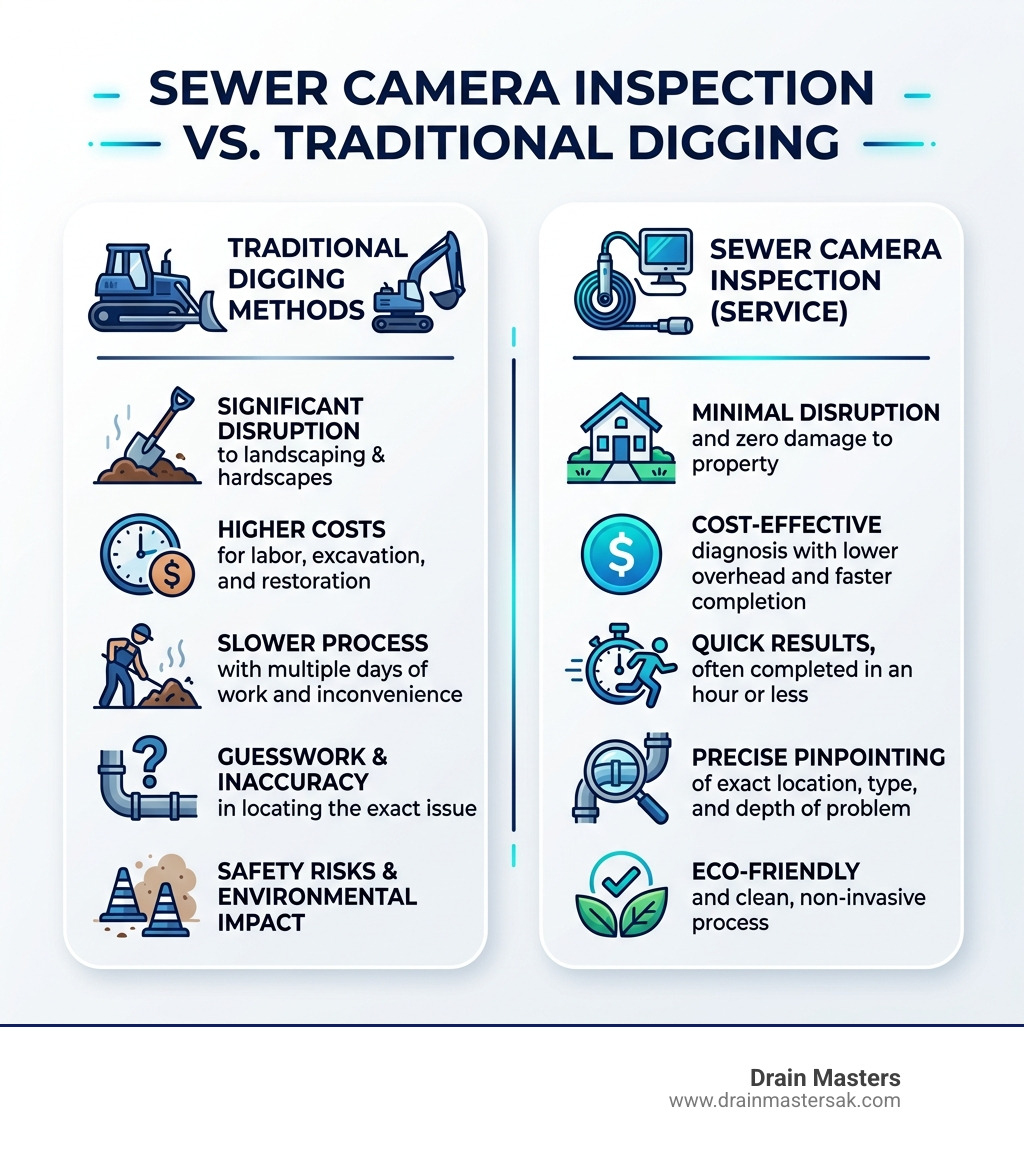
In the old days, if you had a sewer problem, plumbers had to play a guessing game. This usually involved “exploratory digging,” basically trenching up your yard until they found the leak. It was messy, expensive, and devastating to your landscaping.
Modern video diagnostics follow the “Know Before You Dig” principle. By using precision locating, the team can identify the exact spot of the failure. If repair is needed, Drain Masters can review the appropriate options for pipe repair and replacement while limiting disruption to a small, specific area instead of the entire lawn or driveway.
| Feature | Video Camera Inspection | Traditional Exploratory Digging |
|---|---|---|
| Accuracy | Pinpoint precision (within inches) | General guesswork |
| Property Damage | None (non-invasive) | Significant (trenches, ruined grass) |
| Time | 30–60 minutes | Hours or days |
| Cost | Typically more predictable, with fewer restoration-related expenses | Can increase significantly due to excavation, labor, and landscaping restoration |
| Evidence | HD video recording | Visual confirmation only after digging |
The Step-by-Step Process of a Professional Video Inspection
When the Drain Masters team arrives at your home for a sewer camera inspection service, technicians follow a systematic process to ensure nothing is missed.
- Access Point Identification: First, the technician locates the “cleanout,” which is a capped pipe that provides direct access to your main sewer line. If a cleanout isn’t available, the technician may access the system through a roof vent or by temporarily removing a toilet.
- Camera Insertion: The technician gently guides the high-resolution camera into the line. Drain Masters’ equipment can handle pipes from 2 to 36 inches in diameter, making it suitable for everything from a small sink drain to a main municipal line.
- Full-Length Navigation: The technician guides the camera through the entire length of the pipe, usually all the way to the city main or your septic tank.
- Real-Time Analysis: As the camera moves, the technician watches the monitor for signs of trouble. Homeowners can watch the inspection in real time while the technician points out any cracks, roots, or bellies that appear on screen.
- Digital Recording: The entire inspection is recorded. This digital footage serves as a permanent record of your pipe’s condition, which is helpful for insurance claim support or future maintenance comparisons.
- Post-Repair Verification: After a cleaning or repair, the technician runs the camera through one last time to prove the line is 100% clear and the repair is sound.
When to Schedule a Sewer Line Inspection
Don’t wait for a “geyser” in your basement to call a professional. There are several warning signs that suggest your pipes need a professional look:
- Recurring Clogs: If you’re snaking the same drain every few months, you aren’t fixing the problem; you’re just poking a hole in it.
- Slow Drains: If all the sinks and tubs in your house are draining slowly, the issue is likely in the main sewer line.
- Sewage Odors: A healthy sewer system should be airtight. If you smell “rotten eggs” in your yard or basement, there’s a leak or a vent issue.
- Soggy Patches in the Yard: Extra-lush, green grass or wet spots when it hasn’t rained are classic signs of a leaking underground pipe.
- Gurgling Toilets: If your toilet bubbles when you run the shower, your pipes are gasping for air due to a blockage.
- Older Homes: If your home was built before 1980, you are statistically at a much higher risk for pipe failure. Over 42% of homes in some service areas are in this “high-risk” age bracket.
For preventative maintenance, we recommend a sewer camera inspection service every 18 to 24 months. This allows us to catch small issues like hairline cracks before they become catastrophic collapses.
Frequently Asked Questions about Sewer Camera Inspection Services
How much does a sewer camera inspection cost?
Pricing for a sewer camera inspection service varies based on the line length, access point, and complexity of the inspection. If additional access or diagnostic work is needed, the overall cost may change. Drain Masters provides upfront pricing so you know what to expect before work begins.
How long does a sewer camera inspection typically take?
Most residential inspections are completed within 30 to 60 minutes. If the line is short and clear, it might only take 15 minutes. If we encounter multiple blockages or have to navigate a complex commercial system with robotic crawlers, it may take longer.
Is a sewer camera inspection invasive or damaging to pipes?
Not at all. The equipment consists of flexible, smooth rods and waterproof camera heads. There is no drilling, cutting, or high-pressure water involved in the inspection itself. It is 100% safe for all pipe materials, including PVC, clay, and cast iron.
Conclusion
A sewer camera inspection service is the smartest way to manage your home’s plumbing health. It eliminates the guesswork, protects your landscaping, and provides the visual evidence you need to make informed decisions about repairs. Whether you’re dealing with a stubborn clog, buying a new home in Anchorage, or just want the peace of mind that comes with preventative maintenance, the Drain Masters team can help.
Drain Masters is a family-owned business with over 20 years of experience serving the Anchorage, AK community. The team performs over 4,000 jobs annually, using advanced tools and high-definition technology to keep local pipes flowing freely. Drain Masters is known for honest assessments and dependable service.
Don’t let a hidden pipe issue turn into a costly disaster.
For help diagnosing a suspected line issue, contact our professional sewer camera inspection technicians.