
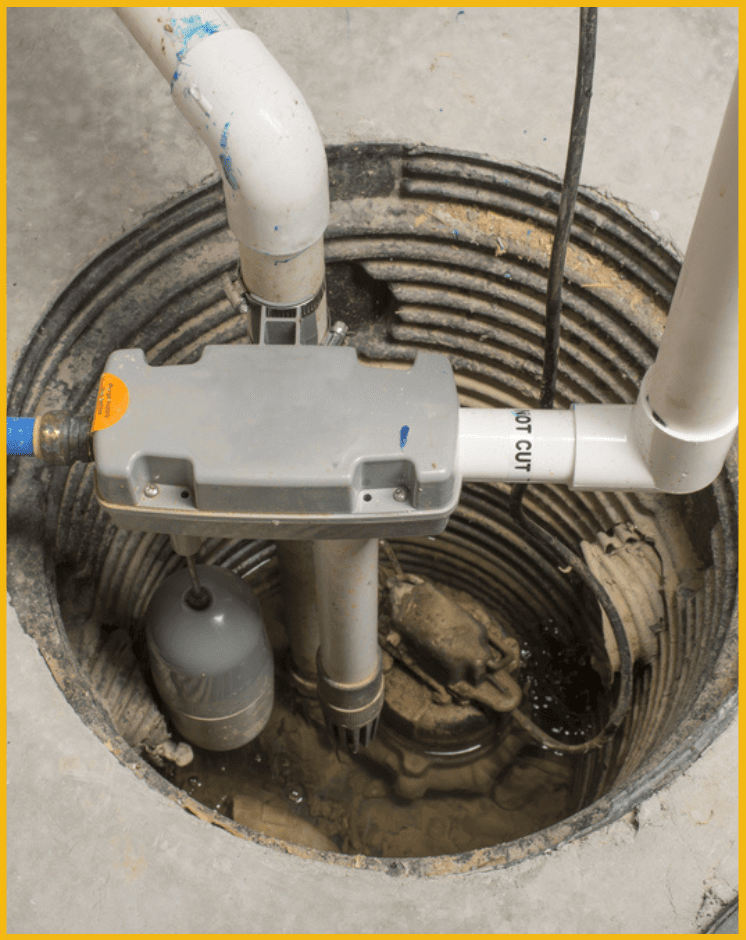
Finding Sump Motor Repair Near You in Anchorage, AK
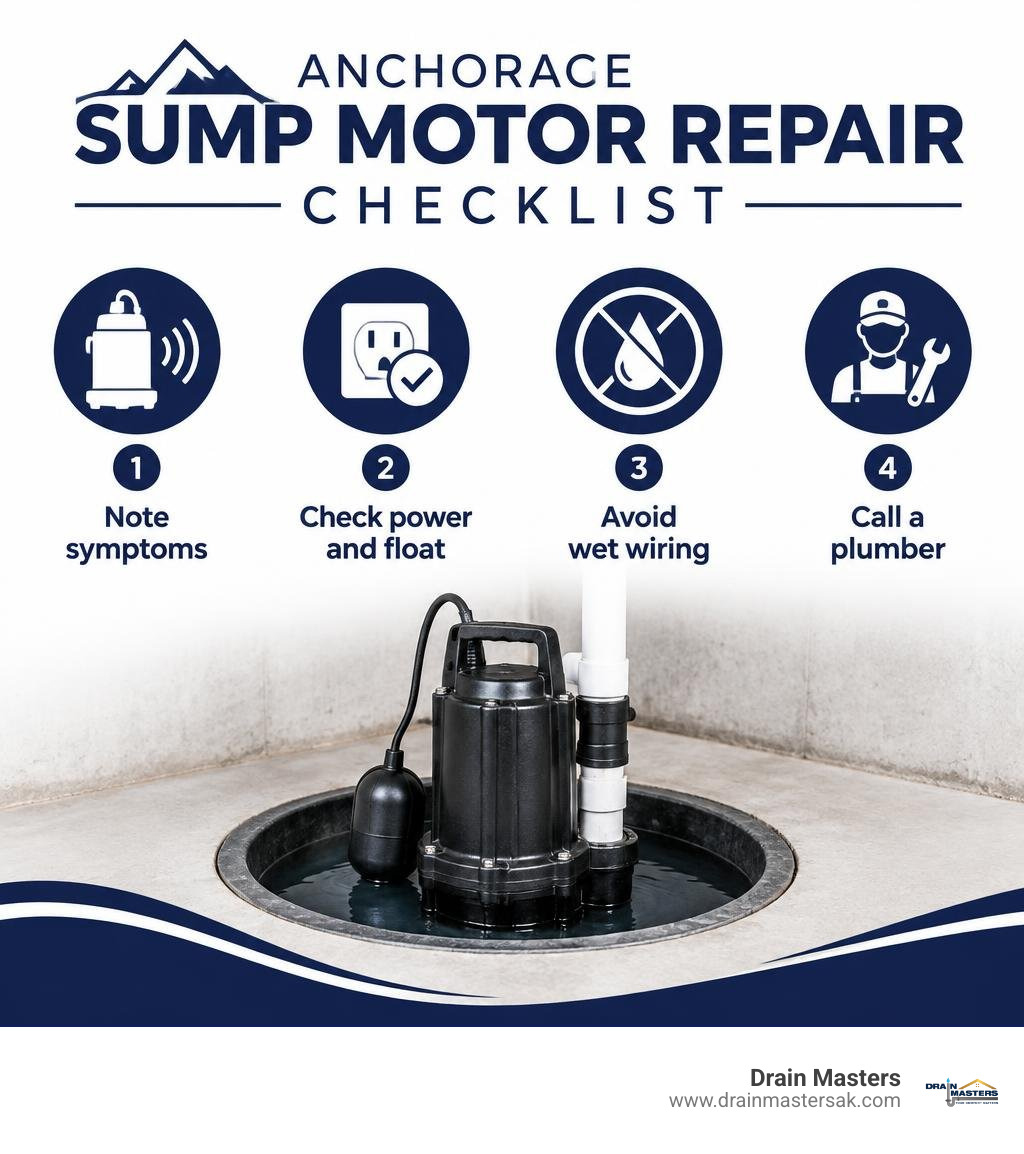
If you’re searching for sump motor repair near me in Anchorage, AK, contact Drain Masters and describe what the pump is doing: humming, running nonstop, or failing to start. You can check whether the outlet has power and the float moves freely, but leave motor and electrical repairs to a professional. If water is rising, stay away from wet electrical equipment and seek help promptly.
The family-owned Drain Masters team helps homeowners searching for sump motor repair near me recognize warning signs and understand which basic checks are safe before a service visit.
Primary Signs You Need Sump Motor Repair Near Me
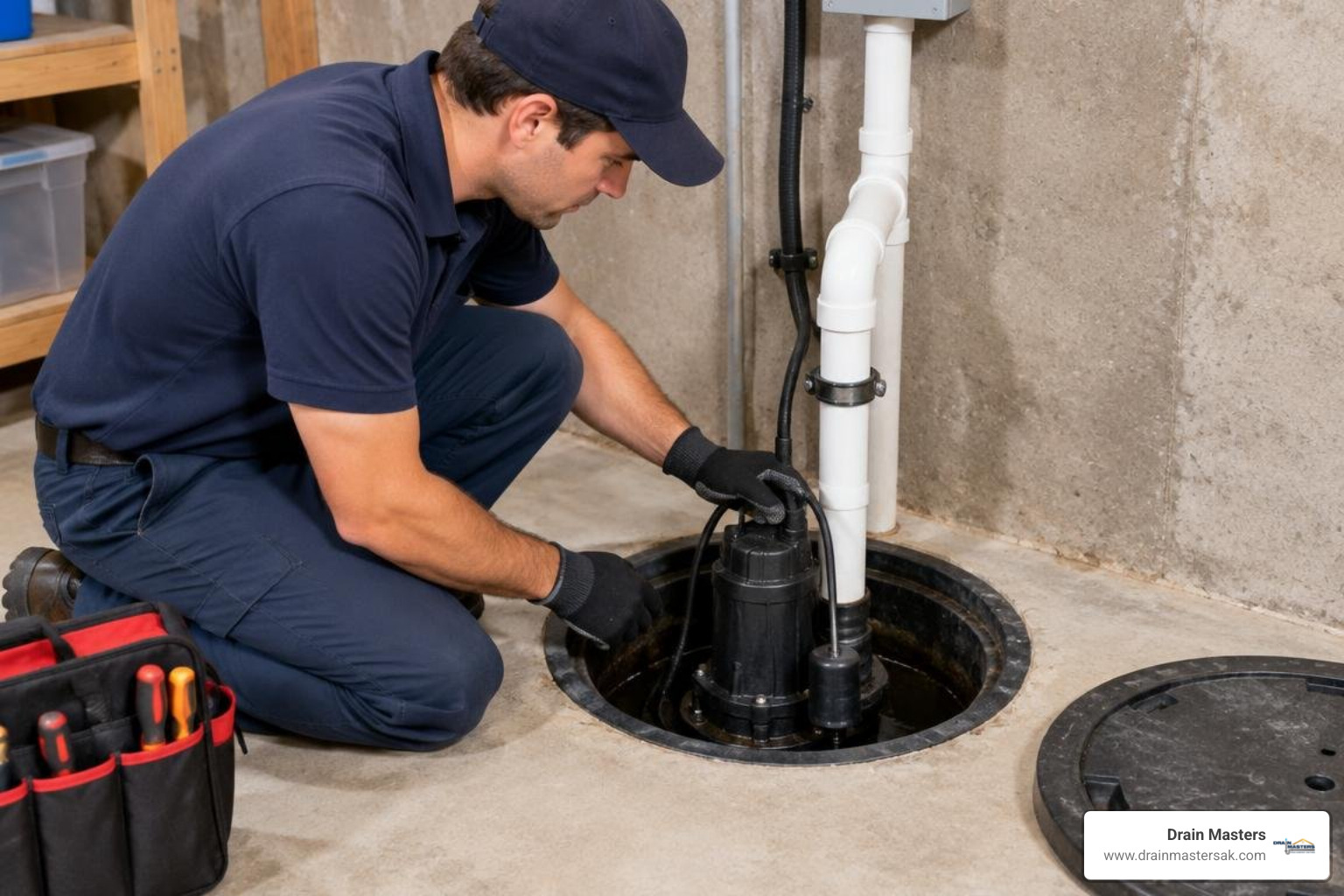
A failing sump pump rarely goes silent without giving off a few warning signals first. Because basements and crawlspaces stay tucked out of sight, homeowners often overlook initial mechanical symptoms until water begins pooling across the floor. Recognizing the early indicators of internal mechanical distress lets you address minor faults before they escalate into catastrophic foundation flooding.
When internal components degrade, the electric motor experiences irregular resistance, electrical imbalances, or mechanical binding. Addressing these issues early through reliable plumbing repairs prevents total motor burnout and keeps your home protected from severe sub-floor water damage.
Unusual Noises and Motor Humming
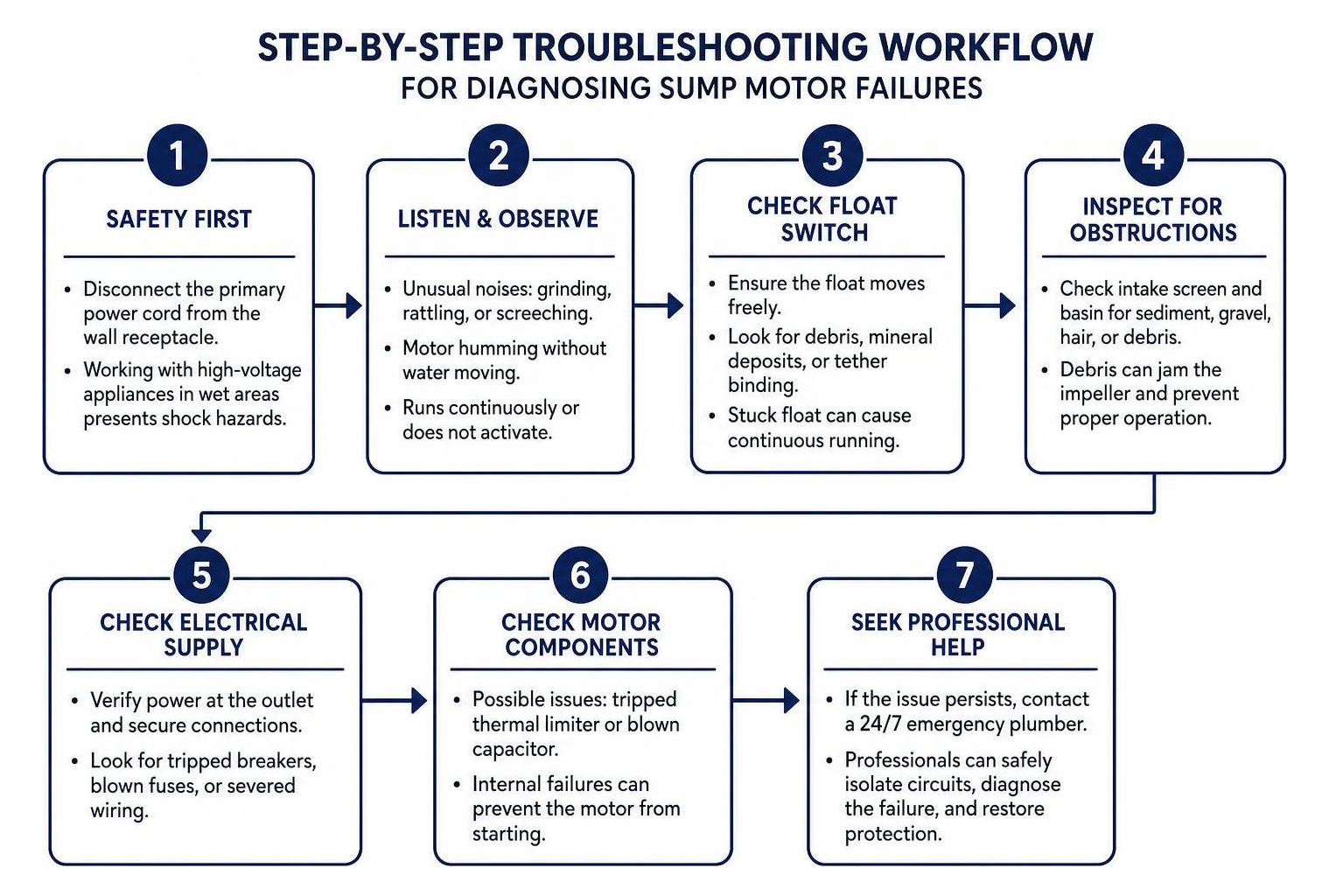
A healthy sump system emits a smooth, low-pitched hum while actively cycling water out of the pit. If you suddenly hear loud grinding, rattling, or metal-on-metal screeching, mechanical parts inside the housing have likely sustained damage.
Grinding sounds typically suggest that a hard foreign object, such as coarse gravel or renovation debris, has entered the volute and become lodged against the spinning impeller blades. When the impeller jams, the electric motor continues pulling electrical current to spin the drive shaft. This creates intense resistance, leading to a persistent electrical humming sound without any water moving through the discharge pipe. Running an electric motor against a locked impeller generates intense heat across the internal stator windings, leading to rapid motor burnout if not shut down immediately.
Continuous Running and Stuck Float Switches
A sump pump that runs without stopping is one of the most frequent service calls we handle across Anchorage, AK. While continuous cycling can occur during historic rainfall or rapid spring snowmelts, a pump that runs constantly in moderate conditions points to an underlying equipment malfunction.
In most cases, continuous operation stems from a mechanical failure within the float switch mechanism. The float switch acts as the brain of your unit, rising alongside incoming water to bridge an internal electrical contact that powers the motor. Over time, mineral deposits, physical debris, or vibrations can cause the float arm or tethered bulb to pin itself against the basin wall, keeping the switch engaged even after the pit is completely dry.
When a pump motor runs dry for extended periods, it loses the liquid cooling provided by surrounding water. This causes the internal seals to dry out, warp, and crack, ultimately destroying the motor’s watertight encapsulation.
Failure to Activate During Heavy Rain
Nothing is more alarming than looking into your sump pit during a heavy downpour and discovering standing water rising over the rim while the pump sits entirely unresponsive. A complete failure to activate can result from electrical supply disruptions, tripped internal thermal limiters, blown capacitors, or severed wiring.
If rising groundwater enters your living areas and the equipment fails to engage, avoid stepping into standing water near electrical panels or submerged wiring. Instead, reach out to an experienced emergency plumber who can safely isolate the electrical circuits, diagnose the source of the mechanical failure, and restore protection to your foundation.
Common Sump Pump Motor Malfunctions and Troubleshooting Steps
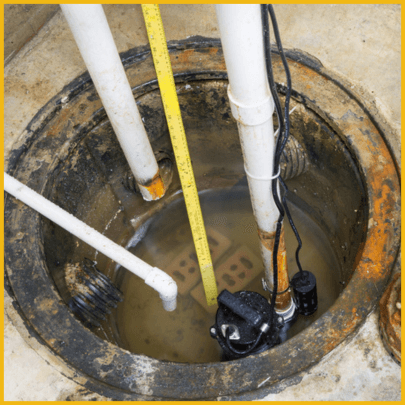
Troubleshooting an unresponsive or malfunctioning pump motor requires a systematic approach to isolate electrical faults from physical obstructions. While simple checks can be performed safely by homeowners, working with high-voltage appliances in wet basement environments presents genuine shock hazards.
Before inspecting any equipment, always disconnect the primary power cord from the wall receptacle. Our article on safe sump pump troubleshooting steps explains the preliminary checks homeowners can make without attempting electrical repairs.
Jammed Impeller and Debris Clogs
The impeller is the rotating disk fitted with curved vanes that accelerates water outward into the discharge pipe. Over months of regular operation, fine silt, gravel, hair, and small fragments accumulate at the bottom of the collection basin.
When the intake screen becomes coated in sediment, or when hard debris slips past the protective grates, the impeller binds tightly against the pump housing. To troubleshoot a suspected jam:
- Unplug the pump completely from its dedicated wall outlet.
- Disconnect the discharge pipe union and lift the pump assembly out of the basin.
- Inspect the bottom intake screen for visible blockages or mud buildup.
- Remove the base plate screws to access the impeller housing.
- Use a wooden dowel or gloved fingers to rotate the impeller manually, clearing out any trapped stones or debris.
- Clean the basin floor thoroughly before lowering the unit back into position.
Electrical Tripping and Thermal Overload
When an electric motor draws significantly more amperage than its circuit is rated to handle, your home’s electrical panel will trip the dedicated circuit breaker to prevent an electrical fire. Frequent breaker trips often point to an internal short within the motor windings, a deteriorated power cord, or an overburdened electrical circuit sharing heavy appliances like HVAC or AC equipment.
Sump pump motors are equipped with internal thermal overload switches designed to shut the unit off before extreme heat melts the internal insulation. If your motor runs for two or three minutes, shuts off abruptly, and refuses to turn on until it cools down twenty minutes later, the thermal switch is actively tripping. This is usually caused by low incoming line voltage, an undersized extension cord creating resistance, or high mechanical friction inside the motor casing.
Sump Motor Repair Near Me for Worn Capacitors and Bearings
Inside single-phase induction pump motors, a start capacitor provides the initial burst of electrical torque needed to overcome resting inertia and spin the motor shaft. Over years of repetitive starting cycles, capacitors degrade, lose their capacitance, or rupture internally. When a start capacitor fails, the motor will hum loudly and pull high current, but the shaft will not begin spinning on its own.
Similarly, the upper and lower motor bearings keep the central rotor spinning smoothly within the magnetic field of the stator. When water penetrates the mechanical shaft seals, it washes away lubricating grease and corrodes the steel ball bearings. Worn bearings produce high-pitched screeching sounds, generate intense frictional heat, and place excessive drag on the motor.
If you suspect bearing degradation or capacitor failure, consult a qualified motor repair professional to perform high-voltage testing and seal replacements safely.
Comparing Sump Pump Types and Mechanical Configurations
Selecting the correct mechanical configuration is vital for long-term reliability and manageable maintenance. Sump pumps installed in residential structures fall primarily into two mechanical categories: submersible pumps and pedestal pumps. Each design places different physical demands on the electric motor, affecting how heat dissipates and how long internal parts survive.
| Feature | Submersible Sump Pumps | Pedestal Sump Pumps |
|---|---|---|
| Motor Location | Sealed inside basin, underwater | Mounted on a column above the pit |
| Cooling Mechanism | Surrounding basin water and oil bath | Ambient air circulation |
| Noise Level | Extremely quiet operation | Moderately loud motor hum |
| Space Requirement | Requires wider, deeper basin | Fits into narrow, shallow sumps |
| Solids Handling | Excellent (handles small solids) | Limited (clean water only) |
| Lifespan | 7 to 10 years on average | 10 to 15 years on average |
| Maintenance Access | Requires pulling unit from pit | Motor easily accessible above pit |
Submersible vs. Pedestal Pump Motors
Submersible sump pumps house both the electric motor and the fluid impeller inside a single, hermetically sealed casing that rests directly at the bottom of the water pit. The motor is submerged in a non-conductive, dielectric oil bath that transfers heat directly to the outer cast-iron or stainless-steel casing, which is then cooled by the surrounding groundwater. This liquid cooling allows submersible motors to achieve high horsepower ratings in compact footprints while operating with minimal noise. However, because the motor sits submerged, mechanical seal failure inevitably leads to motor destruction.
Pedestal pumps position the electric motor atop a long vertical shaft, elevating the electrical components well above the maximum water line of the basin. Only the lower impeller casing and intake screen sit submerged in water. Because the motor relies on ambient air circulation for cooling, it can run for extended cycles without water-cooling dependency, resulting in longer overall motor lifespans. The primary drawbacks are increased operating noise and vulnerability to physical damage or moisture from damp basement environments.
Battery Backup and Secondary Systems
A primary sump pump is only as reliable as the electrical grid powering it. Severe weather events frequently knock out municipal power grids precisely when groundwater inflows reach peak levels. Installing a dedicated battery backup pump system ensures continuous protection when primary AC power drops out.
Backup systems feature secondary, direct-current (DC) pump motors wired to deep-cycle marine batteries and intelligent charging stations. If the main motor fails due to mechanical seizure, switch failure, or power loss, a secondary float switch engages the DC motor automatically. A properly sized pit is important when adding a secondary pump, and our sump basin selection article explains how basin diameter affects the space available for both assemblies.
Sump Pump Motor Repair vs. Replacement Decision Guide
Deciding whether to repair a malfunctioning motor or replace the entire pump assembly comes down to the unit’s age, physical condition, and the overall cost of replacement parts. While repairing an accessible external switch or clearing an impeller clog is straightforward, rebuilding sealed internal motor components often approaches the cost of a brand-new, warrantied system.
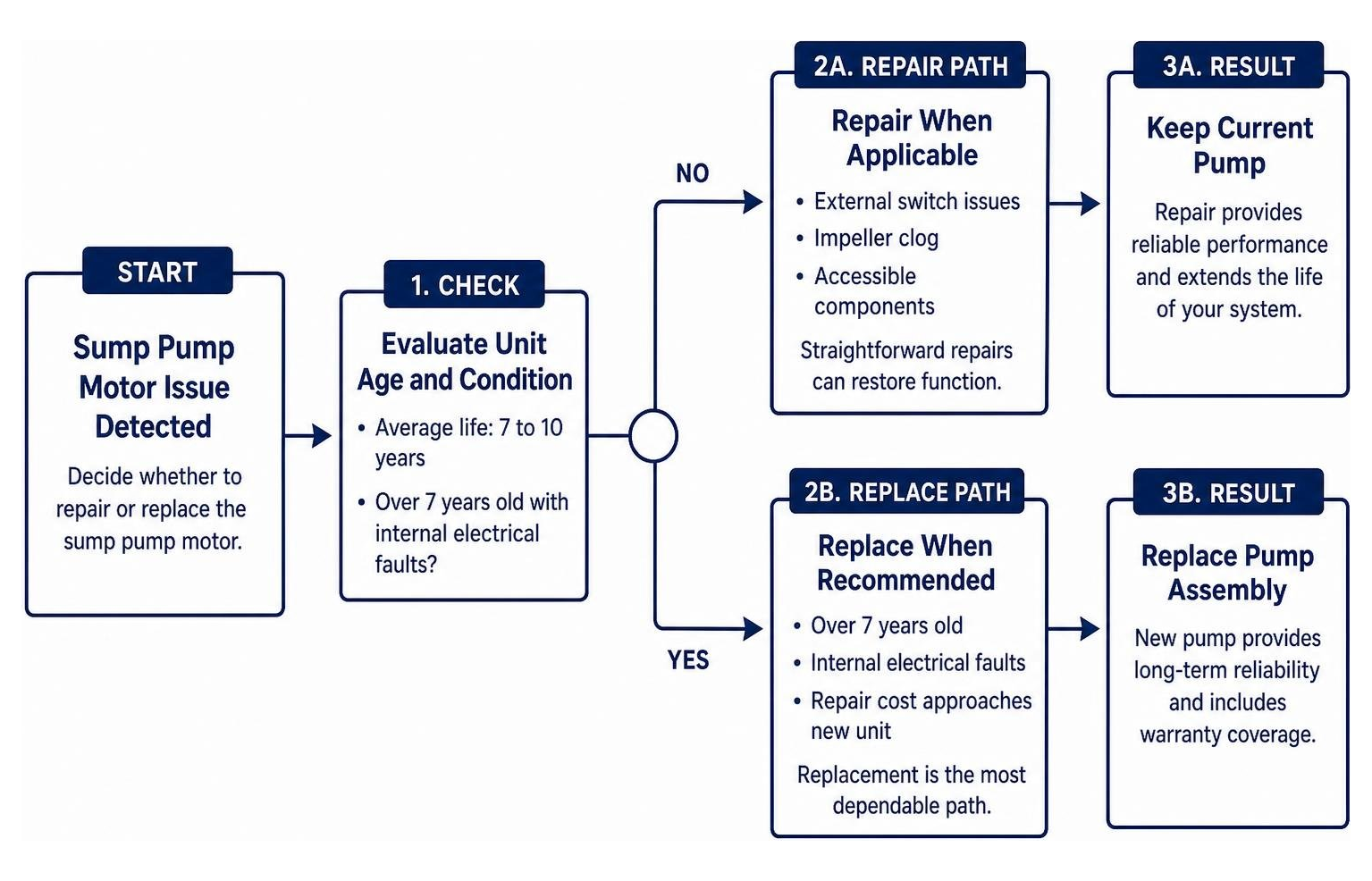
When weighing your options, scheduling an inspection with professional sump pump experts helps determine whether a targeted repair will provide lasting reliability or simply delay an inevitable failure.
Evaluating Unit Age and Lifespan
Most residential sump pumps have an average life expectancy of seven to ten years depending on usage frequency, water chemistry, and routine maintenance history. If your pump motor is over seven years old and experiences internal electrical faults, replacing the entire unit is the most dependable path forward.
Over time, constant exposure to moisture leads to severe rust and external housing corrosion. In areas with high mineral content or iron bacteria, thick orange slime coats the motor casing, trapping heat and seizing internal moving parts. Attempting to rebuild a motor with severe corrosion or deteriorated casing threads compromises the waterproof seal, increasing the risk of premature failure during the next major storm.
Cost Breakdown for Motor Fixes vs Replacement
When evaluating a repair quote, consider how labor rates compare against the cost of a new unit. Replacing an external float switch, check valve, or discharge coupling involves minimal labor and low component costs, making repair an economical choice.
Conversely, if the internal motor windings have burned out, or if water has breached the shaft seals, repairing the motor requires complete unit disassembly, specialized bearing pullers, replacement seals, and fresh dielectric oil. In almost every case involving an older pump, the combined labor and parts expenses for an internal motor rebuild exceed the cost of purchasing and installing a modern, energy-efficient replacement with a full manufacturer warranty.
Preventive Maintenance and Routine Testing Procedures
Proactive care is the most effective way to protect your basement from sudden water damage. Rapid snowmelt and rain can create water intrusion problems, so test your existing sump pump and check the discharge line before thaw conditions develop. Implementing regular preventative plumbing care helps catch minor mechanical friction, silt accumulation, or switch misalignments before seasonal rains begin.
- Inspect the power cord every six months for fraying, stiff insulation, or heat discoloration at the wall plug.
- Remove the basin lid quarterly to clear out accumulated mud, gravel, and organic debris.
- Check that the discharge pipe terminates at least ten feet away from the foundation walls.
- Ensure the discharge line has a downward slope to prevent standing water from freezing during cold winter months.
- Verify that the inline check valve closes tightly, preventing discharged water from flowing backward into the basin.
Step-by-Step Bucket Testing
Testing your sump pump manually takes less than ten minutes and provides immediate confirmation that the motor, float switch, and discharge piping are operating correctly.
- Locate a standard five-gallon bucket and fill it with tap water.
- Slowly pour the water directly into the sump basin, keeping the stream away from the float arm to simulate natural groundwater rise.
- Observe the float switch as the water level climbs; verify that it rises smoothly without snagging against the basin walls or discharge pipe.
- Listen for the motor to engage smoothly as the float reaches its activation threshold.
- Watch how quickly the water drains from the pit; a healthy motor should empty five gallons in under five seconds.
- Verify that the check valve prevents backflow when the motor cycles off, and ensure the float returns to its resting position without sticking.
Scheduling Professional Sump Motor Repair Near Me
While routine bucket tests and visual checks are simple for homeowners to perform, an annual professional inspection provides deeper diagnostic insight into your system’s health. Certified technicians utilize specialized diagnostic meters to measure operating amperage draw, check winding resistance, inspect check valve integrity, and test high-water alarm systems under full load conditions.
Investing in dependable local plumbing services ensures your flood-prevention systems are fully prepared to handle rapid seasonal transitions, sudden snowmelts, and heavy precipitation events without unexpected interruptions.
Frequently Asked Questions About Sump Pump Repairs
What are the common signs that my sump pump needs repair?
Common warning signs include unusual noises such as grinding, rattling, or loud humming, continuous running without shutting off, irregular cycling, visible rust or corrosion on the casing, high vibration during operation, and failure to turn on when water rises in the pit.
How much does sump pump repair typically cost?
Sump pump repair costs vary depending on the specific component that has failed, the accessibility of your basin, and whether electrical diagnostics are required. Minor fixes like float switch adjustments or check valve replacements are straightforward and economical, while complex internal motor repairs involve higher labor and component expenses.
How often should I have my sump pump serviced or inspected?
You should have your sump pump professionally inspected at least once a year, preferably in early spring before heavy rains and snowmelts begin. Additionally, homeowners should perform a quick bucket test every three to four months to confirm proper operation.
What is the average lifespan of a sump pump and when should I consider replacement?
The average lifespan of a residential sump pump is seven to ten years. If your pump is approaching or has exceeded ten years of service, requires frequent repairs, or struggles to keep up with incoming water, complete unit replacement is recommended.
Can I repair my sump pump myself or should I hire a professional?
Homeowners can safely handle basic maintenance tasks such as clearing surface debris from the basin, testing the float with a bucket of water, and checking the power connection. However, internal motor repairs, electrical troubleshooting, and component rewiring involve shock hazards and should always be handled by a certified plumbing professional.
What are the different types of sump pumps and which one is best for my home?
The two main types are submersible pumps and pedestal pumps. Submersible pumps are quieter, handle higher water volumes, and sit out of sight inside the basin, making them ideal for most finished basements. Pedestal pumps have an elevated motor that lasts longer in smaller, shallow basins where quiet operation is not a priority.
How do I test my sump pump to ensure it is working properly?
To test your pump, pour approximately five gallons of water into the sump basin until the float rises. The pump should turn on automatically, discharge the water quickly and smoothly, and shut off once the water level drops.
What maintenance does a sump pump require to prevent failures?
Routine maintenance includes cleaning dirt and debris from the basin floor, clearing the pump intake screen, verifying that the check valve prevents backflow, ensuring the discharge line outside is unobstructed, and checking that the float switch moves freely without catching.
Do I need a battery backup for my sump pump?
Yes, installing a battery backup system is highly recommended. Severe storms that cause high groundwater inflows frequently knock out municipal power grids. A battery backup ensures your sump system continues pumping water even during prolonged electrical outages.
What should I do if my sump pump stops working during a storm?
If your pump stops during a storm, first check your electrical panel for a tripped breaker and ensure the GFCI outlet has not tripped. If the unit has power but hums without pumping, check for a stuck float or debris jam. If water continues rising toward living areas, use a manual transfer pump or wet vacuum to remove water and call for emergency plumbing assistance immediately.
Conclusion
A reliable sump pump is your home’s primary defense against groundwater intrusion, structural foundation damage, and hazardous mold growth. Paying close attention to mechanical warning signs, such as unusual motor humming, continuous cycling, or sudden electrical tripping, ensures you can address minor component wear before severe storms put your basement at risk.
Whenever you encounter persistent motor malfunctions, electrical faults, or aging equipment, trust the licensed professionals at Drain Masters to restore your home’s flood protection. Our experienced team provides prompt diagnostic assessments, precision repairs, and high-performance replacement installations tailored to your property. Protect your home and foundation by scheduling an appointment with contact our sump pump repair specialists today for comprehensive sump pump solutions.