
Why Cleared Sewer Lines Keep Clogging: The Underlying Culprits
When a main sewer line clogs repeatedly within weeks or months of being cleared, it is rarely bad luck. Mainlines do not back up without an underlying obstruction, a structural failure, or persistent buildup along the pipe walls. Understanding why standard mechanical clearing fails requires examining what is actually happening deep underground.
Tree Root Intrusion and Infiltration
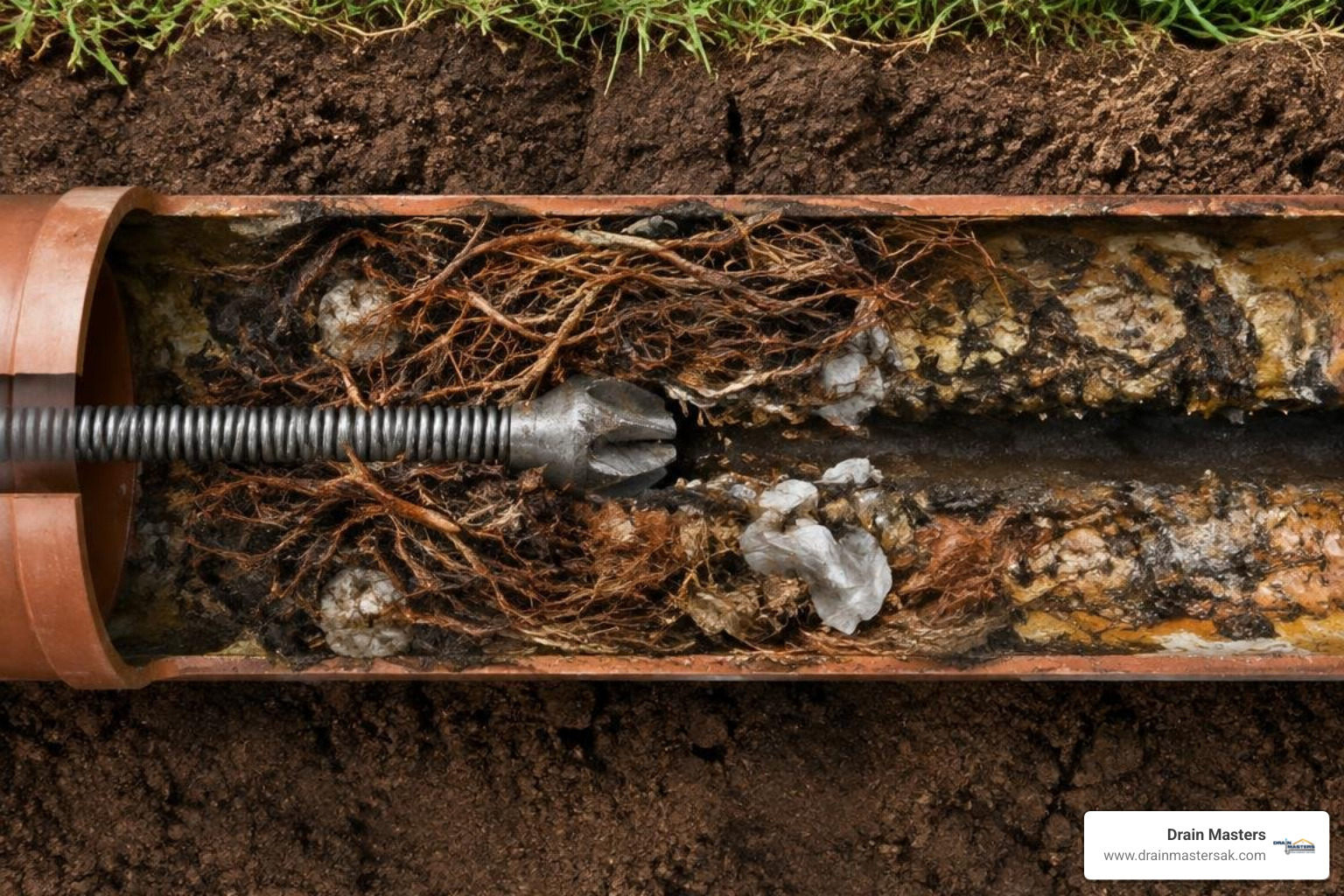
Tree roots naturally seek moisture, nutrients, and warm air escaping through tiny hairline fractures or loose pipe joints. Older clay and cast-iron lines are particularly vulnerable to this biological invasion. Once a single microscopic root hair penetrates a seam, it feeds on the nutrient-rich effluent and expands rapidly, creating a dense, web-like root ball inside the conduit.
While mechanical root cutters can chop away the center of the intrusion to restore drainage temporarily, cutting roots stimulates rapid regrowth, much like pruning a hedge above ground. The underlying issue is that the physical crack in the pipe remains open to the surrounding soil. This is why many property owners discover that standard drain clearing falls short against tree roots over the long haul, as persistent infiltration requires structural rehabilitation rather than repeated cable passes.
Structural Defects, Bellies, and Pipe Aging
A properly functioning gravity-fed sewer pipe relies on a steady downward pitch (typically a quarter-inch drop per foot) to carry wastewater and solids out to the municipal connection. When the soil underneath the pipe shifts, settles, or erodes, sections of the pipe can sink. This creates a low spot known as a pipe belly.
In a pipe belly, standing water sits continuously. Solids, paper, and heavy debris cannot clear the elevation rise on the other side of the sag, causing them to settle at the bottom. Over time, this stagnant pool acts as a catch basin, forming a recurring blockage even if the line was recently snaked.
Similarly, older pipe materials have distinct lifespans and failure modes:
- Cast Iron: Averages a 50-year lifespan and is prone to channel rot along the bottom and heavy internal rust scale.
- Orangeburg (bituminized fiber): Highly susceptible to egg-shaping, delamination, and sudden structural collapse.
- Clay: Resists chemicals but fractures easily under ground movement and has joint collars every few feet that attract root growth.
- PVC: Modern standard with a 100-plus year service life, offering smooth interiors that resist mineral scaling.
Recurring Buildup: Grease, Scale, and Flushable Wipes
The third major culprit behind chronic blockages is the steady accumulation of fats, oils, and grease (FOG). When warm grease is poured down a kitchen sink, it cools as it hits underground pipes, solidifying into a sticky layer along the pipe walls.
This sticky grease bed acts like an adhesive net for other debris. When synthetic fibers enter the system, specifically so-called flushable wipes that do not break down in water, they bind with the solidified grease and mineral scale to create massive physical obstructions. Homeowners often learn about how flushable wipes damage plumbing systems only after experiencing a severe basement backup. The wipes snag on rough interior pipe scale, building a dam that mechanical clearing rods merely punch a small hole through.
Clearing vs. Cleaning: Why Snaking Leaves You Vulnerable
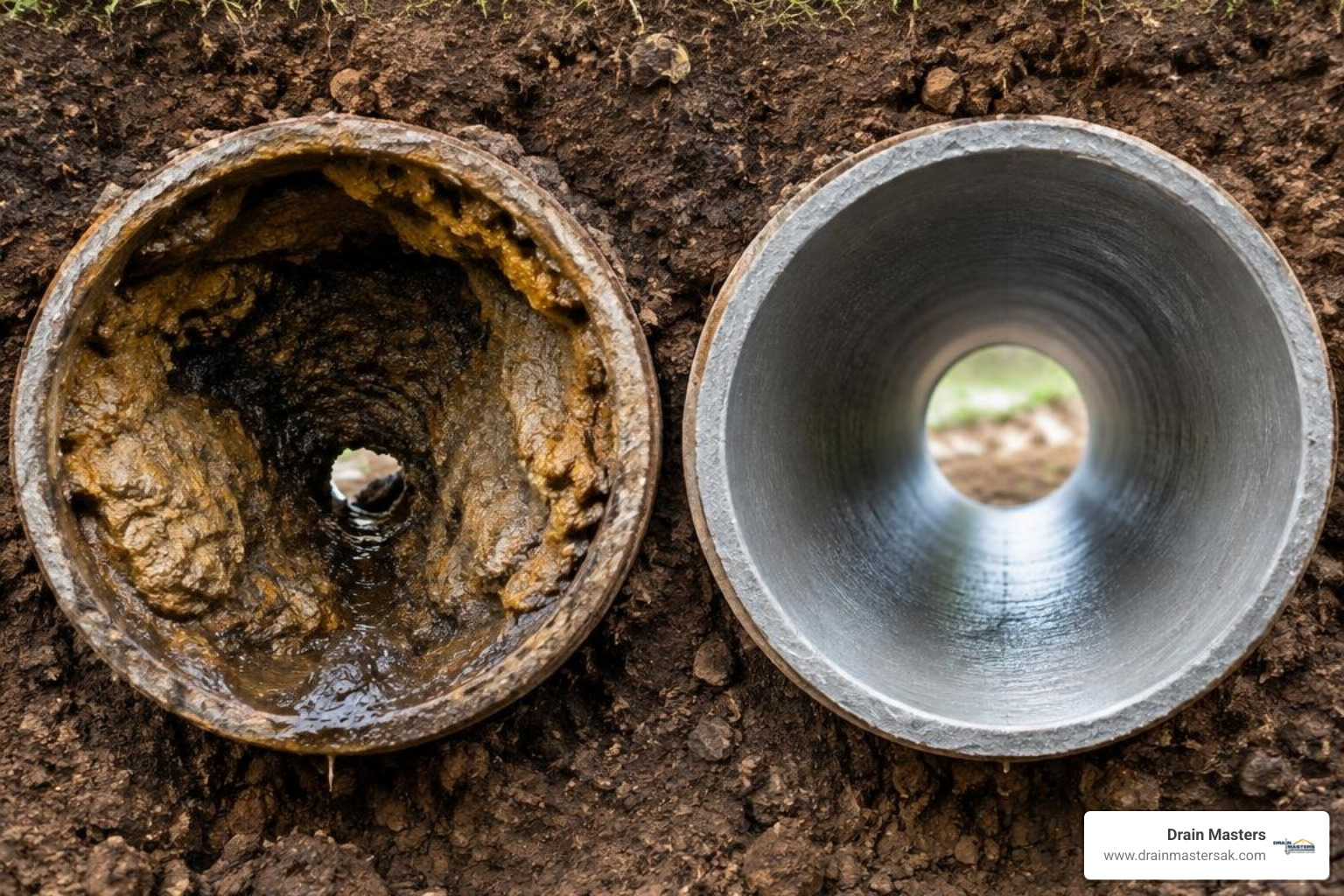
The most common misconception in residential plumbing is that clearing a line is the same as cleaning it. They are fundamentally different procedures with completely different outcomes for your plumbing system’s health and longevity.
How Drain Snaking Punches Holes Without Removing Buildup
A mechanical drain snake (or continuous cable auger) uses a flexible steel cable with a cutting head driven into the pipe. When the head encounters an obstruction, it rotates to bore a hole through the center of the mass or retrieve items like wipes and rags.
While snaking is an essential emergency tool for relieving standing wastewater, it only creates a passage roughly the diameter of the blade, leaving the perimeter of the pipe coated in sludge, grease, and scale. Within days, waste catches on the remaining sticky residue, closing the hole back up. For a deeper look at tool selection, comparing hydro-jetting versus traditional snaking clarifies why mechanical cables offer only temporary relief for heavy grease and scale accumulation.
| Feature / Metric | Mechanical Snaking / Augering | High-Pressure Hydro-Jetting |
|---|---|---|
| Primary Function | Reactive emergency blockage puncture | Comprehensive pipe-wall scouring |
| Cleaning Coverage | 25% to 40% of internal diameter | 100% of internal diameter |
| Grease & Sludge Removal | Bores through; leaves coating on walls | Liquefies and washes out entirely |
| Mineral Scale & Rust | Ineffective against wall scale | Descales metal and restores original bore |
| Root Removal | Trims center core; leaves root stumps | Cuts flush to pipe wall with specialty heads |
| Diagnostic Requirement | Can be done blindly | Requires pre-inspection for structural safety |
| Long-Term Longevity | Weeks to months | Years of smooth operation |
Hydro-Jetting: The Best Way to Keep Sewer Lines Clean from Scale and Sludge
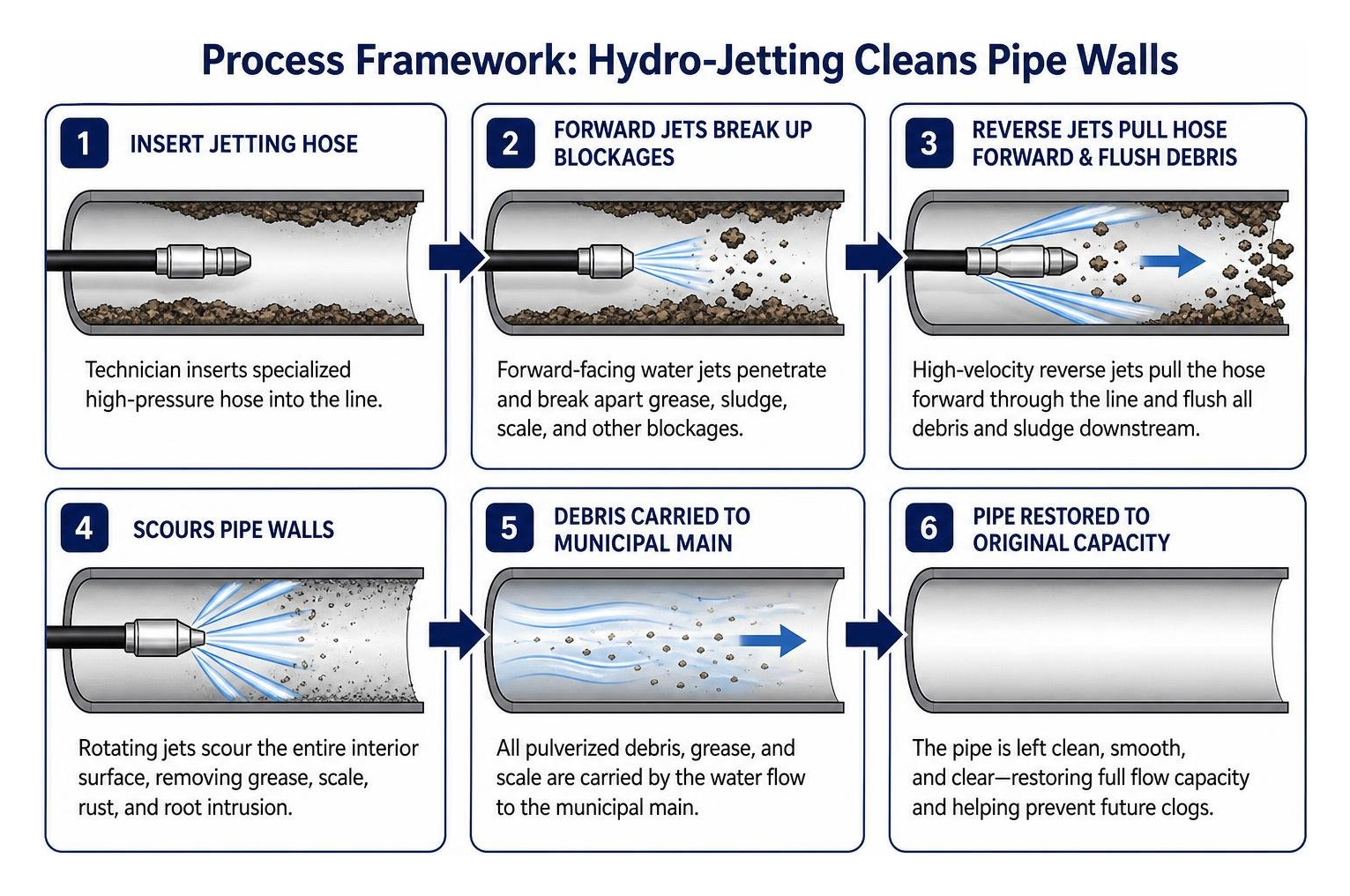
Professional hydro-jetting utilizes specialized high-pressure water streams operating at up to 4,000 PSI to scrub the entire interior surface of the pipe. Forward-facing water jets break up stubborn blockages, while high-velocity reverse-facing jets pull the hose forward through the line and flush all pulverized debris, heavy grease, and scale downstream to the municipal main.
Using specialized rotational nozzles, advanced hydro-jetting equipment scours away decades of accumulated grease and rust scale, effectively restoring the pipe’s interior diameter to its original capacity. This comprehensive scouring removes the anchor points that catch toilet paper and organic waste, preventing repeat clogs before they start.
Diagnostic Precision: The Role of Sewer Camera Inspections
Attempting to fix chronic sewer clogs without a visual inspection is like operating in the dark. Modern plumbing diagnostics rely on high-definition, self-leveling fiber-optic cameras equipped with radio sondes to visually inspect the line from the inside.
Pinpointing Offset Joints, Cracks, and Sags
A professional sewer camera travels the entire length of your lateral line, providing high-resolution footage of internal conditions. This diagnostic process allows technicians to accurately assess:
- Offset Joints: Sections of pipe that have shifted out of alignment due to soil movement, creating a physical ledge that catches paper and waste.
- Cracked or Collapsed Walls: Structural failures caused by freeze-thaw cycles, heavy surface loads, or material fatigue.
- Infiltration Points: The exact locations where tree roots are entering the system.
- Pipe Grade Issues: Measuring the depth and length of standing water to identify severe pipe bellies.
Following a local sewer inspection guide ensures that property owners receive actionable data about their underground infrastructure rather than guesswork, preventing unnecessary excavation work.
Post-Cleaning Verification for Long-Term Health
Camera technology is equally vital after cleaning is complete. A post-cleaning video audit confirms that all grease, sludge, and scale have been completely removed from the pipe walls. More importantly, removing heavy debris exposes the underlying pipe material, allowing technicians to verify that high-pressure washing did not reveal hidden structural fractures that require immediate attention.
To properly evaluate recurring mainline failures, scheduling a high-definition sewer camera inspection provides the visual proof needed to choose between ongoing maintenance, hydro-jetting, or targeted spot repairs.
The Best Way to Keep Sewer Lines Clean: Long-Term Prevention Strategies
Keeping sewer lines flowing freely requires combining smart everyday household habits with planned professional maintenance. Rather than reacting to messy backups, a structured maintenance plan protects both your home’s structural foundation and your plumbing investment. Implementing proven methods to prevent recurring sewer clogs transforms a troublesome sewer system into a reliable, low-maintenance asset.
Proactive Household Habits as the Best Way to Keep Sewer Lines Clean Daily
Preventing buildup starts at the fixtures inside your home. What enters your plumbing system directly determines how quickly your main line accumulates residue:
- Follow the Three Ps Rule: Only flush pee, poop, and toilet paper. Never flush facial tissues, paper towels, dental floss, feminine hygiene products, or wet wipes, even if the packaging claims they are dispersible.
- Manage Fats, Oils, and Grease (FOG): Wipe greasy pans with a paper towel before washing them, and pour liquid cooking oils into a dedicated container for solid waste disposal. Never wash grease down sinks, even with hot water and dish soap.
- Use Drain Strainers: Install fine-mesh screens over shower, tub, and sink drains to catch hair, soap chunks, and food debris before they reach your main sewer line.
- Limit Garbage Disposal Usage: Compost vegetable scraps, coffee grounds, eggshells, and starchy foods (like potato peels and rice) rather than running them through the disposal unit.
- Seasonal Protection: In colder regions, sub-zero temperatures can freeze shallow drain exits or vent stacks. Taking proven steps to insulate vulnerable drainage pipes safeguards against seasonal freeze-ups that mimic main line clogs.
- Routine Upkeep: Complement these daily habits with scheduled, non-caustic, enzyme-based maintainers that digest light organic films naturally without eroding pipe walls.
When Sewer Repair Is Needed for Root and Structural Damage
When a camera inspection reveals cracked hubs, severe offset joints, or recurrent root intrusion, cleaning alone will not permanently solve the problem. In these situations, structural sewer repair is necessary.
Modern trenchless rehabilitation techniques, such as Cured-In-Place Pipe (CIPP) lining, allow technicians to install an epoxy-saturated liner inside the damaged host pipe. The liner cures into a continuous, jointless, and smooth pipe within a pipe. This eliminates joint seams entirely, preventing root penetration and water infiltration for decades without requiring disruptive excavation across your lawn or driveway.
Recommended Maintenance and Inspection Schedules
Establishing a regular service schedule keeps sewer lines running smoothly and avoids costly emergency backups:
- Standard Residential Homes: Schedule a professional camera inspection and hydro-jetting maintenance every 18 to 24 months.
- Older Homes (Built Pre-1980): Properties with clay or cast-iron lines should receive an annual camera assessment and preventive cleaning to manage scale and joint shifting.
- Heavily Wooded Properties: If mature trees stand within 20 to 30 feet of your sewer lateral, consider annual root maintenance combined with an inspection.
- Commercial Kitchens and High-Occupancy Buildings: Due to accelerated grease and waste accumulation, commercial lines should be professionally hydro-jetted every 3 to 6 months.
For recurring buildup or frequent backups, Drain Masters can provide professional sewer cleaning based on the condition of the line and the cause of the blockage.
Following guidelines from the U.S. Environmental Protection Agency on wastewater infrastructure management, consistent preventive maintenance dramatically reduces the risk of sanitary sewer overflows and groundwater contamination.
Frequently Asked Questions About Recurring Sewer Line Clogs
Why does my sewer line keep backing up after being snaked?
Snaking only bores a narrow hole through the center of an obstruction to relieve standing water. It does not scrape away the grease, sludge, or mineral scale lining the pipe walls. The remaining sticky buildup quickly catches new waste, toilet paper, and hair, causing the line to clog again within weeks.
What is the difference between clearing a drain and cleaning a sewer line?
Clearing a drain is a temporary, reactive fix using a mechanical cable to punch a hole through a clog. Cleaning a sewer line is a thorough, preventive process (usually performed with high-pressure hydro-jetting) that scours the entire internal circumference of the pipe back to its original diameter.
How often should residential sewer lines be professionally cleaned?
For most residential properties, sewer lines should be professionally inspected and hydro-jetted every 18 to 24 months. Homes built before 1980, homes with mature trees near the sewer run, or households with high water usage benefit from annual preventive cleaning.
Can tree roots grow back after being cut out of a sewer pipe?
Yes. Cutting roots with a mechanical auger trims the intrusion inside the pipe, but it leaves the external root system intact. Tree roots thrive on the moisture and nutrients inside the sewer line and will aggressively grow back through the existing cracks or open joints within 6 to 12 months.
Are chemical drain cleaners safe for clearing main sewer lines?
No. Chemical drain cleaners contain harsh caustic acids or lye that generate intense heat. These chemicals can warp or melt PVC pipes, accelerate corrosion in cast-iron systems, and fail to reach main line clogs effectively while creating hazardous working conditions for service technicians.
What are the earliest warning signs that a sewer line is clogging again?
Early warning signs include multiple slow-draining fixtures across the home, gurgling noises coming from toilets when a sink or washing machine drains, foul sewer gas odors, and water backing up into lowest-level floor drains or bathtubs.
How does hydro-jetting remove grease and mineral scale?
Hydro-jetting uses a high-pressure pump to deliver water at pressures up to 4,000 PSI through specialized rotating nozzles. The forward water streams break apart solid obstructions, while reverse jets scrub the pipe walls, emulsifying grease and stripping away rust and scale before flushing everything out of the system.
What is a sewer pipe belly and how does it cause recurring clogs?
A pipe belly is a low, sagging section in a sewer lateral caused by soil settlement or improper installation. Because gravity cannot move wastewater uphill, water and heavy solids collect in this pocket, creating a perpetual catch basin that regularly forms blockages.
Can sewer repairs help prevent tree roots from returning?
Yes. Trenchless pipe lining (CIPP) or point repairs seal the fractures, damaged seams, and joints where roots enter. By creating a continuous, seamless internal barrier, the repair permanently blocks root systems from accessing the moisture inside the pipe.
Is preventive sewer maintenance cheaper than emergency cleanouts?
Yes. Routine preventive maintenance, such as regular camera inspections and scheduled hydro-jetting, is significantly more affordable than emergency service calls, structural excavation, and the extensive remediation costs associated with raw sewage flooding living areas.
Conclusion
Chronic sewer backups are a clear sign of deeper structural defects, invasive root systems, or heavy internal buildup that simple snaking cannot fix. Relying on continuous emergency clearings leaves your property vulnerable to catastrophic backups, property damage, and premature pipe failure. By investing in accurate diagnostics and professional high-pressure scouring, you can solve the root cause of the problem for good. If you are dealing with persistent drainage issues in Anchorage, AK, contact Drain Masters today to contact our professional sewer cleaning technicians and restore lasting reliability to your plumbing system.