When to Schedule a Tankless Water Heater Flush
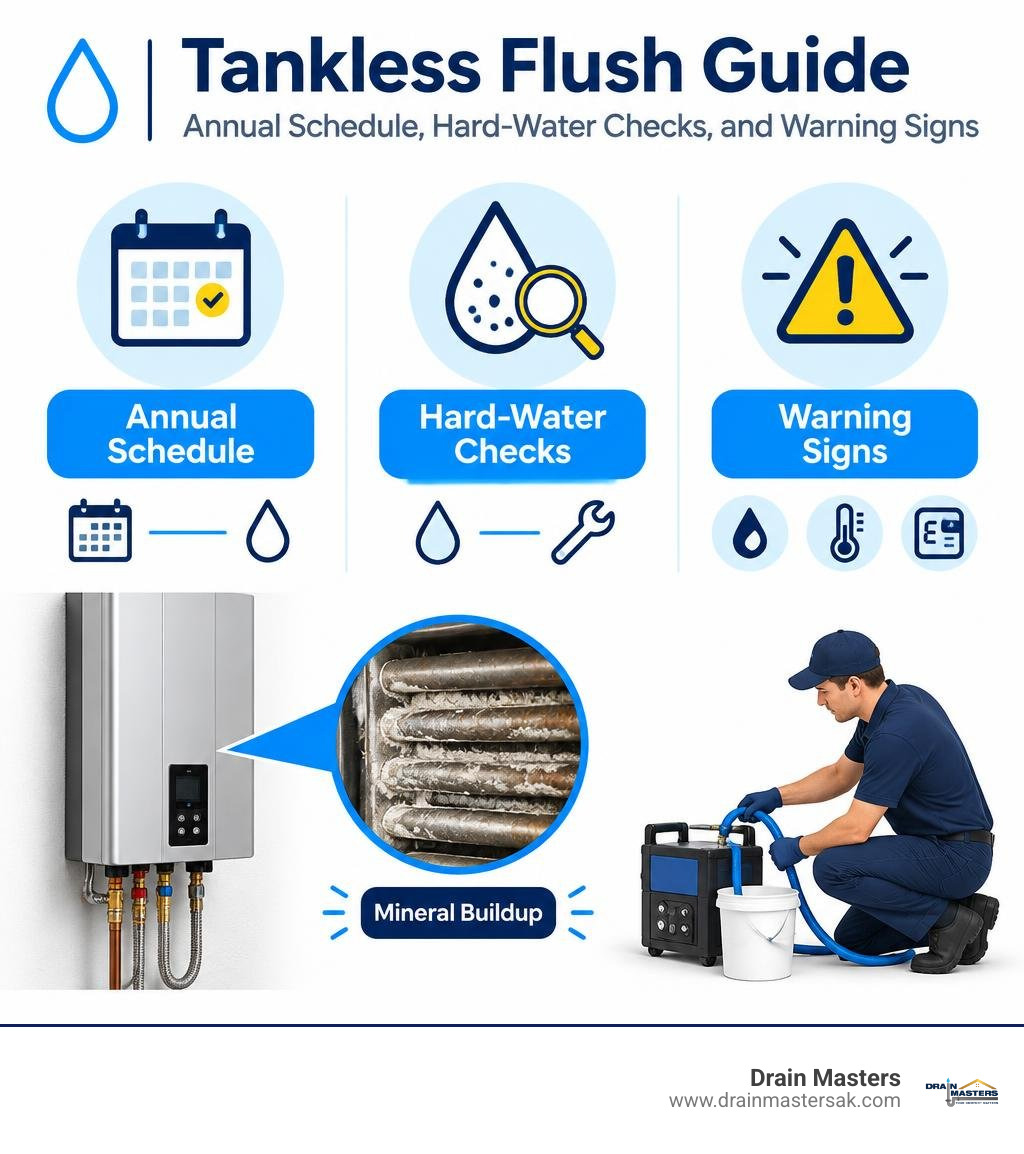
Schedule a tankless water heater flushing service about once a year. If your household water supply is notably hard, consult a licensed plumbing contractor to determine whether your equipment requires descaling every six months. Reduced hot-water flow, erratic water temperatures, or unfamiliar diagnostic error codes can indicate that your system needs attention sooner. Because these performance issues can stem from several mechanical factors, a qualified technician should evaluate the entire system before beginning a flush.
The Drain Masters team brings more than 20 years of residential and commercial plumbing experience to homes in Anchorage, AK. That hands-on background helps property owners understand when routine maintenance is appropriate and when an in-depth mechanical inspection is critical for long-term reliability.
Establishing a Predictable Maintenance Schedule
Operating an on-demand water heater offers remarkable energy savings, but sustaining peak efficiency demands ongoing attention. Waiting until water temperatures plunge during peak morning routines often means mineral deposits have already begun restricting internal heat transfer passages. Incorporating regular system flushes into your broader home maintenance calendar prevents surprise breakdowns and extends equipment longevity.
Why Mineral Buildup Demands a Regular Flush Tankless Water Heater Service
Tankless water heaters deliver continuous hot water by routing cold water directly through a compact, high-efficiency heat exchanger assembly. While this on-demand configuration eliminates the standby energy losses inherent to traditional storage tanks, it creates a distinct vulnerability: dense mineral scale accumulation.
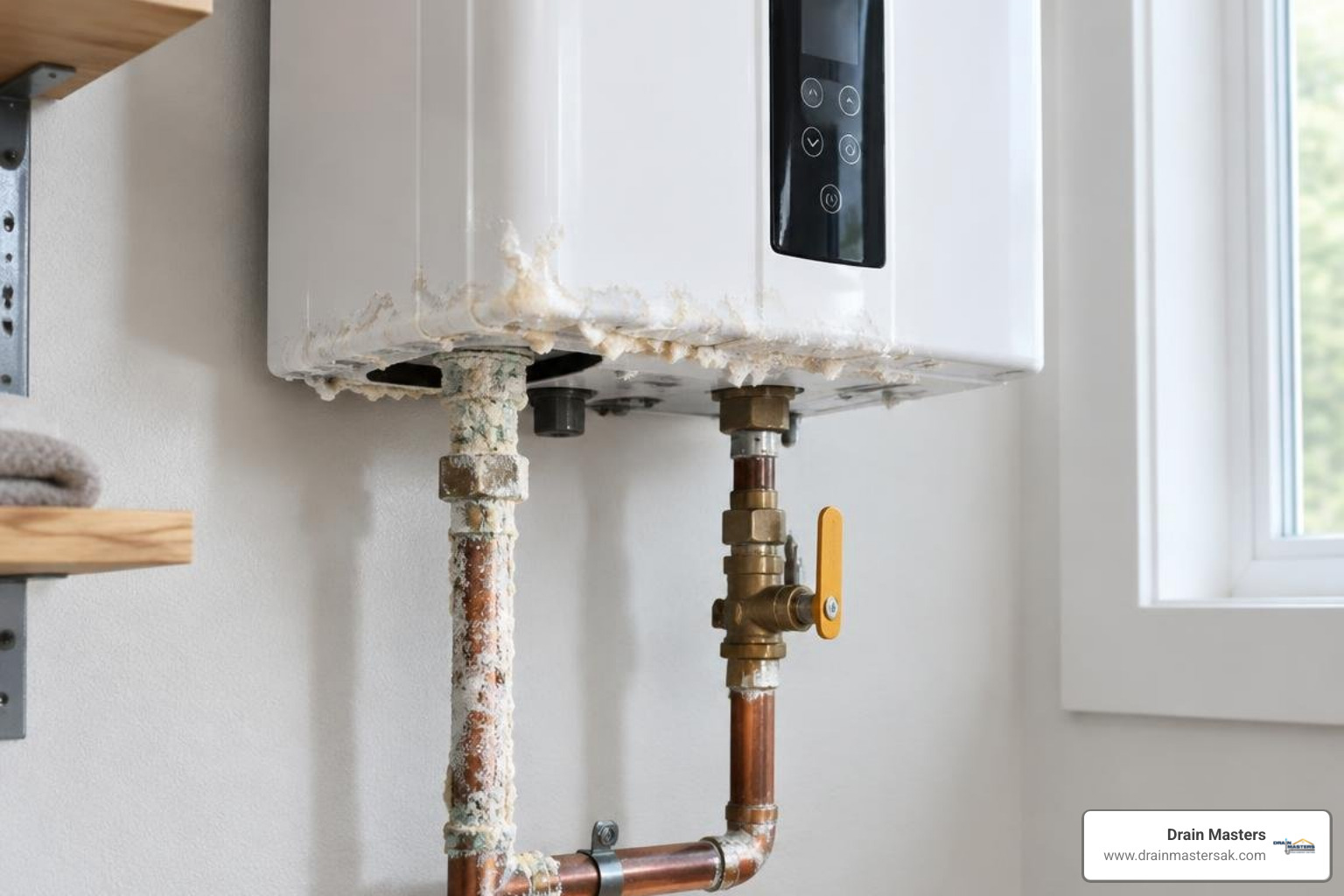
As cold municipal or well water passes rapidly across the intense internal heating surfaces of modern on-demand heating systems, dissolved minerals such as calcium carbonate and magnesium naturally precipitate out of solution. Over time, these mineral particles form a hardened, chalky layer of limescale that acts as an unwanted thermal insulator.
When scale coats internal copper or stainless steel passages, the heating element or gas burner must generate significantly more heat and run for longer cycles just to transfer energy into your water supply. This sudden drop in heat transfer efficiency subjects the appliance to extreme thermal stress, raising monthly utility expenses and accelerating wear on delicate internal assemblies.
How Hard Water and Limescale Accumulate in Heat Exchangers
Water hardness represents the concentration of dissolved mineral ions in your incoming supply line. When cold water encounters high-temperature metal surfaces, rapid crystallization occurs along internal pipe walls.
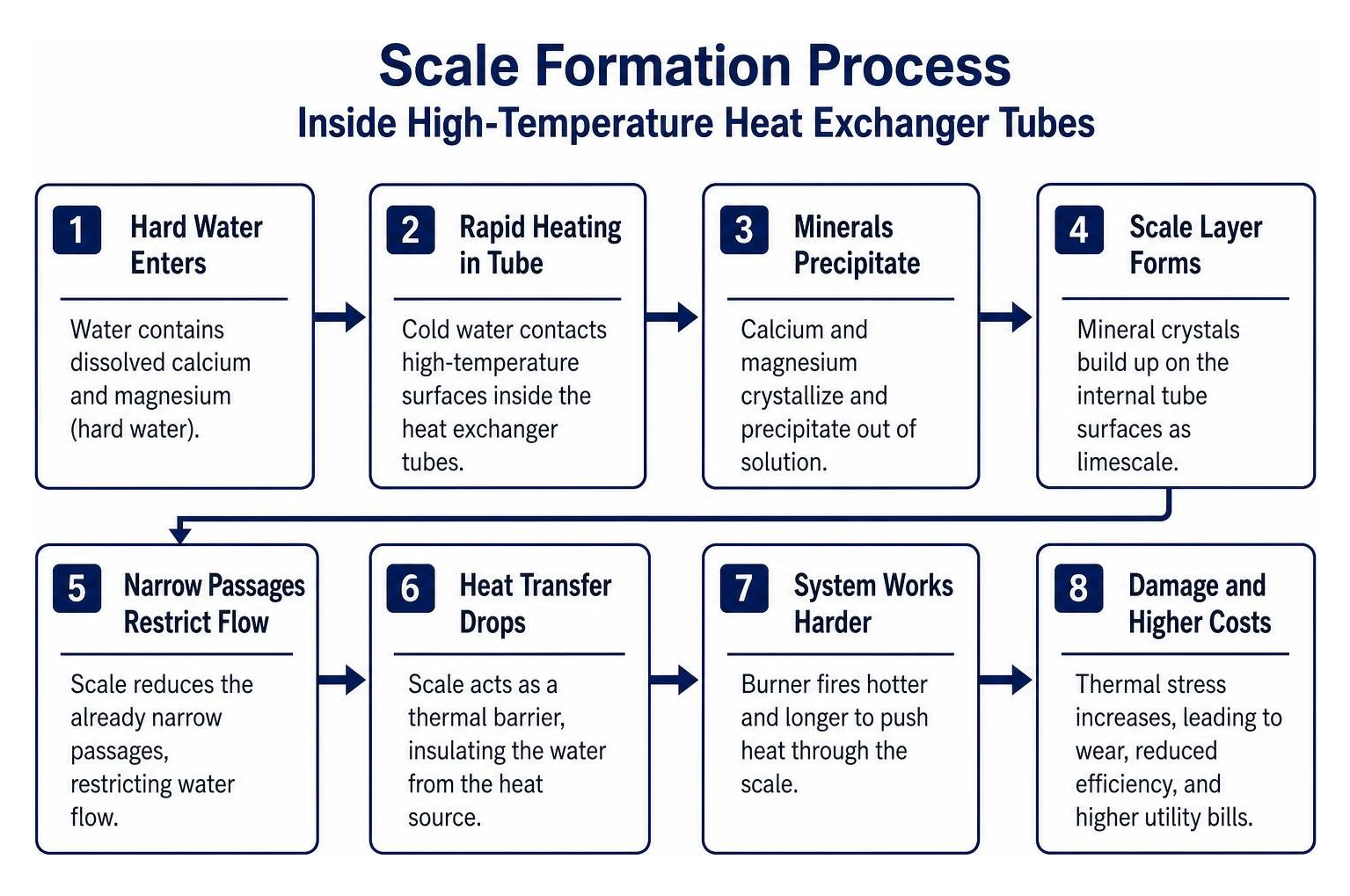
Because on-demand heat exchangers rely on narrow pathways to maximize thermal transfer, even a thin layer of scale can severely restrict water volume. Unchecked mineral deposits gradually solidify into rock-hard crusts, creating localized hot spots that can warp, weaken, or crack the metal walls of the heating assembly.
The Difference Between Descaling Tankless Units and Traditional Tanks
Servicing an on-demand heating unit requires a fundamentally different procedure than maintaining a conventional storage tank. In standard tank models, sediment slowly collects across the broad base of a large vessel, allowing technicians to drain the reservoir and wash out loose silt with cold water pressure.
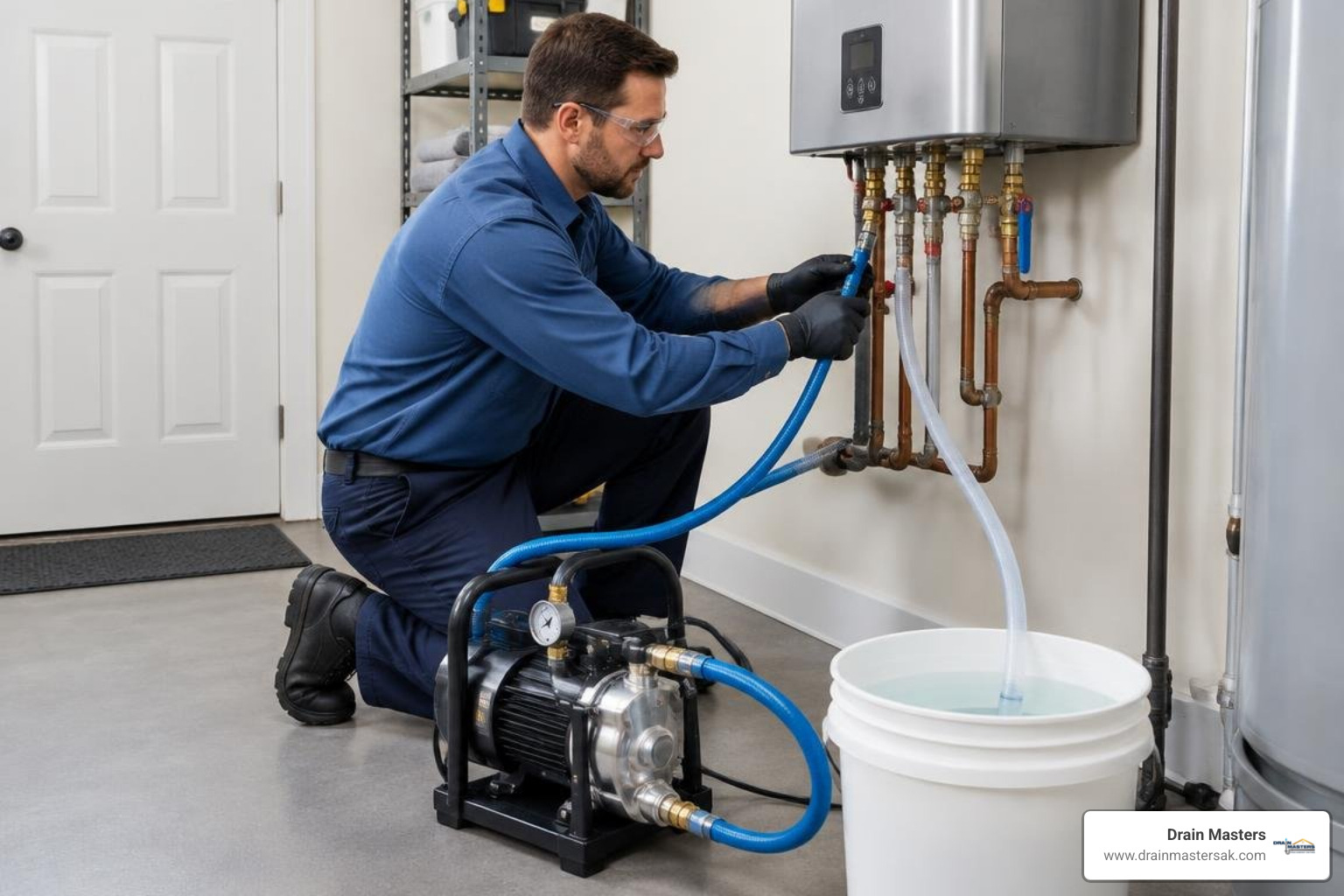
With tankless equipment, simply opening a drain valve will not dislodge scale because mineral deposits chemically bond to the internal copper coils. Technicians must actively circulate specialized, non-toxic descaling solutions using an external submersible pump to dissolve these stubborn obstructions.
While simple drain flushes maintain traditional vessels, modern on-demand units rely on chemical descaling cycles to restore proper heating capability. Choosing between comprehensive water heater care for traditional storage tanks or specialized descaling for on-demand equipment ensures each appliance receives targeted maintenance.
Telltale Signs Your On-Demand System Needs Descaling
Your on-demand unit provides clear operational warnings when mineral accumulation begins choking internal passages. Recognizing these symptoms early allows you to schedule maintenance before flow restrictions turn into severe mechanical breakdowns.
| Early Warning Sign | Underlying Cause | Recommended Corrective Action |
|---|---|---|
| Fluctuating Water Temperature | Scale slows heat transfer, creating hot and cold cycles | Complete system descaling and sensor check |
| Reduced Hot Water Flow Rate | Mineral buildup narrows the internal copper coils | Descaling flush and inlet filter cleaning |
| Strange Rumbling or Popping | Localized boiling caused by hot spots beneath scale | Immediate professional flush and burner tune-up |
| System Error Codes (Ignition/Flame) | Scale traps heat, tripping safety limit switches | Diagnostic evaluation and thorough descaling |
| Rising Gas or Electric Bills | Unit burns more fuel to overcome scale insulation | Annual preventive descaling service |
Key Warning Signals of Mineral Scaling
When limescale accumulates inside your system, you may notice the frustrating “cold water sandwich,” where hot water starts normally, dips to an icy temperature for several seconds, and then slowly recovers. As scale thickens, your unit may also struggle to maintain consistent water pressure across plumbing fixtures, especially when running multiple faucets or showers simultaneously.
Inside the unit cabinet, internal monitoring sensors track thermal performance and exhaust output. When heavy scaling prevents rapid heat absorption, sensors detect abnormal temperature spikes and trigger diagnostic error codes related to ignition failure or high-limit trip switches.
If you observe white mineral flakes clogging faucet aerators or hear rumbling sounds from your utility closet, requesting professional system repairs enables a technician to clear internal obstructions, inspect electrical connections, and verify proper combustion.
Risks and Warranty Pitfalls of Neglected Maintenance
Postponing routine descaling is a leading cause of premature on-demand water heater failure. As mineral deposits create uneven temperature zones along the heat exchanger, metal components expand and contract unevenly under sustained thermal strain. Over time, metal fatigue leads to microscopic fractures, resulting in internal leaks that can damage sensitive electronics, internal fans, and fuel valves.
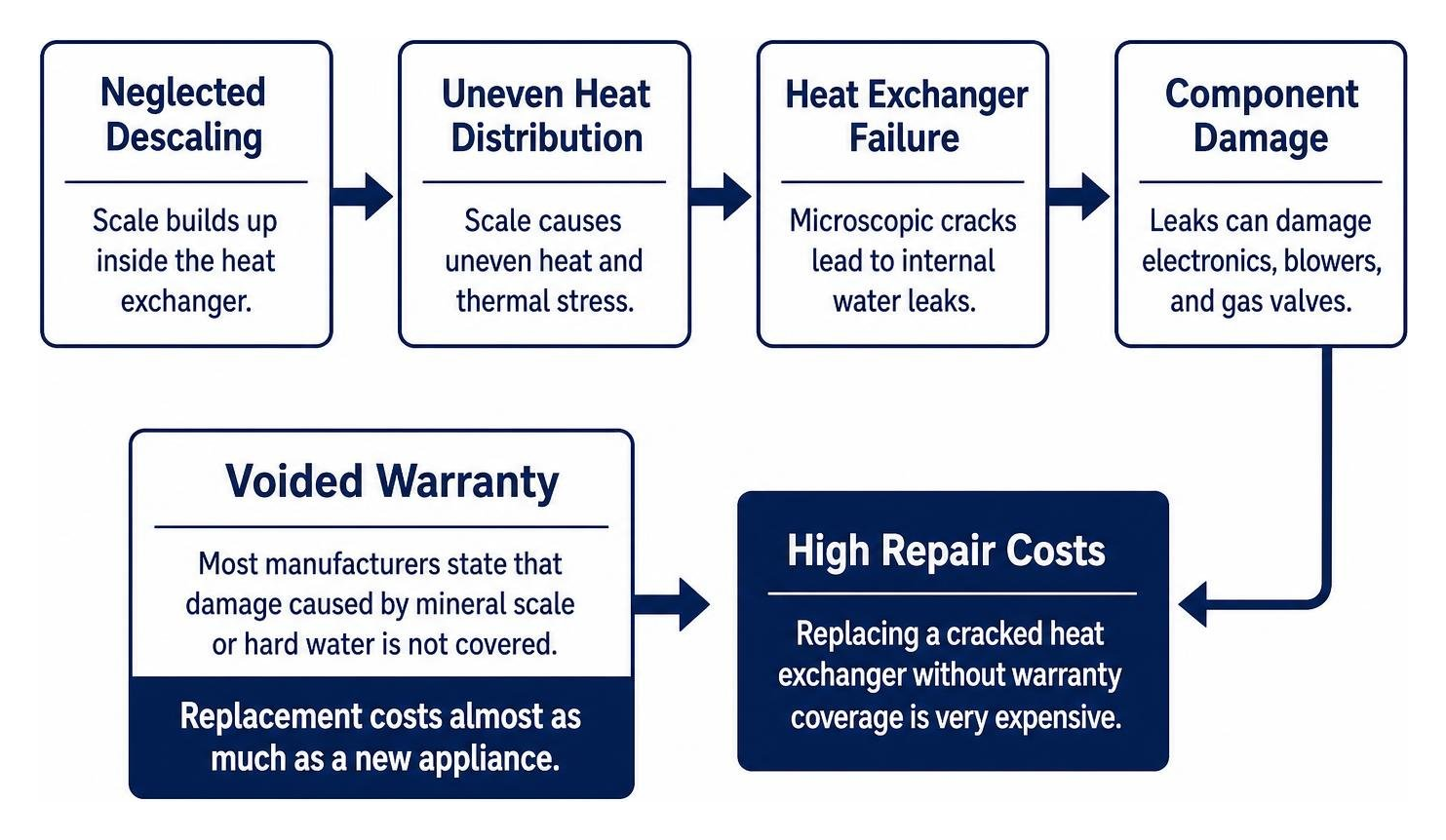
In addition to premature equipment breakdown, skipping annual maintenance creates serious financial exposure. Most major manufacturer warranty policies explicitly exclude coverage for damage caused by hard water scale or lack of regular maintenance. Replacing a cracked heat exchanger without active warranty protection is a major expense. Reviewing these structural risks alongside essential guidelines for when to install a new unit demonstrates why routine preventive care remains the smartest investment for homeowners.
What to Expect During a Professional Flush Tankless Water Heater Service
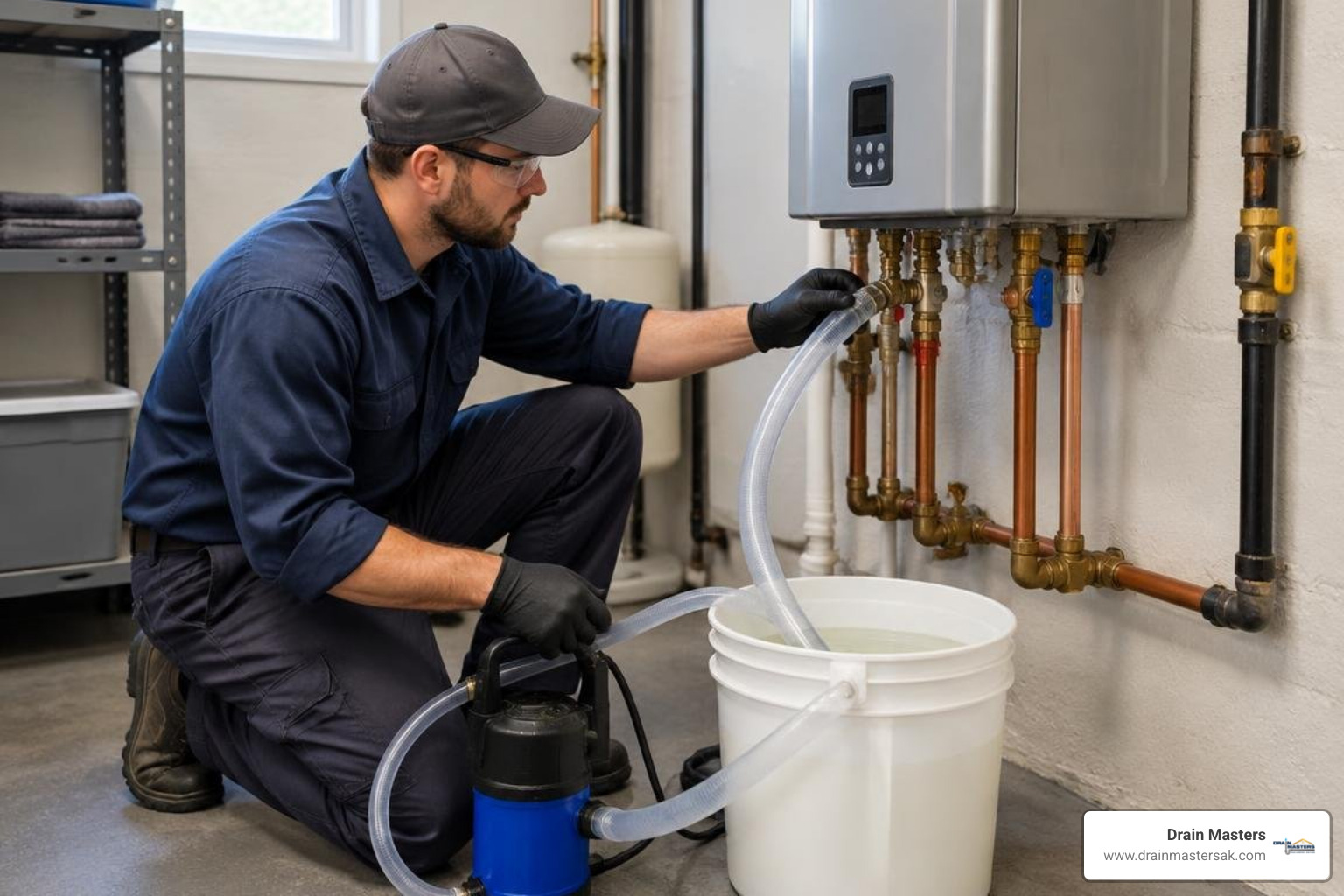
A thorough professional service appointment does far more than simply circulate cleaning fluid through a pipe. When licensed plumbing technicians arrive to perform a tankless water heater flushing service, they carry out a multi-point inspection and tune-up designed to restore factory operating efficiency and protect your home plumbing system.
Step-by-Step Steps in a Professional Flush Tankless Water Heater Service
- System Isolation and Electrical Disconnection: The technician disconnects electrical power and shuts down main fuel isolation valves to ensure complete safety before opening service connections.
- Water Supply Isolation: Cold-water inlet and hot-water outlet isolation valves are closed, sealing the appliance off from the household water distribution network.
- Service Port Setup: Reinforced hoses are attached to dedicated isolation purge ports. The cold-water port connects to the discharge nozzle of a commercial submersible utility pump placed inside a clean five-gallon container, while the hot-water port returns circulating fluid back into the reservoir.
- Circulation Cycle: The technician adds several gallons of an approved, non-toxic descaling solution, such as food-grade virgin white vinegar or concentrated citric acid descaling compound, running the pump continuously for 45 to 60 minutes. This controlled flow breaks down limescale, calcium, and magnesium deposits without harming internal gaskets or soldered connections.
- Freshwater Purge: Following the descaling cycle, service ports are redirected and fresh cold water is flushed rapidly through the internal coils for several minutes to wash away any remaining acidic cleaner and dislodged mineral sediment.
- System Reactivation: The technician secures the service port caps, reopens main water lines, restores electrical and fuel supplies, and evaluates the burner firing sequence under active water demand.
Filter Cleaning, Safety Inspections, and Freeze Prevention
A comprehensive tune-up addresses the entire appliance rather than just the heat exchanger coils. During the appointment, technicians remove and clean the cold-water inlet filter screen, which captures sand, pipe scale, and municipal grit before it enters the appliance.
Technicians also inspect the combustion air intake screen, clean the electronic flame sensors and igniters, and test the temperature and pressure (T&P) relief valve to confirm reliable emergency pressure release. In colder northern climates, checking that internal anti-freeze heating elements, external pipe insulation, and venting assemblies function properly protects your system during freezing weather.
DIY Maintenance vs. Professional Flush Tankless Water Heater Service
Many homeowners consider purchasing retail flush kits to perform maintenance on their own. While consumer descaling kits are readily available at home improvement centers, completing a DIY flush demands strict safety precautions, specialized hardware, and proper chemical handling practices.
Working around household utility connections presents genuine safety hazards. Making an error during the process, such as opening pressurized service ports without bleeding residual water pressure, applying aggressive industrial acids that corrode copper coils, or failing to flush acidic residue out of residential lines, can cause property damage, chemical contamination, or total equipment failure. For optimal safety and reliable results, homeowners should always partner with a licensed plumbing technician to maintain code-compliant performance.
Comparing Home Kits to Professional Service Standards
Retail DIY kits frequently include low-power utility pumps that struggle to generate the flow velocity needed to strip heavy mineral deposits out of multi-pass heat exchangers. Additionally, DIY efforts focus exclusively on circulating liquid, bypassing crucial diagnostic evaluations like fuel pressure checks, venting draft measurements, flame rectification testing, and electrical safety audits. A certified plumbing professional inspects the overall system, resolving subtle heating and combustion issues before they turn into costly mid-winter emergencies.
Service Costs and Factors Affecting Pricing
Maintenance needs vary based on physical installation layout and accessibility. Homeowners weighing long-term maintenance needs against installation decisions can also explore whether a tankless water heater is worth it in Anchorage, AK. Wall-mounted units in garages or open utility rooms with pre-installed service valves are straightforward to access. Conversely, units positioned in crawlspaces, finished closets, or high attic spaces require additional setup time and specialized containment to guard nearby living spaces against moisture spills. Servicing multiple on-demand units or setting up regular preventive maintenance plans helps keep operational costs predictable while ensuring your water heating system stays in peak condition.
Frequently Asked Questions About Tankless Water Heater Flushing
How often should a tankless water heater be flushed?
Most manufacturers recommend descaling an on-demand water heater once every twelve months. In regions with moderate to severe water hardness, flushing the unit every six months prevents heavy mineral crusting and maintains peak heating efficiency.
How much does a professional tankless water heater flush cost?
Pricing varies based on unit accessibility, installation location, and whether the system already features proper service isolation valves. Routine annual maintenance visits are typically structured as flat-rate service calls.
How long does a professional flush service take?
A standard maintenance appointment generally takes about one hour to ninety minutes. The active descaling circulation cycle runs for approximately 45 to 60 minutes, with the remaining time dedicated to safety inspections, filter cleaning, and system testing.
What solution is used to descale a tankless unit?
Technicians primarily use undiluted, food-grade white vinegar or specialized non-toxic descaling solutions containing citric or sulfamic acids. These solutions dissolve calcium and magnesium deposits without damaging internal copper tubing or rubber seals.
Can all tankless water heater brands and ages be flushed?
Virtually all modern on-demand units can be serviced provided they have isolation valves installed. However, units older than eight to ten years that have never been descaled require careful professional evaluation, as removing heavy, structural scale on neglected units can occasionally reveal pre-existing corrosion leaks.
What should I do if my outdoor tankless unit freezes?
If your unit loses power during sub-freezing weather, its built-in electric freeze protection will not function. You should immediately shut off the cold water supply, turn off gas and power, and follow manual drain procedures to clear internal water before expanding ice ruptures the heat exchanger.
What is the ideal temperature setting for an on-demand water heater?
Setting your system to 120 degrees Fahrenheit provides an ideal balance of comfort, energy efficiency, and scald prevention. Running units at higher temperatures accelerates mineral precipitation, causing limescale to form much faster on heat exchanger surfaces.
Will skipping routine flushing void my manufacturer warranty?
Yes. Nearly all major manufacturer warranties contain clear exclusion clauses stating that heat exchanger failures or performance defects caused by scale, hard water, or lack of documented annual maintenance are not covered.
How can I prevent mineral scale buildup between service visits?
Installing a whole-home water softener or a dedicated catalytic scale-prevention filter on the cold-water inlet line dramatically reduces mineral crystallization, keeping your heat exchanger cleaner between scheduled annual maintenance visits.
How do I choose a qualified local technician for flushing?
Select a licensed, insured plumbing contractor with documented experience in high-efficiency gas and electric tankless systems. Look for established local companies that offer upfront pricing, comprehensive multi-point inspections, and strong community reputations.
Conclusion
A tankless water heater is a premium home comfort investment that delivers continuous hot water and remarkable energy efficiency when maintained properly. Routine descaling eliminates stubborn mineral buildup, keeps monthly utility bills low, and protects your equipment against premature heat exchanger failure.
Whether your system is due for its regular annual flush or showing early signs of restricted water flow, trusting experienced professionals ensures your heating equipment operates at peak reliability throughout the year. Contact the certified team at Drain Masters today to contact our professional tankless water heater service technicians and keep your hot water flowing dependably.