

What Is a Central Water Filter (and Do You Need One)?
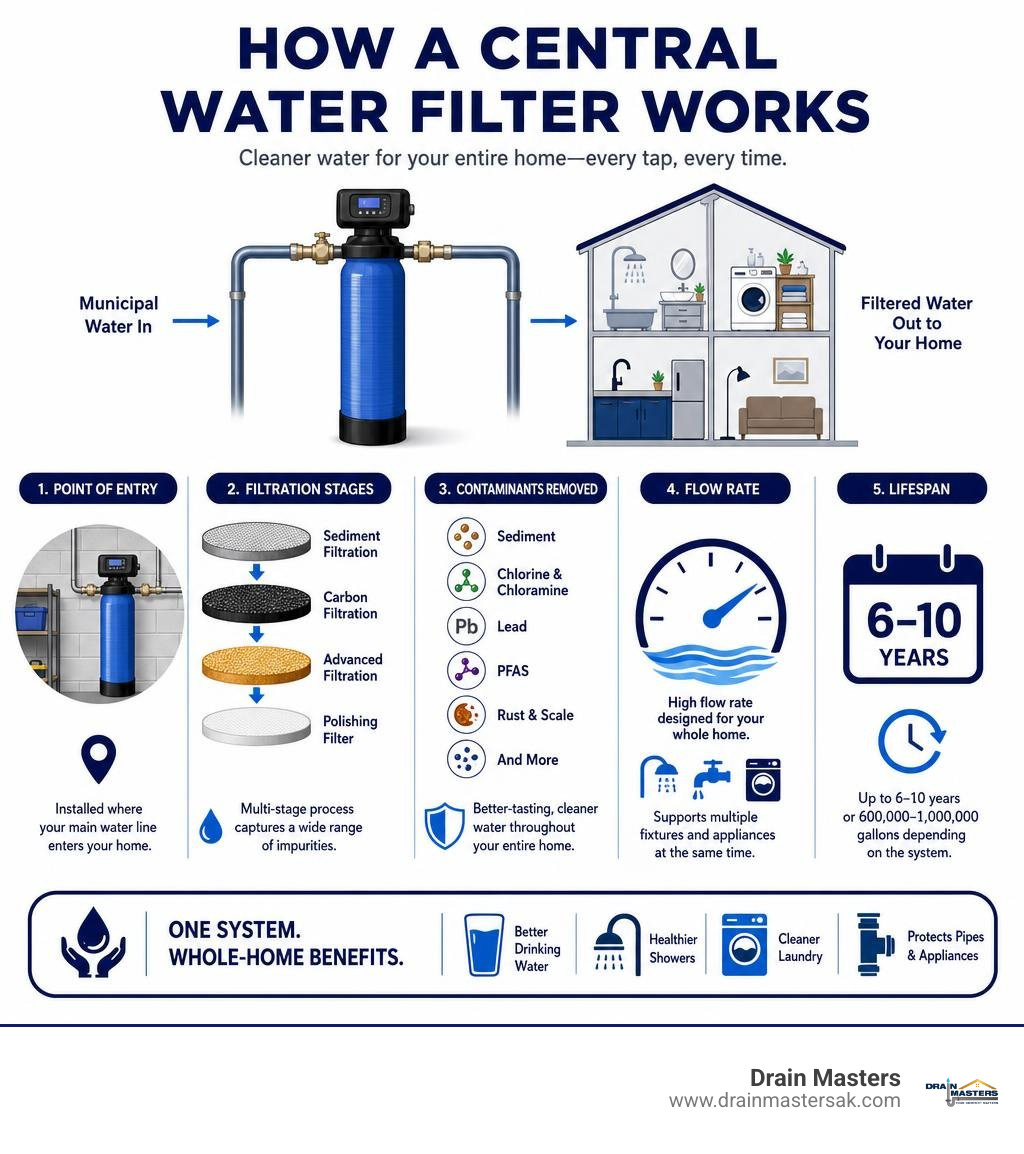
A central water filter is a whole-house filtration system installed at your home’s main water supply line, so every tap, shower, and appliance receives filtered water.
Quick answer:
| Question | Answer |
|---|---|
| What does it do? | Filters all water entering your home at the main supply line |
| What does it remove? | Sediment, chlorine, chloramine, lead, PFAS, rust, and more |
| Who is it for? | Any homeowner wanting clean water from every tap |
| How long does it last? | Up to 6-10 years or 600,000-1,000,000 gallons depending on the system |
| Does it need maintenance? | Minimal – many systems self-clean automatically every 14 days |
If you live in Anchorage, AK, you already know that tap water can carry sediment, chlorine, and other unwanted stuff that affects how water looks, tastes, and feels. A central water filter solves that problem at the source, before the water ever reaches your pipes, appliances, or shower head.
Unlike a pitcher filter or an under-sink unit that only cleans water at one spot, a central system treats every drop of water that enters your home. That means cleaner water for drinking, cooking, bathing, and even doing laundry.
I’m Debra Blouin, General Manager of Drain Masters, and after more than two decades working alongside homeowners dealing with everything from corroding pipes to poor water quality, I’ve seen how a central water filter can protect plumbing systems and improve daily life. In the sections below, I’ll walk you through everything you need to know to decide if one is right for your home.
What is a Central Water Filter and How Does It Work?
To understand how a central water filter works, it helps to think of it as a gatekeeper for your home. It is a Point-of-Entry (POE) system, meaning it is installed where your main water line enters your house, usually in a utility closet, basement, or garage. This is different from Point-of-Use (POU) systems, like faucet filters or pitcher filters, which only clean water at a single tap.
Whether your home runs on municipal city water or a private well, water travels through miles of underground pipes before it reaches your faucet. Along the way, it can pick up dirt, rust, sand, and chemical treatment byproducts like chlorine or chloramine. A central filter intercepts this water immediately, ensuring that every single outlet in your home delivers clean, purified water.
When water enters the system, it passes through specialized media designed to trap suspended solids and chemically neutralize dissolved contaminants. Because the system handles the water demand for your entire household, it is engineered to maintain high water pressure and a strong flow rate. This ensures you do not experience a frustrating drop in pressure when someone runs the shower while the washing machine is filling.
For homeowners looking for an efficient, set-it-and-forget-it solution, high-quality whole-house systems offer a streamlined way to achieve clean water without the constant hassle of manual filter changes. By treating the water at the point of entry, you protect your entire plumbing infrastructure from the corrosive effects of chemicals and the abrasive nature of sediment.
Key Components of a Central Water Filter
A high-performing central system is comprised of several carefully engineered parts working in harmony:
- The Media Tank: This is the heart of the system. It contains a multi-layered bed of filtration media, often utilizing high-grade activated carbon, catalytic carbon, or specialized oxidation media, that targets specific contaminants as water flows through it.
- The Control Valve: Mounted on top of the tank, this digital brain monitors your water usage and manages self-cleaning cycles. Advanced systems use smart timer-control systems to schedule these cycles automatically, typically during the night when water usage is minimal.
- The Bypass Valve: This safety feature allows you to temporarily divert water around the filter if you ever need to perform maintenance, service the system, or water your lawn with unfiltered water.
- Automatic Backwash Mechanism: Over time, the filter media traps a massive amount of sediment. Instead of requiring you to open the tank and swap out filters, many modern central systems use automatic backwashing. The system reverses the water flow to flush trapped dirt and debris down a drain line, keeping the media fresh and preventing pressure drops.
- FilterSense Technology: Some advanced models feature proprietary sensor technology that automatically initiates a flush-and-drain cycle every 14 days, ensuring the system remains clean with zero manual intervention.
How Water Flows Through the System
The physical journey of water through a central filter is simple yet incredibly effective:
- Inlet Port: Unfiltered water from your main utility line or well pump enters the system through the inlet port.
- Downward Filtration: The water is forced downward through the multi-layered media bed. As it moves through, the larger physical particles like sand, silt, and rust are physically trapped in the upper layers of the media.
- Chemical Adsorption: As the water continues downward, dissolved chemicals like chlorine, chloramines, and synthetic organic compounds stick to the microscopic pores of the carbon media through a process called adsorption. This chemical bonding removes tastes, odors, and potential toxins.
- The Distributor Tube: Once the water reaches the bottom of the tank, it is completely filtered. It enters a central distributor tube and is pushed back upward.
- Outlet Port: The clean, polished water exits through the outlet port and flows directly into your home’s hot and cold water lines, ready for use in every room.
Contaminants Removed and Benefits of Whole House Filtration
Investing in a central filtration system does more than just make your drinking water taste better. It acts as a comprehensive shield for your entire home, protecting your health, your plumbing, and your expensive water-using appliances.
Targeting Sediment and Turbidity
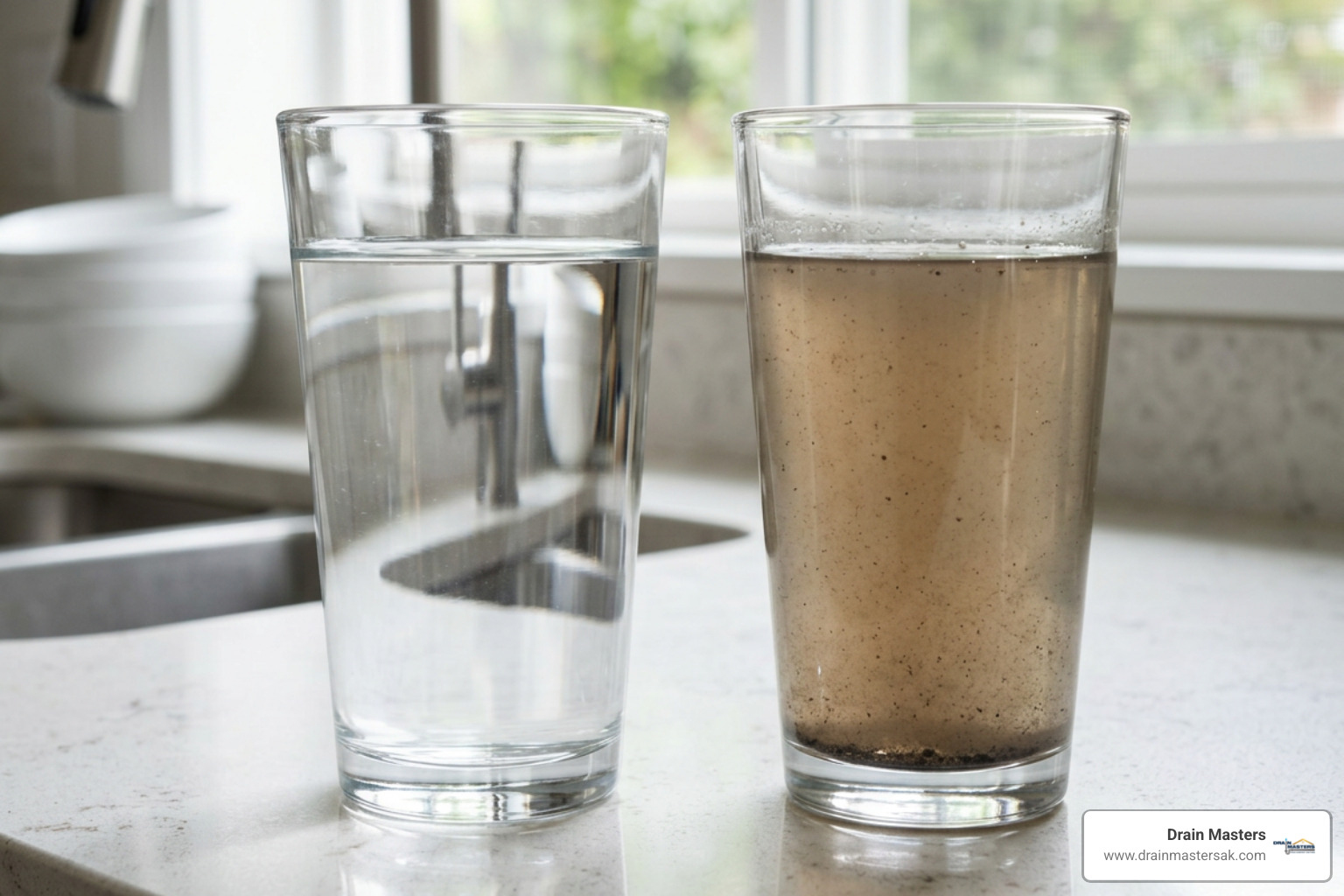
Turbidity refers to the cloudiness or haziness of water caused by individual particles that are generally invisible to the naked eye. This sediment, which includes fine sand, clay, silt, and flecks of rust from aging municipal water mains, acts like sandpaper inside your plumbing.
When sediment-laden water flows through your pipes, it slowly wears down valves, clogs aerators, and accumulates at the bottom of your water heater. This buildup forces your water heater to work much harder, driving up your energy bills and significantly shortening its lifespan. Over time, the abrasive nature of these particles can even lead to pinhole leaks in copper piping.
Central systems use high-capacity media to trap these particles. Many systems utilize a multi-stage approach, often pairing the main tank with a dedicated sediment pre-filter. For instance, a high-capacity pleated sediment filter can be used to catch larger physical particles before they can reach the carbon block, extending the overall life of the entire system and ensuring your water remains crystal clear.
Chemical and Heavy Metal Reduction
In addition to physical debris, municipal water supplies are treated with chemicals to kill bacteria. While chlorine and chloramine are excellent for keeping water safe during transit, they are not something you want to drink, cook with, or breathe in while showering.
When you take a hot shower, chlorine evaporates into the steam, creating chloroform gas that you inhale. It also strips the natural oils from your skin and hair, leading to chronic dryness, itching, and eczema flare-ups. A central filter utilizing high-grade activated carbon or catalytic carbon reduces up to 97% of chlorine taste and odor, significantly improving indoor air quality and skin health.
Furthermore, premium central water filters can target dangerous heavy metals like lead and mercury, as well as modern synthetic chemicals like PFAS (per- and polyfluoroalkyl substances). By removing these contaminants at your home’s point of entry, you ensure that every sink is a safe source of drinking water, protecting your family from long-term exposure to harmful substances.
Comparing Central Systems to Point-of-Use Filters
When deciding how to improve your home’s water quality, you will likely compare central water filters to point-of-use systems. Each has its place, but they serve very different purposes.
| Feature | Central Water Filter (Whole House) | Point-of-Use Filter (Under-Sink / Countertop) |
|---|---|---|
| Coverage | Every tap, shower, and appliance in the home | Single dedicated faucet or dispenser |
| Flow Rate | High (typically 7 to 15+ GPM) | Low (typically 0.5 to 1.5 GPM) |
| Maintenance | Low (self-cleaning, lasts up to 10 years) | High (cartridge changes every 3 to 12 months) |
| TDS Reduction | No (retains healthy minerals) | Yes (if using Reverse Osmosis) |
| Primary Goal | Plumbing protection, chemical-free showers, general purity | Ultra-pure drinking and cooking water |
If you are tired of filling pitchers or waiting for slow-filtering devices, you can explore instant purification options to find a setup that fits your lifestyle.
Why Choose a Central Water Filter Over Under-Sink Options?
The primary advantage of a central system is its sheer scale of coverage. An under-sink filter only protects the single sink where it is installed. It does nothing to prevent sediment from ruinous accumulation in your dishwasher, nor does it stop chlorine from drying out your skin in the shower.
Additionally, point-of-use systems require frequent maintenance. Most under-sink carbon cartridges must be replaced every 6 to 12 months. If you have multiple bathrooms and a kitchen system, keeping up with replacement schedules and costs can quickly become a second job.
A central water filter, on the other hand, is designed for high-volume, low-maintenance performance. Many models handle up to 600,000 to 1,000,000 gallons of water, lasting up to a decade, without requiring a single manual filter swap. If you are looking to protect your entire property, installing a complete home purification setup is the most reliable way to achieve total peace of mind.
Combining Systems for Maximum Purity
It is important to note that central water filters and point-of-use systems do not have to be mutually exclusive. In fact, combining them represents the gold standard of home water treatment.
Because central filters maintain high flow rates, they do not remove Total Dissolved Solids (TDS) like dissolved salts and minerals. If you want completely mineral-free water for drinking or a specialized ice maker, pairing a whole-house carbon filter with an under-sink Reverse Osmosis (RO) system is the perfect solution. The central filter acts as a pre-treatment system, removing chlorine and sediment that would otherwise damage the delicate RO membrane, saving you money on expensive RO filter replacements.
Lifespan, Maintenance, and Choosing the Right System
To get the most out of your investment, it is crucial to choose a system sized correctly for your household’s water usage patterns and to understand the minimal maintenance required to keep it running smoothly.
Understanding Automatic Backwashing and Regeneration
One of the greatest benefits of a modern central water filter is the self-cleaning cycle, often referred to as backwashing or regeneration.
During normal operation, water flows downward through the filter media, packing it down tightly and trapping sediment. To prevent the media from clogging and causing a drop in water pressure, the control valve automatically initiates a backwash cycle, usually in the middle of the night.
During this 15-to-25-minute process, the system reverses the water flow, sending it upward through the tank. This lifts and expands the media bed, lifting away trapped sediment and flushing it out through a dedicated drain line. Keeping these automated processes running smoothly is a key part of keeping up with routine system care that protects your home’s entire piping network.
Determining Your Flow Rate and Capacity Needs
When selecting a central water filter, you must look at two key metrics: capacity and flow rate.
- Capacity: This is the total number of gallons the system can filter before the media is exhausted. Residential systems typically range from 500,000 to 1,000,000 gallons, which translates to roughly 5 to 10 years of use for an average family.
- Flow Rate: Measured in Gallons Per Minute (GPM), this determines how much water the system can deliver at once. A system with a low flow rate, around 5 to 7 GPM, is suitable for smaller homes with 1 to 2 bathrooms. Larger households with 3 or more bathrooms require a high-flow system, typically 12 to 15+ GPM, to ensure that running multiple showers and appliances simultaneously does not result in a sudden drop in water pressure.
Recommended Add-Ons for a Complete Solution
Depending on your specific water source, you may want to customize your system with complementary add-ons:
- Spin-Down Sediment Pre-Filters: If your water has heavy sediment or sand, which is common with private wells, a spin-down pre-filter catches large debris before it reaches your main tank, preventing premature clogging.
- Salt-Free Water Conditioners: If you have hard water, pairing your filter with a salt-free descaler prevents calcium and magnesium scale from sticking to your pipes and heating elements without the slippery feel of traditional salt-based softeners.
- UV Sterilizers: For well water systems prone to bacterial contamination, a UV light sterilizer kills 99.9% of harmful viruses and bacteria, ensuring your water is biologically safe to drink.
To keep all of these components working in perfect harmony, staying on top of regular upkeep of your pipes is always highly recommended.
Frequently Asked Questions About Whole House Filtration
What is the difference between a water softener and a central water filter?
A central water filter focuses on removing chemical impurities, sediment, chlorine, and heavy metals to improve water taste, smell, and overall safety. A water softener specifically targets hard water minerals like calcium and magnesium, using an ion-exchange process to prevent scale buildup in pipes and appliances. Many homeowners choose to install both systems to achieve comprehensive water treatment.
How do I know if my home needs a sediment pre-filter?
If you notice visible sand, dirt, or rust flecks in your water, or if your aerators frequently clog with gritty debris, you need a sediment pre-filter. This is especially common for homes on private wells or those in areas with aging municipal water infrastructure. A pre-filter protects the main filtration media from clogging prematurely.
Can a central water filter remove fluoride and total dissolved solids (TDS)?
Standard central carbon filters do not remove fluoride or TDS because doing so requires extremely slow filtration speeds that would ruin your home’s water pressure. To remove these dissolved compounds, you should pair your whole-house filter with an under-sink Reverse Osmosis system for drinking water.
How much does it typically cost to install a whole house filtration system?
The total cost of installing a whole-house system varies depending on the type of filter media, the size of your home, and the complexity of your existing plumbing lines. While basic systems are highly affordable, advanced multi-stage setups require a slightly higher initial investment. Professional installation ensures the system operates efficiently without leaks.
Does installing a central water filter reduce home water pressure?
A properly sized system will not cause a noticeable drop in water pressure. By choosing a system with a flow rate that matches your household size, typically 9 to 15 GPM for medium to large homes, your water pressure will remain strong across all fixtures even when multiple taps are running.
How often does a self-cleaning central filter regenerate?
Most automatic central filters are programmed to backwash and regenerate every 14 days. This cycle is typically scheduled to run in the early hours of the morning when water usage is at its lowest, ensuring you are never left without filtered water when you need it.
Is well water compatible with central carbon filters?
Yes, but well water often requires pre-treatment. Well water typically contains higher levels of heavy sediment, iron, manganese, or sulfur. Pairing your central carbon filter with a sediment pre-filter or an iron-reduction system ensures the carbon media does not clog prematurely and can perform effectively.
Can a homeowner install a whole house water filter as a DIY project?
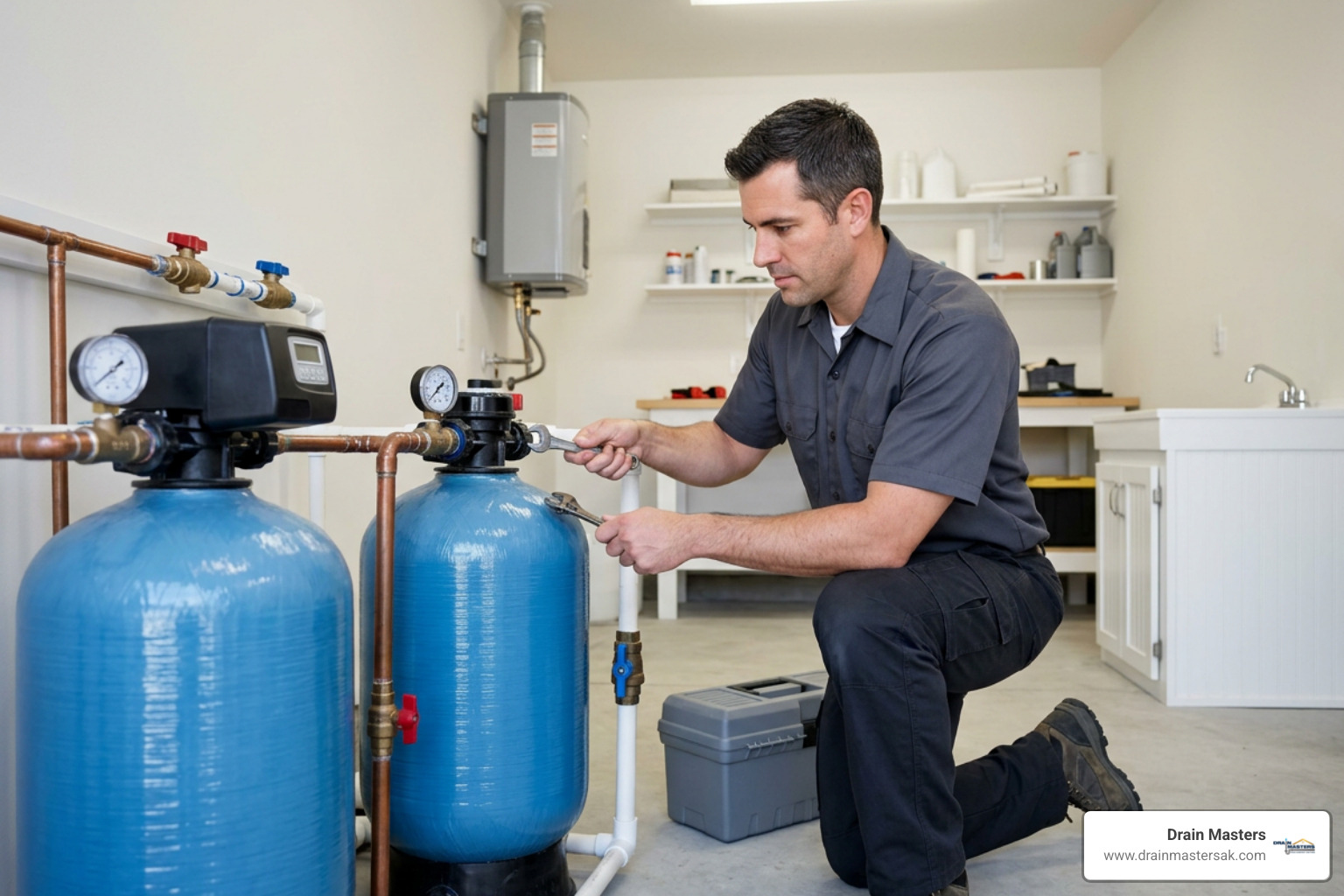
While some handy homeowners attempt a DIY installation, it requires cutting into your home’s main water line, soldering pipes, and installing bypass valves. To prevent leaks, water damage, and voided warranties, we always recommend professional plumbing installation.
How long do the internal filter media beds last before replacement?
High-quality central filtration media beds are designed to last between 5 and 10 years, or roughly 500,000 to 1,000,000 gallons of water. Once the media is exhausted, the tank can typically be rebed with fresh media without replacing the entire system, making it a highly cost-effective long-term solution.
What are the health benefits of showering in carbon-filtered water?
Showering in carbon-filtered water eliminates exposure to harsh chlorine and chloramines. This helps preserve your skin and hair’s natural oils, reducing dryness, dandruff, and eczema, while also preventing you from inhaling vaporized chlorine chemicals in the steam.
Conclusion
Installing a central water filter is one of the most effective ways to protect your home’s plumbing, extend the lifespan of your water-using appliances, and enjoy clean, refreshing water from every single tap. From saving your water heater from abrasive sediment to protecting your family’s skin and hair from harsh chemicals, the benefits of a whole-house system are felt every single day.
Because installing a whole-house system involves working directly with your main water supply line, proper installation is key to ensuring optimal flow rates and preventing leaks. At Drain Masters, our experienced team has spent over 20 years helping homeowners in Anchorage, AK, achieve clean, reliable water.
If you are ready to upgrade your home’s water quality, contact Drain Masters today to learn more about our advanced water treatment options and schedule a professional filtration consultation with our experienced local team. For all your home’s plumbing needs, you can count on us for reliable, professional assistance with your home systems backed by upfront pricing and decades of local expertise.