
Why an Instant Water Purifier Belongs in Every Home
An instant water purifier gives you clean, filtered water on demand, with no waiting, no hauling water jugs, and no slow drip through a gravity filter. If you want the short answer on what these systems do and how they compare, here it is:
What is an instant water purifier?
An instant water purifier is an electric-powered filtration system that uses a built-in pump to push water through filter stages, delivering purified water in seconds rather than minutes. Most use reverse osmosis (RO), UV sterilization, or activated carbon, and many combine all three.
Instant purifier vs. other filter types at a glance:
| Filter Type | Delivery Speed | Contaminant Removal | Installation |
|---|---|---|---|
| Instant electric purifier | Seconds | Up to 99% (RO + UV) | Countertop or under-sink |
| Gravity pitcher filter | 5-20 minutes | Moderate (some chlorine, particulates) | None |
| Whole-house system | Instant (at tap) | High (multi-stage) | Professional install at main line |
| Bottled water | Immediate | Varies | None |
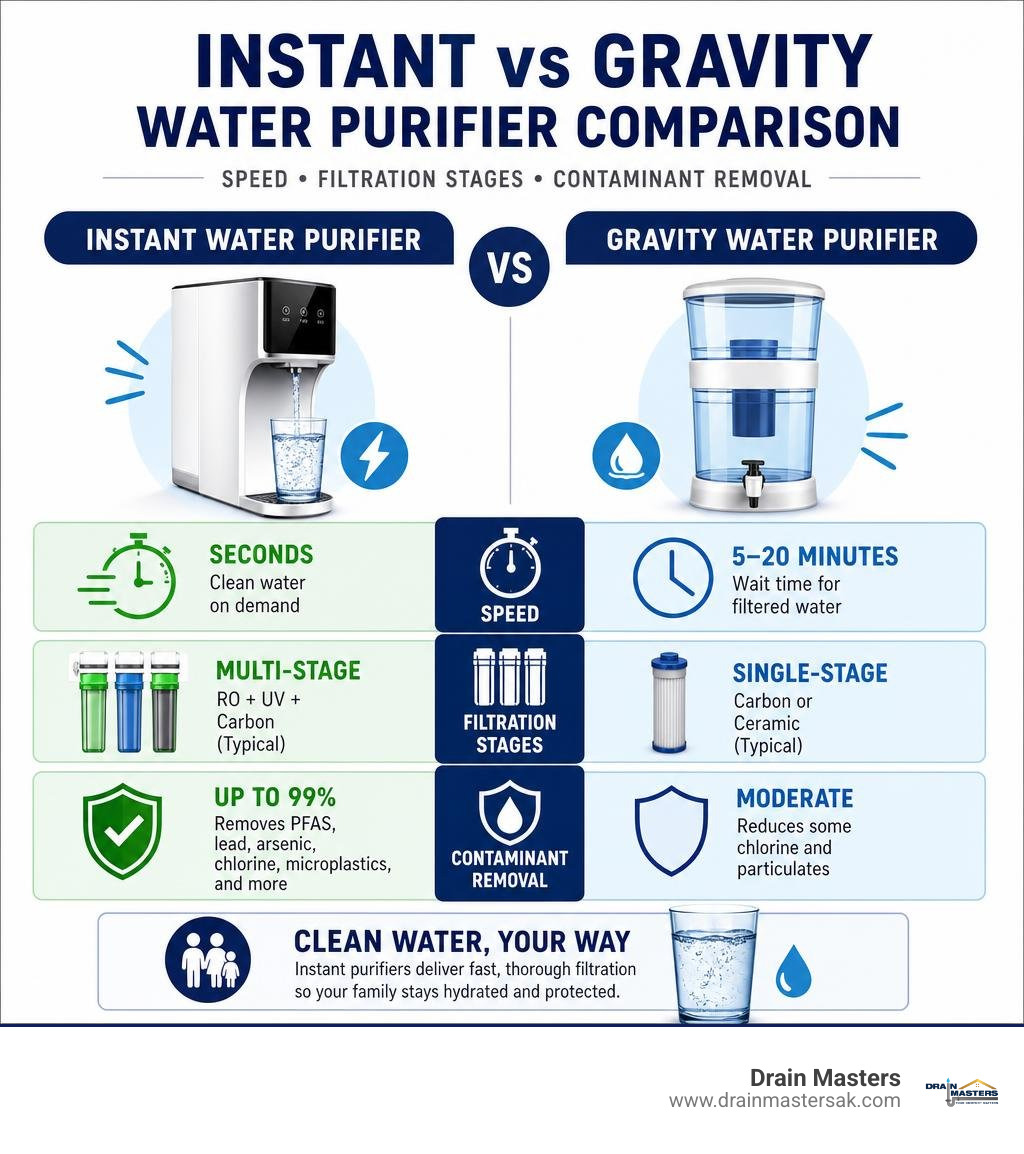
Electric purifiers deliver water instantly compared to gravity-fed systems, which can take anywhere from 5 to 20 minutes to process the same amount of water. That gap matters a lot in a busy household.
These systems can remove up to 99% of contaminants, including PFAS (forever chemicals), lead, arsenic, chlorine, and microplastics, depending on the filtration technology used.
As Debra Blouin, General Manager of Drain Masters, a family-owned plumbing company in Anchorage, AK, with over two decades of hands-on plumbing experience, I have seen how the right water treatment setup can make a real difference in home water quality and daily comfort. In this guide, I will walk you through everything you need to know to choose and maintain the best instant water purifier for your home.
What is an Instant Water Purifier and How Does It Work?
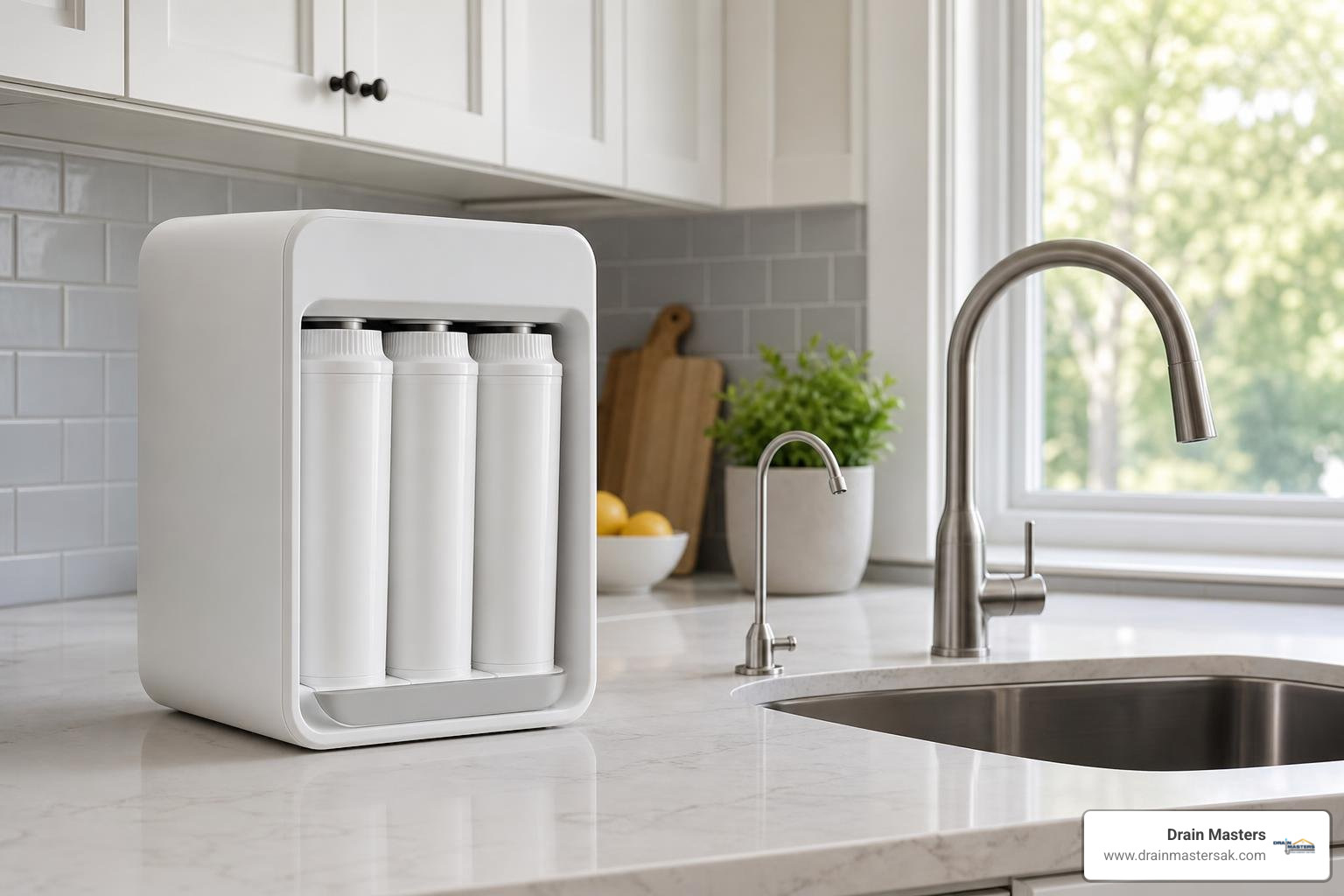
An instant water purifier is a point-of-use filtration system that delivers treated water quickly, usually from a countertop dispenser, dedicated faucet, or under-sink tap. Instead of waiting for gravity to pull water through a filter, the system uses water pressure, an electric pump, or both to move water through one or more filtration stages.
Most instant systems are designed for drinking and cooking water. They may sit on the counter, connect below the sink, or combine filtration with instant hot water dispensing. Some models store a small amount of purified water in an internal reservoir, while others filter on demand.
A typical instant purifier may include:
- A sediment filter to catch rust, sand, dirt, and larger particles
- Activated carbon to reduce chlorine, odors, and unpleasant taste
- A reverse osmosis membrane to reduce dissolved contaminants
- UV light to inactivate bacteria and viruses
- A post-filter to polish taste
- Optional remineralization to add back select minerals after RO filtration
The main idea is simple: water goes in, contaminants get reduced, and cleaner water comes out fast enough for daily life. No staring at a pitcher. No chanting, “Please filter faster,” while your coffee waits.
How an Instant Water Purifier Differs from Traditional Filters
Traditional pitcher and gravity filters are easy to use, but they are slow. You pour water into the top chamber, then gravity pulls it through the filter. Depending on the filter type and how clogged it is, that process can take several minutes.
Instant electric purifiers are different because they use pressure or a pump to move water through the filter media. That means they can dispense filtered water in seconds instead of 5 to 20 minutes.
Here is how they compare in real household use:
| Feature | Instant Water Purifier | Pitcher or Gravity Filter |
|---|---|---|
| Speed | Dispenses in seconds | Often takes several minutes |
| Filtration strength | Often higher, especially with RO and UV | Varies widely by filter |
| Capacity | Continuous or reservoir-based | Limited by pitcher size |
| Best for | Families, cooking, coffee, tea, daily hydration | Light use, renters, small spaces |
| Maintenance | Filter changes, occasional flushing, possible plumbing checks | Filter changes and pitcher cleaning |
| Installation | Countertop plug-in or under-sink connection | No installation |
Instant systems are especially useful when water demand is steady throughout the day. If you fill bottles, cook often, make baby formula, prepare tea or coffee, or want a dedicated filtered water tap, speed matters.
For homeowners who want more than a small drinking-water filter, it may also be worth comparing point-of-use systems with broader home water treatment options. A single kitchen purifier can solve drinking-water needs, while a larger system can treat water at more taps.
The Science Behind Instant Filtration Technologies
Not all instant purifiers clean water the same way. The right technology depends on what is in your water. That is why water testing is always the first smart step, especially in Anchorage, AK, where homes may rely on municipal water, private wells, or plumbing systems of different ages.
The most common technologies include:
Reverse osmosis
Reverse osmosis, often called RO, pushes water through a very fine membrane. RO is one of the strongest household filtration methods for dissolved contaminants. Depending on system design and certification, RO can reduce many substances, including:
- PFAS
- Lead
- Arsenic
- Fluoride
- Uranium
- Nitrates
- Microplastics
- Dissolved salts
- Some pharmaceuticals and industrial chemicals
Many RO membranes are designed with extremely small pore sizes, commonly described around 0.0001 microns. In practical terms, that is tiny enough to make a coffee filter look like a chain-link fence.
Activated carbon
Activated carbon is excellent for improving taste and odor. It is commonly used to reduce:
- Chlorine
- Chloramine, depending on carbon type and contact time
- Volatile organic compounds
- Some pesticides and chemicals
- Musty or chemical tastes
Carbon alone is not the same as RO. It can make water taste much better, but it may not remove dissolved metals or PFAS as thoroughly unless the filter is specifically designed and certified for those contaminants.
UV sterilization
UV light does not physically remove contaminants. Instead, it uses ultraviolet energy to inactivate microorganisms such as bacteria, viruses, and some protozoa. UV is especially useful for private well water or any water supply with microbiological risk.
Important note: UV works best when water is already clear. Sediment can shield microorganisms from the light, so UV is usually paired with sediment filtration.
Ultrafiltration
Ultrafiltration, or UF, uses a membrane with larger pores than RO but smaller pores than many standard filters. UF can reduce sediment, bacteria, some cysts, and microplastics, but it does not remove dissolved minerals or many dissolved chemicals the way RO can.
Multi-stage systems
Many instant purifiers combine technologies. For example, a system may use sediment filtration, carbon, RO, UV, and a final taste-polishing stage. Some countertop RO systems use multiple stages to address a broad range of contaminants while avoiding permanent plumbing changes.
The bottom line: the more specific your water quality concern, the more important certification and proper system matching become.
Key Benefits of Upgrading to an Instant Water Purifier

The biggest benefit of an instant water purifier is convenience, but that is only the start. A well-chosen system can change how your household uses water every day.
Here are the main advantages.
1. Faster filtered water
Instant systems are built for speed. Many deliver filtered water in seconds. Some instant hot systems can also heat water quickly, making tea, coffee, oatmeal, and cooking prep easier.
2. Better taste and smell
Activated carbon and post-filtration stages can reduce chlorine taste, musty odors, and metallic notes. Better taste often means people drink more water. That is one of the easiest health upgrades a household can make.
3. Strong contaminant reduction
Systems that use RO can reduce many contaminants that basic pitcher filters may not handle as effectively. Depending on certification and design, RO systems can remove up to 99% of many contaminants, including PFAS, lead, arsenic, and microplastics.
4. Less bottled water
If you regularly buy bottled water, an instant purifier can reduce plastic waste, storage clutter, and grocery hauling. Your back and your recycling bin may both thank you.
5. Hot water functionality
Some systems combine purification with instant hot water. Modern systems can pair RO filtration with adjustable hot water dispensing. That type of setup can be useful for cooking, beverages, and busy kitchens.
6. More confidence in daily water use
Filtered water is not just for drinking. Many homeowners use it for:
- Coffee and tea
- Cooking rice, pasta, and soup
- Ice cubes
- Baby formula preparation
- Pet water bowls
- Humidifiers, when manufacturer instructions allow
- Filling reusable bottles
If you are already thinking about your water quality, you are ahead of the curve. Many homeowners only look into filtration after a taste issue, plumbing repair, or water test result raises concerns.
Key Features of a High-Quality Instant Water Purifier
A good purifier should do more than look fancy on the counter. Shiny buttons are nice, but clean water is the point.
When comparing systems, look for these features:
Certified contaminant reduction
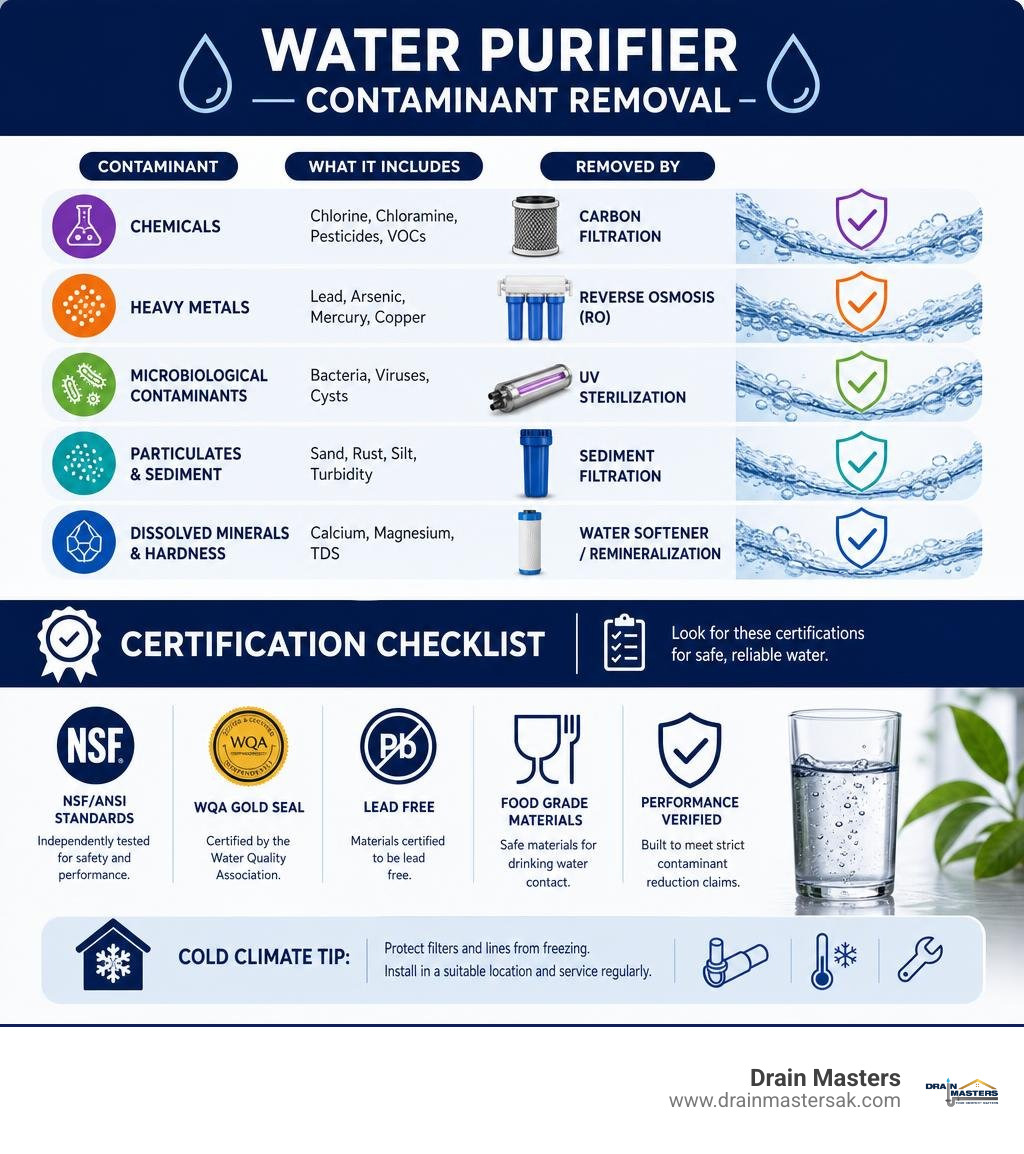
Look for independent certifications, such as NSF/ANSI standards or WQA certification, for the contaminants you care about. Certification should be specific. A filter certified for chlorine taste and odor is not automatically certified for lead, PFAS, or arsenic.
Common standards include:
- NSF/ANSI 42 for aesthetic effects like chlorine taste and odor
- NSF/ANSI 53 for certain health-related contaminants
- NSF/ANSI 58 for reverse osmosis systems
- NSF/ANSI 372 for low-lead plumbing components
- NSF/ANSI 401 for some emerging contaminants
Flow rate
A high-quality system should dispense water fast enough for your household. If you cook often or fill large bottles, slow dispensing gets old quickly.
Capacity
Countertop systems often use feed tanks and purified water reservoirs. Under-sink systems may use a tank or tankless design. Larger households should pay close attention to daily production capacity.
Filter life indicators
Smart indicators help prevent overdue filter changes. A filter that is past its service life can lose effectiveness and slow down flow.
TDS monitoring
TDS stands for total dissolved solids. Some RO systems display TDS before and after filtration. While TDS does not identify every contaminant, it can show how well the RO membrane is reducing dissolved material.
Temperature controls
Instant hot systems may offer adjustable temperatures for tea, coffee, baby formula, or cooking. Child locks are important if hot water is available.
Remineralization
RO filtration can remove beneficial minerals along with contaminants. Some systems add select minerals back for taste. This is not required for everyone, but many people prefer the flavor of remineralized RO water.
Easy filter changes
If filter replacement requires a wrestling match under the sink, it may not happen on time. Look for accessible filter cartridges, clear instructions, and maintenance reminders.
Installation, Maintenance, and Long-Term Costs
Instant purifiers fall into two main installation categories: countertop and under-sink.
Countertop systems
Countertop systems are usually the easiest to set up. Many are plug-in units with a refillable tank. They may be a good fit for renters, offices, small kitchens, or homeowners who do not want plumbing modifications.
Pros:
- Little or no installation
- Portable
- Easy filter access
- Good for apartments, cabins, or temporary setups
Cons:
- Takes counter space
- Requires manual refilling
- Limited tank capacity
- May look bulky in small kitchens
Under-sink systems
Under-sink systems connect to the cold water line and usually dispense from a dedicated faucet or combined tap. Some include instant hot water functionality. These systems are more permanent and often better for households that use a lot of filtered water.
Pros:
- Saves counter space
- Higher capacity options
- Cleaner kitchen appearance
- Convenient dedicated faucet
Cons:
- Requires plumbing connections
- May need electrical access
- Takes cabinet space
- Professional installation is often the safest choice
If you are not comfortable working with water supply lines, shutoff valves, drain connections, or electrical components near plumbing, call a professional. Water damage is not the kind of surprise anyone wants under the sink. Our team handles professional plumbing work in Anchorage, AK, and we always recommend safe installation over guesswork.
Filter lifespan
Filter life depends on the system, usage, and water quality. Common replacement ranges include:
- Carbon filters: every few months to 1 year
- Sediment filters: every few months to 1 year
- RO membranes: often 1 to 2 years, sometimes longer
- UV lamps: commonly about 1 year
- Post-filters: often 6 to 12 months
Some systems are designed for annual filter changes, while others require more frequent maintenance. In water with high sediment, iron, or hardness, filters may clog faster.
Wastewater generation
RO systems produce purified water and reject water. Older systems may waste more water, sometimes producing multiple gallons of reject water for each gallon of purified water. Newer designs can be more efficient, with improved pure-to-drain ratios such as 2:1, 3:1, or even 4:1 in some systems.
That ratio matters. A 3:1 pure-to-drain ratio means the system produces three parts purified water for every one part wastewater. A 1:3 ratio, on the other hand, would mean one part purified water and three parts wastewater. Always read the spec carefully, because the order of those numbers matters.
Long-term operating costs
Pricing can vary depending on system type, filter replacement schedule, installation needs, water quality, and household use. The most important long-term costs are usually:
- Replacement filters
- RO membrane replacement
- UV lamp replacement, if included
- Possible pre-filtration for sediment or well water
- Professional installation or maintenance
- Water use from RO reject water
- Electricity for pumps, heating, or UV
A cheaper system is not always cheaper over time. If filters have short lifespans or the system wastes more water, operating costs can creep up.
Regular plumbing care helps protect the system and the home around it. For example, checking shutoff valves, supply lines, and drain connections during routine plumbing maintenance can help catch small issues before they turn into cabinet-soaking headaches.
Choosing the Right System for City vs. Well Water
Your water source matters.
City water
Municipal water is treated before it reaches your home, but it can still contain chlorine, chloramine, disinfection byproducts, sediment from aging pipes, or trace contaminants. Older plumbing can also contribute lead or metals in some homes.
For city water, many homeowners choose:
- Carbon filtration for chlorine taste and odor
- RO for PFAS, lead, arsenic, microplastics, and dissolved contaminants
- Remineralization for improved taste after RO
- Under-sink systems for daily kitchen use
Well water
Private well water is different because the homeowner is responsible for testing and treatment. Well water may contain sediment, iron, manganese, hardness minerals, bacteria, nitrates, arsenic, or other naturally occurring contaminants depending on local geology and the condition of the well.
For well water, we usually recommend testing before choosing equipment. A strong well-water setup may include:
- Sediment pre-filter
- Iron or manganese treatment if needed
- Water softening if hardness is high
- UV sterilization for microbiological protection
- RO at the kitchen sink for drinking water
- Whole-home filtration when multiple taps need treatment
An instant purifier can be part of a well-water solution, but it should not be the only barrier if the water has heavy sediment or bacteria concerns. Pre-filtration protects the purifier and improves performance.
For Anchorage, AK, homeowners, cold climate conditions and plumbing layout also matter. Filter housings, lines, and equipment should be installed where they are protected from freezing and easy to service.
Environmental Impact and Household Efficiency
An instant purifier can make your home more efficient by reducing bottled water use, cutting down on single-use plastic, and making filtered water easier to access. When clean water is convenient, people tend to use it more consistently.
Here is a practical comparison.
| Option | Convenience | Environmental Impact | Maintenance | Best Use |
|---|---|---|---|---|
| Instant purifier | High; filtered water on demand | Reduces bottled water use; RO may create reject water | Scheduled filter changes | Daily drinking, cooking, hot drinks |
| Pitcher filter | Moderate; requires waiting and refilling | Less plastic than bottled water | Frequent filter changes | Small households, light use |
| Bottled water | Easy but requires buying and storing | High plastic, transport, and storage impact | None at home | Emergency backup or travel |
| Whole-house filtration | Very high; treats water throughout home | Reduces need for point-of-use filters | Periodic media and filter service | Whole-home water improvement |
| Faucet-mounted filter | Moderate; simple use | Less plastic than bottled water | Frequent cartridge changes | Basic taste and odor improvement |
RO systems do create reject water, but efficient models can reduce waste compared with older designs. In many households, the environmental benefit of reducing bottled water can still be significant.
A smart approach is to pair filtration with good habits:
- Use reusable bottles
- Replace filters on schedule
- Choose systems with longer-lasting cartridges when appropriate
- Fix leaks quickly
- Avoid oversized systems when a smaller one fits the need
- Test water before buying treatment equipment
Water treatment is part of a bigger household plumbing picture. Leak detection, fixture maintenance, and smart monitoring can all help reduce waste. We share related ideas in our guide to smarter plumbing maintenance.
Frequently Asked Questions About Instant Water Purifiers
What is an instant water purifier?
An instant water purifier is an electric or pressure-assisted filtration system that delivers filtered water quickly, usually in seconds. It may sit on a countertop or connect under the sink. Many systems use reverse osmosis, activated carbon, UV sterilization, or a combination of these technologies to reduce contaminants and improve taste.
How fast does an instant water purifier deliver clean water?
Most instant purifiers dispense water in seconds once they are set up and ready. Some systems filter on demand, while others maintain a small internal reservoir of purified water. This is much faster than many gravity filters or pitcher filters, which can take 5 to 20 minutes to process a full amount of water.
Do instant water purifiers remove PFAS and microplastics?
Some do, but it depends on the filtration technology and certification. Reverse osmosis systems are among the strongest household options for reducing PFAS and microplastics. Activated carbon may also reduce some PFAS when specifically designed for that purpose. Always look for third-party certification for the exact contaminants you want removed.
What is the difference between countertop and under-sink instant purifiers?
Countertop systems usually require little or no plumbing work. They often plug into an outlet and use a refillable tank. Under-sink systems connect to the cold water line and usually dispense through a dedicated faucet. Countertop units are easier to move, while under-sink systems save counter space and often suit higher daily water use.
How often do I need to replace the filters in an instant water purifier?
Filter replacement varies by system, water quality, and household usage. Some filters last a few months, while RO membranes may last 1 to 2 years or longer. UV lamps are commonly replaced about once per year. Always follow the manufacturer’s schedule and pay attention to flow changes, taste changes, or filter indicator alerts.
Do these systems waste a lot of water?
Reverse osmosis systems create reject water as part of the purification process. Older designs may waste more water, while newer systems can be more efficient with improved pure-to-drain ratios. If water conservation is a priority, compare the system’s efficiency rating before buying and make sure it is installed correctly.
Can I use an instant water purifier with well water?
Yes, but well water should be tested first. If the well water contains sediment, iron, bacteria, hardness, or other issues, pre-treatment may be needed before the instant purifier. RO and UV can be very useful for well water, but they work best as part of a system matched to the test results.
What certifications should I look for when buying a purifier?
Look for certifications from recognized organizations such as NSF or WQA. Common standards include NSF/ANSI 42 for chlorine taste and odor, NSF/ANSI 53 for certain health-related contaminants, NSF/ANSI 58 for reverse osmosis systems, NSF/ANSI 372 for low-lead components, and NSF/ANSI 401 for some emerging contaminants.
Is the hot water from an instant purifier safe for baby formula?
It can be, but follow infant feeding guidance from your pediatrician and formula manufacturer. A purifier can improve water quality, and adjustable temperature controls can make preparation easier. However, hot water temperature, cleanliness, and proper formula handling still matter. Use child-lock features and make sure the system is maintained carefully.
How do I install an under-sink instant water purifier?
Most under-sink systems connect to the cold water supply, include filtration cartridges, and dispense through a dedicated faucet or tap. Installation may also involve a drain connection, electrical outlet, and cabinet space planning. If you are unsure about shutoff valves, fittings, drilling, leak prevention, or electrical safety, contact a professional plumber.
Conclusion
An instant water purifier can make clean water easier, faster, and more convenient for everyday life. Compared with pitcher filters, these systems deliver filtered water much more quickly. Compared with bottled water, they reduce hauling, storage, and plastic waste. And when properly matched to your water quality, technologies like RO, UV, and activated carbon can reduce a wide range of contaminants, including PFAS, lead, chlorine, and microplastics.
The best system for your home depends on your water source, available space, contaminant concerns, and how much filtered water your household uses. Countertop models are simple and flexible. Under-sink models are clean, convenient, and built for daily use. Well water may need extra testing and pre-filtration. City water may need carbon, RO, or both.
If you are planning an under-sink installation, upgrading your kitchen water treatment, or trying to understand what your water actually needs, we can help. Drain Masters is family-owned in Anchorage, AK, with over 20 years of hands-on plumbing experience, upfront pricing, advanced tools, and thousands of jobs handled each year. For safe setup and dependable guidance, contact our team to schedule professional water purification services.