
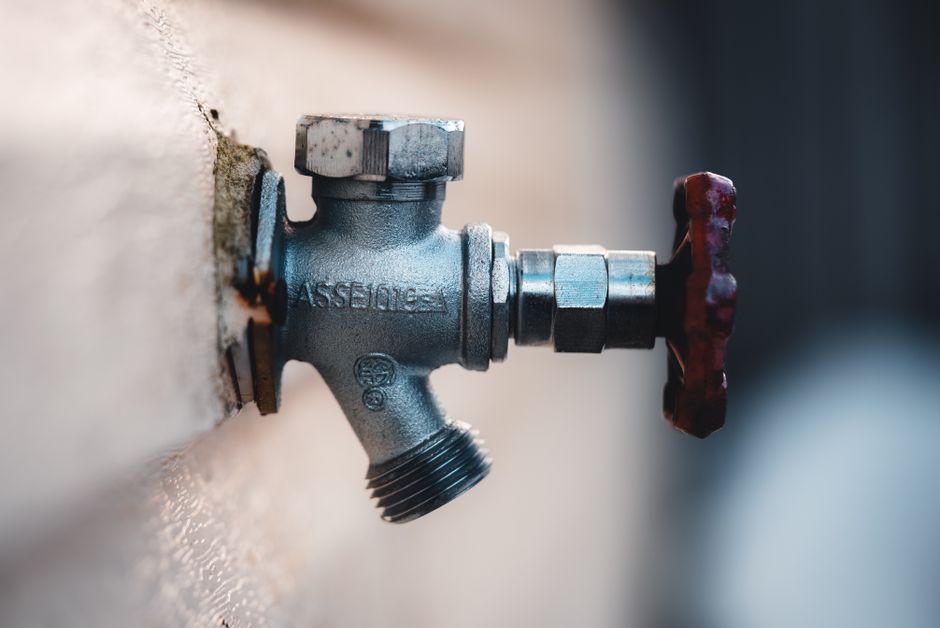
Why Your Outdoor Faucet Needs an Anti-Siphon Vacuum Breaker
An anti-siphon vacuum breaker is a small but critical device that stops contaminated water from being pulled backward into your home’s clean water supply. If yours is leaking, spraying, or damaged, here’s what you need to know at a glance:
Quick Answer: How to Fix a Bad Anti-Siphon Vacuum Breaker
- Check for visible leaks or spraying around the vacuum breaker body
- Shut off the water to the hose bib before doing anything
- Unscrew the old vacuum breaker by hand or with pliers (counterclockwise)
- Inspect the washer and seal for cracks, mineral buildup, or wear
- Replace the unit if the seal is damaged or the set screw is broken off
- Hand-tighten the new vacuum breaker onto the hose bib threads
- Turn the water back on and check for leaks
- Call a licensed plumber if the leak continues or you see signs of backflow contamination
That small device on the end of your outdoor spigot does a big job. Without it, a drop in water pressure can create a siphon effect that pulls dirty water from your garden hose, sprinkler system, or anything else connected to that faucet right back into your drinking water. This is called backsiphonage, and it’s a real health risk that most homeowners never think about until something goes wrong.
The good news is that most anti-siphon vacuum breaker problems are straightforward to diagnose. A little water spraying from the top during normal use is expected. But constant dripping, cracked housing, or water that never stops running are signs your device needs attention.
I’m Debra Blouin, General Manager of Drain Masters in Anchorage, AK, and over my two decades in the plumbing industry I’ve seen how often a failing anti-siphon vacuum breaker gets overlooked until it causes a much bigger problem. In the sections below, I’ll walk you through exactly how these devices work, how to fix common issues, and when it’s time to call in a pro.
What is an Anti Siphon Vacuum Breaker and How Does It Work?
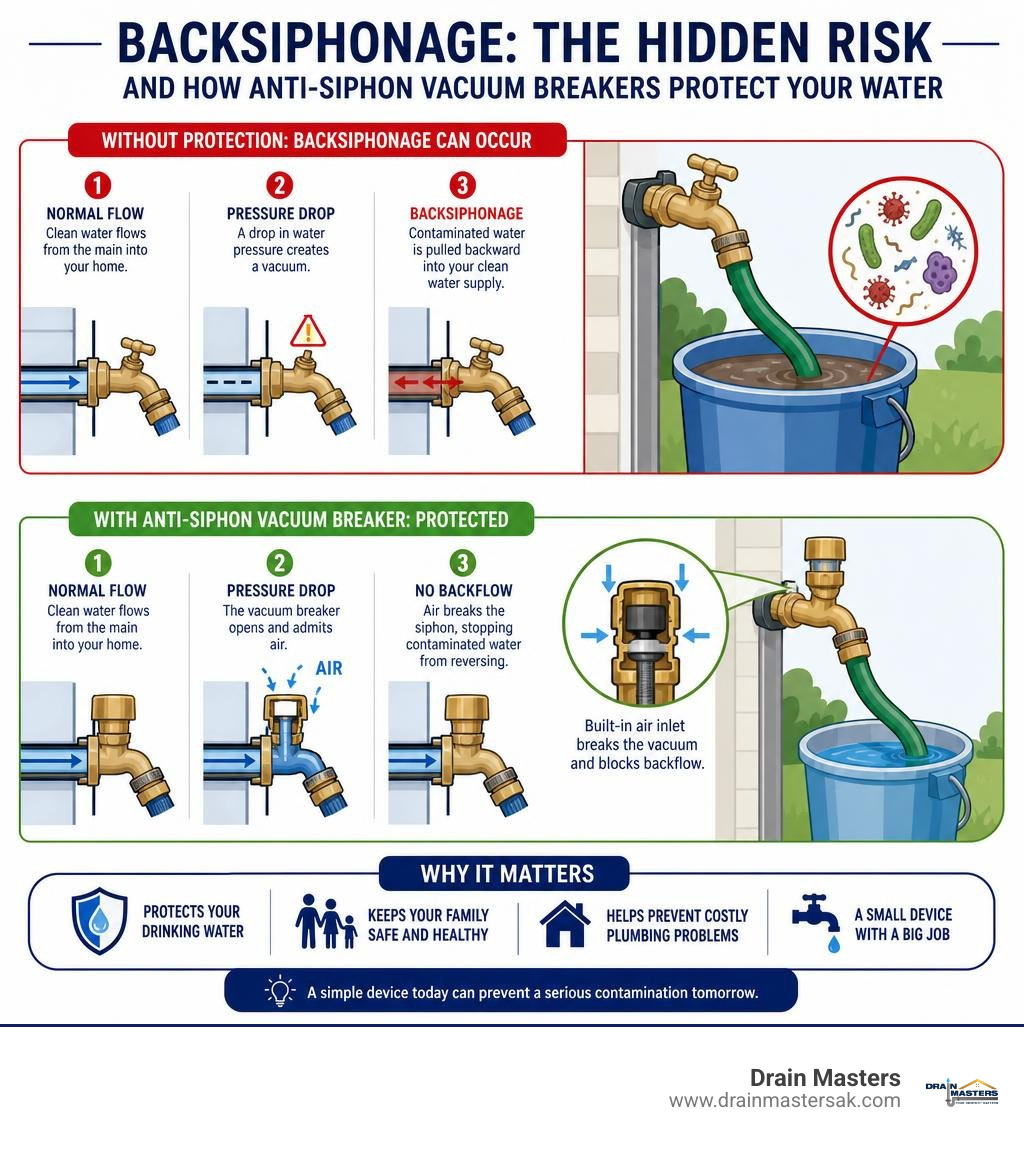
To understand why this tiny piece of brass or plastic is so vital, we have to look at how water moves through your home. Under normal conditions, water is pushed forward through your pipes by constant municipal water pressure. However, if that pressure suddenly drops, such as during a water main break, nearby firefighting efforts, or high-demand periods, a vacuum is created.
This vacuum acts like a giant drinking straw, sucking water backward through any open connections. If you have a garden hose sitting in a bucket of soapy water, a puddle of fertilizer, or a muddy lawn, that contaminated liquid can be drawn directly into your potable water supply. This hazardous event is known as backsiphonage.
An anti-siphon vacuum breaker prevents this by utilizing a simple, mechanical design. Inside the valve, there is a small, spring-loaded check valve and an atmospheric vent.
- Under Normal Pressure: The force of the flowing water pushes the internal check valve open and seals the atmospheric vent closed, allowing water to flow out of the spigot as intended.
- Under Loss of Pressure: If a drop in pressure occurs, the internal spring immediately snaps the check valve shut, blocking the path back into your home’s plumbing. Simultaneously, the atmospheric vent opens to let outside air into the pipe. This breaks the vacuum (hence the name “vacuum breaker”) and stops any siphoning action in its tracks.
Because these mechanical parts are constantly exposed to water, minerals, and extreme weather, they eventually wear out. To ensure your home remains fully protected against these invisible hazards, scheduling a professional test for your backflow system is the best way to verify that your safety devices are operating exactly as they should. Manufacturers like Watts design a wide range of these devices to handle different flow rates and plumbing configurations, which you can explore on the manufacturer specifications and options.
Main Types of Vacuum Breakers and Why They Matter
When dealing with cross-connections, which represent any point where potable water can mingle with non-potable substances, choosing the right safety device is paramount. Failing to install the correct backflow preventer can result in serious health hazards, contaminated drinking water, and even violations of local plumbing codes.
If you are already experiencing strange noises or fluctuating water flow when turning on your spigots, you might be resolving issues with your home water pressure that go beyond a simple valve replacement. Having a clear picture of the different vacuum breaker styles is the first step in restoring your system’s balance. At Drain Masters, we provide our full range of residential plumbing services to help homeowners identify exactly which device fits their specific system layout.
Atmospheric Anti Siphon Vacuum Breaker Options
The most common type of backflow protection found on residential properties is the atmospheric vacuum breaker. These are typically small, inexpensive brass fittings that screw directly onto the threaded end of your outdoor hose bibb.
A standard atmospheric model is designed to comply with ASSE 1011 safety standards. These devices are constructed from durable, lead-free brass to withstand outdoor elements.
Atmospheric vacuum breakers are excellent for non-continuous pressure applications, meaning they should not be left under constant water pressure for more than 12 hours at a time. They are designed to relieve pressure and drain out excess water when you turn off the spigot, which is why you will often hear a brief hiss or see a small splash of water near the faucet threads when the water is shut off.
Pressure Vacuum Breaker Assemblies for Irrigation
For systems that require constant, continuous water pressure, such as dedicated lawn sprinkler systems or commercial irrigation lines, an atmospheric hose bibb accessory will not suffice. Instead, plumbing codes require a Pressure Vacuum Breaker (PVB) assembly.
These larger, more complex assemblies are certified under ASSE 1020 standards. Unlike atmospheric models, a PVB is designed to remain under continuous operating pressure. It features built-in test cocks that allow plumbers to hook up specialized gauges and test the internal spring-loaded check valves annually.
A critical rule for installing a PVB is that it must be mounted vertically and at least 12 inches above the highest downstream sprinkler head or outlet. This elevation ensures that gravity cannot bypass the atmospheric vent, allowing the device to break the siphon successfully if water pressure drops.
Below is a quick comparison to help you determine which style of anti-siphon vacuum breaker is right for your home’s outdoor setup:
| Feature | Atmospheric Vacuum Breaker (Hose Bibb) | Pressure Vacuum Breaker (PVB Assembly) |
|---|---|---|
| Primary Application | Garden hoses, outdoor spigots, utility sinks | In-ground irrigation, lawn sprinkler systems |
| Continuous Pressure? | No (maximum 12 hours of continuous pressure) | Yes (designed for constant system pressure) |
| Installation Location | Directly on the hose bibb threads | Outdoors, at least 12 inches above highest outlet |
| Standard Certification | ASSE 1011 / CSA B64.2 | ASSE 1020 / IAPMO |
| Testing Requirement | Manual inspection, visual check for leaks | Annual professional testing using test cocks |
| Primary Material | Brass, plastic, or chrome-plated brass | Cast bronze, stainless steel internals |
How to Install and Maintain Backflow Preventers
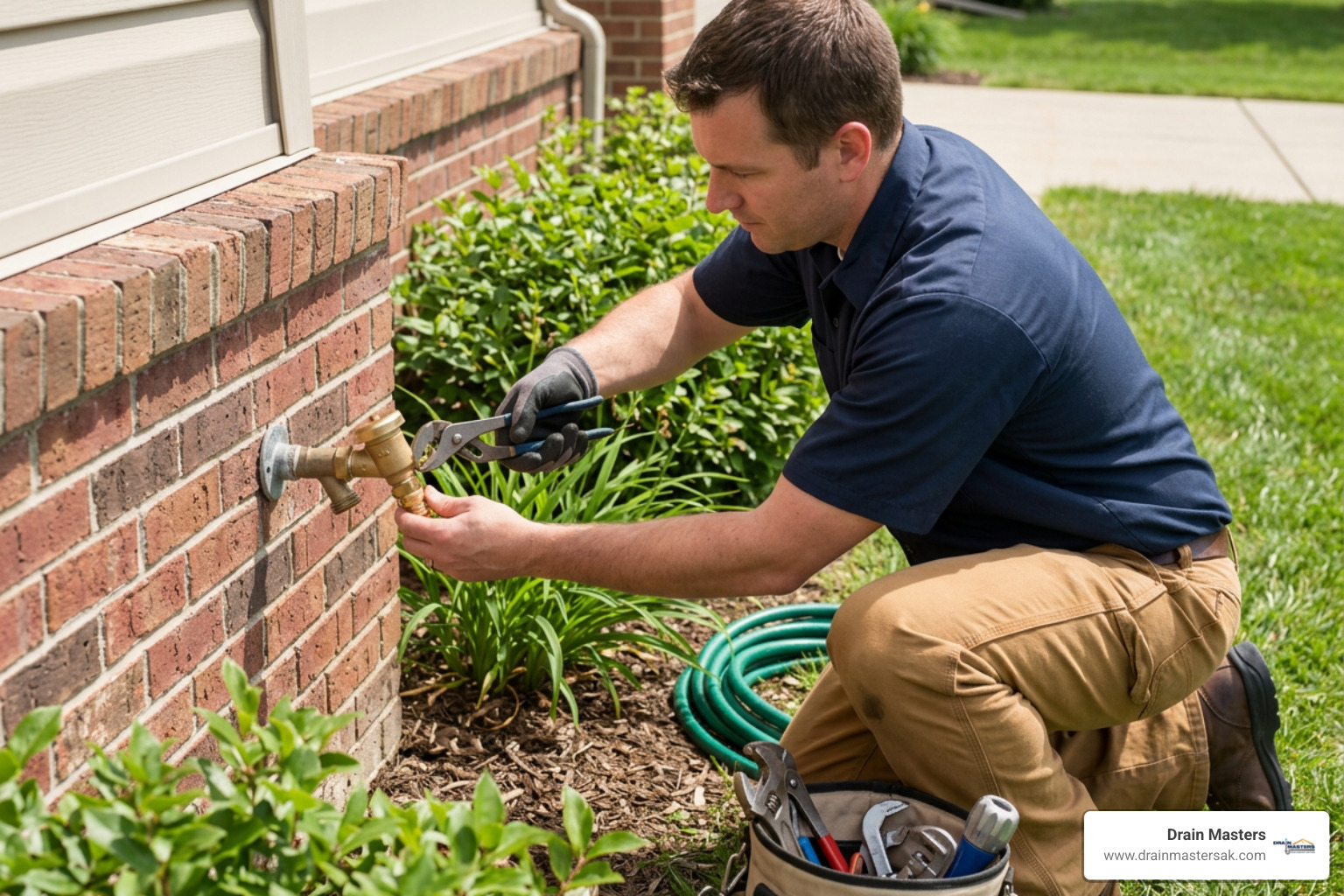
Taking care of your backflow devices keeps your water clean and prevents sudden, expensive plumbing emergencies. Fortunately, keeping these valves in top shape does not require a degree in engineering.
Step-by-Step Installation of an Anti Siphon Vacuum Breaker
If you are replacing an old, leaking atmospheric hose bibb vacuum breaker, you can often perform the swap with a few basic tools. However, always keep safety in mind: turn off the main water supply or the dedicated shut-off valve to your outdoor spigot before attempting any repairs.
- Remove the Old Device: If the old vacuum breaker has a set screw, you may need to drill it out or use a screw extractor if the head has been snapped off (which is common for tamper-proof designs). Once the screw is clear, use a pair of pliers to turn the old breaker counterclockwise to unscrew it.
- Clean the Threads: Use a wire brush to clean any corrosion, dirt, or old thread tape off the male threads of your outdoor faucet.
- Apply Thread Tape: Wrap a couple of layers of PTFE thread tape clockwise around the spigot threads to ensure a watertight seal.
- Thread the New Device: Screw the new anti-siphon vacuum breaker onto the faucet by hand turning it clockwise. Once hand-tight, give it a quarter-turn with pliers to snug it up. Do not over-tighten, as this can crack the internal rubber washer.
- Secure the Set Screw: If your new device comes with a break-away tamper-proof set screw, tighten it down until the hex head shears off. This locks the device permanently onto your spigot to satisfy local building codes.
- Test Your Work: Turn the water supply back on, attach your garden hose, and check for leaks around the threads.
While swapping a hose bibb attachment is a common DIY task, larger pressure vacuum breakers on irrigation lines require professional calibration. Integrating these checks into setting up a routine maintenance plan is the best way to safeguard your home. If you run into frozen pipes, stubborn rusted threads, or a snapped faucet shank, stop immediately and contact a licensed professional to avoid causing major water damage.
Troubleshooting Common Failures and Leaks
The most frequent complaint homeowners have about their outdoor spigots is water spraying wildly from under the plastic cap of the vacuum breaker.
In many cases, this spray is actually the valve doing its job. When you turn off the spigot, the sudden drop in pressure causes the internal check valve to drop, venting the remaining water out of the side ports. However, if water is continuously spraying or dripping while the hose is turned on and running, you have a failure.
Continuous leaking is usually caused by:
- Worn Rubber Washers: Over time, the internal rubber seals dry out, crack, or become deformed.
- Mineral Deposits: In areas with hard water, calcium and scale build up inside the valve, preventing the internal float from sealing completely.
- Freeze Damage: This is incredibly common in Anchorage, AK. If a hose is left attached to the spigot during our freezing winters, water gets trapped inside the vacuum breaker. As that water freezes, it expands, cracking the brass body or shattering the plastic internal float.
If you suspect freeze damage has cracked the internal piping behind your outdoor faucet, you may need professional water line repairs to fix hidden leaks before they ruin your home’s foundation or crawl space.
Frequently Asked Questions About Vacuum Breakers
What is an anti-siphon vacuum breaker?
An anti-siphon vacuum breaker is a plumbing safety device installed on outdoor faucets, utility sinks, and irrigation systems. It uses an internal check valve and an atmospheric vent to prevent non-potable water, chemicals, or debris from being siphoned backward into your home’s clean drinking water supply during a sudden drop in water pressure.
How do I know if my vacuum breaker is bad?
A bad vacuum breaker will typically leak continuously from under its plastic cap while the water is running, drip constantly even when the valve is closed, or show visible cracks in its brass or plastic body. You might also notice a significant drop in water pressure when using your garden hose.
Why is water spraying out of my vacuum breaker?
A brief spray of water when you turn off your outdoor faucet is completely normal; it means the device is venting pressure and draining safely. However, if water sprays continuously while the faucet is turned on and water is actively flowing through the hose, the internal rubber seal or float is likely worn out or clogged with mineral deposits and needs to be replaced.
Can I remove a vacuum breaker with a broken set screw?
Yes, but it takes some care. Many hose bibb vacuum breakers use a break-away set screw designed to prevent easy removal. To remove it, you will need to use a small drill bit to carefully drill out the center of the remaining screw or use a hacksaw to make a small notch in the screw head so you can back it out with a flathead screwdriver.
How often should outdoor vacuum breakers be replaced?
Generally, standard brass hose bibb vacuum breakers last between 3 to 5 years depending on water quality and weather exposure. However, they should be visually inspected every spring for leaks, and professional pressure vacuum breakers on irrigation lines should undergo safety testing every year.
Do vacuum breakers freeze in the winter?
Yes, vacuum breakers are highly susceptible to freeze damage. If you leave a garden hose attached during freezing temperatures, water remains trapped inside the valve body. When this water freezes and expands, it can easily split the brass housing or ruin the delicate internal plastic check valves.
What is the difference between a backflow preventer and a vacuum breaker?
A vacuum breaker is a specific type of backflow preventer. While all vacuum breakers prevent backflow, they only protect against backsiphonage (the vacuum effect) and cannot handle backpressure (when downstream pressure exceeds supply pressure). Other backflow preventers, like reduced pressure zone (RPZ) valves, protect against both backsiphonage and backpressure.
Are vacuum breakers required by plumbing codes?
Yes, modern plumbing codes across the country, including in Anchorage, AK, strictly require anti-siphon protection on all outdoor spigots, hose connections, and irrigation systems to prevent cross-contamination of the public water supply.
Can I install an anti-siphon vacuum breaker myself?
A standard screw-on hose bibb vacuum breaker is a simple DIY project that most homeowners can complete with basic hand tools. However, installing or replacing a whole-house backflow preventer or an irrigation pressure vacuum breaker involves cutting into main water lines and must be handled by a licensed plumber to ensure safety and code compliance.
How do I winterize my outdoor vacuum breaker?
To winterize a hose bibb vacuum breaker, disconnect all hoses before the first freeze to allow the valve to drain completely. For large irrigation pressure vacuum breakers, you must shut off the main indoor water supply to the system, open the test cocks on the valve to release trapped water, and blow out the lines with compressed air to prevent ice damage.
Conclusion
Protecting your home’s drinking water from contamination is one of the most important aspects of home maintenance. A failing anti-siphon vacuum breaker might seem like a minor nuisance when it sprays water on your shoes, but it represents a major vulnerability in your plumbing system’s safety network. Keeping these devices clean, dry, and properly winterized will save you from unexpected water line damage and keep your family’s water clean.
Pricing can vary depending on several factors, such as the accessibility of your outdoor lines and whether you need a simple hose bibb replacement or a complete irrigation valve overhaul. If you are dealing with stubborn leaks, frozen pipes, or need certified testing, the team at Drain Masters is here to help. As a family-owned business serving Anchorage, AK, for over 20 years, we combine upfront pricing with advanced tools to complete more than 4,000 successful jobs annually.
Don’t let a faulty valve compromise your home’s water safety; contact Drain Masters today to schedule your expert professional backflow testing services and keep your systems running flawlessly.