
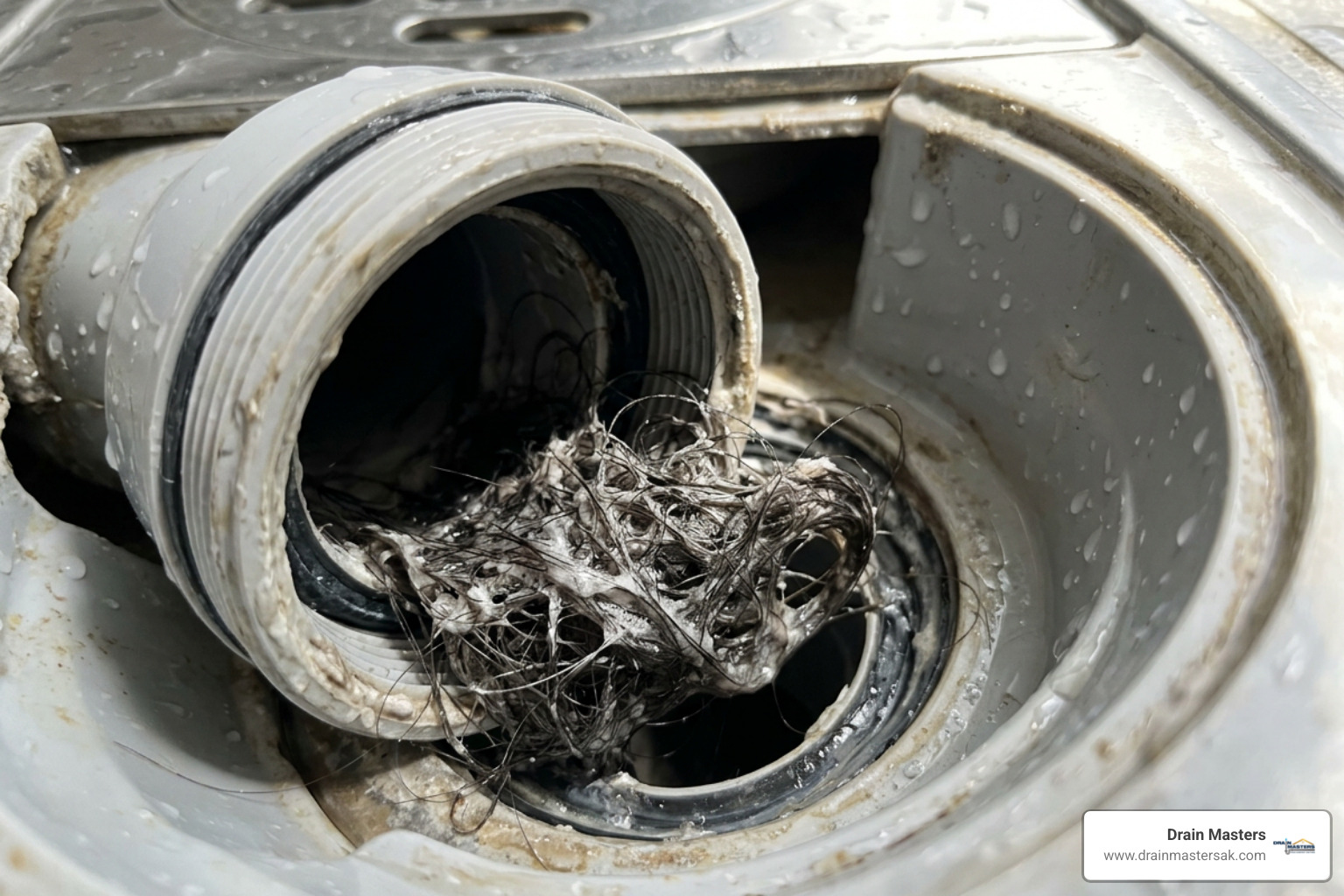
What Causes Stubborn Shower Drain Blockages?
The best way to clear a clogged shower drain is to remove the drain grate and manually extract hair buildup using a flexible barbed plastic drain tool or hand snake, followed by a hot tap-water flush and an enzymatic cleaner to break down soap residue.
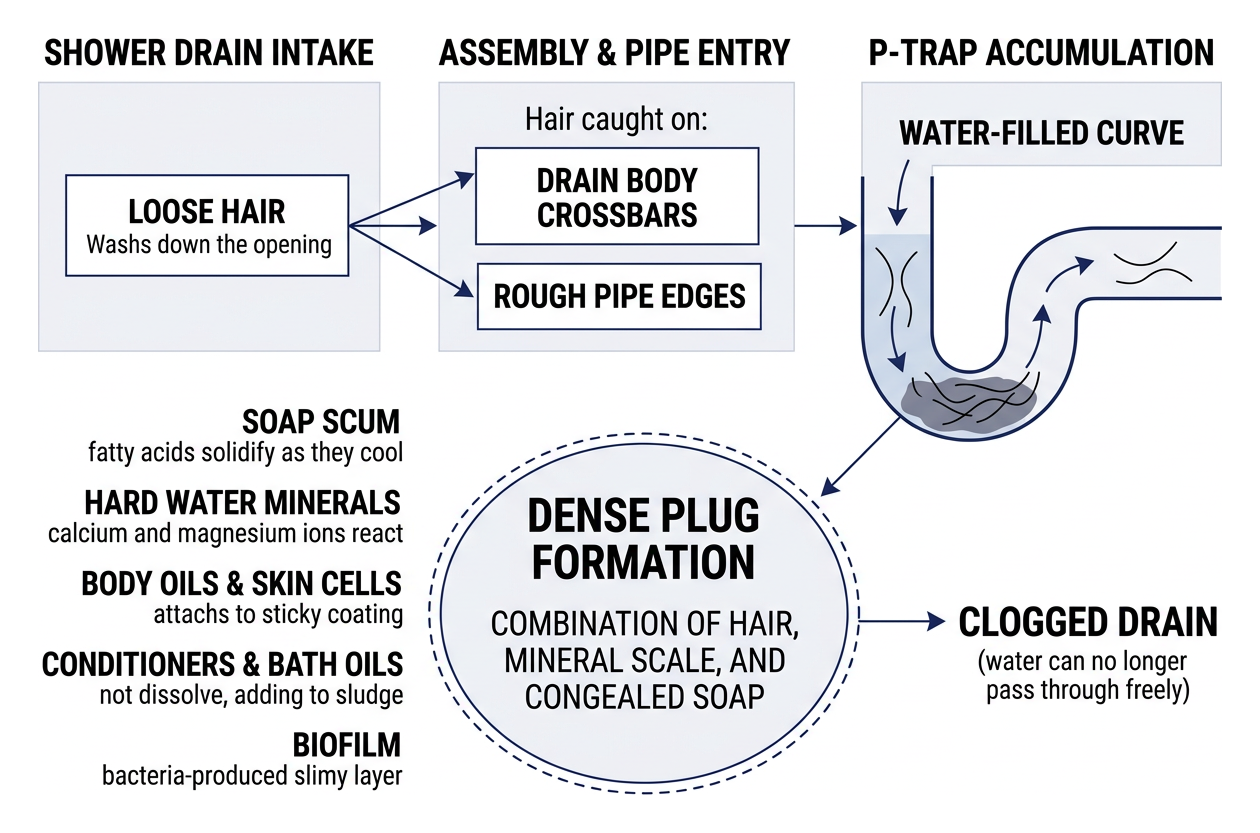
Understanding what happens beneath your shower floor makes clearing clogs much easier. When you take a shower, loose hair naturally washes down the opening. The average person sheds 50 to 100 hairs per day, and much of that loss happens while washing and conditioning your hair. On its own, a few strands of hair might slide through your plumbing without incident. However, your shower drain handles far more than just rinse water.
As hair enters the pipe, it catches on the rough edges of the drain assembly, the crossbars of the drain body, or inside the water-filled curve of the P-trap. From there, other household substances accelerate the clog formation:
- Soap scum: Traditional bar soaps contain animal fats and fatty acids that solidify as they cool inside your drainage system.
- Hard water minerals: Calcium and magnesium ions react with soap residues, creating an insoluble, sticky curd that coats pipe walls.
- Sloughed skin cells and body oils: Natural body oils and dead skin attach directly to the sticky soap coating, adding mass.
- Conditioners and bath oils: Heavy cosmetic oils, thick hair masks, and liquid body washes do not dissolve instantly in lukewarm water and add to the sticky sludge.
- Biofilm: Harmless environmental bacteria feed on organic debris, producing a slimy layer that glues hair strands together into a rope-like mass.
This combination of hair, mineral scale, and congealed soap is a common cause of residential bathroom drain clogs. The dense plug acts like a sticky net, catching every new hair that enters the drain until water can no longer pass through freely.
The Best Way to Clear Clogged Shower Drain Blockages Step-by-Step
When you encounter standing water around your ankles, jumping straight to extreme measures can damage your plumbing or create safety hazards. The most effective approach follows a methodical hierarchy: start with mechanical surface removal, advance to mechanical extraction inside the trap, and finish with safe, natural treatments to clear sticky residues.
| Method | Best For | Effectiveness | Pipe Safety | Relative Cost |
|---|---|---|---|---|
| Manual / Barbed Tool Extraction | Visible hair in the first 12–24 inches | Extremely High | 100% Safe | Low |
| Cup Plunging | Soft clogs, soap blocks, and loose debris | Moderate to High | Safe | Low |
| Mechanical Snaking | Deep hair clogs past the P-trap | Very High | Safe (when rotated correctly) | Low to Moderate |
| Baking Soda & Vinegar | Light soap residue, deodorizing, biofilm | Mild | 100% Safe | Very Low |
| Enzymatic Cleaners | Organic buildup, long-term maintenance | Moderate (Slow acting) | 100% Safe (Septic Safe) | Low |
| Chemical Cleaners | Not recommended | Inconsistent | Risky (Corrosive to pipes) | Moderate |
Always prioritize safety during any drain clearing process. Wear durable rubber gloves to protect your skin from bacteria and grime, ensure proper room ventilation, and wear eye protection if you plan on plunging standing water.
Step 1: Remove the Drain Cover and Inspect the Opening
The journey toward an open drain starts at the surface. Many shower blockages sit right beneath the decorative grate.
- Identify the grate attachment: Modern shower grates either snap into place or are secured with one or two stainless steel screws.
- Remove the cover: If screws are present, use an appropriate flathead or Phillips screwdriver to remove them and set them safely aside outside the shower pan. For snap-in styles, insert a flathead screwdriver or butter knife under the outer rim and gently pry upward.
- Inspect the pipe: Shine a bright flashlight straight down into the opening.
- Remove immediate debris: If you see a cluster of hair caught on the underside of the drain crosshairs or immediately below the flange, put on your rubber gloves and extract it using needle-nose pliers or your fingers. Often, removing this top bundle immediately restores partial flow.
Step 2: Manually Remove Clogged Shower Drain Hair Buildup
If clearing the surface does not solve the slow drainage, the main blockage is likely sitting within the first 12 to 24 inches of the pipe. A flexible barbed plastic drain tool is the ideal instrument for this stage.
Feed the flexible plastic tool down into the drain opening. You will feel slight resistance as it navigates past the internal crossbars and enters the upper bend of the P-trap. Gently push the tool through the resistance, then rotate it clockwise two or three full turns. The tiny backward-facing barbs along the tool’s spine will snag the woven hair fibers.
Slowly draw the tool straight up and out of the drain. Be prepared: this will pull up a substantial, discolored clump of hair and soap scum. Deposit the debris directly into a trash bag. Repeat this process two to three times at slightly different angles until the tool emerges clean.
For another practical explanation of how hair and residue build up inside household drains, our guide to clearing stubborn drain clogs walks through safe, mechanical-first techniques.
Step 3: Plunge the Drain Opening to Dislodge Deep Residue
If the barbed tool comes back clean but water continues to pool, the clog may be sitting slightly farther down or consist of soft soap sludge that slipped past the barbs. A simple flat-bottomed cup plunger provides targeted suction to shift these obstructions.
- Ensure a water seal: For a plunger to work, there must be enough standing water in the shower pan to submerge the rubber cup, about 1 to 2 inches. If the shower has drained completely dry, run a little warm tap water into the base.
- Seal secondary openings: If you are plunging a combination shower-and-bathtub unit, block the overflow plate on the tub wall. Stuff a damp washcloth firmly into the overflow opening or hold it tightly with your hand to prevent air and pressure from escaping.
- Position the plunger: Place the rubber cup flat over the shower drain opening to form an airtight seal against the smooth shower floor.
- Execute the strokes: Push down gently to release trapped air, then plunge vigorously up and down with quick, forceful strokes for 15 to 20 seconds. The upward pulling motion is what dislodges the clog by pulling the mass back toward the opening.
- Check the results: Break the seal and see if the water rushes down. If it begins draining quickly, run hot tap water for two minutes to flush the loosened debris down the line.
Step 4: Loosen Remaining Grime with Natural Cleansers
Once mechanical tools have pulled out the thick hair plug, you may still have sticky, greasy soap residues clinging to the interior pipe walls. A simple combination of pantry staples can help loosen this remaining sludge without introducing harmful chemicals into your home’s plumbing.
- Pour 1/2 cup of baking soda (sodium bicarbonate) directly down the drain opening, using a small funnel if necessary to get the powder past the grate mounts.
- Pour 1 cup of distilled white vinegar directly over the baking soda.
- Cover the drain opening immediately with a flat rubber drain stopper or a damp cloth to force the bubbling action down into the pipe rather than up into the shower pan.
The chemical reaction between the mild alkaline baking soda and the acidic vinegar produces carbon dioxide gas and active fizzing that works to loosen greasy films and break down light organic residue. Allow the mixture to work for 15 to 30 minutes.
After waiting, flush the drain with hot tap water for several minutes. Never pour boiling water directly into a modern shower drain. Most residential drainage systems use PVC or ABS plastic pipes joined by adhesive solvent welds, and very hot water can soften thin pipes, compromise rubber gasket seals, or degrade adhesive at pipe joints. Stick to hot water straight from your household tap.
Step 5: Dissolve Residual Biofilm with an Enzymatic Cleaner
For lingering odors or deep biological film that mechanical tools and vinegar cannot reach, enzymatic drain cleaners provide an eco-friendly finishing step. Unlike caustic liquid cleaners, enzyme treatments contain concentrated natural bacteria and biological enzymes that digest organic matter like hair proteins, grease, and soap scum over several hours.
Pour the manufacturer-recommended dosage of enzymatic cleaner down the shower drain just before going to bed. Avoid using the shower, sink, or running any water in that bathroom overnight, ideally 6 to 8 hours, so the live enzymes have ample time to feed on the organic lining inside the pipes. In the morning, flush the line with warm water. Enzymatic cleaners are non-corrosive, safe for plastic and metal pipes, and suitable for homes connected to septic systems.
Mechanical Snaking vs. Chemical Drain Cleaners
When basic home methods fail to fully open a blocked drain, homeowners often face a choice: buy a bottle of heavy chemical drain opener or use a mechanical drain snake. Professional plumbers generally recommend mechanical snaking over liquid chemicals.
The Hidden Risks of Chemical Cleaners
Store-bought chemical drain cleaners rely on aggressive compounds like sodium hydroxide, also called caustic soda or lye, or concentrated sulfuric acid. These chemicals generate an intense heat-producing reaction intended to break apart organic blockages. Unfortunately, this process introduces serious hazards:
- Pipe degradation: Heat from chemical reactions can warp, soften, and damage PVC and ABS drainage pipes. In older metal systems, caustic chemicals can corrode copper, brass, and cast iron, causing pipe walls to thin and pinhole leaks to develop.
- Toxic fumes: Chemical openers can emit harsh fumes that irritate eyes, skin, and respiratory tracts in enclosed bathroom spaces.
- Severe chemical burns: If the chemical fails to clear the clog, your shower can become a basin of standing caustic liquid. Any subsequent plunging or snaking may splash it onto your skin or eyes.
- Environmental impact: Corrosive chemicals can disrupt beneficial bacteria in septic systems and should not be treated as a routine solution.
Why Snaking Is Often the Best Way to Clear Clogged Shower Drain Traps
A manual hand snake, also called a drum auger, is a reusable tool that physically addresses the problem without exposing your plumbing to caustic chemicals. A standard 25-foot hand auger consists of a flexible steel cable with a corkscrew tip housed inside a rotating drum.
To snake a shower drain:
- Feed the steel cable into the drain opening by hand until you encounter resistance, usually at the P-trap.
- Maintain light forward pressure while turning the drum handle clockwise. The rotating motion helps the curved head maneuver through tight pipe bends.
- Continue feeding the cable past the trap until you hit the solid resistance of the clog.
- Rotate the drum crank to bore the corkscrew tip directly into the hair mass.
- Lock the cable clamp and slowly withdraw the snake, reeling in the trapped obstruction.
Snaking physically extracts the blockage rather than pushing it farther down the pipe. If a recurring clog seems to extend beyond the shower trap, our team can provide branch and fixture drain clearing to safely clear the shared line.
If you are deciding whether to keep troubleshooting or bring in a professional, our DIY versus professional drain-clearing comparison explains when deeper drain issues call for expert equipment.
How to Prevent Future Shower Drain Clogs
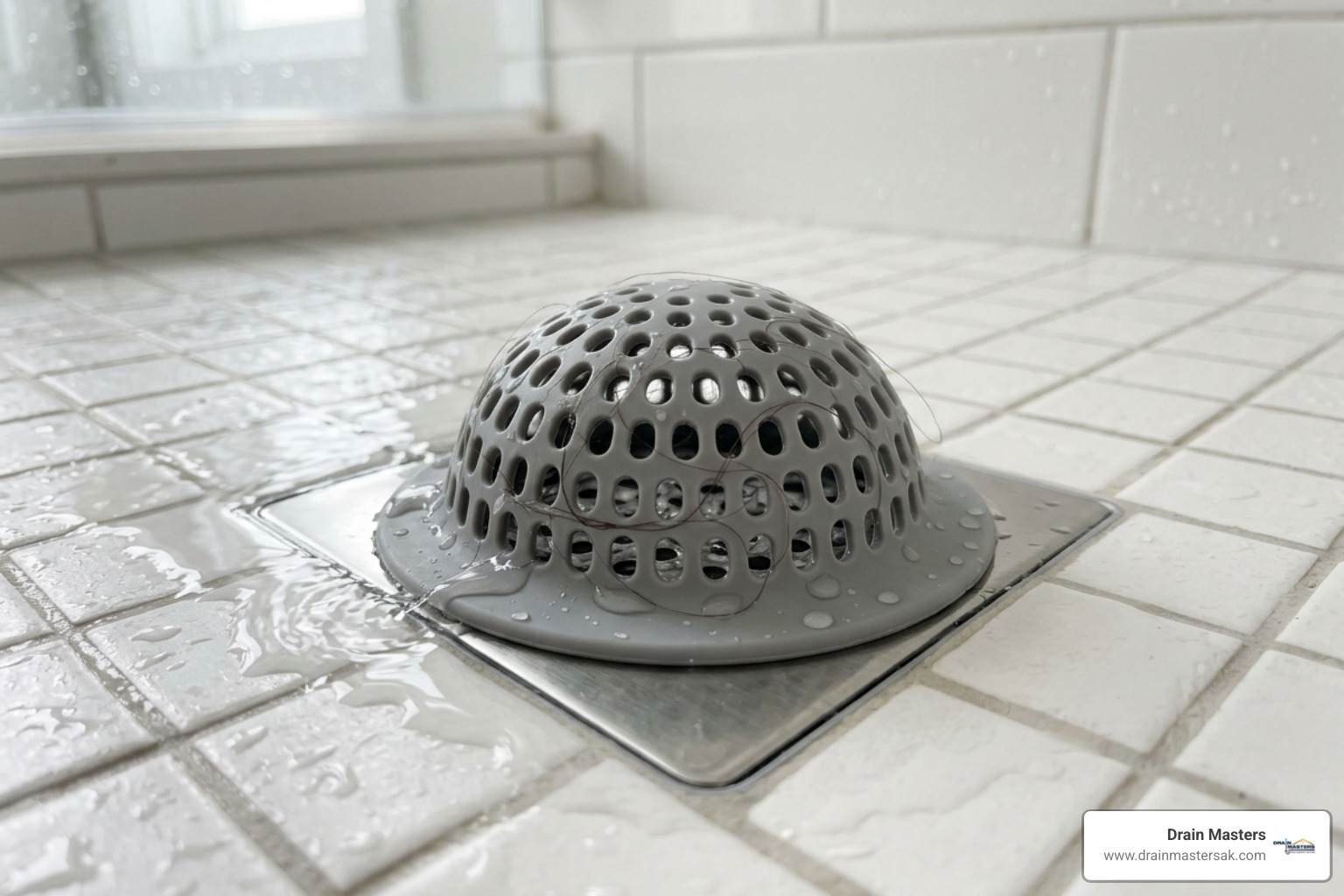
Once your shower drain is running smoothly, simple preventive habits can help you avoid pulling out a snake or plunger again.
- Install a high-efficiency hair catcher: The single most effective preventive step is placing a stainless steel mesh strainer or a dome-shaped silicone hair catcher over the drain. Modern catchers sit flush with the shower floor, catching loose strands before they enter the plumbing while letting water flow through unobstructed.
- Clean the catcher after every shower: Get into the habit of using a piece of toilet paper to wipe collected hair off the strainer immediately after each shower and toss it into the trash.
- Brush hair before bathing: Running a hairbrush through your hair before stepping into the shower removes loose strands before water washes them down the drain.
- Perform weekly hot-water flushes: At the end of each week, run hot tap water at full blast for three to five minutes to wash away fresh, uncongealed soap scum and bath-oil residue before it hardens along the pipe walls.
For ongoing protection of bathroom drains and other plumbing fixtures, routine plumbing maintenance can help identify developing issues before they become disruptive backups.
When to Call a Professional Plumber
While most isolated shower clogs can be resolved with a plastic barbed tool or a hand snake, certain warning signs indicate a deeper problem within your home’s drainage or venting network.
Stop DIY efforts and call a licensed plumber if you experience any of the following symptoms:
- Multiple slow fixtures: If your shower, bathroom sink, and toilet are all draining sluggishly at the same time, the clog is likely beyond the shower trap in the main branch or sewer lateral.
- Water backing up into other fixtures: If running the bathroom sink causes water to rise in your shower pan, or if using your washing machine causes the shower to back up, you may be dealing with a shared-line blockage.
- Gurgling sounds from nearby drains: Hearing air bubbling or gurgling out of your toilet or sink when the shower drains can indicate pressure problems caused by a clogged drain line or obstructed roof vent stack.
- Persistent sewer odors: A strong sulfur or rotten-egg odor that lingers after clearing the drain can point to a damaged P-trap, compromised vent, or dried-out drain seal that allows sewer gases into your living space.
- Repeated clogs every few weeks: When a drain backs up repeatedly despite frequent snaking, mineral scale, pipe misalignments, or tree root intrusion may be narrowing the pipe.
A professional camera inspection can identify cracked pipes, bellies, or foreign obstructions deep inside the line. Our sewer camera inspection service helps the Drain Masters team pinpoint the underlying issue before recommending repairs.
For heavily scaled or sludge-filled lines, professional drain cleaning services can clear buildup that basic DIY tools cannot safely reach.
Frequently Asked Questions About Clearing Shower Drains
What is the fastest way to unclog a shower drain at home?
The fastest DIY method is manual extraction using an inexpensive plastic barbed drain tool. After removing the drain cover, insert the barbed tool into the opening, twist it to snag the hair mass, and pull it out. This takes under five minutes and removes the primary obstruction immediately.
Can baking soda and vinegar dissolve thick hair clogs?
No. The chemical reaction between baking soda and vinegar produces carbon dioxide bubbles that help loosen light soap scum, grease, and surface biofilm. However, the mixture is not strong enough to dissolve dense, matted hair clumps, which require physical removal with a tool or snake.
Is it safe to pour boiling water down a shower drain?
Boiling water should not be used in modern shower drains. Water at 212°F can soften PVC and ABS plastic pipes, compromise rubber seals, and weaken the adhesive holding pipe joints together. Instead, use hot tap water (around 120°F to 130°F) to flush drains safely.
Why is my shower drain gurgling when water drains?
Gurgling sounds happen when draining water is forced past a partial pipe blockage or when a blocked plumbing vent stack restricts airflow. This creates negative pressure that sucks air through the P-trap water seal, resulting in a distinct bubbling or gurgling noise.
Are liquid chemical drain cleaners safe for older plumbing?
No. Liquid chemical cleaners contain caustic acids or lyes that generate extreme heat and corrode older metal plumbing like copper, brass, and cast iron. They can also melt plastic joints and leave hazardous standing chemical pools if the clog fails to clear.
How often should I use an enzymatic cleaner in the shower?
For preventive maintenance, apply an enzymatic drain cleaner once a month. In busy households with multiple people showering daily, applying an enzyme treatment every two to three weeks keeps soap scum and organic matter from accumulating inside the pipes.
What causes a shower drain to smell like rotten eggs?
A rotten egg smell is usually caused by sewer gas escaping into the bathroom. This happens if the water inside the P-trap evaporates from lack of use, if hair and biofilm accumulate and rot inside the drain throat, or if there is a crack in the drain pipe or vent line.
Why does water back up into my shower when the washing machine runs?
Because showers are typically the lowest drainage fixture in a bathroom, any blockage in the shared branch line or main sewer pipe forces high-volume drainage from appliances like washing machines to back up into the shower pan instead of exiting the house.
How far down the pipe does a typical shower clog form?
Most common shower clogs form within the first 12 to 24 inches of the pipe, directly around the drain body assembly or inside the curve of the P-trap. Blockages located farther down usually involve shared branch lines or main sewer piping.
What should I do if snaking and plunging fail to clear the drain?
If plunging and snaking do not restore proper drainage, stop using the fixture to avoid overflow. The blockage is likely deeper in the plumbing system, caused by heavy mineral scale, root intrusion, or a damaged pipe. Contact a licensed plumbing professional equipped with video inspection tools and commercial drain clearing equipment.
Conclusion
Taking quick action at the first sign of a slow shower drain keeps minor hair buildup from escalating into standing water, foul odors, or structural water leaks. By following a safe, mechanical-first approach, including extracting surface hair, using a cup plunger, and maintaining pipe walls with natural enzymes, you can solve many bathroom drainage issues cleanly and affordably.
When DIY steps do not clear the line, or when you notice warning signs like multiple slow fixtures, gurgling pipes, or recurring backups, professional diagnostic equipment can help protect your home’s plumbing. In Anchorage, AK, the experienced team at Drain Masters is ready to help, so contact our drain-cleaning specialists today.