Fast Help for a Blocked Drain in Anchorage, AK
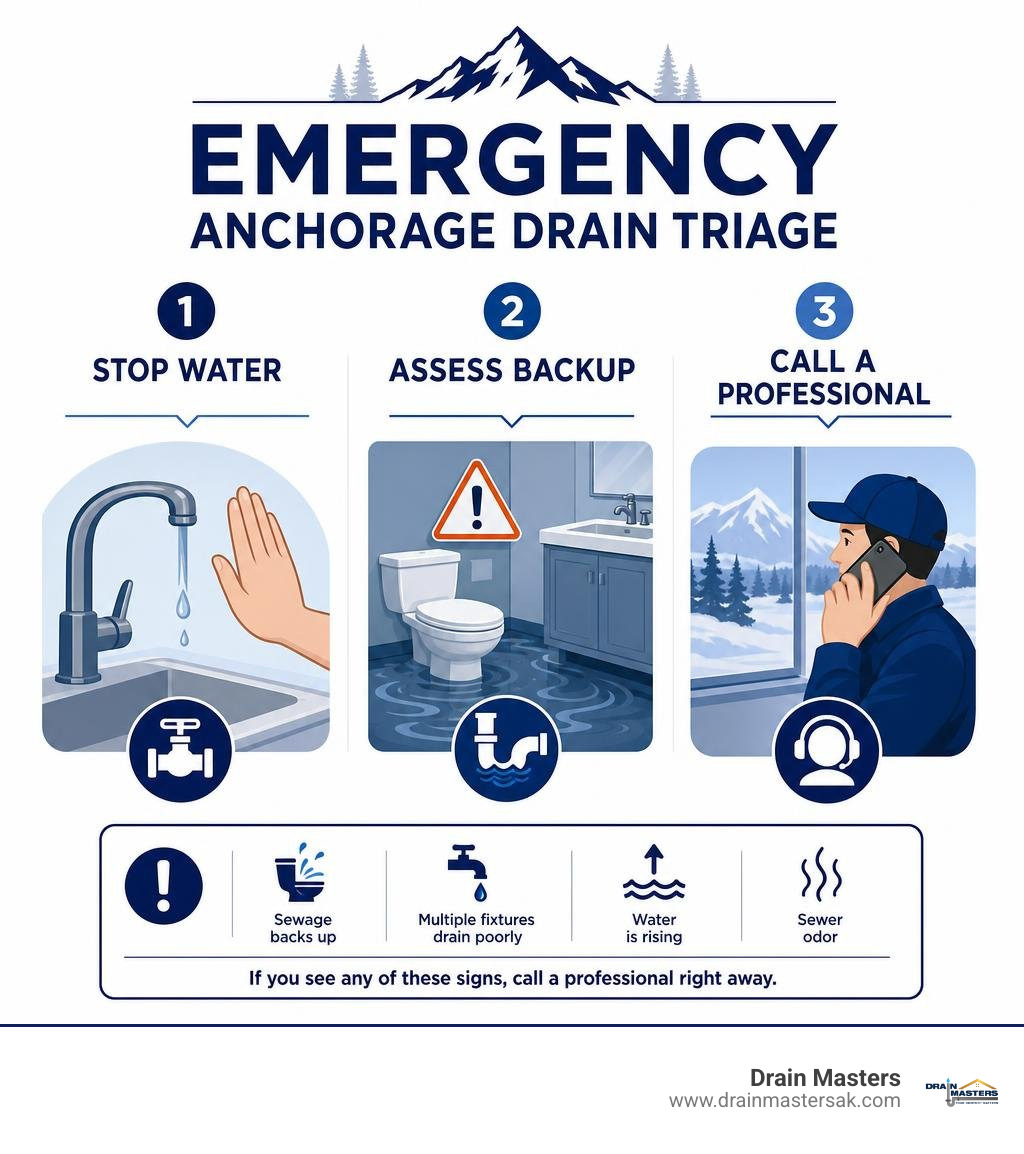
Dealing with blocked drain unclogging in Anchorage, AK requires quick thinking, safe household measures, and a clear understanding of when to call in licensed professionals. When a drain suddenly backs up in your home, the very first step is to stop running water into the affected fixture immediately. Keep any standing wastewater contained within the basin, tub, or toilet bowl, and avoid using adjacent plumbing fixtures until you assess the severity of the obstruction. If the backup is confined to a single sink, tub, or toilet, a standard plunger can often break apart minor, localized surface debris. However, if wastewater begins rising across multiple fixtures, if you hear persistent bubbling throughout your system, or if you notice foul sewer odors filling your living spaces, you should stop troubleshooting and contact an experienced drain professional right away. These symptoms typically point to a serious clog within your main sewer line that demands specialized diagnostic cameras and high-pressure clearing equipment.
Drainage systems in Southcentral Alaska face unique operational stresses. Sub-zero winter cold, thick permafrost, shifting sub-arctic soils, and heavy spring runoff all place extraordinary demands on residential plumbing networks. During sub-zero cold snaps, cold ground temperatures cause fats, oils, and grease to solidify rapidly along the interior perimeter of sub-grade pipes. Meanwhile, spring thaws bring ground shifting and heavy silt that can compromise aging lateral lines. In these environments, pouring harsh chemical cleaners down your pipes is never recommended. Chemical openers generate intense corrosive heat that can warp modern PVC joints, deteriorate aged cast iron, and leave hazardous caustic liquids sitting inside sluggish or frozen lines without addressing the root cause of the blockage.
The Drain Masters team in Anchorage, AK brings more than two decades of experience supporting the plumbing, sewer, and drain-clearing needs local homeowners depend on every day. This comprehensive guide outlines what you can safely try on your own, explains how sub-arctic weather affects regional drainage, and details the industrial equipment professionals use to restore clear flow safely and permanently.
Understanding Blocked Drain Unclogging Anchorage Challenges
Living in Southcentral Alaska offers magnificent mountain scenery and rugged outdoor beauty, but our severe sub-arctic climate presents constant challenges for residential wastewater networks. When a sink drains at a crawl, a bathtub pools with standing gray water, or a basement floor drain begins to bubble in Anchorage, AK, the problem rarely stems from an isolated accident. More often, a localized backup represents a long-term buildup influenced by household habits, extreme subterranean temperatures, seasonal ground movement, and aging municipal connections.
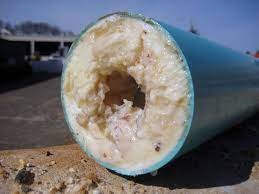
During extended winter deep freezes, ground frost penetrates several feet below the surface. As warm household wastewater exits your living spaces and enters exterior underground pipes, it cools at an accelerated rate. Cooking fats, oils, grease, and dissolved dairy products that might wash freely down sewer mains in warmer regions rapidly congeal against frigid pipe walls. Over several weeks of sub-zero temperatures, these grease layers act like sticky glue, capturing hair strands, soap scum, vegetable fibers, and toilet paper. This continuous narrowing restricts pipe volume until normal wastewater flow stops completely. When temperatures warm up during spring breakup, the drainage challenges shift from internal freezing and grease accumulation to ground shifting, soil saturation, and heavy sediment intrusion.
Common Causes Requiring Blocked Drain Unclogging Anchorage Residents Face
Every plumbing fixture throughout a home handles a different combination of organic matter, hygiene products, and structural drainage loads. Successfully diagnosing and clearing obstructions requires understanding how drain clogs develop in fixtures and tracking the source of the blockage:
- Kitchen Sinks: The most frequent culprits include cooking oils, bacon grease, mayonnaise, butter, coffee grounds, and fibrous food scraps like celery, potato peels, and onion skins. When hot grease is poured into a sink, it hardens almost instantly once it touches cold sub-grade pipes under your foundation.
- Bathroom Tubs and Showers: A dense mixture of long hair, pet fur, bar soap residue, body washes, and heavy conditioners forms thick, felted mats that wrap around pop-up stoppers and catch within P-traps beneath the floor.
- Toilets: Flushing unapproved items such as baby wipes, disinfectant wipes, feminine hygiene products, cotton swabs, paper towels, and dental floss creates dense, impenetrable plugs in branch lines. Even products labeled as flushable do not break down quickly enough to navigate older lateral sewer lines.
- Basement and Utility Drains: Floor drains and laundry standpipes catch clothing lint, pet hair, floor sweepings, road salt, and fine silt tracked in from winter footwear and seasonal melting snow.
Outside the foundation walls, older residential sewer laterals constructed from cast iron, vitrified clay, or thin-wall plastic can experience interior scaling, joint displacement, physical bellies, and root penetration that drastically slow down wastewater evacuation.
Freeze-Thaw Cycles and Sub-Zero Drainage Vulnerabilities
Anchorage experiences dramatic seasonal freeze-thaw cycles that place enormous physical pressure on buried drainage pipes. Southcentral Alaska soils expand when moisture freezes in early winter and contract significantly during the spring thaw. This subterranean movement can shear rigid pipe walls, pull mechanical hub joints apart, crack fragile clay sections, and cause sewer pipes to sag out of grade. When a pipe develops a belly or low spot, stagnant wastewater sits in the depression, loses its thermal energy, and freezes into a solid plug of ice during cold snaps.
In addition to underground piping issues, sub-zero winter temperatures frequently target rooftop sewer plumbing vent stacks. Warm, humid air rising from household drainage vents condenses and freezes as it exits the roofline. During prolonged cold snaps, this frost accumulates until the vent stack is completely sealed with a cap of ice. When a plumbing vent freezes over, the entire drainage system loses atmospheric pressure equalization. Fixtures will gurgle as water struggles to drain against negative pressure, draining speeds slow to a crawl, and the vacuum can pull water out of fixture traps, allowing noxious sewer gas to enter your home.
Safe DIY Clearing Methods vs. Calling a Professional
When water starts pooling in a bathroom basin or backing up around your ankles in the shower, reaching for a basic plunger is a standard homeowner reaction. While safe mechanical techniques can successfully resolve minor surface blockages, using aggressive methods or caustic chemical products can cause severe damage to your home and plumbing infrastructure.
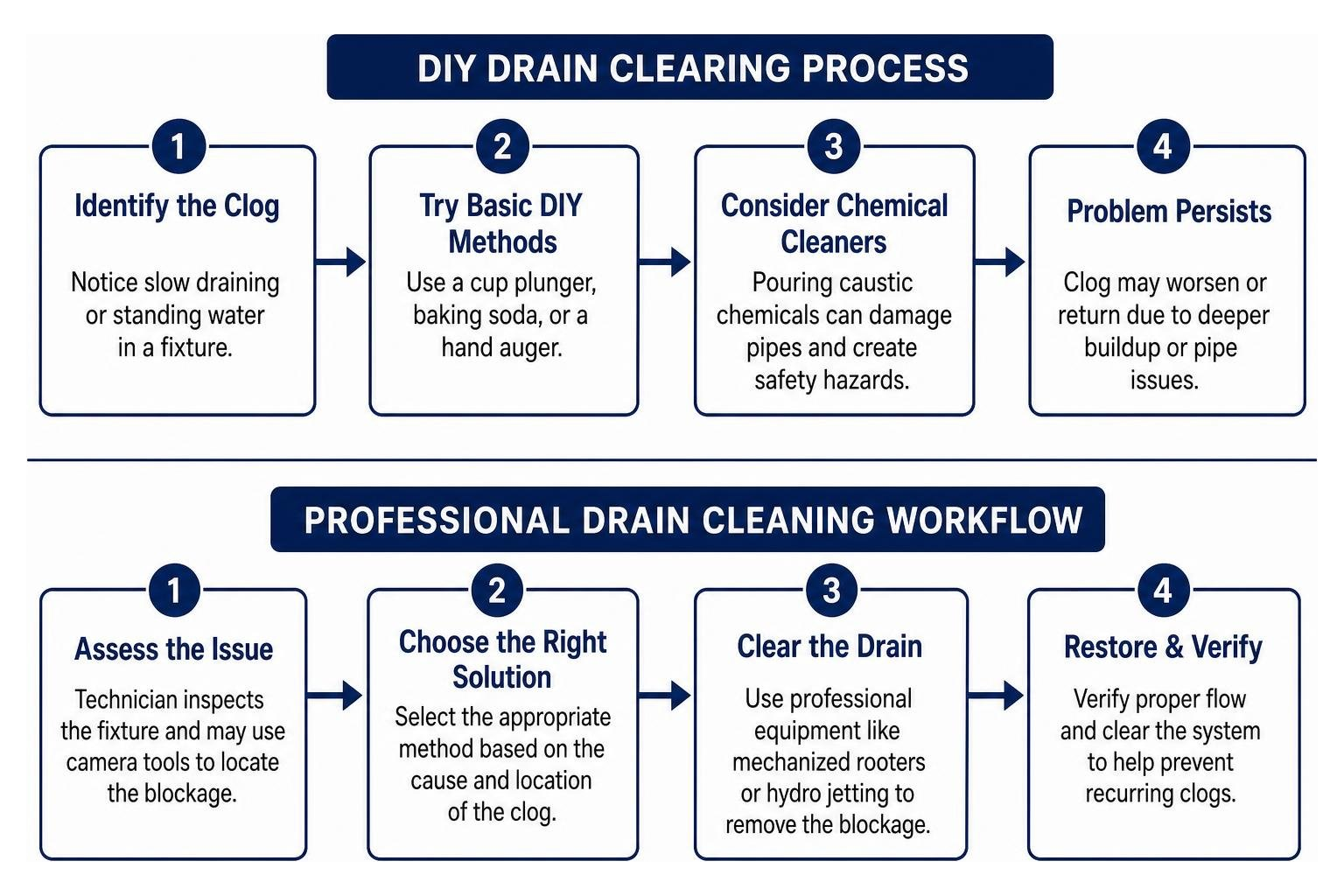
Pouring store-bought chemical drain cleaners into sluggish pipes is dangerous in northern homes. These products rely on caustic chemicals like sodium hydroxide (lye) or concentrated sulfuric acid that generate intense thermal reactions to melt organic waste. In cold climates, this localized chemical heat can warp thin PVC pipes, melt glue at pipe joints, and accelerate the corrosion of aged cast iron, galvanized steel, and copper pipes. If the pipe is obstructed by ice or a deep mechanical clog, the corrosive chemicals remain trapped in the standing water. This creates dangerous toxic fumes inside your home and puts professional plumbers at risk of severe chemical burns when they dismantle or snake the line later. For safe wastewater practices, homeowners can consult resources from the U.S. Environmental Protection Agency regarding household chemical disposal.
| Feature / Method | DIY Drain Clearing | Professional Drain Cleaning |
|---|---|---|
| Primary Tools | Cup plunger, baking soda, hand auger | High-pressure hydro jetting, mechanized rooters |
| Reach & Depth | 3 to 15 feet from fixture drain opening | Entire branch line through municipal sewer main |
| Safety Level | Safe if chemical-free; risk of fixture damage | Fully controlled with diagnostic equipment |
| Clog Removal | Punches a temporary hole through soft debris | Completely scrubs pipe walls clean to bare material |
| Diagnostic Power | None (clearing blindly) | HD video inspection pinpointing exact structural issues |
Safe DIY Techniques for Blocked Drain Unclogging Anchorage Property Owners Can Try
Before calling a plumbing technician, there are several gentle, safe DIY clearing methods you can use on isolated fixture clogs without risking your health or pipe integrity. Utilizing reliable home drain clearing techniques allows you to address simple blockages safely:
- The Cup Plunger Technique: For sinks, tubs, and showers, use a standard flat-bottom rubber cup plunger. Before plunging, seal the fixture overflow opening with a damp cloth to maintain airtight suction. Add enough water to cover the plunger cup, place the rubber firmly over the drain opening, and pump up and down vigorously for 10 to 15 strokes before lifting the seal quickly. For toilets, always select a dedicated flanged plunger that forms a secure seal inside the curved bowl trap.
- Natural Baking Soda and Vinegar Flush: Pour half a cup of dry baking soda directly down the drain, followed immediately by one cup of household white vinegar. Place a drain stopper over the opening for 15 to 20 minutes while the effervescent bubbling loosens fresh soap scum and soft surface grease. Finish by flushing the line with a kettle of hot tap water. Never use boiling water on porcelain fixtures or modern PVC piping, as sudden thermal shock can crack the material.
- Manual Hand Snake or Zip-Strip: A small handheld plastic zip-strip or flexible hand-crank drum snake can be carefully fed down a shower or bathtub drain opening to grab, twist, and pull out hair clusters and lint lodged near the strainer.
Always protect yourself during DIY maintenance by wearing heavy rubber gloves and protective safety glasses. Never force a manual snake past sharp mechanical resistance, and stop your efforts immediately if you suspect the line is frozen or collapsed.
When to Stop and Call for Emergency Plumbing
Certain drain symptoms indicate severe mainline obstructions that no DIY tool can safely resolve. Continuing to use fixtures or repeatedly plunging a completely blocked line can force contaminated, pathogen-rich blackwater upward through lower-level floor drains and plumbing fixtures, creating severe property damage and biological contamination. Carefully evaluating when to call a plumber versus clearing lines yourself protects your property and prevents costly water damage.
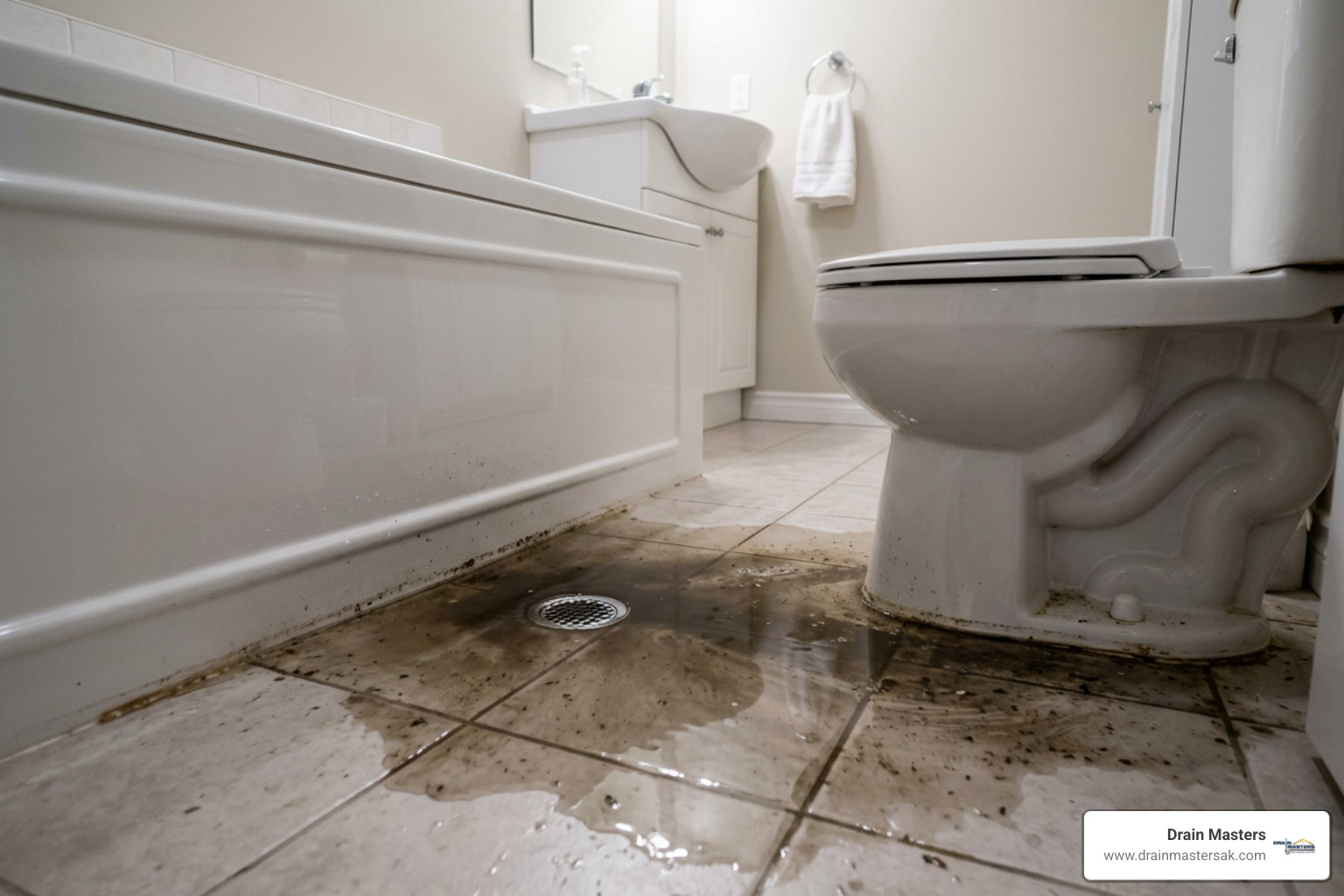
Stop water usage and reach out for emergency plumbing assistance if you experience any of the following critical warning signs:
- Multiple Concurrent Fixture Backups: Water backing up into bathtubs or shower pans when a toilet is flushed, or wastewater surging into sinks when running the washing machine.
- Persistent Bubbling and Gurgling: Gurgling noises from toilets or floor drains when adjacent plumbing fixtures are draining.
- Foul Sewer Gas Smells: Persistent odors of rotten eggs or raw sewage coming from drains, crawl spaces, or basement areas.
- Wastewater Overflow Around Floor Cleanouts: Dark, foul-smelling liquid pooling around basement floor drains or mechanical room cleanout plugs.
- Water Backups Threatening Electrical Infrastructure: Any standing wastewater that nears electrical baseboard heaters, floor outlets, or mechanical HVAC systems.
Professional Solutions for Blocked Drain Unclogging Anchorage Homeowners Trust
Professional drain specialists employ high-definition diagnostic instruments and heavy-duty mechanical machinery to resolve severe blockages quickly and safely. Rather than guessing the location or nature of a subterranean blockage, licensed technicians inspect the pipe interior, determine the structural integrity of the line, and execute a targeted clearing solution designed for sub-arctic drainage challenges.
Diagnostic Sewer Camera Inspections
The cornerstone of dependable modern drain cleaning is an in-depth high-definition sewer camera inspection. Technicians feed a self-leveling, waterproof fiber-optic camera head down the drainage pipe via an accessible cleanout. Equipped with high-intensity LED lights and an integrated locating sonde transmitter, this camera transmits real-time color video directly to a digital monitor at the surface.
During an inspection, the technician evaluates the entire length of the underground lateral line to identify:
- Heavy accumulations of hardened grease, scale, and mineral crystallization.
- Aggressive tree root intrusions penetrating pipe joints, fractures, or seals.
- Cracked, sheared, or completely collapsed pipe segments caused by shifting soils.
- Severe pipe bellies and sags that trap standing water and freeze into solid ice.
- Displaced gaskets and mechanical offsets that snag solids and paper products.
By locating the precise depth and position of the obstruction from above ground, technicians can resolve the issue cleanly without unnecessary excavation or exploratory drywall demolition.
Branch Clearing and Hydro Jetting Technology
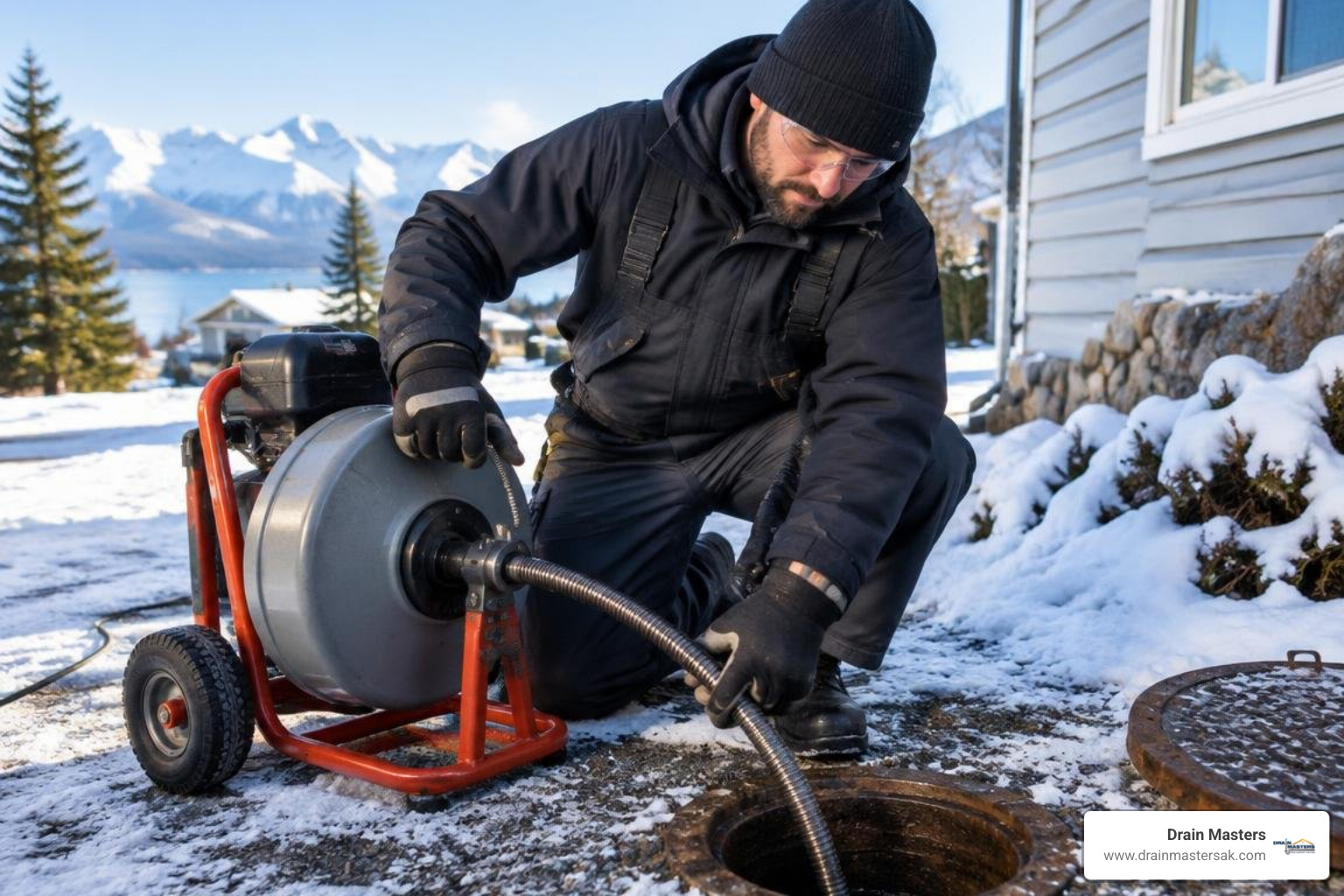
Following a thorough camera diagnosis, technicians deploy specialized equipment matched to the pipe size and clog material. For localized clogs inside residential living areas, technicians perform professional branch and fixture clearing using variable-speed motorized augers with specialized cutting heads that slice through dense hair, food debris, and soap buildup inside sink, tub, and toilet branch lines.
For stubborn main sewer clogs, thick grease blockages, recurring root masses, and frozen drain lines, high-pressure industrial hydro jetting is the premier solution. Hydro jetters pressurize clean water up to 4,000 PSI and propel it through specialized rear-facing and forward-facing jet nozzles. The concentrated water streams slice through dense tree roots, shatter solid ice dams, scour hardened grease and mineral scale from pipe walls, and flush all suspended debris completely out to the municipal sewer main. Unlike mechanical snaking cables that simply bore a small opening through a clog, hydro jetting restores the entire interior diameter of the pipe back to its full original flow capacity.
Anchorage, AK Drain Service Costs and Long-Term Prevention
Maintaining a clean, reliable residential drainage system requires understanding the variables that influence local service pricing and adopting proactive winterization habits before sub-zero winter temperatures arrive in Southcentral Alaska.
Professional Service Pricing and Expectations
The total cost of professional drain cleaning in Anchorage, AK depends on the location, depth, severity, and accessibility of the blockage. A localized branch clog affecting a single sink or shower trap requires standard mechanical clearing, which is generally fast and economical. Conversely, an emergency mainline backup requiring video camera diagnostics, heavy-duty hydro jetting, root cutting, or mechanical thawing involves specialized equipment and extended technician labor.
Trustworthy plumbing contractors provide clear, upfront pricing estimates after performing an initial assessment on-site, ensuring that homeowners understand the full scope of work and available service options before any clearing begins. Avoiding hidden fees and receiving detailed written guarantees gives property owners complete confidence throughout the repair process.
Winterization and Year-Round Maintenance
Consistent preventative care ensures your home’s wastewater plumbing withstands the rigors of cold northern winters and seasonal soil movement:
- Insulate Vulnerable Drain Lines: Wrap drain lines passing through unheated crawl spaces, basements, cantilevered floors, and exterior walls with thick closed-cell foam insulation or thermostatically controlled heat tape.
- Protect Exterior Cleanouts: Ensure that all outdoor cleanout access caps are sealed tightly and insulated against freezing drafts, and mark cleanout locations so they can be accessed quickly beneath deep snow.
- Use Protective Drain Strainers: Install fine-mesh metal strainers in all kitchen sinks, utility basins, showers, and bathtubs to prevent hair, food scraps, and foreign debris from entering your piping.
- Dispose of Fats and Cooking Oils Properly: Never pour cooking oil, pan grease, or animal fat down kitchen sinks or garbage disposals. Pour liquid grease into a heat-safe metal container, allow it to cool and solidify, and discard it directly with your household trash.
- Schedule Routine Inspections: Booking routine residential plumbing maintenance keeps your lines clean, identifies minor root intrusions early, and prevents catastrophic winter drain emergencies.
Frequently Asked Questions About Anchorage, AK Drain Clearing
What causes the majority of drain blockages in Anchorage, AK?
The leading causes of residential drain clogs in Anchorage, AK include cooking grease that hardens rapidly in frigid underground pipes, hair mats in bathroom fixtures, unflushable hygiene wipes, frozen rooftop vent stacks, and seasonal ground movement that creates pipe bellies.
How much does professional drain unclogging cost in Anchorage, AK?
Professional drain clearing costs depend on the severity of the obstruction, whether the clog is localized to a single fixture trap or located in the main sewer line, and whether advanced diagnostic cameras or hydro jetting are required. Technicians provide upfront estimates after an initial on-site evaluation.
Is it safe to use chemical drain cleaners in older Anchorage, AK homes?
No. Chemical drain cleaners generate high heat that can melt PVC joints, corrode older cast iron and copper pipes, release noxious fumes, and create severe chemical burn hazards for plumbers if the line remains blocked.
How does freezing winter weather affect home drainage systems in Anchorage, AK?
Sub-zero temperatures can freeze rooftop sewer vent stacks, resulting in air pressure imbalances that cause sluggish drainage and gurgling noises. In addition, cold ground temperatures cause grease to solidify faster, and uninsulated pipes in crawl spaces can freeze completely.
What are the signs of a main sewer line clog versus a single fixture clog?
A single fixture clog affects only that specific sink, tub, or toilet. A main sewer line blockage causes widespread symptoms across the home, such as water backing up into tubs when a toilet is flushed, gurgling in basement drains, and raw sewage backing up through floor drains.
How quickly can a clogged drain turn into an emergency?
A clogged drain becomes an emergency within minutes if contaminated wastewater overflows into living spaces, if backups occur near electrical panels and heating systems, or if raw sewage odors spread through the home.
Can tree roots invade sewer lines in Anchorage, AK?
Yes. Tree and shrub roots actively seek moisture, warmth, and nutrients during the growing season. Roots penetrate tiny cracks, loose joints, and deteriorated pipe seals, expanding inside the pipe and catching toilet paper and solids.
What is hydro jetting and when is it necessary?
Hydro jetting is a professional cleaning method that uses water pressurized up to 4,000 PSI to scour grease, mineral scale, ice dams, and tree roots from pipe walls. It is necessary for stubborn main sewer line stoppages, heavy grease accumulation, and recurrent clogs.
How do I locate my main sewer cleanout in an Anchorage, AK home?
The main sewer cleanout is usually found in the basement, utility room, or crawl space where the primary drainage line exits the foundation. Many homes also have an outdoor cleanout riser in the yard that may require clearing snow to locate.
How can I prevent frozen drain lines during sub-zero cold snaps in Anchorage, AK?
To protect drain lines from freezing, insulate exposed pipes in crawl spaces with foam or heat tape, maintain indoor heating above 55 degrees Fahrenheit, open cabinet doors during extreme cold to circulate warm indoor air, and make sure exterior cleanout caps are tightly covered.
Conclusion
A backed-up drain in your Anchorage, AK home requires rapid, dependable service to protect your property from structural water damage and biological health hazards. When simple plunging methods fail to clear the line, or when multiple fixtures back up simultaneously, turning to experienced local professionals ensures that the underlying problem is diagnosed and resolved safely.
At Drain Masters, our family-owned team brings more than 20 years of local hands-on experience, advanced diagnostic camera technology, and heavy-duty hydro jetting equipment to every residential call. For prompt help restoring clear, reliable drainage, contact our professional drain cleaning technicians today.