
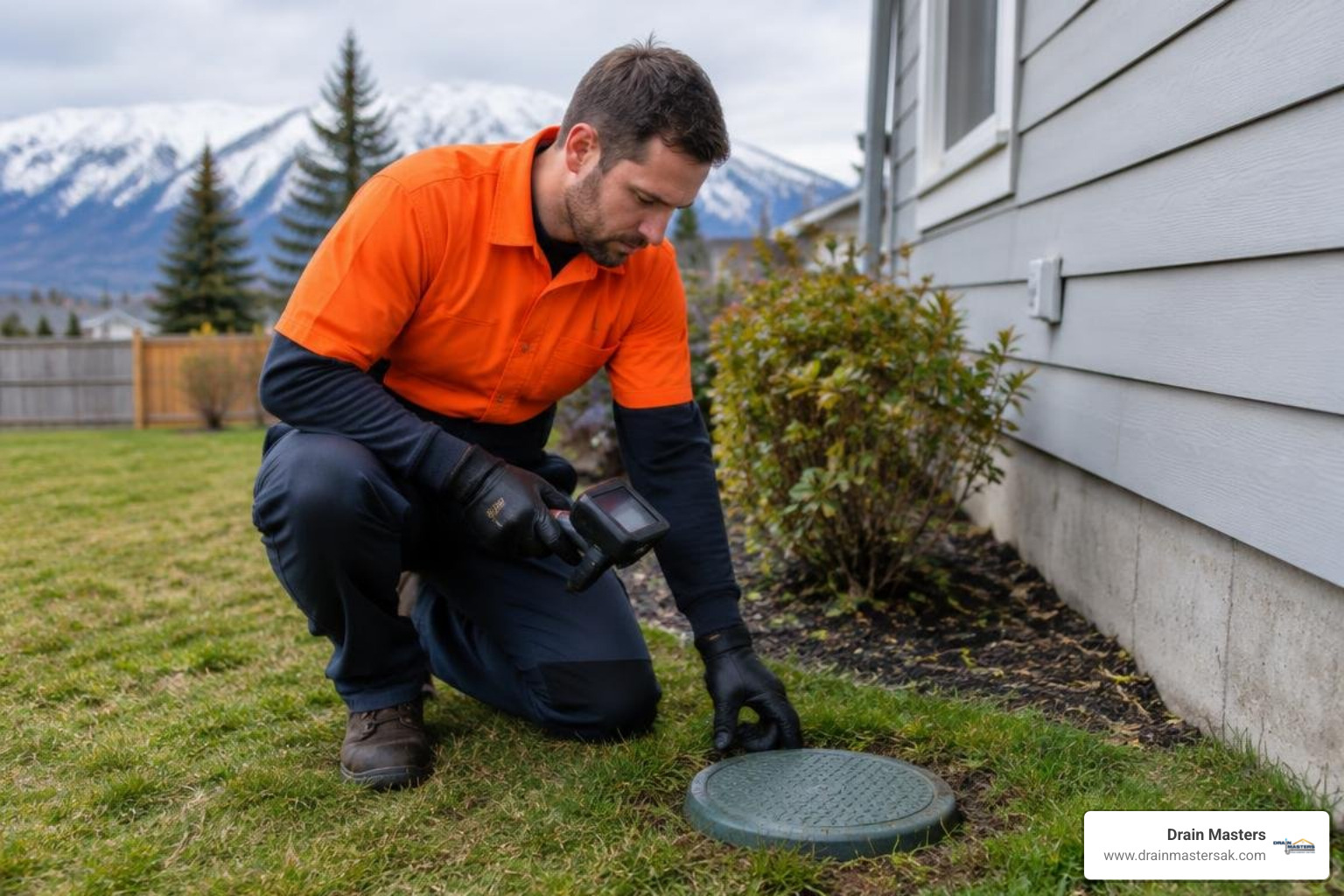
What to Do When Your Sewage Main Line Is Clogged
If your sewage main line is clogged, stop using water immediately. Do not flush toilets, run the washing machine, take showers, or run water down any sinks. The most telling warning sign of a whole-house lateral obstruction is wastewater, sluggish drainage, or gurgling sounds occurring at multiple fixtures simultaneously, particularly at the lowest gravity points such as a basement floor drain, utility sink, or ground-level shower stall.
A single slow sink usually points to an isolated trap or branch line clog. However, when multiple fixtures malfunction at the same time, the obstruction is located within the central sewer lateral that conveys wastewater from your building plumbing out to the municipal sewer main or private septic tank. Opening the sewer cleanout with proper precautions and deploying the appropriate mechanical auger can resolve basic blockages, but sewage backups introduce hazardous biological contaminants and hydrostatic pressure. Persistent backups, recurring root intrusions, or structural pipe damage require professional diagnostic assessment before property damage escalates.
For residential properties in Anchorage, AK, older pipe materials, shifting soil conditions, and intense seasonal freeze-thaw cycles frequently turn simple clogs into serious structural sewer lateral concerns.
The Drain Masters team in Anchorage, AK, brings more than two decades of hands-on plumbing, drain, and sewer experience to complex sewer main obstructions. The team diagnoses and resolves these issues safely, methodically, and with a focus on long-term pipe integrity.
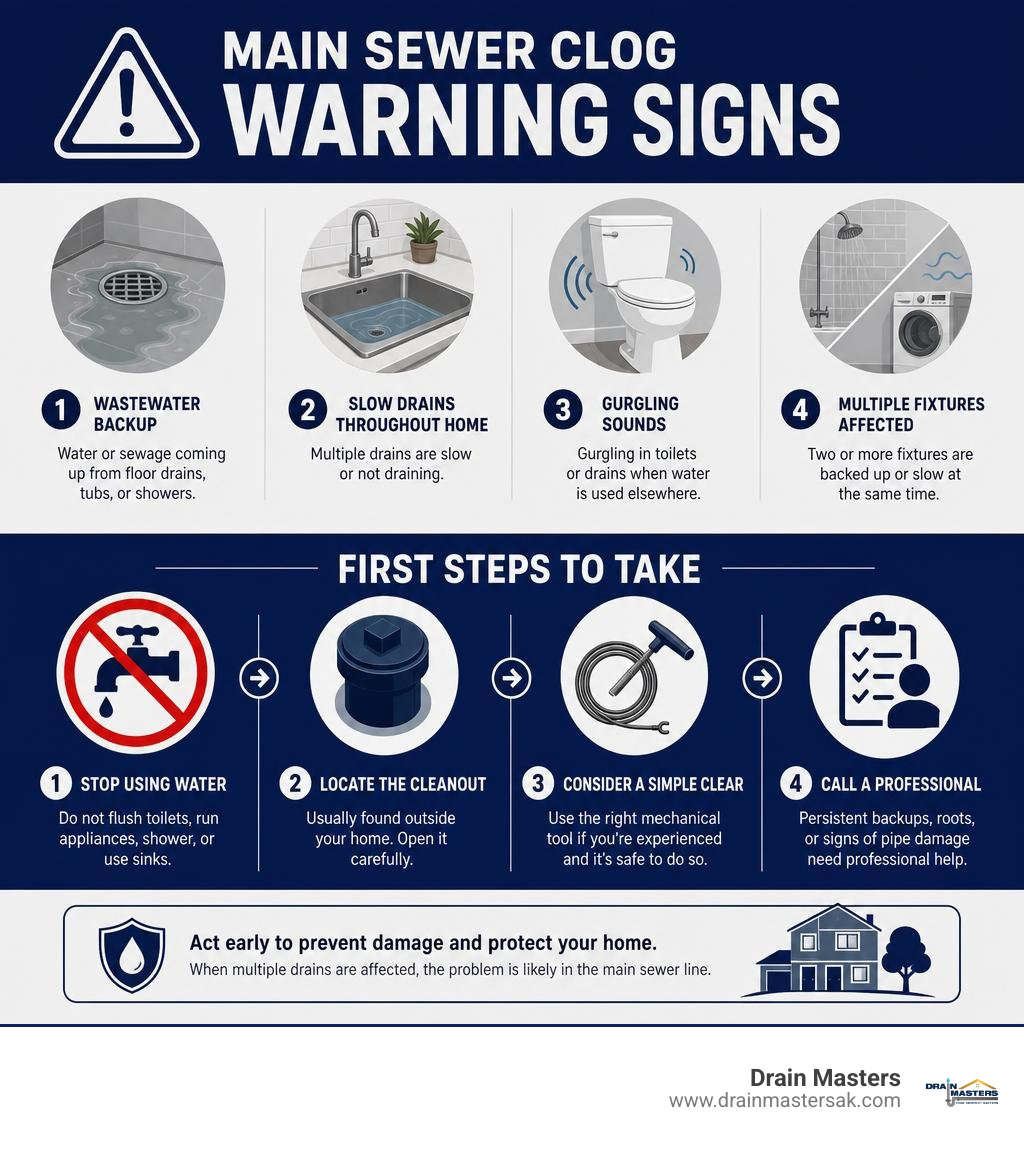
Warning Signs Your Sewage Main Line Clogged and Backing Up
Recognizing the early symptoms of a main line obstruction helps prevent catastrophic water damage and expensive biohazard cleanup. When your central sewer line becomes obstructed, wastewater loses its exit pathway. Because plumbing systems rely on gravity, effluent backs up into the lowest open fixtures in the home.
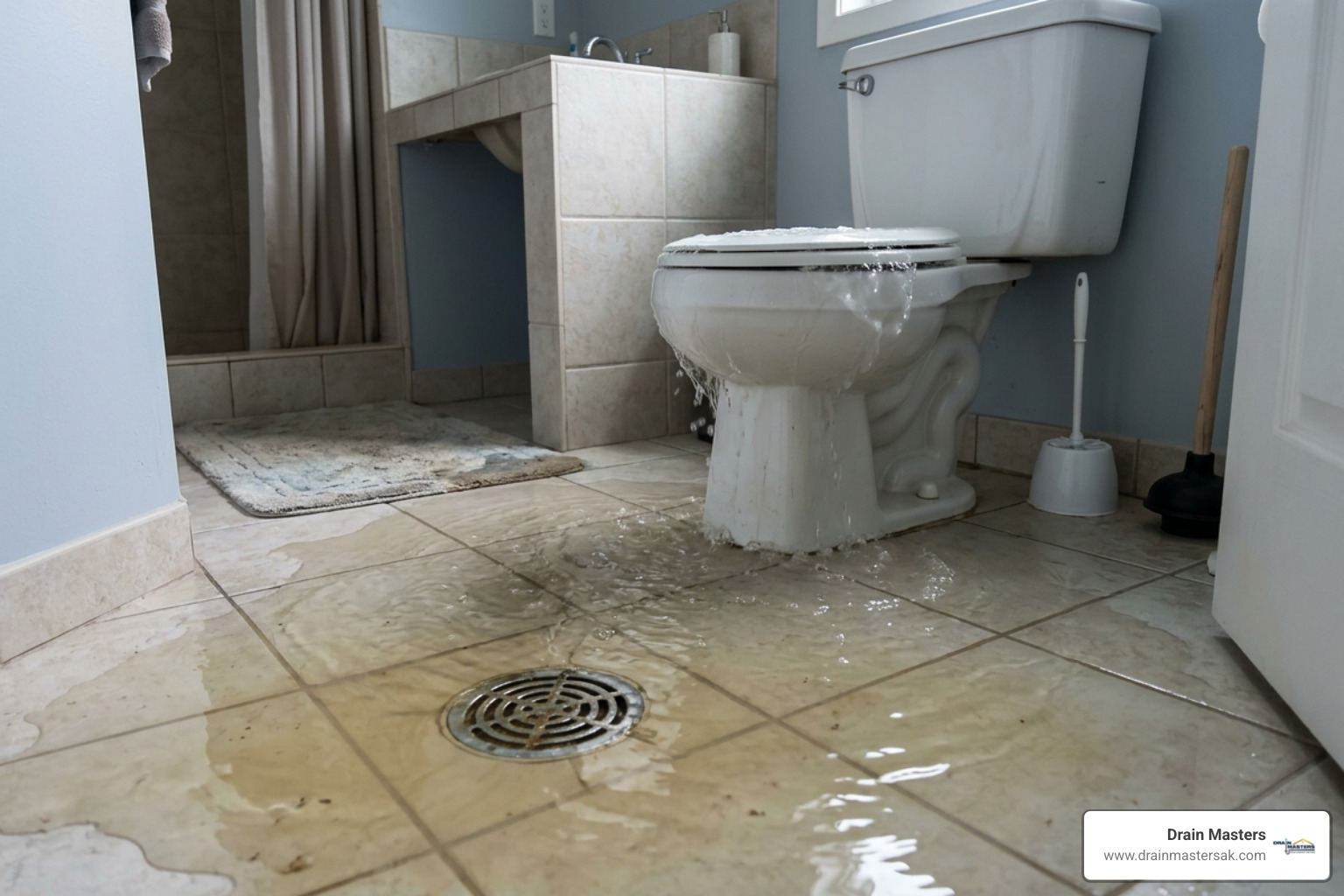
Unlike an isolated obstruction located beneath a single bathroom sink, a main sewer stack blockage exhibits predictable whole-building symptoms. Recognizing the early warning signs of a sewer backup helps you quickly determine whether an issue is isolated to a secondary fixture branch or located deep within the primary lateral.
Multi-Fixture Drainage Failures and Low-Point Backups
A primary indicator of a compromised main sewer stack is simultaneous drainage failure across multiple rooms. Because gravity directs wastewater downward, backed-up effluent seeks the path of least resistance.
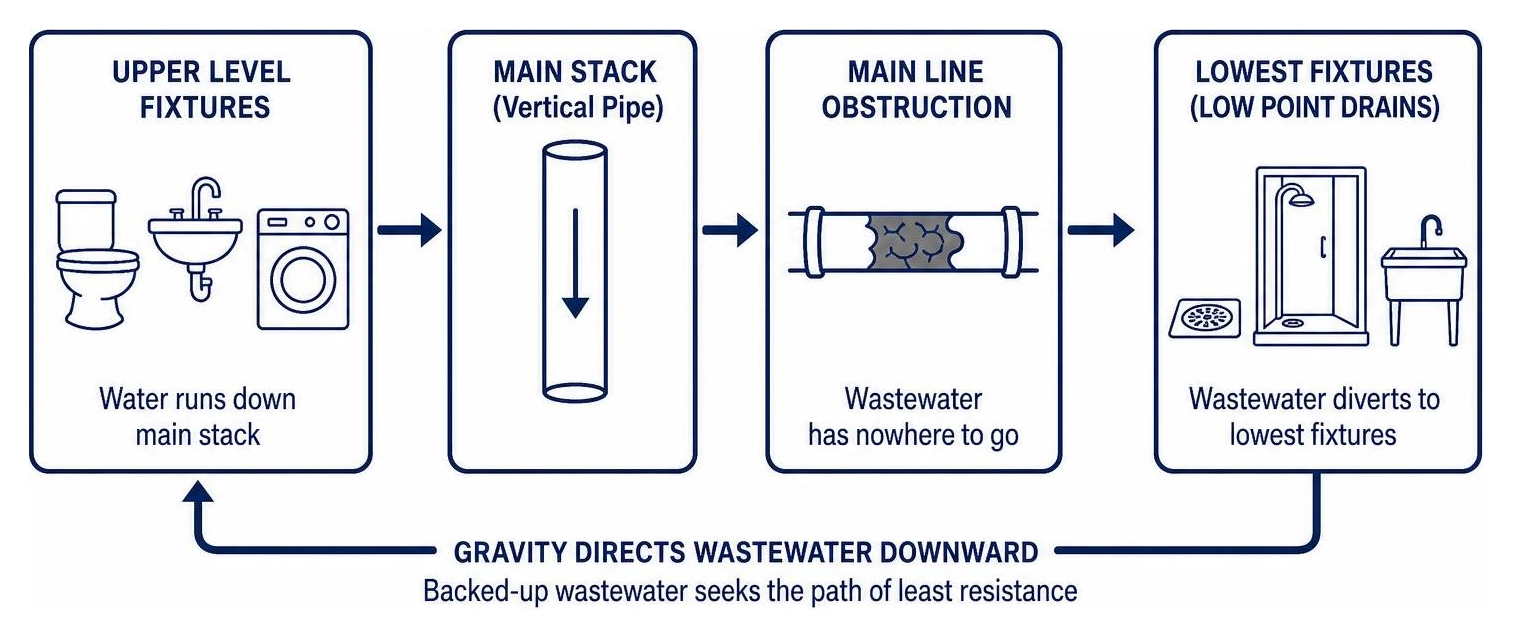
If running a washing machine discharge cycle causes dirty water to surge out of a basement floor drain, or flushing an upper-level toilet causes dirty water to rise in a ground-floor shower pan, the main lateral is blocked. Standard residential branch pipes range from 1.5 to 2 inches in diameter, but they all converge into a 3-inch or 4-inch main drain-waste-vent (DWV) stack. When this stack or the exterior building sewer pipe becomes obstructed, wastewater cannot escape.
Under the IICRC S500 Standard for Professional Water Damage Restoration, wastewater originating from a sewer backup is classified as Category 3 “black water.” This water contains active pathogens, bacteria, and chemical biohazards that require immediate containment, personal protective equipment, and specialized remediation.
Gurgling Noises, Air Traps, and Sewer Smells
Before physical wastewater overflows into your living spaces, your plumbing system provides audible and olfactory warnings. Trapped air pockets forced through water seals create distinct bubbling or gurgling sounds in toilets and tub drains.
When a large volume of water attempts to squeeze past a partial main line obstruction, it produces negative pressure within the pipe system. This suction pulls water out of individual fixture P-traps, breaking the barrier that keeps hazardous sewer gases out of your living areas. Once this seal breaks, unpleasant hydrogen sulfide and methane aromas waft into your home, creating air quality hazards and persistent unpleasant odors.
Primary Causes of Underground Main Line Obstructions
Underground sewer pipes endure severe environmental stress, internal grease accumulation, and structural shifts over time. Understanding your pipe material composition and surrounding landscape reveals why these obstructions develop.
| Pipe Material | Historical Installation Era | Average Lifespan | Primary Failure Mode |
|---|---|---|---|
| Vitrified Clay | 1950s to 1970s | 50 to 60 Years | Joint separation, hairline cracking, root penetration |
| Cast Iron | 1950s to 1980s | 50 to 75 Years | Internal scale build-up, channel corrosion, bottom rot |
| Orangeburg (Fiber Conduit) | 1950s to 1970s | 30 to 50 Years | Delamination, ovalization, structural collapse |
| PVC / ABS Plastic | 1980s to Present | 50 to 100 Years | Ground settling shear, improper slope, joint failure |
Invasive Tree Roots and Seasonal Soil Shifts
Tree roots remain one of the most common causes of underground lateral failures. Trees naturally seek underground sources of moisture, vapor, and nutrients. Hairline fissures, minor cracks, and loose mortar joints in older vitrified clay or cast iron pipes offer an ideal entry point.
Once microscopic root tendrils enter the pipe, they expand into dense, hair-like root balls. These root masses catch passing toilet paper, solid waste, and hygiene debris, forming an impenetrable barrier. While snaking may poke a temporary hole through the obstruction, mechanical clearing alone does not solve the structural flaw. In fact, roots routinely grow back within 6 to 12 months unless thoroughly removed and structurally sealed. Understanding the nature of tree root intrusions in sewer pipes helps property owners choose long-term rehabilitation rather than relying on recurring emergency snake calls.
Fats, Oils, Grease, and Flushable Wipes
Fat, oil, and grease (FOG) introduced through kitchen sinks enter drainpipes as warm liquids but quickly cool and solidify along the interior pipe perimeter. Over time, this grease layer thickens, constricting the pipe’s interior diameter.

This problem escalates when households flush non-dispersible personal items. Despite marketing claims, so-called flushable wipes do not break down like standard toilet paper. Standard toilet paper disintegrates in water within minutes, whereas wet wipes maintain high tensile strength. When wipes contact sticky grease deposits along pipe walls, they bind together to create dense obstructions known as fatbergs. Learning about the severe damage caused by flushable wipes protects your plumbing infrastructure from preventable blockages.
Sub-Zero Ground Freeze and Pipe Bellies
In cold northern regions like Anchorage, AK, extreme freeze-thaw cycles present severe challenges to underground utilities. Deep frost penetration causes cyclical soil expansion and contraction, known as frost heave.
This shifting ground exerts uneven physical pressure on buried sewer lines, creating low spots called pipe bellies. A bellied section loses its positive downward pitch, allowing wastewater to lose velocity and pool. Heavy solids and paper settle in these sags instead of flowing out to the municipal connection, causing recurring blockages.
DIY Diagnostics and Non-Jetting Clearing Techniques
When faced with a sewer backup, identifying the location of the cleanout and assessing the clog safely is the first step. If you plan to attempt basic DIY clearing, you must use proper protective equipment and the right tools to avoid personal injury, contamination, or pipe damage.
Before undertaking any mechanical intervention, evaluate your skill level and available tools. For serious or recurring issues, calling a licensed professional plumber is always the safest course of action.
How to Safely Open a Cleanout When a Sewage Main Line Clogged
The sewer cleanout is a dedicated access point with a threaded cap, typically located outside near the foundation wall or inside the basement at the base of the vertical soil stack. Because a clogged sewer line traps gallons of standing wastewater behind the blockage, opening this access cap without proper preparation can result in an uncontrolled sewage flood.
Follow these critical safety steps to access your cleanout:
- Equip Personal Protective Equipment (PPE): Put on heavy-duty waterproof rubber gloves, safety goggles, a face shield, and rubber work boots.
- Clear the Surrounding Area: Place drop cloths, absorbent towels, and large capture buckets beneath the cleanout fitting.
- Stand to the Side: Never position your face or body directly in front of the cleanout cap.
- Loosen Slowly: Use a pipe wrench to turn the square-head plug counter-clockwise by only a single turn.
- Bleed the Hydrostatic Pressure: Allow standing wastewater to seep out gradually into your containment bucket until drainage stops, indicating pipe pressure has equalized.
- Remove the Cap: Once the internal pressure subsides, fully remove the plug to inspect the line.
Why Chemical Cleaners Fail When a Sewage Main Line Clogged
Pouring store-bought chemical drain openers down a fixture when your main line is backed up is ineffective and dangerous. These caustic products rely on concentrated sodium hydroxide or sulfuric acid to dissolve organic matter. However, when applied to a 4-inch main line filled with tens of gallons of backed-up water, the chemical dilutes rapidly, losing its reactive potency long before it reaches the obstruction.
Furthermore, caustic chemicals create violent exothermic reactions. When trapped deep inside a pipe, this heat can soften and warp PVC joints or accelerate corrosion in older cast iron lines. If the chemical fails to clear the clog, your pipes remain filled with toxic, caustic black water, endangering anyone who services the line mechanically later.
Clearing Obstructions with Motorized Augers and Non-Jetting Tools
For non-jetting mechanical clearing, rent or acquire a commercial-grade motorized sewer auger equipped with a 3/4-inch steel cable and interchangeable cutting heads. Hand snakes and 1/2-inch sink augers lack the rigidity and torque needed for a 4-inch sewer lateral and will kink inside wide pipes.
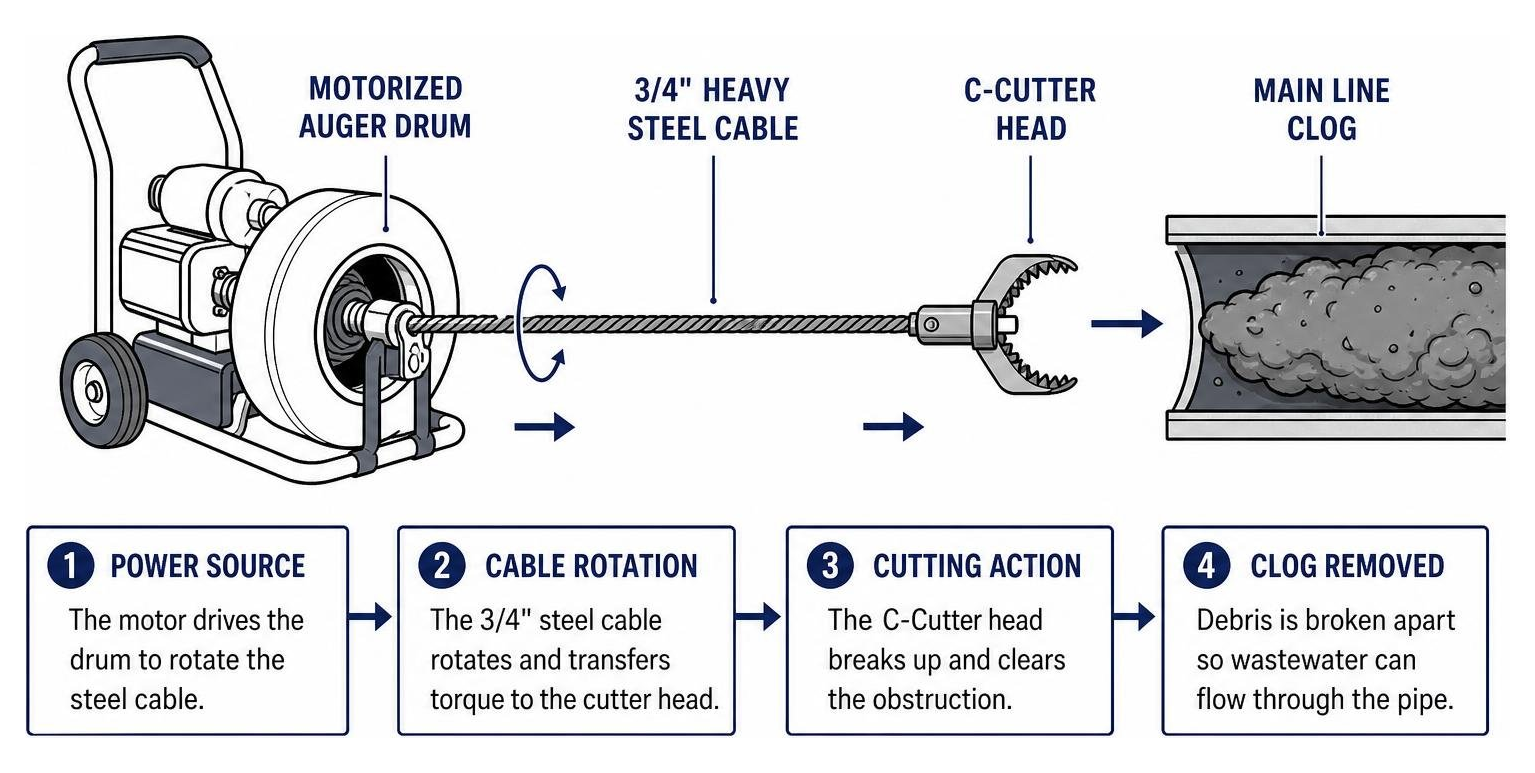
Position the machine within two feet of the cleanout opening to prevent cable whipping. Manually feed the cable into the line until you feel physical resistance. Engage the motor using the forward foot pedal while maintaining firm, two-handed control on the cable. Advance the rotating head steadily into the clog. If the cable begins to twist or strain, immediately release the foot pedal and reverse the rotation to prevent binding.
For routine maintenance on slow lines with light organic buildup, apply biological enzyme or bacterial drain cleaners. Unlike caustic chemicals, enzymes consume grease and sludge without damaging pipe walls. For dense root blockages, major grease plugs, or collapsed lines, rely on certified experts for specialized sewer clearing to protect your property.
Professional Solutions: Hydro-Jetting and Camera Inspections
When mechanical augers reach their operational limits, or when tree roots and heavy grease instantly re-clog the pipe, advanced diagnostic and restoration equipment becomes necessary.
To restore flow and evaluate the structural integrity of your underground lines, professional contractors rely on clearing heavy buildup with hydro-jetting alongside detailed optical camera scopes.
Video Camera Pipe Diagnostics
A video camera inspection eliminates the guesswork of underground pipe maintenance. Plumbers feed a high-resolution, waterproof camera mounted on a flexible fiberglass push-rod through the cleanout, sending a live video feed to an external monitor.
During professional camera pipe diagnostics, an integrated sonde transmitter emits an electromagnetic signal that the technician tracks above ground using a receiver wand. This identifies the exact depth, underground trajectory, and location of:
- Pipe wall fractures, shear breaks, and joint separations
- Offset joints allowing soil and root entry
- Hidden structural pipe bellies and sags
- Severe internal scale buildup and mineral encrustation
According to the Anchorage Water and Wastewater Utility sewer FAQs, homeowners own and are responsible for maintaining their private sewer service lateral from the building all the way to the main public connection. A camera inspection confirms whether a problem lies on your private property or falls under municipal care.
High-Pressure Hydro-Jetting Benefits
While mechanical snaking punches a 2-inch to 3-inch hole through an obstruction, hydro-jetting scours the entire circumference of the pipe. Operating at water pressures up to 4,000 PSI, a hydro-jetter uses specialized forward-facing and rear-facing spray nozzles to cut through stubborn blockages.
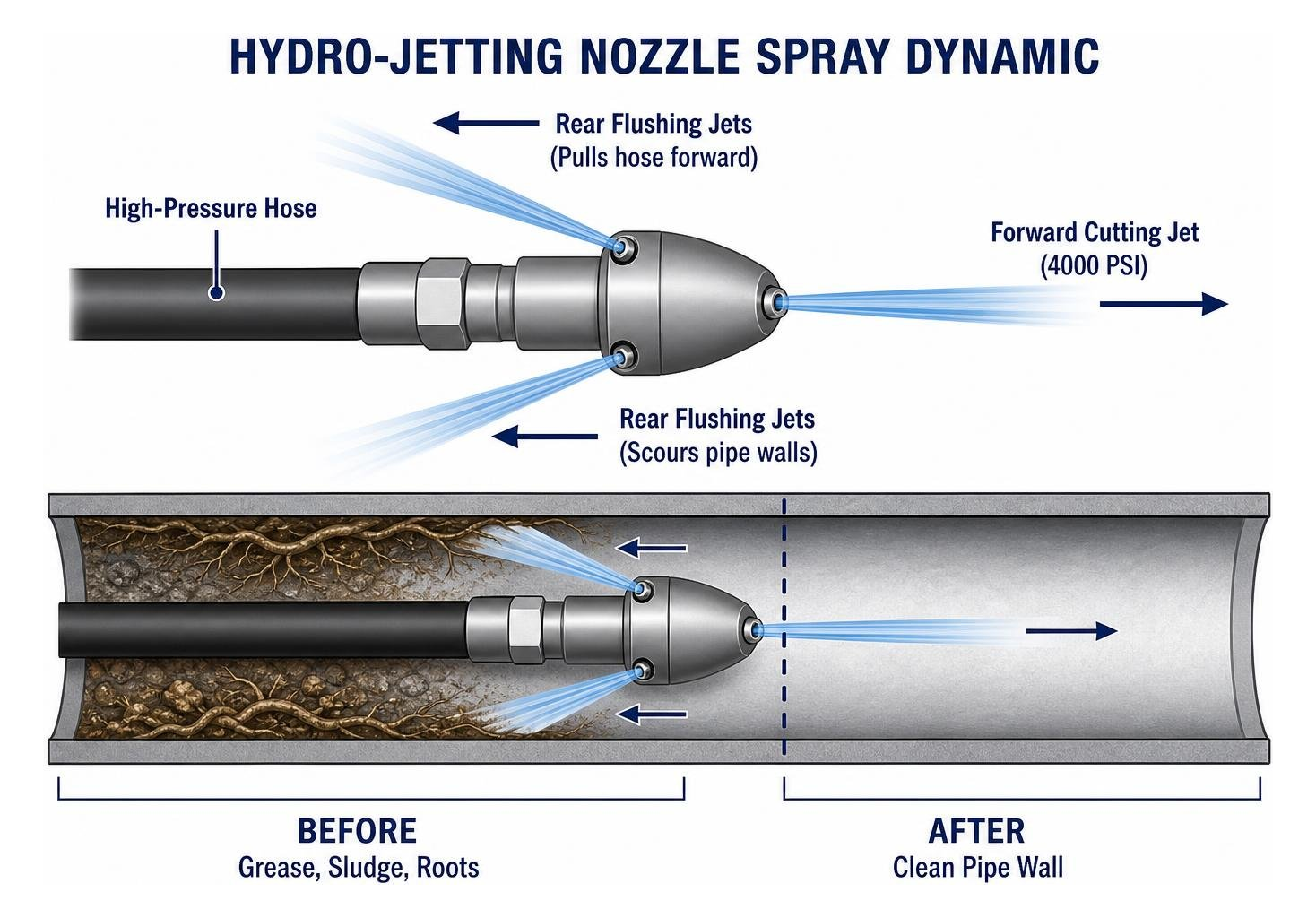
Hydro-jetting provides several distinct benefits:
- Complete Root Emulsification: Shaves invasive tree roots flush against pipe walls, delaying regrowth far longer than standard blades.
- Total Grease Descaling: Emulsifies hardened grease and sludge, flushing it completely out of the lateral.
- Full-Diameter Cleaning: Restores the pipe interior diameter without harmful chemical agents.
- Safe for Sound Pipes: Safely prepares pipes for diagnostic evaluation or protective lining.
Repair vs. Replacement: Addressing Structural Sewer Failures
Not every main line issue can be resolved with a thorough cleaning. If a pipe has suffered structural failure, repeated clearing simply wastes money while postponing an inevitable collapse. For a closer look at when recurring problems signal structural damage, see when a sewer line needs repair rather than replacement.
Knowing when to rehabilitate versus fully replace a damaged sewer line protects your home from sudden structural backups and contaminated water damage.
CIPP Lining and Trenchless Pipe Repair
Modern plumbing technology allows contractors to rehabilitate broken, cracked, or root-invaded pipes without destroying lawns, driveways, or patios. Known as Cured-in-Place Pipe (CIPP) lining, this trenchless method creates a seamless, jointless structural pipe within the host pipe.
Technicians pull an epoxy-saturated felt tube through the existing damaged lateral via the cleanout. Once in position, the liner is inflated with air or hot water until the epoxy cures, forming a smooth, root-proof interior wall. Trenchless sewer line rehabilitation provides a robust 50-year structural life extension without costly excavation.
Long-Term Prevention and Maintenance Habits
Preventing future sewer line emergencies requires straightforward daily plumbing habits:
- Use Drain Mesh Strainers: Install stainless steel strainers over all shower, tub, and sink drains to catch hair, soap residue, and food waste.
- Never Pour Cooking Grease Down Drains: Let cooking grease cool in a container, then dispose of it in your household trash.
- Flush Only Toilet Paper: Never flush feminine hygiene products, facial tissues, paper towels, or wet wipes.
- Manage Yard Landscaping: Avoid planting water-loving tree species such as willows, cottonwoods, and maples within 50 feet of your underground sewer lateral.
- Schedule Periodic Inspections: Keep aging plumbing systems running smoothly by scheduling professional maintenance checkups.
Conclusion
A clogged main sewer line is an urgent plumbing emergency that requires prompt, methodical action. From shutting off household water fixtures and relieving cleanout pressure safely to deploying heavy-duty mechanical augers, knowing how to respond minimizes costly property damage. If simple mechanical fixes fail or camera diagnostics reveal deep structural cracks, pipe bellies, or dense root intrusion, relying on certified professionals is the safest, most cost-effective path forward.
Our team at Drain Masters has served homeowners across Anchorage, AK for more than 20 years. We combine honest upfront evaluations with advanced camera inspection and hydro-jetting equipment to provide lasting solutions for any emergency. If your drains are gurgling, backing up, or draining slowly, contact our professional sewer clearing and repair technicians today.
Frequently Asked Questions About Clogged Sewer Mains
What are the warning signs of a clogged main sewer line?
The most common warning signs include multiple plumbing fixtures backing up simultaneously, wastewater rising in lowest-level drains like basement floor drains or tubs, bubbling or gurgling sounds from toilets when other water fixtures run, and foul sewage odors coming from household drains.
What are the most common causes of main sewer line blockages?
The leading causes are invasive tree roots penetrating pipe joints, accumulated cooking fats, oils, and grease, flushed non-dispersible items such as wet wipes, bellied or sagging pipes caused by soil movement, and structural deterioration in older clay, cast iron, or Orangeburg pipes.
How can I clear a clogged main sewer line without using jetting or heavy equipment?
You can clear light obstructions using a heavy-duty motorized drain auger with a 3/4-inch cable, portable sewer flushers connected to high-volume water sources, natural biological enzyme treatments for organic sludge, or controlled gravity backflushing from upstream cleanouts.
When should I use a motorized drain auger versus calling a professional?
A motorized auger is suitable for experienced DIY homeowners dealing with soft debris, paper clogs, or minor localized obstructions accessible via an open cleanout. If you encounter stubborn tree roots, heavy grease, collapsed pipes, or if the cable binds repeatedly, stop immediately and call a licensed professional.
Why do chemical drain cleaners fail on main sewer line clogs?
Liquid chemical cleaners quickly dilute in the large volume of standing wastewater inside a 4-inch sewer line, losing their cleaning effectiveness before reaching the clog. Additionally, the extreme heat they generate can soften PVC pipes, corrode cast iron lines, and create dangerous chemical splashback risks during mechanical snaking.
How can I prevent future main sewer line clogs?
Prevent recurring clogs by throwing cooking grease and non-dispersible wipes in the trash, installing drain strainers on all sinks and tubs, avoiding planting trees within 50 feet of underground pipes, and scheduling periodic video camera inspections and hydro-jetting maintenance.
What are the signs that a sewer line needs replacement instead of just cleaning?
Signs that a sewer line requires replacement or structural lining include persistent backups every few months, extensive root intrusion visible on camera scopes, pipe bellies holding standing water, cracked or offset joints, and deteriorated pipe materials reaching the end of their operational lifespan.
How do I locate and safely open the sewer cleanout?
Look for a 3-inch or 4-inch capped pipe located along the exterior foundation perimeter or in the basement at the base of the main vertical plumbing stack. To open it safely, wear protective goggles and gloves, place capture buckets underneath, stand to the side, and loosen the threaded cap slowly to bleed off trapped hydrostatic pressure before removing it completely.
What is the role of a sewer camera inspection in diagnosing main line issues?
A sewer camera inspection uses a waterproof, high-definition optical camera pushed through the pipe to provide real-time footage of internal conditions. It identifies the precise cause, depth, and location of cracks, blockages, root intrusion, and structural pipe shifts without invasive digging.
When is hydro-jetting necessary, and what are its benefits?
Hydro-jetting is necessary when pipes suffer from heavy grease buildup, recurring root growth, or thick mineral scale that mechanical snaking cannot fully clear. Operating at up to 4,000 PSI, it scours the entire interior surface of the pipe, removes roots along the pipe walls, and restores optimal flow without damaging sound plumbing pipes.