
Find an Emergency Plumber for a Blocked Toilet Near You
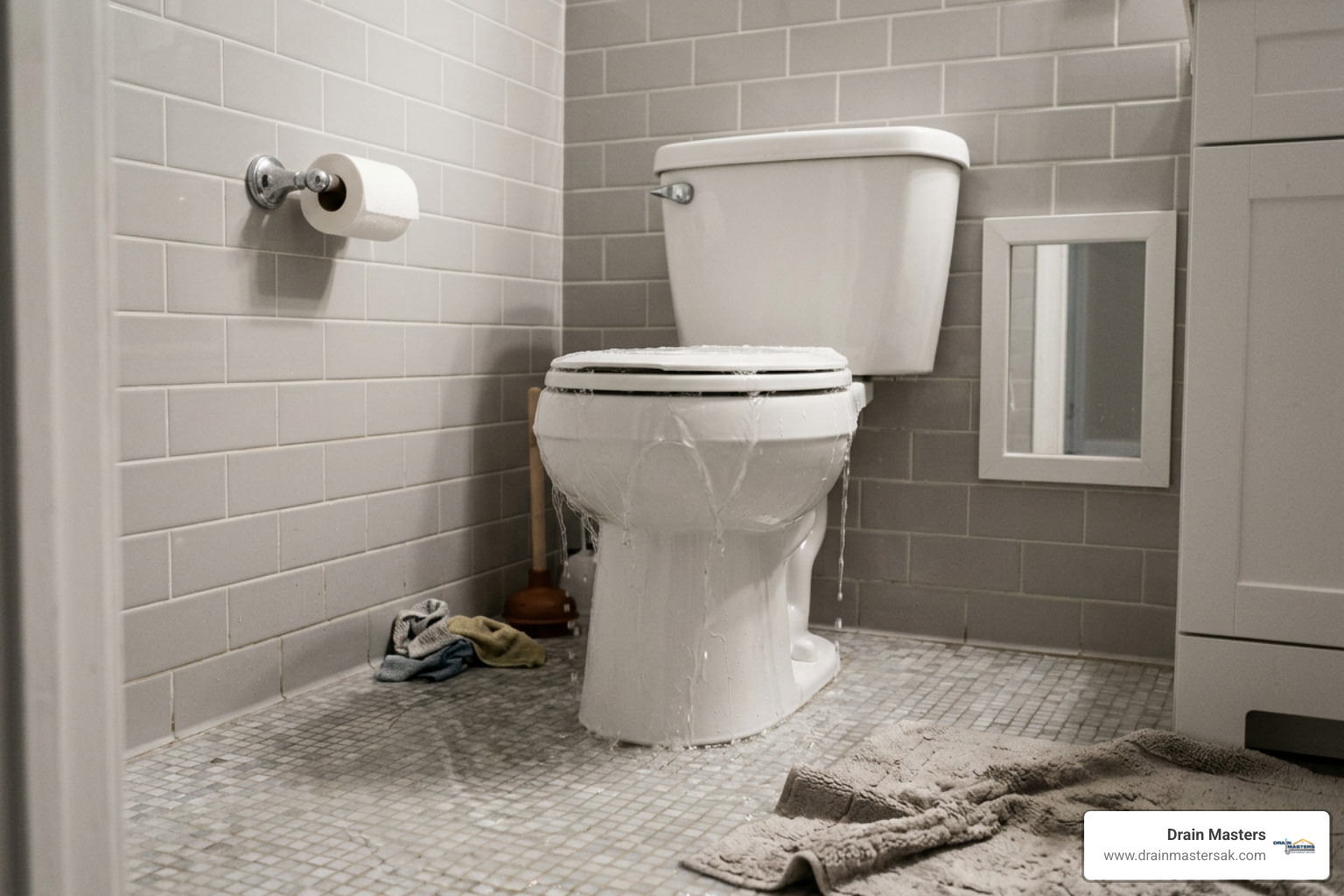
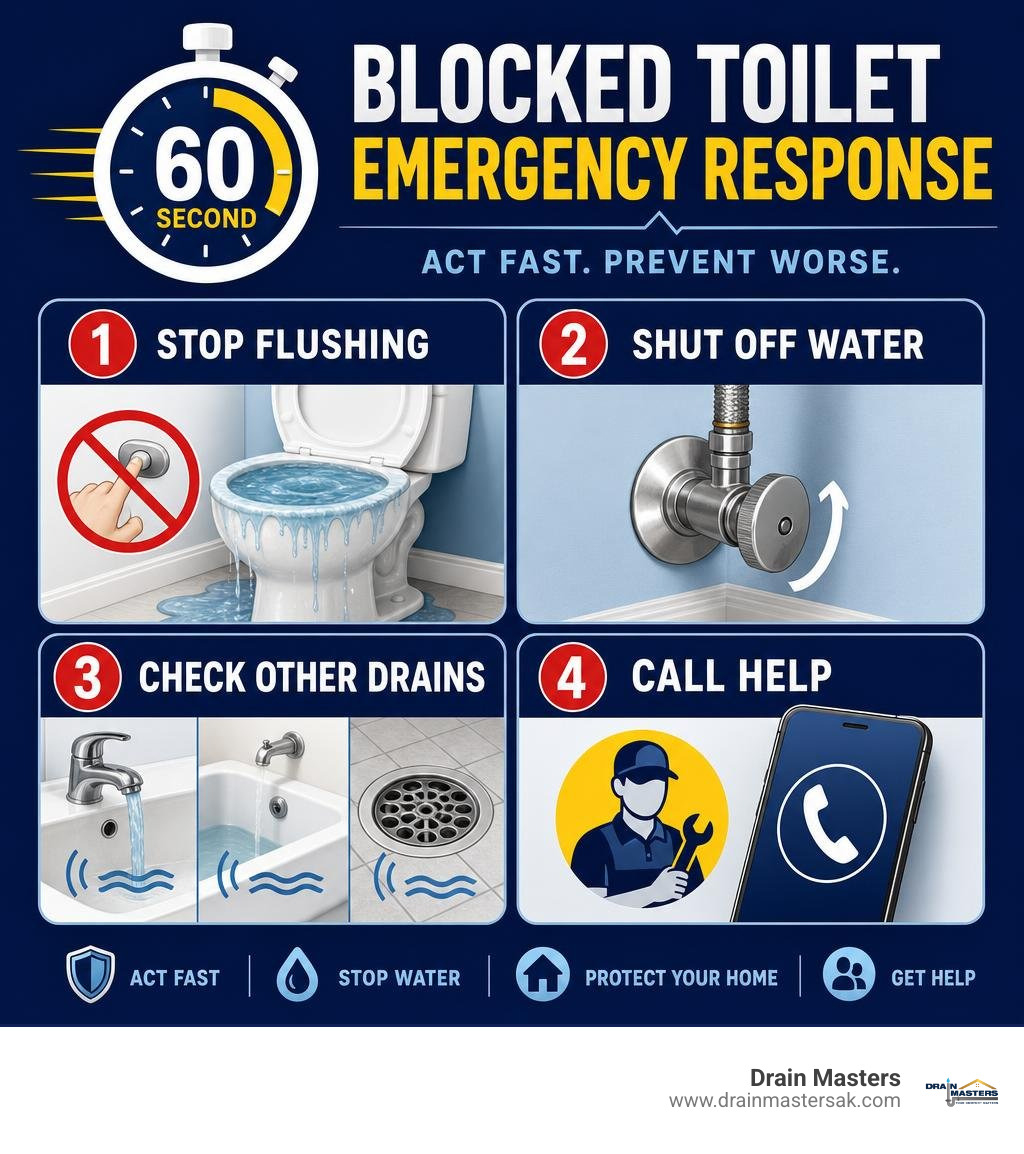
If you need a plumber for a blocked toilet near you, the first rule is to stop flushing immediately. When the bowl water begins rising toward the rim, turn the angle shut-off valve behind the toilet fixture clockwise to cut off the incoming water supply. Once you halt incoming water, take a quick look at adjacent fixtures, including bathroom sinks, shower pans, bathtubs, and basement floor drains. When multiple fixtures drain slowly, gurgle, or discharge wastewater, stop running all water across the house right away and reach out to a licensed professional. These warning signs indicate a deeper main sewer line restriction rather than a simple bowl clog.
When dealing with an isolated toilet clog that is not currently overflowing, using a heavy-duty flange plunger correctly can often dislodge everyday paper obstructions. However, you should stop DIY efforts immediately if two careful plunging sessions fail, if foul wastewater backs up into nearby tubs, or if the obstruction keeps recurring. Never pour harsh chemical drain openers into standing toilet water, as these corrosive compounds generate extreme heat, damage drain pipes, degrade rubber seals, and create dangerous chemical splashback risks during mechanical clearing.
A dependable local plumbing contractor provides 24/7 emergency availability, transparent upfront pricing, clear arrival windows, proper municipal licensing, and advanced diagnostic capabilities. For homeowners in Anchorage, AK, recurring drain blockages and sluggish toilet flushes often require high-definition video pipe diagnostics to identify tree root intrusion, shifting soils, severe grease buildup, or heavy mineral scale accumulation.
Drain Masters is a trusted family-owned plumbing, drain, and sewer company serving homeowners in Anchorage, AK. Backed by more than two decades of hands-on field experience, our team delivers rapid, reliable, and thorough plumbing services when urgent drainage backups threaten your home.
Immediate Steps to Take When Your Toilet Is Blocked and Overflowing
When a toilet fixture refuses to drain and murky wastewater surges upward toward the rim, fast action is essential. The vast majority of indoor water damage incidents do not happen during the initial flush that encounters the blockage; they occur when an anxious homeowner pulls the flush handle a second time in hopes that added hydraulic volume will force the clog away. When your toilet bowl fills rapidly, taking immediate control protects your subflooring, baseboards, and living spaces from contaminated wastewater.
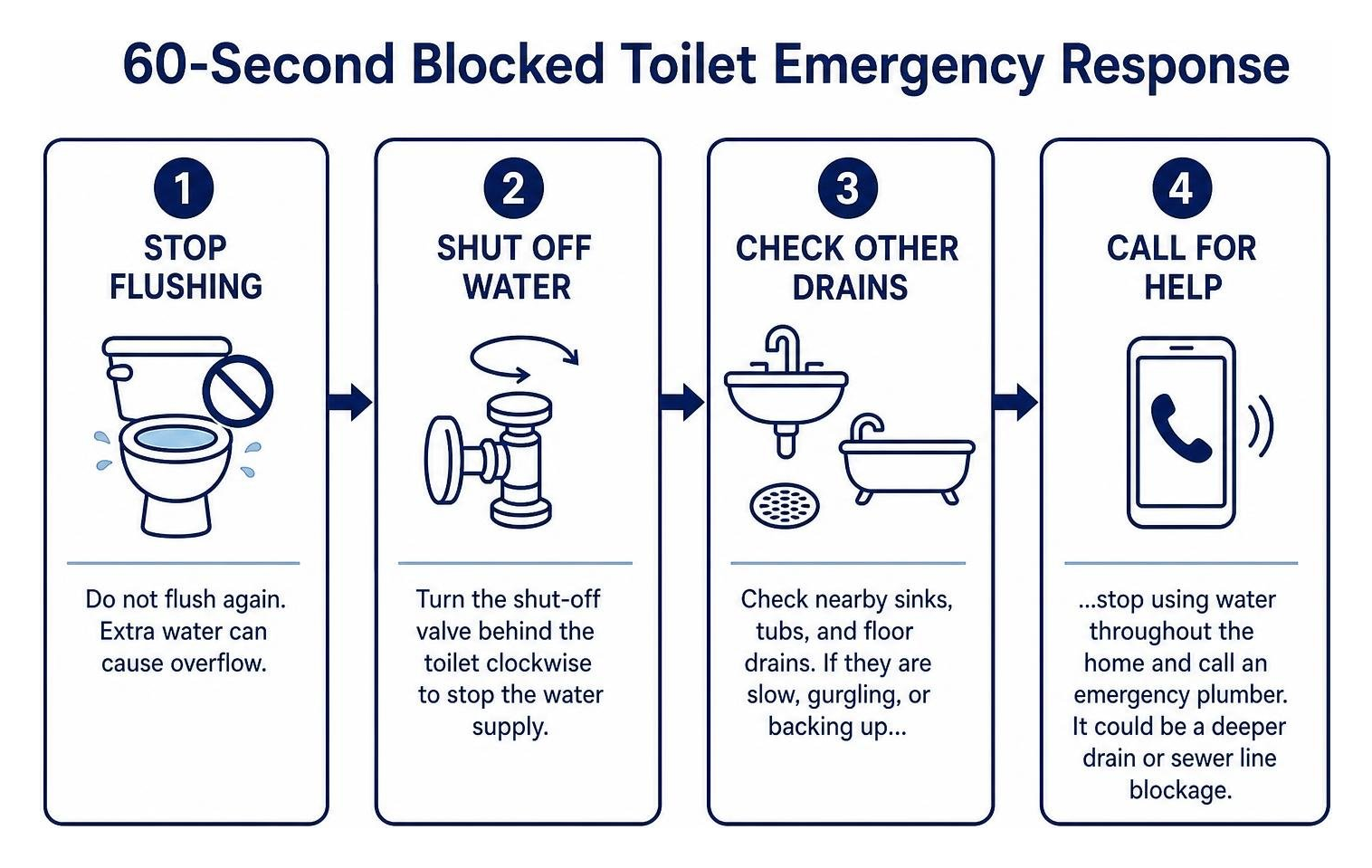
First, shut off the water supply fixture valve immediately. Reach directly behind the base of the toilet and find the oval angle stop valve mounted where the water supply line emerges from the wall or floor. Turn this valve clockwise until it stops turning. If the shut-off valve is frozen or stubborn, immediately lift off the porcelain tank lid. Reach into the clean tank water, take hold of the vertical float cup or float ball, and pull it upward. Lifting the float mechanism signals the fill valve to shut off water instantly. While keeping the float raised, manually push the rubber tank flapper down over the drain opening to prevent remaining tank water from entering the bowl.
Once incoming water is stopped, focus on hygiene, containment, and safety. Contaminated wastewater harbors harmful microorganisms, so keep children and pets away from the area. Lay down heavy towels around the toilet base to absorb moisture, and turn on the bathroom exhaust fan or open windows for ventilation. When you are ready to evaluate the situation calmly, a step-by-step approach to unclogging a stubborn toilet can help you plan safe next steps.
Assessing the Clog: Local Trap Obstruction vs. Main Line Failure
Before picking up any tools, determine whether the problem is isolated to a single fixture or stems from a larger drainage failure. Every modern toilet utilizes an integrated porcelain trapway, an internal curved channel engineered to maintain a water barrier that keeps sewer gas from entering your home. Typical clogs caused by excess toilet paper or organic matter lodge directly inside this curved passage. When an obstruction remains confined to the toilet trap, other sinks and tubs in the home drain smoothly.
Conversely, if flushing your toilet produces bubbling noises or dirty water rising in an adjacent bathtub or shower drain, the restriction is not isolated. Household plumbing systems link multiple branch lines to a common sewer lateral. When the primary line is obstructed, wastewater backs up into the lowest available drain openings. Persistent bubbling sounds, foul odors, or simultaneous slow drains across multiple rooms are classic indicators of severe clogged drain emergencies. If you notice these symptoms, cease running all plumbing fixtures across your house immediately and contact a professional.
Safe DIY Unblocking Methods to Try Before Calling Help
When a blockage is strictly isolated to a single toilet bowl and water levels have stabilized, you can try safe, non-invasive clearing techniques. The best tool for this job is a heavy-duty flange plunger (also known as a closet plunger). Unlike flat-bottom plungers made for flat sink basins, a flange plunger features an extended rubber sleeve that fits directly into the bowl’s curved drain opening to deliver focused hydraulic force.
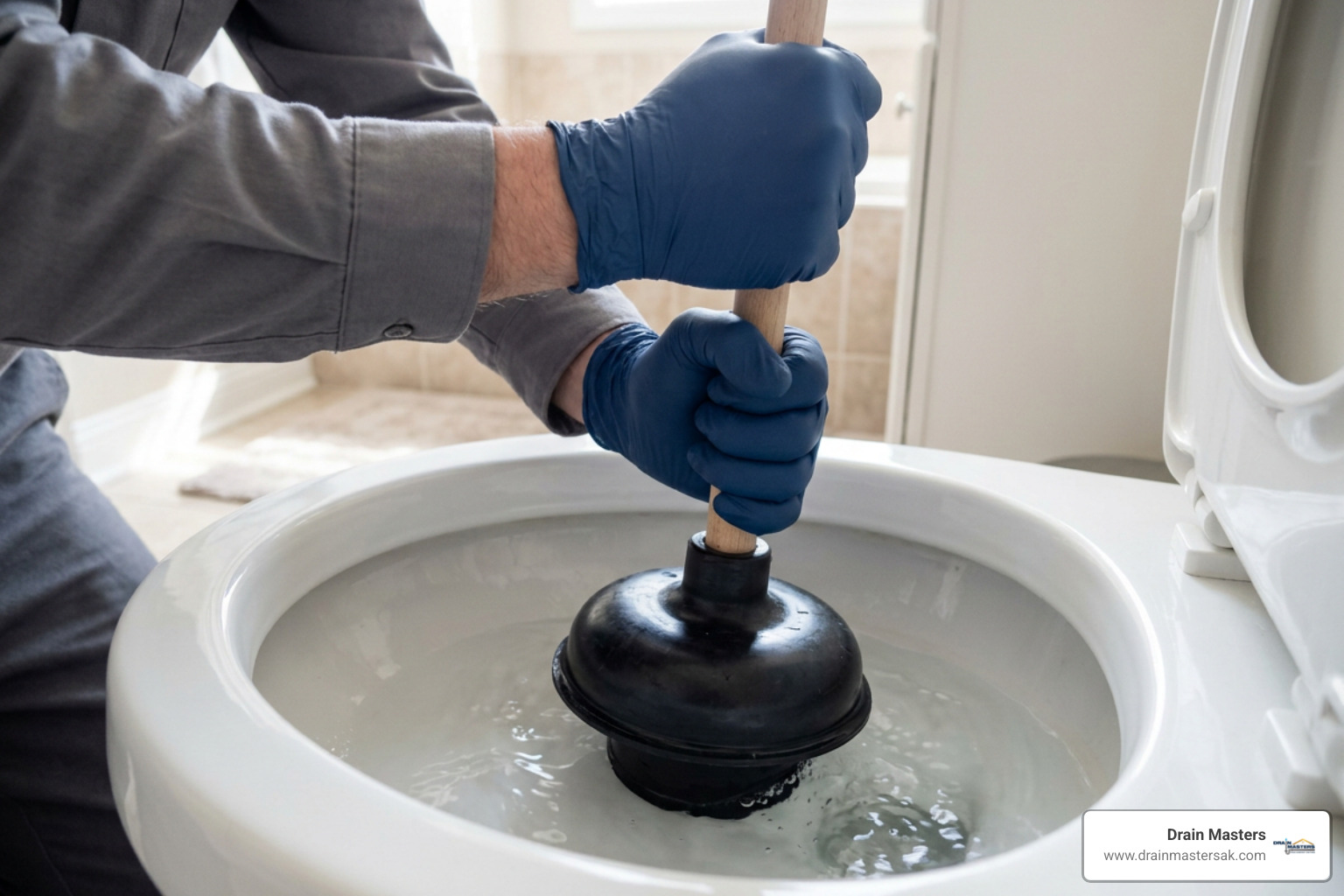
To plunge properly, make sure the rubber cup is fully submerged in water. Press the flange firmly into the drain inlet. Start with a soft push downward to force out trapped air, then execute firm, continuous vertical strokes for 15 to 20 seconds while maintaining a tight seal. The upward pull generates negative pressure that draws the obstruction backward, helping it break apart naturally.
If standard plunging does not dislodge a minor paper clog, add half a cup of liquid dish soap into the toilet bowl and allow it to sit for ten minutes. Follow this by pouring a bucket of hot tap water into the bowl from waist level. Never pour boiling water into a porcelain toilet, as sudden thermal expansion can crack the bowl and require emergency replacement. If two rounds of plunging do not clear the drain, stop immediately to prevent porcelain damage or driving the blockage deeper into the waste line.
When to Stop DIY Attempts and Hire a Professional
While handling basic household tasks is satisfying, recognizing when to stop is critical for keeping your plumbing system intact and protecting your home. Stubborn toilet clogs that refuse to budge under a flange plunger are rarely composed of soft paper. Forcing an obstruction with excessive plunging force or makeshift wire hangers can scratch porcelain, crack delicate vitreous china, or jam the obstruction into subfloor branch lines.
Additionally, pouring retail chemical unblockers into a clogged toilet is both hazardous and ineffective. Caustic drain liquids generate high chemical heat that can warp thin PVC pipes, compromise wax ring seals, and crack porcelain bowls. Because standing water dilutes the chemicals, they rarely dissolve dense blockages like wet wipes or hygiene products. If you attempt to plunge or snake the toilet afterward, corrosive liquid can splash onto your skin or eyes, causing serious chemical burns.
Another clear reason to call in an expert is the presence of raw sewage, recurring backups, or strong sewer gas odors. Raw wastewater carries bacteria such as E. coli, along with airborne contaminants that present significant health hazards under safety standards from the U.S. Environmental Protection Agency. When a backup keeps returning, homeowners may be dealing with repeat clogs because surface-level clearing may not reach the root source of the obstruction. Continuing DIY attempts under these conditions only delays necessary mechanical solutions.
Understanding Common Causes of Severe Toilet Blockages
Severe toilet blockages occur when physical obstructions, pipe deterioration, or external environmental factors restrict wastewater flow through your drainage pipes:
- Non-Flushable Wipes and Hygiene Products: Even products marketed as flushable do not break down rapidly in municipal or septic drainage systems. Synthetic fibers snag on microscopic pipe imperfections, creating dense blockages.
- Foreign Objects: Dental floss, cotton swabs, paper towels, and dropped household items do not dissolve. Once trapped in the internal trapway, they gather paper and solids until water flow stops.
- Hard Water Mineral Scale: In areas with hard water, mineral scale deposits of calcium and magnesium build up along interior pipe walls. This crust restricts pipe diameter and snags passing toilet tissue.
- Tree Root Intrusion: Fast-growing tree roots seek out moisture and nutrients, entering tiny pipe joints and forming thick underground root balls that trap solid waste.
- Aging or Sagging Drain Pipes: Older cast iron or clay pipes can develop rough corrosion, structural cracks, or low spots (bellies) where standing water collects and solid waste settles.
Why Hiring a Local Plumber for Blocked Toilet Near Me Saves Time
When a toilet backup threatens your living spaces, choosing an experienced local plumbing professional guarantees prompt arrival and regional expertise. A local technician operating in your immediate area reaches your home quickly, shortening the timeframe during which standing wastewater can ruin subfloors, drywall, and surrounding cabinetry. Local experts carry specialized clearing and diagnostic machinery on their service vehicles, ensuring most drainage issues are diagnosed and resolved in a single visit.
Local plumbing specialists also understand regional ground conditions, local municipal building codes, seasonal freeze-thaw cycles, and vent pipe icing challenges common in cold-weather climates like Anchorage, AK.
What to Look for in a Plumber for Blocked Toilet Near Me
Not every contractor has the specialized diagnostic equipment or emergency response capabilities necessary to handle complex drain backups. When choosing a local plumbing contractor, evaluate key credentials to ensure safety, clear communication, and dependable workmanship.
Always confirm that the plumbing company is fully licensed, bonded, and insured for residential drain and sewer work. Proper trade licensing confirms technical expertise and code compliance, while general liability insurance protects your property. Look for contractors providing transparent upfront pricing, defined arrival windows, and 24/7 emergency dispatch.
| Comparison Feature | DIY Toilet Clearing | Professional Plumber Service |
|---|---|---|
| Primary Tools Used | Standard flange plunger, basic hand snake | Motorized closet augers, high-pressure water jetters, CCTV cameras |
| Reach and Clearing Depth | Limited to the 3-foot internal porcelain trapway | Reaches 50 to 100+ feet down main sewer laterals |
| Diagnostic Accuracy | Visual guess based on surface symptoms | Real-time high-definition video sewer line inspection |
| Safety and Pipe Protection | Risk of porcelain scratching or chemical splashback | Zero pipe damage using protective rubber sheaths and controlled torque |
| Resolution Effectiveness | Temporary fix for minor paper clogs | Complete debris removal, line descaling, and root eradication |
| Workmanship Warranty | None; risk of recurring backups | Backed by professional guarantees and verified work history |
Questions to Ask a Plumber for Blocked Toilet Near Me Before Booking
When speaking with a plumbing provider during an urgent drainage problem, asking a few direct questions ensures you hire the right team:
- “What is your estimated arrival window, and do you offer emergency dispatch?” Clear communication keeps you informed throughout the process.
- “Does your diagnostic service fee apply toward the repair if I approve the work?” Reputable companies often apply evaluation fees toward the completed clearing service.
- “Do your service vehicles carry specialized tools like video inspection cameras and commercial augers?” This ensures the plumber can solve the problem immediately without extra trips.
- “Do you provide upfront pricing before beginning physical work?” Upfront estimates prevent unexpected charges once work is completed.
- “What warranties or guarantees back your drain clearing services?” Trustworthy contractors stand firmly behind their service quality.
Professional Diagnostic and Clearing Techniques
When an experienced technician arrives at your home, they follow a systematic process to pinpoint and resolve the blockage safely.
The plumber first inspects fixture water levels and tests nearby branch drains to determine if the blockage is isolated to the fixture or located further down the line. For toilet-level obstructions, they use a professional closet auger with a protective rubber sleeve that shields porcelain surfaces from steel cable scratches while breaking up or extracting the clog.
For deeper blockages situated past the fixture, technicians perform a non-invasive sewer camera inspection. A high-definition optical camera is guided through cleanout access points to view pipe conditions in real time, pinpointing root intrusions, physical line sags, cracked joints, or heavy grease buildup.
When main lines require thorough descaling or root removal, technicians utilize high-pressure hydrojetting systems. High-pressure water scouring strips away grease, cuts through root masses, and cleans pipe walls thoroughly to restore complete drainage flow.
Cost Factors and Prevention Strategies for Blocked Toilets
Understanding the factors that influence drain clearing costs helps you make informed choices when booking service. While clearing an isolated paper clog in a toilet bowl takes minimal time, several key variables determine the overall project scope:
- Location and Depth of the Obstruction: Clogs confined to the internal toilet trapway are straightforward to clear. Blockages located deep within the primary sewer line require specialized diagnostic equipment and exterior cleanout access.
- Fixture Accessibility: When severe obstructions cannot be reached through cleanouts, the plumber may need to detach the toilet from the floor flange, replace the compressed wax ring, clear the line directly, and reset the fixture securely.
- Required Equipment and Technology: Standard mechanical snaking requires less specialized gear than hydro-jetting machines, root-cutting cutters, or digital camera inspection systems.
- Pipe Condition and Structural Repairs: If video diagnostics reveal cracked clay, collapsed lines, or severe joint separations, repairs may require trenchless pipe lining, pipe bursting, or physical sewer replacement.
To safeguard your plumbing system from recurring blockages, follow everyday preventive practices. Strictly adhere to the “3 Ps” rule: only flush pee, poop, and toilet paper. Treat baby wipes, paper towels, facial tissues, dental floss, and feminine hygiene items as solid trash. In addition, scheduling routine drain cleaning removes stubborn scale and organic deposits before they evolve into full pipe blockages.
Frequently Asked Questions About Blocked Toilet Plumbing
What are the first steps I should take when my toilet is blocked and about to overflow?
Immediately take off the porcelain tank lid, reach inside, and lift the float ball or float cup to instantly shut off incoming water. Next, turn the angle stop shut-off valve located on the wall behind the toilet clockwise until it is completely closed. Do not attempt a second flush, as this will force standing water over the bowl rim and onto your bathroom floor.
How can I tell if a blocked toilet is a simple clog or a larger sewer line problem?
If only the toilet is slow or blocked while nearby bathroom sinks, showers, and bathtubs drain freely, the clog is almost certainly isolated to the toilet’s internal trapway. However, if flushing the toilet causes water to gurgle or back up into your bathtub or shower, or if multiple drains throughout your home are running slowly at the same time, the blockage is located deeper in your main sewer lateral.
When should I stop trying DIY methods and call a professional plumber?
You should stop DIY clearing attempts if two careful sessions with a flange plunger fail to clear the blockage, if dirty wastewater or sewage backs up into adjacent plumbing fixtures, or if the toilet repeatedly clogs after being cleared. Continuing to plunge aggressively can damage porcelain seals or push foreign obstructions deeper into branch lines.
What are the most common causes of a blocked toilet?
The leading causes of blocked toilets include flushing non-degradable items such as wet wipes, paper towels, and hygiene products; foreign objects accidentally dropped into the bowl; heavy mineral scale buildup narrowing older pipes; tree root intrusion penetrating outdoor sewer lines; and weak flush mechanisms failing to deliver sufficient water volume.
How much does it typically cost to unblock a toilet?
The total cost to resolve a blocked toilet depends heavily on the severity and location of the clog, whether the technician must pull the toilet from the floor flange to gain pipe access, and whether specialized diagnostic equipment like high-pressure hydro-jetters or sewer cameras are needed. Routine trapway clearing is generally straightforward, whereas deep sewer line clogs requiring root removal or descaling involve more time and specialized machinery.
What should I look for when choosing an emergency toilet plumber?
Look for a fully licensed, bonded, and insured plumbing contractor with proven residential experience, 24/7 emergency dispatch availability, transparent upfront pricing, and positive local customer reviews. Ensure the company uses advanced diagnostic tools, such as fiber-optic sewer inspection cameras, so they can identify and fix the root cause of the issue rather than just punching a temporary hole through the clog.
How can I prevent my toilet from getting blocked again in the future?
Prevent future blockages by strictly enforcing the 3 Ps rule: only flush pee, poop, and standard toilet paper. Place a small wastebasket in the bathroom for baby wipes, facial tissues, cotton swabs, and hygiene products. Additionally, address slow-filling tank valves promptly to ensure every flush delivers adequate water volume, and schedule periodic professional drain maintenance for older plumbing systems.
What does a professional plumber do during a toilet unblocking service?
A professional plumber begins by assessing whether the blockage is localized to the fixture or sitting in the main sewer line. They use specialized closet augers with protective sheaths to clear the porcelain trapway without scratching the finish. If the obstruction is located further down the line, they utilize motorized drain snakes, perform a fiber-optic video camera inspection, or deploy high-pressure hydro-jetting to thoroughly clean the pipe walls before testing the entire system’s flow.
Is it worth getting a CCTV camera inspection for a recurring toilet blockage?
Yes. If a toilet repeatedly clogs or backs up multiple times a year, a CCTV drain camera inspection is the most cost-effective diagnostic tool available. The high-definition camera reveals the exact cause and location of hidden underground issues, such as cracked pipes, displaced joints, pipe bellies, mineral scale, or tree root intrusion, allowing the plumber to recommend targeted repairs and prevent unexpected sewer line failures.
How quickly can an emergency plumber arrive for a blocked toilet?
Emergency plumbing response times vary depending on your location, traffic, and current call volume, but local emergency service providers typically aim to arrive within 45 to 90 minutes of your call. Once on site, a professional technician can clear a standard fixture clog in 30 to 60 minutes, while complex mainline blockages typically take 1 to 2 hours to fully diagnose and clear.
Conclusion
A blocked or overflowing toilet is a stressful household disruption that can quickly escalate into extensive water damage and costly structural repairs if ignored. By understanding how to immediately isolate your water supply, recognizing the difference between an isolated trap clog and a major sewer line backup, and avoiding risky DIY chemical unblockers, you can safeguard your home from unnecessary contamination. When simple plunging fails or wastewater begins backing up into adjacent drains, bringing in a qualified local professional ensures the blockage is cleared safely, completely, and permanently.
At Drain Masters, we take pride in serving our community as a trusted, family-owned plumbing, drain, and sewer company with more than two decades of dedicated service in Anchorage, AK. Completing over 4,000 jobs every year, our licensed and insured team utilizes advanced diagnostic video cameras, heavy-duty mechanical augers, and high-pressure hydro-jetting to resolve everything from minor fixture blockages to complex mainline sewer failures. For dependable emergency service, contact our professional drain and sewer technicians today to schedule an appointment.