
Drain Pipe Repair in Anchorage, AK: When to Call a Professional
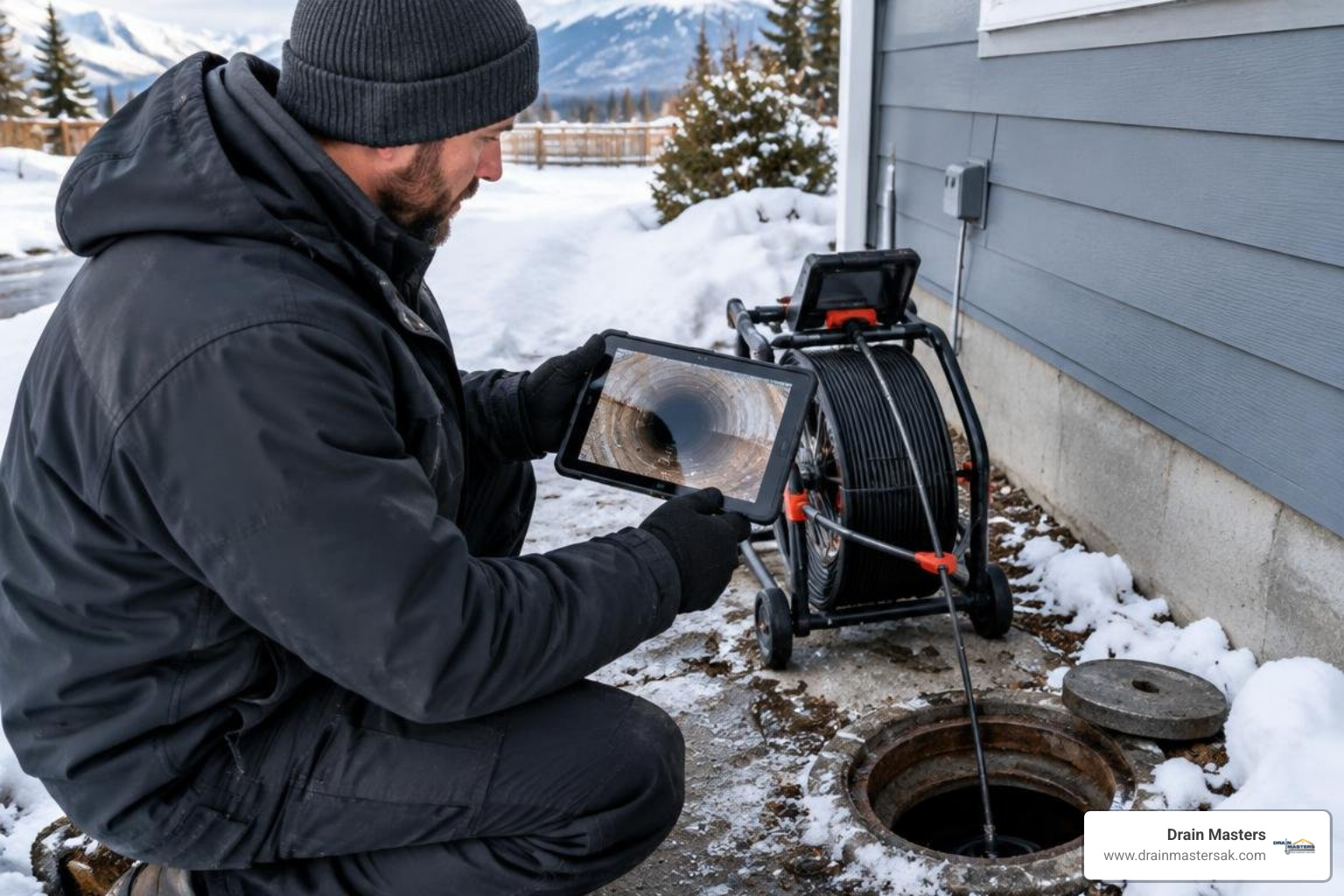
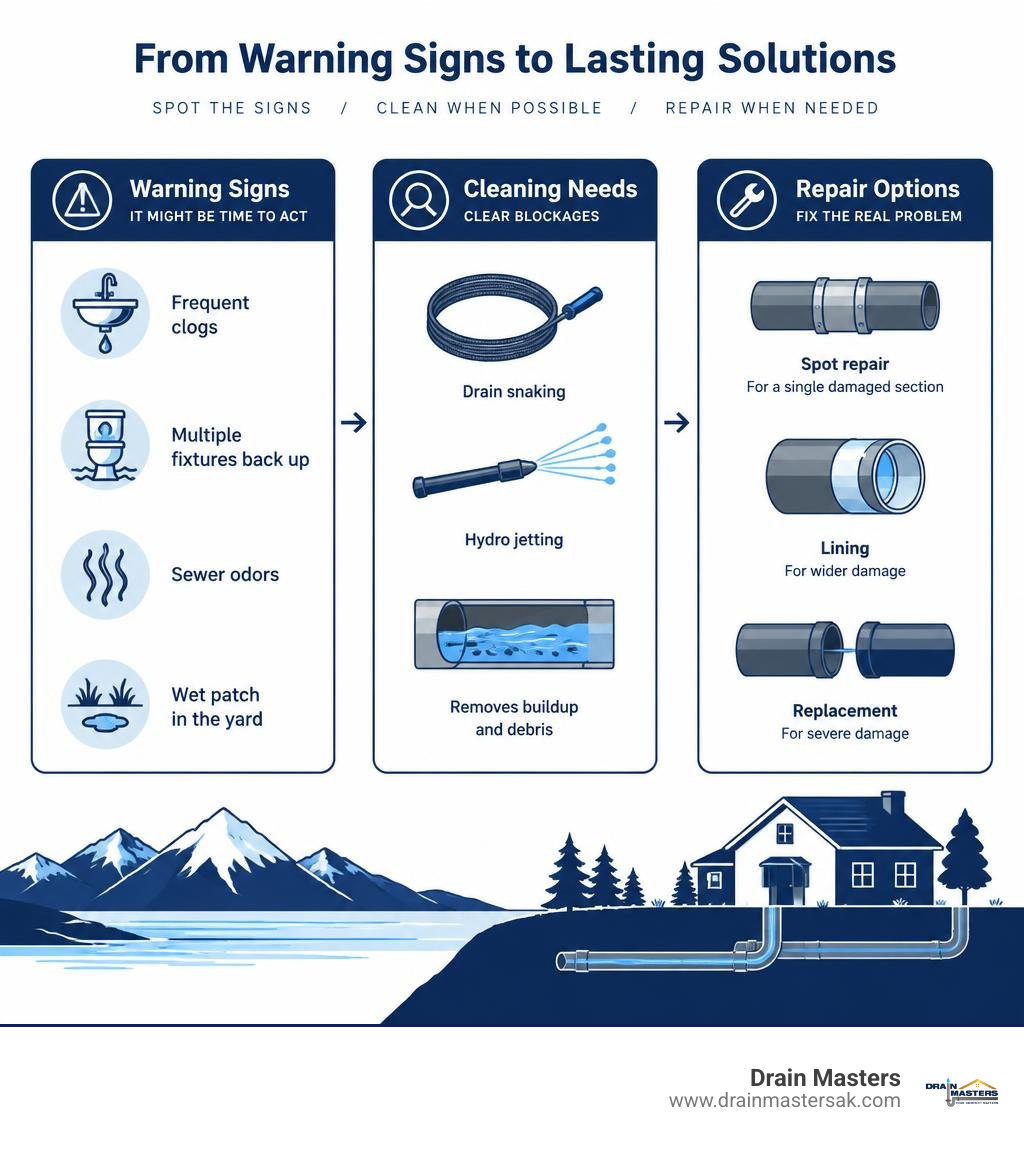
If a drain keeps clogging after cleaning, several fixtures back up, or you notice sewer odors or a wet patch in the yard, call a drain repair professional. Ask for a camera inspection before choosing a fix. Cleaning may clear a blockage, but a cracked or collapsed pipe needs repair. A single damaged section may need a spot repair; wider damage may call for lining or replacement.
In Anchorage, AK, freezing ground and shifting soil can put extra stress on buried drain lines. Finding damage early can help you compare options before a backup gets worse.
For more than 20 years, the Drain Masters team has helped Anchorage homeowners identify drain problems and choose the right next step. This guide explains the warning signs to watch for and what a professional inspection can reveal.
Signs You Need Drain Pipe Repair Near Me
Underground drainage networks quietly transport wastewater away from your home every single day. Because these vital conduits remain hidden behind drywall, beneath concrete basement slabs, and deep within the yard, structural failures often progress quietly before causing a major mess. Recognizing the initial warnings of a compromised wastewater line enables you to act before an inconvenient slow drain transforms into a hazardous indoor backup.
Common warning signs of underground pipe failure include:
- Persistent sewer gas odors: A sealed, healthy drainage system channels toxic sewer gases out through roof vents. If you detect a pungent, rotten-egg smell inside your laundry room, basement, or yard, wastewater is likely escaping through a fracture or dried-out joint.
- Unusual fixture gurgling: When wastewater flows past a broken, partially collapsed, or obstructed pipe section, trapped air is forced backward through domestic water traps. If flushing a toilet causes your bathtub or kitchen sink to bubble and sputter, the drainage line is struggling to vent correctly.
- Slow drainage across multiple drains: While a single slow sink usually points to an isolated hair or soap buildup, multiple fixtures draining sluggishly at the same time signals a structural blockage or offset deep in the main line.
- Lush, extra-green patches of grass: Escaping effluent acts as an underground fertilizer. If a specific strip of your lawn looks noticeably greener, taller, or soggier than surrounding turf, underground sewage is likely leaching into your topsoil.
- Moisture on interior walls and baseboards: Leaking vertical drainage stacks or horizontal sub-slab pipes can saturate surrounding sheetrock and flooring, spurring rapid mold colonization and musty smells.
Whenever these symptoms manifest, guessing at the root cause risks wasting time and money. A professional sewer camera inspection lets technicians examine the pipeline directly. This diagnostic step pinpoints the location, depth, and nature of the defect, helping ensure the recommended solution addresses the root problem.
Recognizing Persistent Backups and Finding Drain Pipe Repair Near Me
When drains repeatedly choke on everyday wastewater, the issue usually extends far deeper than standard surface debris. Persistent backups occur when an underground pipe experiences a loss of structural integrity, preventing smooth hydraulic flow.
One common structural issue is a “belly,” which is a sag in the pipe run caused by shifting subterranean soils. In a sagged section, standing water settles, gathering solids, grease, and paper until an impenetrable barrier forms.
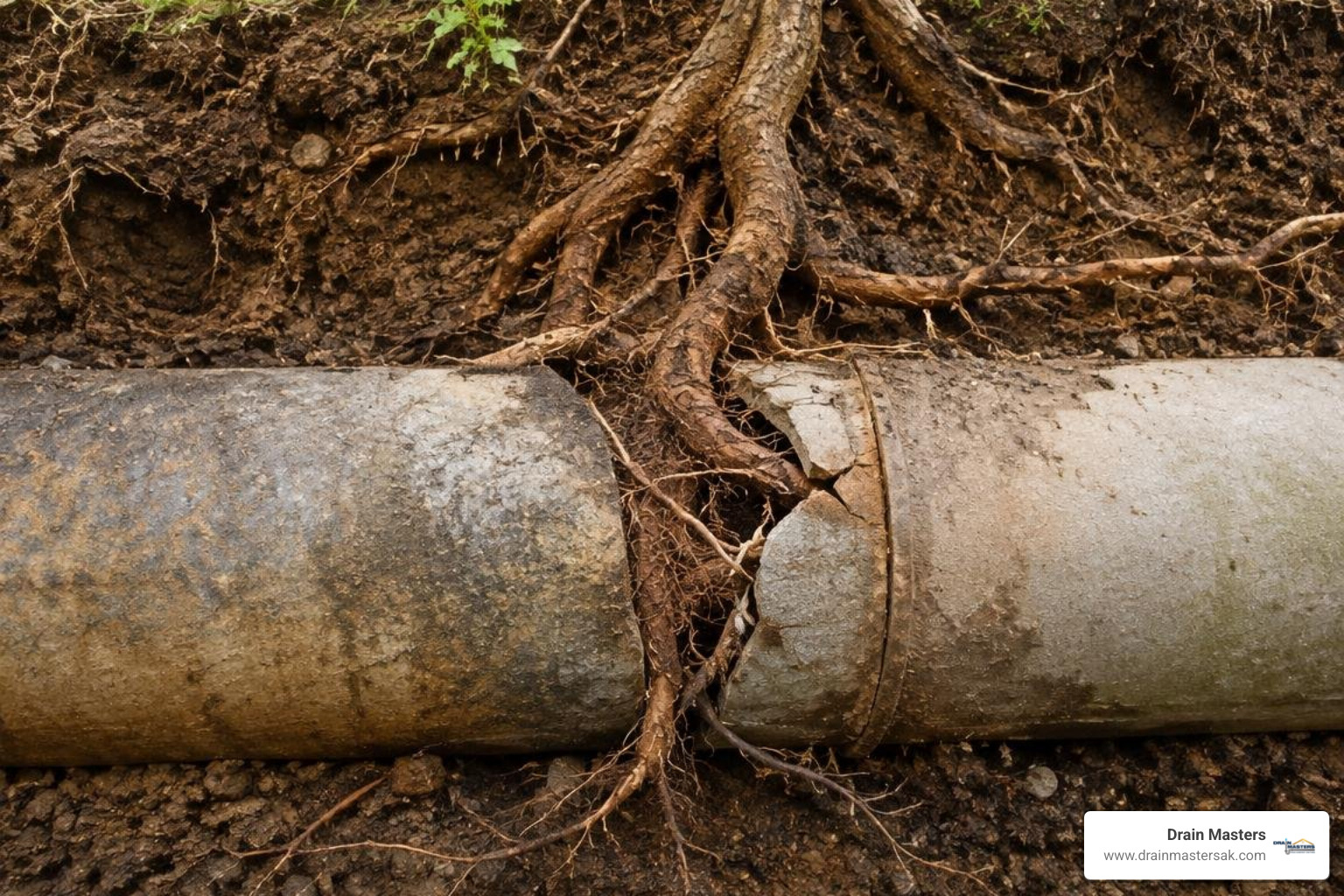
Furthermore, invasive tree roots actively seek out the moisture and nutrients carried within wastewater pipes. Microscopic root hairs penetrate hairline fractures, joint seams, and loose fittings, rapidly expanding into dense, web-like root masses that catch debris and shatter pipe walls from the inside out.
If multiple fixtures back up simultaneously whenever an appliance runs, or if plunging only provides brief, temporary relief, structural intervention is necessary to restore proper drainage.
Unexplained Yard Flooding and Structural Damage
Underground pipe failures do not stay confined to the pipe interior. When wastewater continuously escapes into sub-surface strata, it washes away structural soil support and creates serious foundation concerns. In severe scenarios, ongoing subterranean leakage creates hidden voids that lead to surface sinkholes, driveway settling, and cracked structural concrete slabs.
When assessing unexplained pooling water, it is helpful to understand the basic system differences:
| Diagnostic Feature | Water Supply Line Leaks | Drain & Sewer Line Failures |
|---|---|---|
| Water Quality | Clean, potable, pressurized water | Graywater or blackwater containing waste |
| Water Meter Movement | Continuous spinning even when fixtures are off | No meter movement; flow depends on usage |
| Odor Profile | Odorless | Strong methane, sewage, or sulfur smells |
| Environmental Impact | Wet patches, pooling, mild soil erosion | Lush turf strips, foul soil saturation, mold |
| Diagnostic Method | Acoustic listening, pressure testing | High-definition internal video inspection |
Property owners dealing with persistent moisture or drainage problems can use the warning signs in our Anchorage sewer inspection guide to better understand how technicians locate subsurface structural defects without unnecessary excavation.
Drain Cleaning vs. Drain Pipe Repair: Knowing the Difference
Homeowners often confuse drain cleaning with structural pipe repair. While both services aim to restore functional wastewater flow, they address entirely different problems within your plumbing infrastructure.
Drain cleaning is a maintenance process designed to clear internal, non-structural obstructions. Using tools such as mechanical steel snakes or industrial-grade hydro jetting systems, technicians blast away soft blockages, accumulated fats, oils, grease, soap residue, and light root intrusions. Drain cleaning restores the clear internal diameter of an intact, structurally stable pipe.
Drain pipe repair, by contrast, addresses the physical condition of the pipe itself. If the pipe is cracked, misaligned, sheared by frost, collapsed, or deteriorated from corrosion, cleaning the line will only provide a temporary reprieve. Running a mechanical snake through a fractured pipe can even snag broken pipe edges, accelerating a total collapse.
When structural defects are present, you must rebuild, seal, or replace the broken pipe wall to stop soil washouts, prevent root recurrence, and ensure long-term stability. Our overview of why professional drain repair matters explains why a lasting structural solution is often safer than repeated temporary fixes.
| Comparison Metric | Drain Cleaning Services | Structural Drain Pipe Repair |
|---|---|---|
| Primary Objective | Remove debris and clear internal flow paths | Restore physical pipe strength and water tightness |
| Common Tools | High-pressure hydro jetters, mechanical augers | CIPP liners, sectional sleeves, pipe pullers |
| Addressed Issues | Hair, grease, sludge buildup, light roots | Cracks, sheared sections, bellies, corrosion |
| Structural Impact | Cleans existing pipe walls without reinforcing | Creates an entirely new, sealed structural barrier |
| Long-Term Durability | Requires periodic routine maintenance | Designed to deliver decades of reliable service |
Common Causes of Drain Pipe Damage in Cold Climates
Underground plumbing systems in northern climates face unique environmental stresses rarely encountered in milder regions. Deep ground freezing, frost cycles, and specific soil conditions place immense physical demands on buried drainage lines.
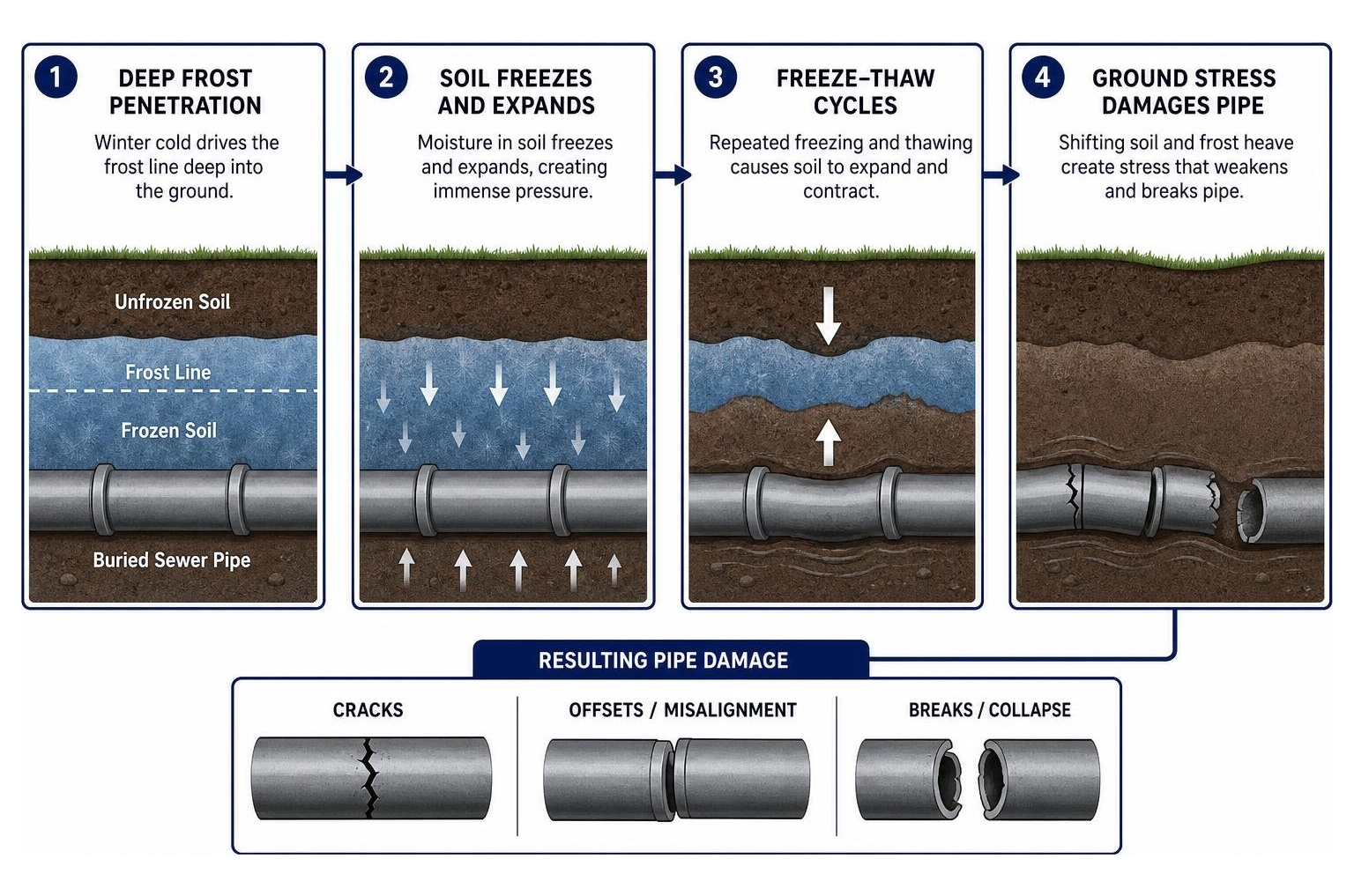
Key causes of pipe failure in cold-climate regions include:
- Deep ground frost penetration: When winter arrives, the frost line extends deep into the earth. The moisture within surrounding soils freezes and expands with incredible hydraulic force, crushing rigid, brittle pipes or pushing horizontal pipe runs out of alignment.
- Frost heave and seasonal thawing: As frozen soil expands and contracts throughout seasonal freeze-thaw cycles, buried pipes experience uneven upward and downward stresses. These shifting forces cause joints to pull apart, crack rigid hub connections, and create low spots where wastewater ponds and freezes.
- Permafrost and shifting subterranean strata: Uneven ground settlement places bending stress across long pipe runs, resulting in lateral shear fractures.
- Tree root intrusion: Trees expand their root systems searching for water. The warmth and moisture leaking from worn pipe joints draw thirsty roots directly toward the line.
- Cast iron scale and internal pipe degradation: Older cast iron pipes develop heavy internal corrosion over time. This rust flakes off, catching debris and thinning the structural pipe wall until pinholes and bottom channel channeling occur.
For homes with older piping materials, our explanation of repair options for broken clay sewer pipes shows how modern rehabilitation methods can restore brittle, aging lines.
Evaluating Soil Movement and Choosing Drain Pipe Repair Near Me
When heavy soil movement occurs around residential sewer lines, rigid pipe materials often snap rather than flex. Offset joints develop when one section of pipe drops lower than its adjoining segment, creating a sharp structural shelf that catches solids and paper products.
Left unaddressed, the ongoing escape of wastewater erodes the soil bed supporting the higher pipe, accelerating joint separation and eventual pipe collapse. Addressing these issues promptly prevents wastewater backups from damaging interior living spaces.
According to environmental guidelines from the U.S. Environmental Protection Agency (EPA), maintaining sealed, watertight wastewater conveyance systems is essential for safeguarding groundwater reserves and preventing local soil contamination. Timely structural repairs ensure environmental safety while protecting your property value.
Aging Infrastructure and Internal Corrosion Factors
Many established neighborhoods feature drainage systems installed decades ago using cast iron, galvanized steel, or vitrified clay. Over decades of service, cast iron lines experience a corrosive process known as tuberculation, where acidic wastewater and sewer gases create jagged rust mounds along the pipe interior.
This internal scaling catches waste, narrows the pipe’s effective diameter, and slowly rots the bottom channel of the pipe. Furthermore, repeated applications of harsh chemical drain cleaners accelerate this breakdown. The caustic chemicals generate intense heat inside the line, eating through weakened metal and eroding old pipe gaskets.
When internal corrosion compromises the pipe walls, structural rehabilitation is needed to prevent structural collapse under the weight of the overlying soil.
Modern Drain Pipe Repair Methods and Trenchless Solutions
In past decades, repairing a broken underground drain pipe required extensive property excavation. Heavy machinery dug wide trenches through mature landscaping, paved driveways, stone patios, and even finished basement slabs to expose and replace the compromised line.
Today, modern plumbing technology offers minimally invasive no-dig methods. Our trenchless sewer repair service can restore cracked, offset, or root-damaged drain pipes with minimal digging, helping protect landscaping and hardscaping.
The two most common trenchless pipe restoration methods are:
- Cured-In-Place Pipe (CIPP) Lining: Technicians insert a flexible, fabric liner saturated with liquid epoxy resin into the damaged pipe through a small cleanout opening. Once positioned, an internal bladder is inflated, pressing the resin-soaked sleeve tightly against the existing pipe walls. As the epoxy cures, it hardens into a smooth, seamless, joint-free structural pipe inside the old host line.
- Trenchless Pipe Bursting: For pipes that have completely collapsed or suffered severe bellies, pipe bursting pulls a heavy, conical bursting head through the damaged line. This head breaks the old pipe apart, outward into the surrounding soil, while simultaneously pulling a new, high-density polyethylene (HDPE) pipe into place behind it.
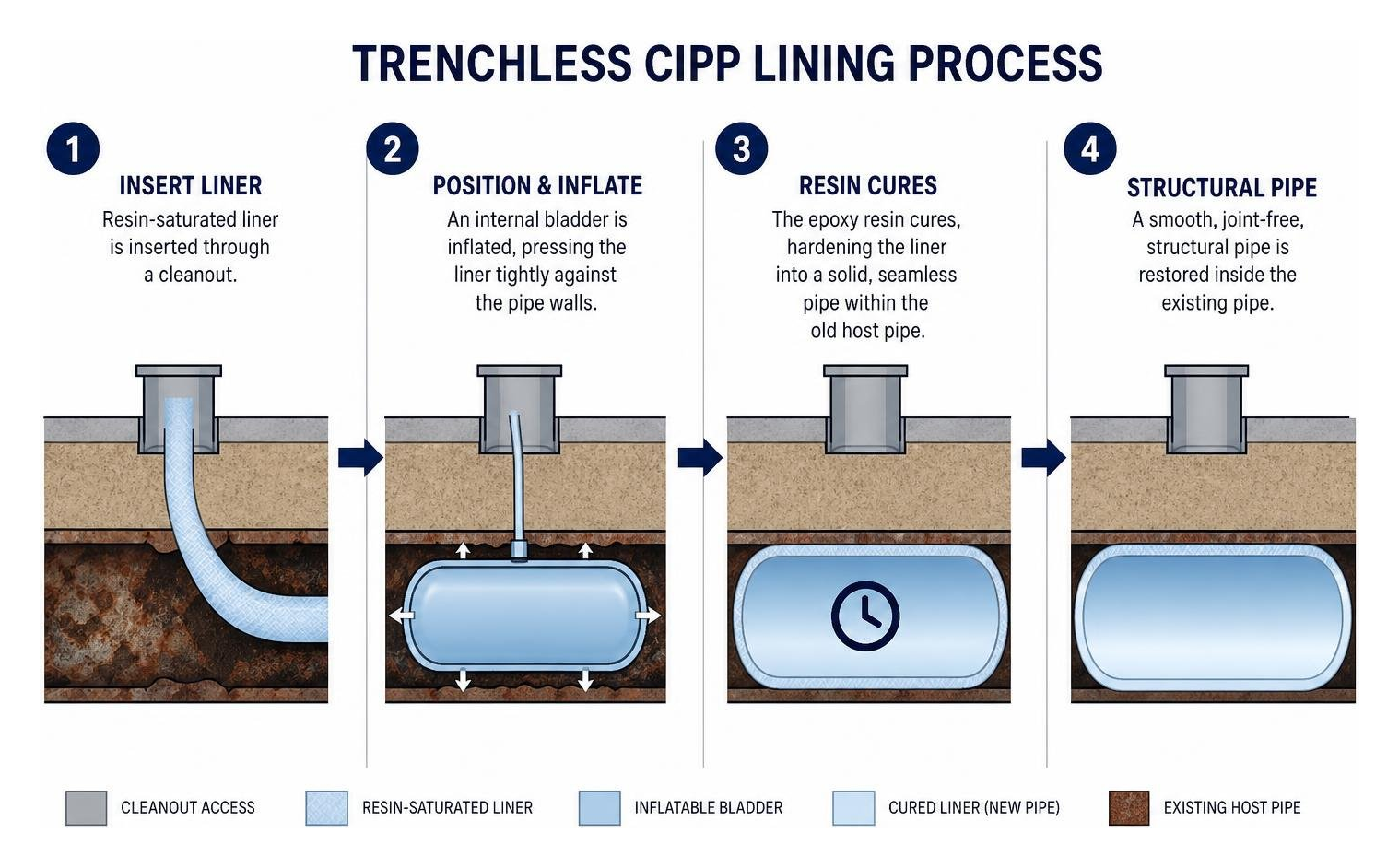
When localized damage is found early, trenchless patch repair options can help technicians seal isolated cracks and joint offsets without relining the entire line.
CIPP Lining vs. Full Line Replacement
Choosing between structural epoxy relining and traditional open-trench replacement depends on the overall structural integrity of the existing pipeline and site conditions.
| Engineering Factor | CIPP Trenchless Lining | Full Trench Replacement |
|---|---|---|
| Excavation Requirement | Minimal access point (cleanout) | Continuous open trench along pipe path |
| Surface Disruption | Preserves yards, trees, and driveways | Requires restoring lawns, concrete, or asphalt |
| Installation Duration | Typically completed in a single day | Often spans multiple days of excavation |
| Structural Longevity | Delivers decades of jointless flow | Delivers long-term new pipe service life |
| Ideal Application | Cracked, corroded, or root-infiltrated lines | Severely crushed, missing, or back-pitched lines |
The key differences between pipe relining and replacement can help property owners evaluate which approach fits their plumbing setup.
Spot Repairs and Sectional Trenchless Patching
Not every damaged drain pipe requires a whole-line replacement. When high-definition camera inspections reveal that the bulk of your piping remains structurally sound, with damage limited to a single cracked section, an isolated root breach, or a single offset joint, a sectional spot repair is often the best choice.
Trenchless spot repair utilizes a targeted fiberglass and epoxy sleeve wrapped around an internal mechanical packer. Technicians guide the sleeve directly to the damaged section using camera guidance. Once inflated, the sleeve presses against the damaged area and cures in place, sealing the crack and restoring structural strength to that specific section.
This focused repair seals out root systems, restores smooth flow, and avoids the unnecessary expense of replacing healthy pipe runs.
How to Choose a Qualified Local Plumbing Contractor
Entrusting your home’s sub-surface drainage to a plumbing contractor is a major decision. Improperly installed piping, inadequate slope, or poor liner curing can result in chronic backups and costly emergency repairs.
When evaluating local plumbing professionals, verify the following credentials:
- Licensing, Bonding, and Insurance: Ensure the business employs licensed Master Plumbers who comply with local municipal building codes. Full liability insurance and workers’ compensation coverage protect your property throughout the project.
- Diagnostic Technology: A reputable contractor always verifies pipe damage using advanced camera diagnostics before proposing a repair plan, allowing you to see the problem firsthand.
- Upfront Pricing Transparency: Look for contractors who provide straightforward, upfront pricing rather than vague verbal estimates that change once work begins.
- Deep Regional Experience: Cold-climate plumbing demands deep familiarity with deep frost lines, soil conditions, and municipal wastewater connections.
- Comprehensive Warranty Coverage: Quality plumbing contractors stand firmly behind their workmanship and materials with clear, written warranties.
Whether you need residential plumbing repairs or specialized sewer and drain repair, choosing an established, family-owned local specialist helps ensure your plumbing repairs are handled with care and expertise.
Frequently Asked Questions About Drain Pipe Repair
What are the most common signs that indicate a need for drain pipe repair?
The most reliable indicators include multiple fixtures draining slowly at the same time, persistent sewer gas odors inside or outside the home, gurgling sounds from toilets or sink traps, recurring clogs that return shortly after cleaning, and unexplained soggy or lush green patches across your yard.
What is the primary difference between drain cleaning and drain repair?
Drain cleaning focuses on removing temporary blockages, such as grease, hair, and light roots, from inside an intact pipe. Drain pipe repair addresses physical, structural damage to the pipe itself, such as fixing cracks, sealing open joints, realigning collapsed walls, or replacing corroded pipe sections.
What causes underground drain pipes to crack or collapse?
Underground pipes crack or collapse due to deep ground frost expansion, seasonal soil settling, heavy root intrusion, structural pipe bellies, and long-term corrosion that rots the bottom of older cast iron or galvanized lines.
Can drain pipe repair be done without digging up my yard?
Yes. Modern trenchless technologies, such as Cured-In-Place Pipe (CIPP) lining and sectional epoxy patch repairs, allow technicians to rehabilitate damaged underground pipes through existing cleanout access points, avoiding major excavation across yards, gardens, and driveways.
How do I know if I need a spot repair or full pipe replacement?
A high-definition video camera inspection will determine the right approach. If damage is limited to a single crack, puncture, or joint offset within an otherwise healthy line, a sectional spot repair is ideal. If the camera reveals widespread corrosion, extensive cracking, or severe structural collapse throughout the run, a full replacement or full-length relining is recommended.
How much does professional drain pipe repair typically cost?
Overall repair costs depend on several factors, including the depth and accessibility of the line, the overall length of the damaged section, the chosen repair method (trenchless lining versus open excavation), and surface restoration requirements. A thorough camera inspection provides the clear details needed for an accurate, upfront estimate.
How long does a typical trenchless drain pipe repair take?
Most residential trenchless CIPP lining and sectional patch repairs are completed within a single day. The process involves inspecting and cleaning the host pipe, inserting the resin-saturated liner, allowing it to cure, and performing a final quality-assurance camera run.
Can cold climate freeze-thaw cycles damage residential drain lines?
Yes. As moisture-rich soils freeze and expand in sub-zero temperatures, they exert massive pressure on buried plumbing lines. This ground movement can crack brittle pipes, separate joint connections, and create low spots that gather wastewater and freeze during mid-winter cold snaps.
How does a video camera inspection help identify drain pipe issues?
A fiber-optic video camera is inserted directly into the drainage line, transmitting real-time footage to a high-definition monitor. This enables technicians to identify the exact nature, depth, and location of structural defects (such as root intrusion, pipe fractures, bellies, and corrosion) without any guesswork or exploratory digging.
What should I look for when hiring a professional drain pipe repair service?
Look for a fully licensed, bonded, and insured plumbing contractor with proven local experience in your region. Choose companies that utilize modern video camera diagnostics, offer clear upfront pricing with no hidden fees, maintain 24/7 emergency availability, and provide solid warranty coverage on their workmanship.
Conclusion
Overlooking minor drainage warnings frequently turns a simple repair into an expensive property emergency. When slow drains, gurgling fixtures, or unpleasant sewer odors appear, acting promptly protects your home’s foundation, preserves your living space, and prevents messy wastewater backups. Modern diagnostic cameras and minimally invasive trenchless technologies make locating and repairing structural pipe failures faster and cleaner than ever before.
For over 20 years, the family-owned team at Drain Masters has delivered trusted, high-quality plumbing solutions throughout Anchorage, AK. Completing over 4,000 jobs annually, our licensed technicians combine advanced camera diagnostics and trenchless repair expertise to restore your home’s wastewater system with lasting precision. If you suspect an underground pipe issue, contact our professional drain pipe repair technicians to schedule an inspection and restore lasting protection.