
Why Backflow Testing Is Something Every Property Owner Needs to Understand
Backflow testing is one of the most important, and frequently overlooked, parts of keeping your plumbing system safe. Many property owners do not realize that the water flowing through their pipes is part of a massive, interconnected network. Because of this shared connection, any sudden change in pressure can cause water to flow backward, pulling hazardous materials into the clean water supply. To prevent this, municipal codes require specialized safety devices and regular inspections.
Here is a quick answer if you need it fast:
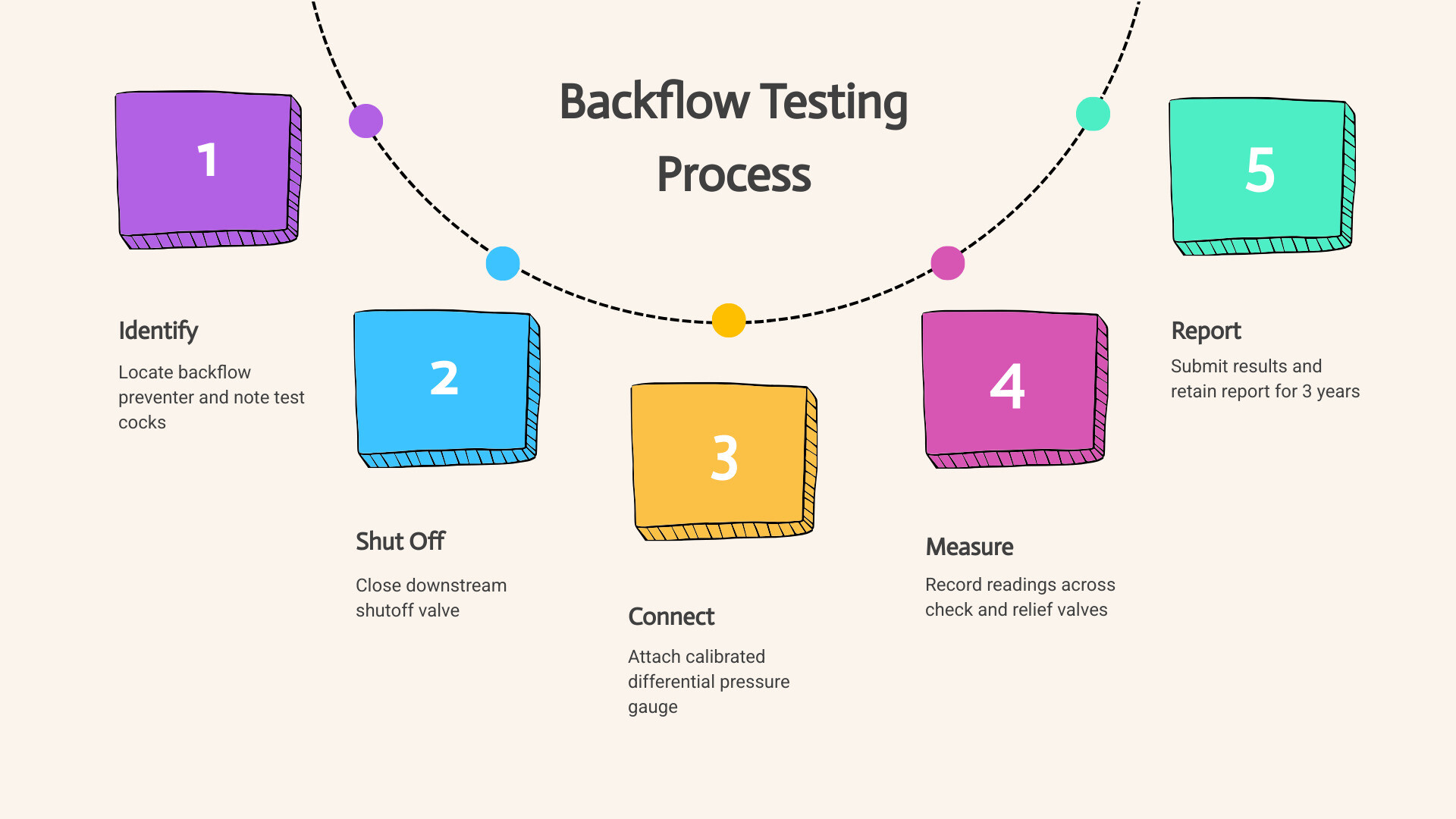
What is backflow testing? Backflow testing is the process of checking whether a backflow prevention device is working correctly. A certified tester uses a differential pressure gauge to measure pressure across the assembly’s check valves and relief valve. The goal is to confirm that contaminated water cannot flow backward into your clean drinking water supply.
Key facts at a glance:
- Backflow testing is required annually in most cities and states
- Tests must be performed by a certified backflow tester (ASSE, ABPA, or similar credentials)
- Test reports must typically be retained for three years by the water supplier, tester, and property owner
- All commercial, industrial, irrigation, and fire line services generally require a backflow prevention assembly
- Failed tests must usually be reported to the local water authority within 24 hours
When water pressure suddenly drops in your plumbing system, water can reverse direction. That reversal can pull in contaminants from irrigation lines, fire sprinklers, swimming pools, or even industrial equipment, sending them straight into your home or building’s drinking water. It sounds alarming, and it is. That is exactly why backflow prevention programs exist, and why routine testing is required by health regulators across the country. Without these programs, public water systems would be highly vulnerable to biological and chemical contamination.
To understand the scale of this issue, we must look at the history of public health. Before modern cross-connection controls were established under federal guidelines like the Safe Drinking Water Act, waterborne disease outbreaks were far more common. When contaminated water siphons back into the main lines, it does not just affect one building; it can compromise an entire neighborhood block or commercial district. This is why municipal water purveyors take a zero-tolerance approach to compliance.
I’m Debra Blouin, General Manager of Drain Masters, and with over two decades of hands-on experience in the plumbing industry, backflow testing is a topic I’ve guided countless Anchorage, AK homeowners and business owners through. In the sections below, I’ll walk you through exactly how backflow testing works, what the regulations require, and how to stay compliant.
Understanding the Mechanics of Backflow and Cross-Connections
To understand why we test these devices, we first have to understand the physical forces at play inside your pipes. Clean water flows to your taps under pressure. When that pressure is stable, water moves in one direction: from the municipal main supply, through your service line, and out of your faucets, showerheads, or appliances. This continuous positive pressure is the primary barrier keeping contaminants out of your drinking water.
However, plumbing systems are dynamic. Pressure changes happen constantly due to water usage patterns, main breaks, or high-demand events. When a dramatic shift in pressure occurs, the direction of the water flow can reverse. This reversal is what we call backflow, and it poses a severe threat to public health.
What is Backflow and How Does It Occur?
Backflow happens in one of two ways: backsiphonage or backpressure. Both events are caused by sudden changes in water pressure, but they occur under different circumstances.
Backsiphonage occurs when there is a sudden drop in the supply pressure of the municipal water main. Think of it like drinking through a straw: when you create a vacuum, liquid is pulled upward. If a water main ruptures down the street, or if firefighters hook up to a nearby hydrant to fight a fire, the pressure in the municipal line drops drastically. This drop creates a negative pressure vacuum that can suck water backward out of your property’s plumbing system and into the public supply. If you are in the middle of a plumbing emergency, you might also need a professional getting your main water line repaired to restore proper pressure levels and prevent these vacuums from forming.
Backpressure, on the other hand, occurs when the pressure downstream, within your private plumbing system, exceeds the pressure upstream in the supply line. This can happen due to thermal expansion in a water heater, pump systems, or boilers. When the pressure inside your system becomes higher than the municipal supply pressure, it pushes water backward through the connection. This is particularly common in commercial buildings with booster pumps, high-pressure boiler systems, or elevated storage tanks where gravity increases the downstream pressure.
The Danger of Cross-Connections in Potable Water
A cross-connection is any physical point where a potable drinking water system connects with a non-potable water source. Common examples include:
- Irrigation and lawn sprinkler systems, where sprinkler heads sit in mud, fertilizers, and animal waste.
- Swimming pools and hot tubs filled using a submerged garden hose.
- Fire sprinkler systems, which hold stagnant water that can grow bacteria and accumulate rust.
- Commercial boilers and industrial chemical tanks.
If a cross-connection is unprotected, a backflow event will pull these hazardous substances directly into your drinking water. This is why local utilities enforce strict cross-connection control programs. You can read more about how municipal programs manage these risks by reviewing municipal safety guidelines to see how local governments structure their safety protocols.
To illustrate the danger, consider a simple garden hose left submerged in a bucket of soapy water or pesticide. If a water main break occurs nearby, backsiphonage can instantly suck that toxic mixture out of the bucket, through the hose, and into your kitchen faucet. The same principle applies on a much larger scale to commercial facilities, where industrial chemicals, heavy metals, or biological contaminants could enter the public water grid.
The Core Steps of Professional Backflow Testing
Because backflow prevention assemblies contain moving mechanical parts like springs, rubber seals, and internal check valves, they are subject to wear, tear, and mechanical failure. Mineral buildup, rust, and debris can easily prevent a valve from sealing completely. That is why a certified backflow test is required to verify that the internal mechanisms are operating exactly as designed.
If you want to understand the testing process, it helps to look at the steps a professional technician takes. While the general theory is simple, the actual execution requires highly specialized tools and precise calibration. If you suspect your system is overdue for an inspection, you can read more about scheduling a certified inspection to see how we keep local properties safe and compliant.
Essential Equipment for Backflow Testing
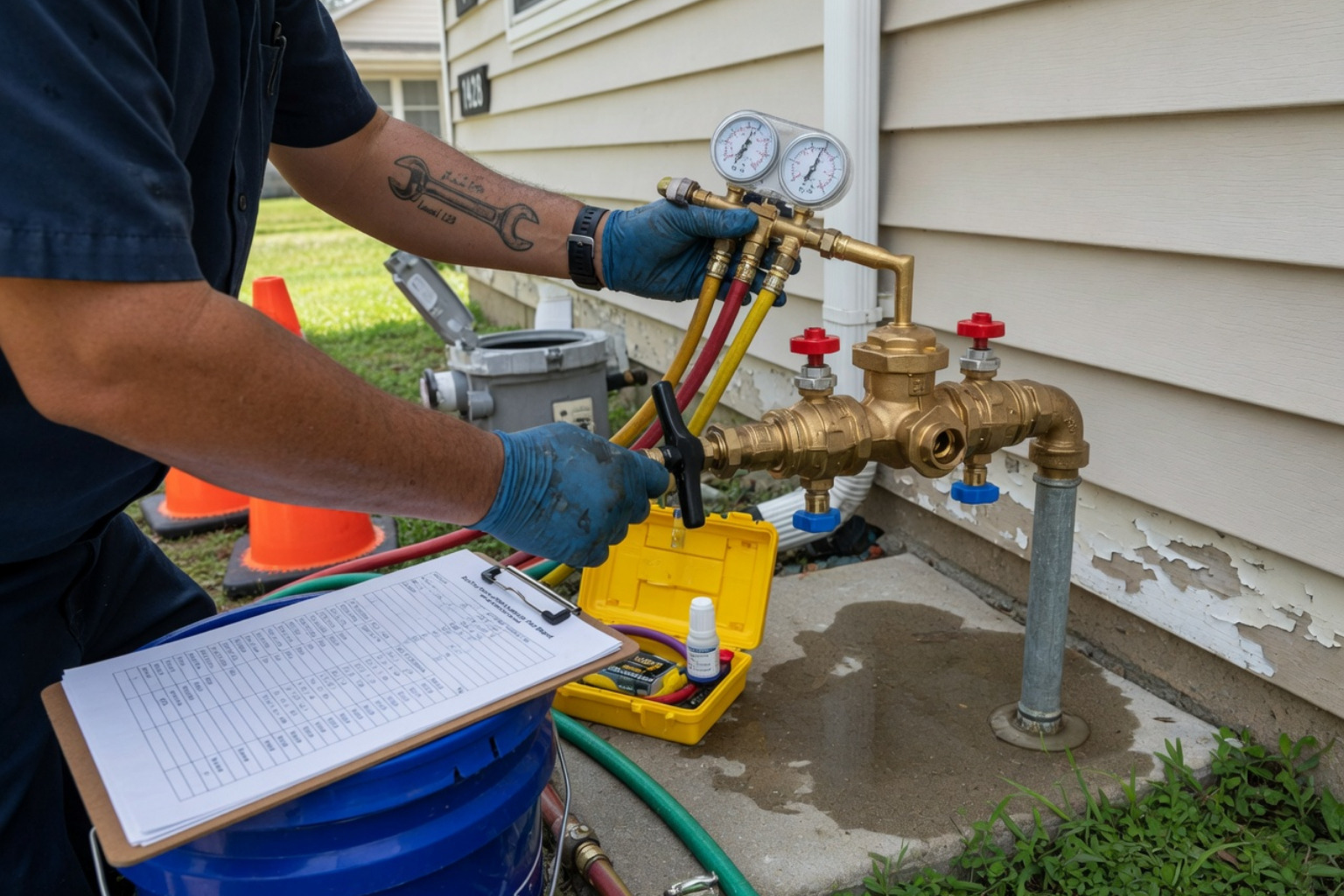
A certified tester cannot simply look at a device to see if it is working. They must use a specialized, calibrated test kit. The core tools of the trade include:
- A Differential Pressure Gauge: This is a highly accurate gauge with multiple hoses that measures the difference in pressure between different zones of the backflow assembly.
- Test Cocks: These are small ball valves built into the side of the backflow preventer. They allow the tester to attach the gauge hoses and access the internal water streams.
- Adapters and Fittings: These are used to connect the gauge hoses securely to various sizes of test cocks.
Because these gauges must be extremely precise, regulatory standards require them to be tested and recalibrated annually. Using an uncalibrated gauge invalidates the test results. Keeping track of your plumbing health is an essential part of staying on top of routine plumbing care, which helps prevent unexpected system failures and water damage.
Understanding Different Assembly Types
There are several types of backflow preventers, each suited for different levels of hazard:
- Double Check Valve Assembly (DCVA): This device consists of two spring-loaded check valves in series. It is typically used for low-hazard applications, such as residential lawn irrigation systems. It prevents both backpressure and backsiphonage but does not provide visual indication of a failure.
- Reduced Pressure Zone (RPZ) Assembly: This is the gold standard of backflow prevention. It features two independent check valves with an intermediate relief valve that vents to the atmosphere. If either check valve leaks, the relief valve opens to discharge the water, ensuring that contaminated water can never enter the clean supply. RPZ devices are mandatory for high-hazard applications, including commercial chemical processing, medical facilities, and boiler systems.
- Pressure Vacuum Breaker (PVB): This device contains an independently acting check valve and an air inlet valve. It is designed solely to prevent backsiphonage and cannot be used where backpressure may occur.
Step-by-Step Guide to Learn Backflow Testing
The testing process varies slightly depending on whether the device is a DCVA or an RPZ assembly. However, the standard procedure involves isolating the device and checking the pressure drop across each internal valve.
Here is how a certified tester performs a standard test on a common RPZ assembly:
- Notify the Property Owner: Before starting, the tester must notify the occupants that the water service will be temporarily shut off.
- Visual Inspection: The tester inspects the physical assembly to ensure it is installed in the correct direction, has proper clearance, and is not visibly damaged or leaking.
- Flush the Test Cocks: The tester opens the test cocks briefly to blow out any dirt, rust, or debris that might clog the differential pressure gauge.
- Connect the Gauge: The tester attaches the high, low, and bypass hoses from the differential pressure gauge to the corresponding test cocks on the assembly.
- Isolate the Assembly: The tester shuts off downstream access by closing the second shut-off valve on the assembly. This isolates the device from the building’s plumbing system.
- Test Check Valve 1: The tester measures the pressure drop across the first check valve. It must hold a minimum pressure (typically at least 5.0 psi for an RPZ) to ensure it stops reverse flow.
- Test the Relief Valve: The tester bleeds pressure through the gauge to simulate a backflow condition. They record the exact pressure at which the relief valve opens to discharge water. The relief valve must open before the pressure difference drops below 2.0 psi.
- Test Check Valve 2: The tester checks the second check valve to ensure it prevents backpressure from pushing water back into the zone.
- Record and Restore: The tester records all gauge readings on the official reporting form, disconnects the equipment, slowly reopens the shut-off valves to restore water service, and checks for leaks.
Testers must follow highly structured guidelines, such as those outlined in the USC 10th Edition manual or regional tester instructions which govern precise testing tolerances.
Because backflow testing involves high water pressure and the risk of contaminating your potable water lines if done incorrectly, it is not a DIY project. Attempting to test or service these valves without proper certification can lead to water system contamination, damage to your plumbing, and severe regulatory fines. Always trust a licensed professional to handle these inspections.
Regulatory Standards and Compliance Requirements
Because the safety of public drinking water is at stake, backflow testing is highly regulated. Local water purveyors, such as those managing local water utility requirements, manage cross-connection control programs to ensure every commercial and multi-family property complies with safety codes.
Annual Testing Mandates and Certified Testers
In Anchorage, AK, and most other jurisdictions, backflow prevention assemblies must be tested upon installation, after any repair or relocation, and at least once per year. This ensures that the mechanical components have not degraded over time.
To perform these tests, a technician must hold an active certification from a recognized training organization, such as the American Society of Sanitary Engineering (ASSE) or the American Backflow Prevention Association (ABPA). These certifications require testers to pass rigorous written and practical examinations to prove they can diagnose assembly failures accurately.
Once the test is complete, the certified tester must fill out an official report. This report must be submitted to the local water utility, and copies must be kept on file for at least three years by the water supplier, the tester, and the property owner. Regular testing should be integrated into your preventative plumbing upkeep schedule to avoid compliance issues.
Consequences of Non-Compliance and Failed Tests
Ignoring a backflow testing notice can lead to serious consequences. If a property owner fails to submit a passing test report within the municipal timeline, the water utility will issue a compliance warning.
If the owner continues to ignore the warnings, the utility has the legal authority to shut off the water service to the property to protect the public water grid. In addition to water service termination, property owners can face substantial financial penalties. These fines can accumulate daily until a certified test report is submitted.
Furthermore, if a backflow event occurs on an unprotected or untested property and causes contamination of the public water supply, the property owner can be held legally and financially liable for any resulting illnesses, injuries, or system cleanup costs. This liability can easily reach hundreds of thousands of dollars, making annual testing a highly cost-effective insurance policy.
If an assembly fails its annual test, it must be repaired or replaced immediately. Most jurisdictions require failed tests to be reported within 24 hours, and the necessary repairs must be completed by working with a licensed plumber to bring the system back into compliance.
Frequently Asked Questions About Backflow Testing
1. What is backflow and why is it dangerous?
Backflow is the unwanted reversal of water flow in a plumbing system, moving from a non-potable source back into clean drinking water lines. It is dangerous because it can pull hazardous materials, such as sewage, industrial chemicals, fertilizers, and stagnant water, back into the clean drinking water supply. Consuming or using contaminated water can lead to severe illnesses, chemical poisoning, and widespread public health crises.
2. How often is backflow testing required?
Backflow prevention assemblies must be tested at least once a year to remain compliant with local health and safety codes. They also require testing immediately after installation, relocation, or any mechanical repairs. Some high-hazard commercial facilities may be subject to more frequent testing depending on local municipal regulations and the specific processes used on-site.
3. Who is authorized to perform a certified backflow test?
Only a certified backflow tester who holds an active certification from an approved agency, such as ASSE or ABPA, is authorized to perform the test and submit official compliance reports to the water utility. These professionals undergo rigorous training and must use calibrated equipment to ensure that the test results are completely accurate and legally valid.
4. What are the most common causes of backflow preventer failure?
The most common causes of failure include worn rubber seals, broken internal springs, mineral buildup, rust, and dirt or debris wedged inside the check valves that prevents them from closing completely. Additionally, exposure to freezing temperatures can crack the internal components or the outer brass body, leading to immediate failure and water leaks.
5. What happens if my property fails a backflow test?
If the assembly fails, it must be repaired or replaced immediately to protect the water supply. The certified tester must report the failure to the water utility, and a licensed professional must restore the device to working order. Once the repairs are complete, the device must be retested to ensure compliance and a passing report must be submitted.
6. Do residential single-family homes need backflow testing?
Most standard single-family homes are exempt from annual testing unless they have specific high-hazard cross-connections. These include dedicated lawn irrigation systems, swimming pools filled with a submerged line, boilers, or auxiliary water wells. If your home has any of these features, you are likely required to install and test a backflow preventer.
7. How long do I need to keep my backflow test reports?
Property owners, water suppliers, and testers are required by law to retain copies of all backflow testing and maintenance reports for a minimum of three years. Keeping these records on file is crucial for proving compliance during municipal audits or if there is ever a question about the safety of your water system.
8. What is the difference between backsiphonage and backpressure?
Backsiphonage is caused by a vacuum or negative pressure in the water supply line pulling water backward, similar to drinking through a straw. Backpressure occurs when the pressure downstream in your private system exceeds the municipal supply pressure, pushing water backward into the main system. Both events can cause severe contamination if not prevented.
9. What should I do if I receive a backflow compliance notice?
You should immediately schedule an appointment with a certified backflow tester. They will inspect the device, perform the necessary testing, and submit the passing report to your water utility to keep your property in good standing. Ignoring the notice can lead to fines and the disconnection of your water service.
10. How do local water utilities enforce backflow prevention programs?
Local utilities enforce programs by tracking backflow devices in a database, sending out annual testing reminders, conducting site surveys, and issuing fines or turning off water service to non-compliant properties. These strict enforcement measures are necessary to protect the entire community’s drinking water from potential contamination events.
Conclusion
Managing your property’s backflow compliance does not have to be a stressful chore. While the physics and mechanical steps of testing are complex, keeping your water safe is as simple as partnering with the right team.
Whether you need a routine annual inspection, a rapid repair for a failing valve, or a completely new installation, the team at Drain Masters is ready to help. As a family-owned business in Anchorage, AK, with over 20 years of experience, we bring upfront pricing, advanced tools, and a track record of over 4,000 successful jobs per year to every single project.
Don’t wait for a compliance warning or a water shut-off notice to take action. Protect your drinking water and keep your property fully compliant by contacting our team today. Schedule your professional backflow test with our certified experts to ensure your plumbing system remains safe and up to code.