
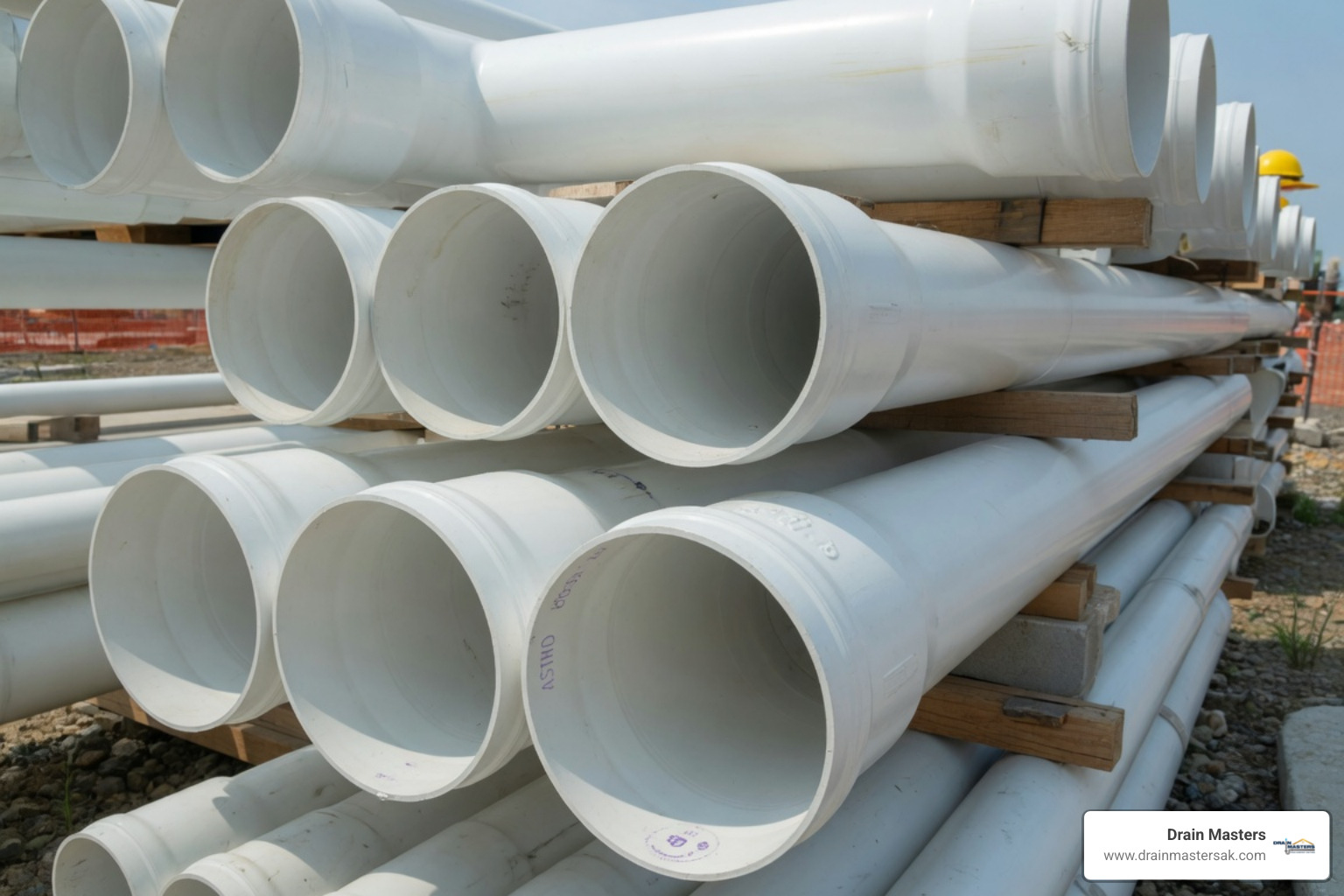
The Right PVC Pipe Makes or Breaks Your Drainage System
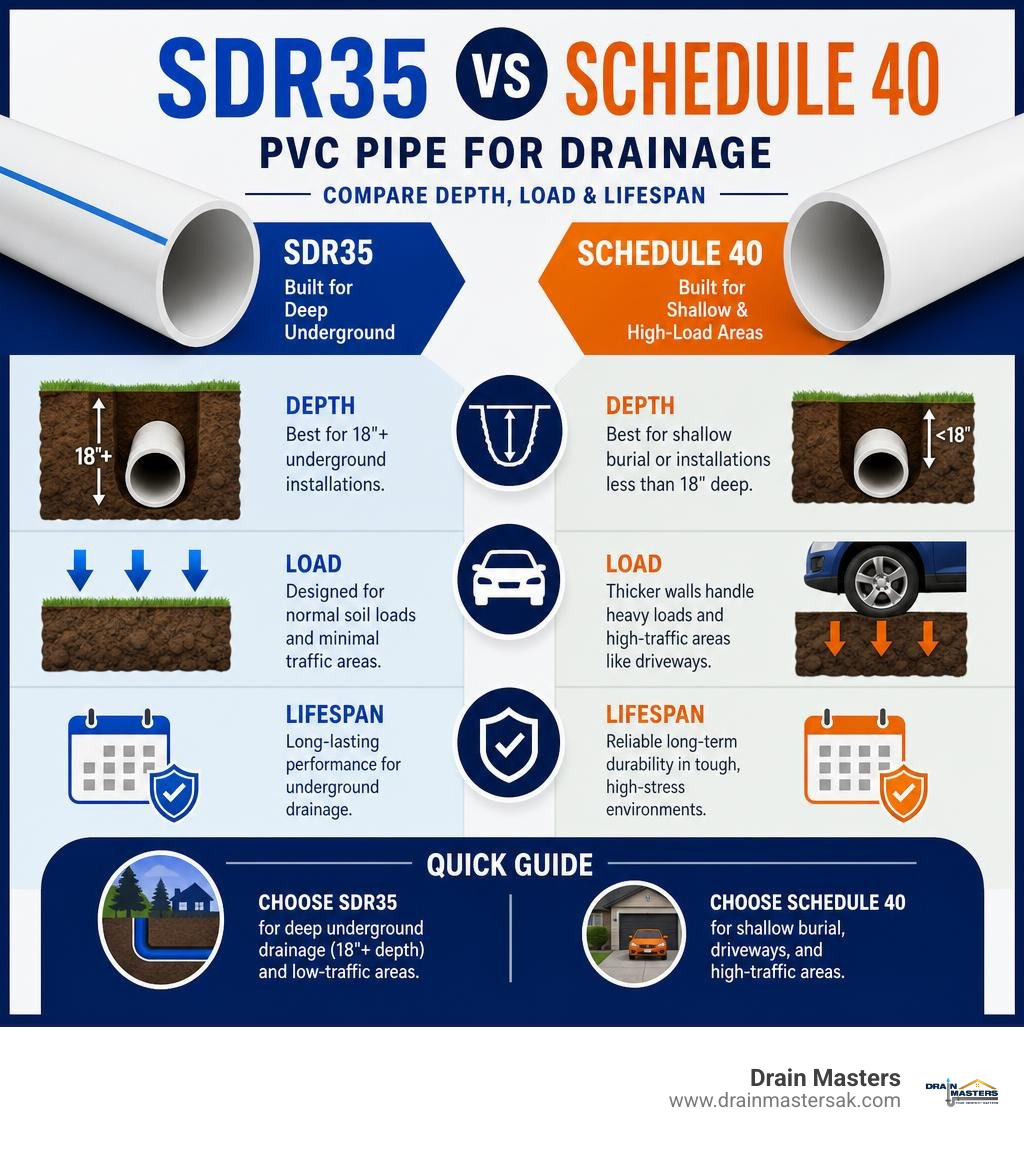
When it comes to selecting the best PVC pipe for drainage, most residential applications come down to two main options: SDR35 for deep underground runs and Schedule 40 for shallow or high-traffic areas like driveways. Choosing the correct material is essential for ensuring that your home remains protected from water damage, soil erosion, and foundation instability over the long term.
Here is a quick overview to help you choose:
| Application | Best PVC Pipe Choice |
|---|---|
| Deep underground drainage (18″+ depth) | SDR35 PVC |
| Shallow burial or under driveways | Schedule 40 PVC |
| French drains | Perforated SDR35 or Schedule 40 |
| Downspout and catch basin runs | SDR35 solid wall |
| High-traffic surface areas | Schedule 40 |
A poorly chosen drainage pipe does not just underperform. It can collapse under load, allow root intrusion, or fail within just a few years, leaving you with flooded yards, eroded soil, or worse, a damaged foundation. When water cannot flow freely away from your property, it pools in low spots, saturates the ground, and exerts hydrostatic pressure against your basement walls.
The good news is that PVC is one of the most reliable materials available for underground drainage. Installed correctly, it can last over 100 years. The key is knowing which type to use, where to use it, and how to put it in the ground the right way. By understanding the structural differences between various pipe schedules and dimension ratios, you can design a system that handles heavy rainfall and seasonal runoff with ease.
This guide walks you through everything you need to make a confident decision, from pipe types and specs to installation tips and when to call a professional.
I’m Debra Blouin, General Manager of Drain Masters in Anchorage, AK, and with over two decades of hands-on experience in drain and sewer systems, I’ve seen what happens when homeowners choose the wrong pipe for the job. Understanding the best PVC pipe for drainage before you dig can save you thousands in repairs down the road.
Understanding PVC Pipe Types for Underground Drainage
Choosing the right pipe starts with understanding the material itself. Most modern drainage systems rely on Unplasticized Polyvinyl Chloride (PVC-U). This material is completely immune to corrosion from normal sewerage and groundwater environments, making it incredibly durable for long-term burial. Unlike older materials like clay or cast iron, PVC does not rust, scale, or degrade when exposed to acidic soils or moisture.
When searching for the best PVC pipe for drainage, you will encounter several technical terms, including wall thickness, pipe stiffness, and specific ASTM standards.
- Wall Thickness & Schedules: PVC pipes are classified by “schedules” or “SDR” (Standard Dimension Ratio). A higher schedule number indicates a thicker pipe wall. However, keep in mind that for a given outer diameter, a thicker wall means a slightly smaller internal diameter, which can affect flow dynamics.
- Cell Class 12454: This classification (governed by ASTM D1784) ensures the PVC compound has a minimum tensile strength, modulus of elasticity, and chemical resistance. It guarantees that the pipe has a minimum stiffness rating of 46 psi, allowing it to withstand underground pressures without structural failure.
- Key Standards: For reliable residential drainage, look for pipes certified under ASTM D1785 (for Schedule 40 and 80 pressure pipes) or ASTM D2665 (for Drain, Waste, and Vent, or DWV, systems). International standards like AS/NZS 1260 also govern high-quality DWV pipe systems designed to cope with soil movements and expansive clays.
Understanding these structural differences is the first step in selecting the right materials for subterranean installations for your specific yard layout and soil conditions.
Solid vs. Perforated PVC Pipes
PVC drainage pipes come in two primary physical styles: solid and perforated.
- Solid PVC Pipes: These are designed purely for water transport. They carry stormwater collected from catch basins, channel drains, and roof downspouts directly to a discharge point (like a street curb or rain garden) without letting any water escape along the way. This ensures that water is moved efficiently away from vulnerable areas without saturating the surrounding soil.
- Perforated PVC Pipes: These pipes feature small, factory-drilled holes along their length. They are the backbone of French drains and sub-surface soil filtration systems. When buried in a gravel-filled trench, perforated pipes allow rising groundwater to seep inside and flow away, keeping your yard dry and preventing water from pooling against your foundation.
Choosing the Best PVC Pipe for Drainage: SDR35 vs. Schedule 40
To select the best PVC pipe for drainage on your property, you must weigh the pros and cons of SDR35 versus Schedule 40.
| Feature | SDR35 PVC Pipe | Schedule 40 PVC Pipe |
|---|---|---|
| Wall Thickness | Thinner, flexible wall | Thicker, rigid wall |
| Dimension Ratio (SDR) | 35 (Outer diameter is 35x wall thickness) | Varies by pipe size (typically much lower/thicker) |
| Crush Resistance | Moderate (designed to flex under load) | High (highly resistant to direct impact and crushing) |
| Flow Capacity | Excellent (smooth interior, Manning’s n = 0.009) | Excellent (smooth interior, Manning’s n = 0.009) |
| Ideal Burial Depth | Deeper runs (18 inches to several feet) | Shallow runs (under 18 inches) or under driveways |
| Joint Connections | Typically rubber gasketed rings or solvent weld | Solvent-welded joints |
Why SDR35 is Often the Best PVC Pipe for Drainage Underground
SDR35 is widely considered the industry standard for main underground drainage runs. Because it has a higher dimension ratio, the pipe wall is thinner than Schedule 40, which actually gives it a distinct advantage underground: flexibility.
When the earth shifts due to seasonal freeze-thaw cycles, which are a major factor here in Anchorage, AK, SDR35 pipes can flex slightly to accommodate soil settlement and expansive clays without cracking. They are manufactured to meet ASTM D3034 standards, ensuring they maintain their structural integrity over decades of underground service.
If you are planning a deep, gravity-fed run across your yard to manage heavy rain or melting snow, SDR35 is highly efficient and easier on the budget. If you ever run into issues with older, settled lines, our team can help restore flow when you schedule professional sewer clearing and cleaning services.
When Schedule 40 is the Best PVC Pipe for Drainage
While SDR35 excels in deep yard runs, Schedule 40 is the undisputed king of high-traffic or shallow-burial areas.
If your drainage line has to cross underneath a concrete driveway, a gravel parking pad, or a high-traffic garden path, you need the extreme crush resistance of a thicker wall. Schedule 40 PVC pipes are rated to handle significant external loads and pressures ranging from 120 to 810 psi depending on the diameter.
For shallow installations (less than 18 inches deep) where lawnmowers or vehicles might pass overhead, a heavy-duty thick-walled DWV pipe option provides the structural peace of mind you need to prevent costly line collapses.
PVC vs. Corrugated Drain Pipe for Stormwater Management
Many homeowners are tempted to use black corrugated plastic pipe for their yard drainage because it is cheap and highly flexible. However, comparing corrugated pipe to PVC is like comparing a temporary fix to a permanent asset.
- Flow Velocity and Capacity: PVC has an incredibly smooth interior bore, giving it a Manning’s roughness coefficient (n value) of just 0.009. Because water flows with virtually zero resistance, SDR35 thick-wall PVC moves three times as much water as typical corrugated drain lines of the same size. Corrugated pipe has a ridged interior that slows down water flow and traps debris.
- Clog Resistance: The ridged interior of corrugated pipe acts like a magnet for silt, leaves, and organic debris. Over time, these ridges fill with gunk, leading to stubborn clogs that are incredibly difficult to clear. PVC’s smooth walls prevent debris from catching, ensuring self-cleaning flow velocities. If your current system is backing up, we can restore its original capacity using our advanced equipment to thoroughly clean out your sewer lines.
- Root Intrusion: Corrugated pipes are typically joined with loose-fitting snap-together couplings that easily leak water. Tree roots can sense this moisture, quickly find their way inside, and completely choke the pipe. PVC systems use solvent-welded joints or tight rubber gaskets that create a completely watertight seal, preventing root intrusion.
- Durability and Lifespan: Typical corrugated drain lines have a short life expectancy of only 3 to 8 years before they collapse, degrade from UV exposure, or get crushed by lawn equipment. In contrast, PVC drain lines last 20 times as long as corrugated lines, boasting an estimated service life expectancy of more than 100 years underground.
Key Factors When Selecting Your Drainage Pipe
To choose the best PVC pipe for drainage on your specific property, consider these critical environmental and structural factors:
- Soil Type and Loading: Heavy clay soils hold onto water and expand when wet, putting immense lateral pressure on buried pipes. If your yard has heavy clay or experiences heavy vehicle traffic, a thicker-walled pipe like Schedule 40 is essential to prevent crushing.
- Frost Line Depth (Cold Climate Considerations): Here in Anchorage, AK, the frost line can reach several feet deep. When the ground freezes, the soil expands and shifts. If you bury your drainage pipes too shallow, they can easily freeze solid, crack, or become misaligned. Your pipes must be buried below the local frost line or properly sloped to ensure they drain completely dry between storms, preventing standing water from freezing inside.
- Pipe Sizing and Rainfall Volume: Most residential downspout and yard drainage systems use 4-inch pipes, which provide an ideal balance of flow capacity and ease of installation. However, for large properties, heavy downpours, or systems combining multiple downspouts, upgrading to a 6-inch pipe can prevent the system from backing up during sudden cloudbursts.
- Local Building Codes: Always verify local municipal codes before starting a drainage project. Some municipalities require specific pipe grades, color-coded pipes (such as green for sewer/drainage), or professional permits for tying into municipal storm systems. You can read more about local requirements and how we handle professional drainage and sewer work in the local area.
Installation Best Practices for Long-Lasting Drainage
Even the best PVC pipe for drainage will fail if it is poorly installed. To get the full 100-year lifespan out of your PVC drainage system, follow these professional installation steps:
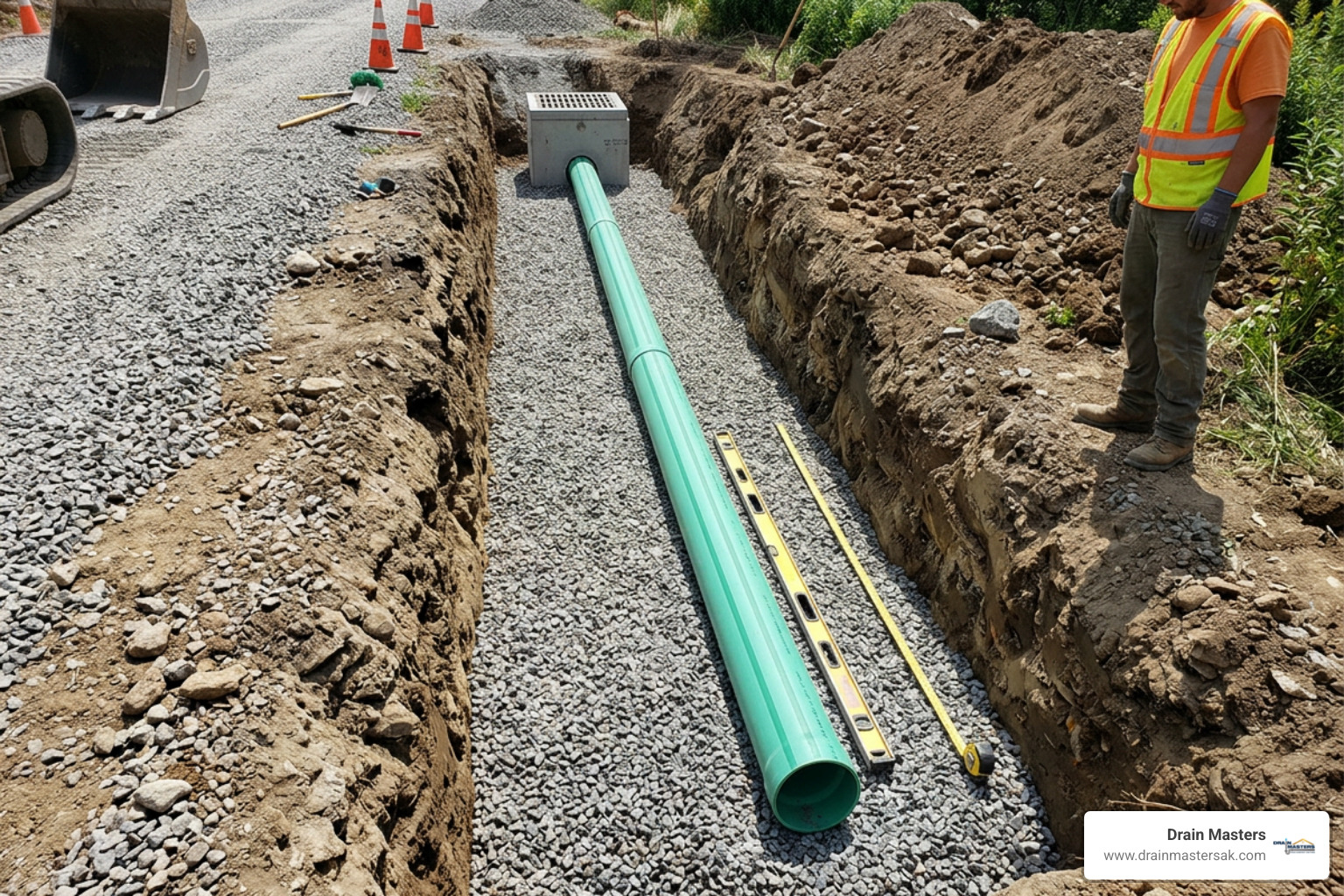
- Trench Excavation: Dig your trench 4 to 6 inches wider than the diameter of your pipe. This leaves enough room to properly pack bedding material around the sides of the pipe, which provides essential structural support.
- Gravel Bedding: Never lay your PVC pipe directly on hard dirt or rocks. Lay a 2-to-4-inch bedding layer of washed gravel or sand at the bottom of the trench first. This cushions the pipe and prevents rocks from puncturing the PVC wall when you backfill the soil.
- Maintain Proper Slope: Gravity is what makes your drainage system work. Ensure your pipes maintain a minimum slope of 1% to 2% (which translates to roughly a 1-to-2-inch drop for every 8 feet of pipe run). Without a proper slope, water will pool in low spots, leading to stagnant water, ice blockages in the winter, and sediment buildup.
- Secure the Joints: For Schedule 40 pipes, use high-quality PVC primer and solvent cement (glue) to weld the joints together. This chemically fuses the plastic, creating a permanent, leak-proof bond. For SDR35 pipes, ensure the rubber gasket joints are clean and lubricated before pushing them firmly together to prevent root intrusion.
- Careful Backfilling: Once your pipe is laid and tested for proper slope, cover it with another layer of gravel before backfilling with soil. Compact the soil in layers to prevent future settling, which can cause the pipe to sag and lose its slope.
If you are dealing with complex yard grading, deep trenches, or connections near your foundation, attempting this as a DIY project can be physically exhausting and risky. For a safe, code-compliant installation that stands the test of time, it is highly recommended to contact a professional team like ours to handle your underground sewer repairs and drainage installation.
What to Do When Underground Pipes Fail
If you have older drainage pipes on your property, such as old clay, cast iron, or cheap corrugated lines, they will eventually fail. You might notice soggy patches in your lawn, water pooling near your foundation, or sinkholes forming over your buried lines.
When underground pipes collapse or get completely choked by tree roots, you do not always have to dig up your entire yard to fix them. Modern plumbing technology offers highly effective, non-invasive solutions:
- Pipe Lining vs. Replacement: Traditional replacement requires heavy machinery to dig a massive trench through your landscaping, driveway, or patio. Pipe lining, on the other hand, allows us to restore your pipe from the inside out. You can learn more about how these options compare in our guide on weighing the pros and cons of pipe lining versus traditional replacement.
- Trenchless Pipe Repair: This modern technique allows us to repair or replace underground lines with minimal disruption to your property. To see how we restore pipes without destroying your lawn, check out our breakdown of how modern trenchless pipe restoration works.
- CIPP Lining: Cured-in-Place Pipe (CIPP) lining involves inserting an epoxy-saturated sleeve into your damaged pipe. Once cured, this sleeve creates a brand-new, seamless, and incredibly durable pipe within your old one. Discover the full process in our article explaining the mechanics of cured-in-place pipe rehabilitation.
Frequently Asked Questions About PVC Drainage Pipes
What is the difference between SDR35 and Schedule 40 PVC?
SDR35 has a thinner wall and is designed to flex slightly, making it ideal for deep, underground gravity-fed drainage lines. Schedule 40 has a much thicker wall, giving it superior crush resistance for shallow burials or areas with heavy surface traffic, like driveways.
Can I use Schedule 40 PVC for underground drainage?
Yes, Schedule 40 PVC is excellent for underground drainage, especially in shallow trenches (less than 18 inches deep) or beneath areas where vehicles, heavy machinery, or riding lawnmowers will drive over the pipe.
How long does PVC drainage pipe last underground?
When installed correctly with proper bedding and slope, high-quality PVC drainage pipe is incredibly durable and has an estimated service life expectancy of more than 100 years underground.
Is corrugated pipe or PVC better for French drains?
PVC is significantly better. While corrugated pipe is cheaper and easier to bend, its ridged interior slows down water flow, traps sediment, and is highly prone to root intrusion and crushing. Perforated PVC drains water faster, resists root intrusion, and lasts decades longer.
What size PVC pipe is best for residential stormwater drainage?
A 4-inch PVC pipe is the standard and best choice for most residential stormwater applications, including downspout extensions and French drains. For exceptionally large roofs or high-rainfall areas, a 6-inch pipe may be used for main collector lines.
How much slope does a PVC drain pipe need?
To maintain self-cleaning water velocity and prevent sediment from settling, a PVC drain pipe needs a minimum slope of 1% to 2%. This means the pipe should drop between 1/8 inch and 1/4 inch per foot of run (or about 1 to 2 inches of drop for every 8 feet).
Can PVC pipes withstand freezing temperatures in cold climates?
Yes, PVC can withstand freezing temperatures, but water must not be allowed to stand inside the pipe. If water pools and freezes, the expanding ice can crack the PVC. Proper slope and burying the pipe below the frost line are critical in cold climates.
What is the difference between solid and perforated PVC pipes?
Solid PVC pipes have solid walls and are used to transport water from one point to another without letting any escape. Perforated PVC pipes have small holes along their length, allowing groundwater to enter the pipe, which is essential for French drains.
How do you connect SDR35 to Schedule 40 PVC?
Because SDR35 and Schedule 40 have different outer diameters and wall thicknesses, they cannot be joined directly with standard fittings. You must use specialized transition adapters or flexible rubber couplings (often called Fernco couplings) designed specifically for this purpose.
Should I glue or use gaskets for underground PVC drainage?
For Schedule 40 PVC, solvent-welded (glued) joints are best to create a seamless, watertight bond. For SDR35, you can use either solvent welding or high-quality rubber gasket joints, both of which are highly effective at preventing root intrusion when properly installed.
Conclusion
Designing and laying down a yard drainage system is a major investment in your home’s structural future. Choosing the best PVC pipe for drainage, whether that means flexible, deep-buried SDR35 or heavy-duty Schedule 40 under your driveway, ensures that stormwater is swept safely away from your foundation for generations to come.
While a simple DIY trench might seem tempting, getting the slope, bedding, and pipe connections exactly right in our challenging Alaskan soil requires precision and experience. A single mistake can lead to standing water, frozen pipes, or a collapsed line.
If you want the job done right the first time, our experienced, family-owned team at Drain Masters is here to help. With over 20 years of service in Anchorage, AK, upfront pricing, and advanced diagnostic tools, we complete over 4,000 successful jobs every year. Contact us today to schedule professional sewer and drain services or a video inspection, and let’s secure your home’s drainage system together!