
When Your Sewer Line Fails, Do You Really Have to Dig Up Your Yard?
How does trenchless sewer repair work is a question more Anchorage homeowners are asking as they look for ways to fix failing pipes without tearing apart their property. The short answer:
- Inspect the damaged pipe using a video camera
- Clean the pipe with high-pressure jetting to remove debris and buildup
- Repair using one of two main methods: inserting and curing a resin liner inside the existing pipe (CIPP), or pulling a new pipe through while fracturing the old one outward (pipe bursting)
- Inspect again with a camera to confirm the repair is solid
No massive trenches. No destroyed landscaping. Usually done in a single day.
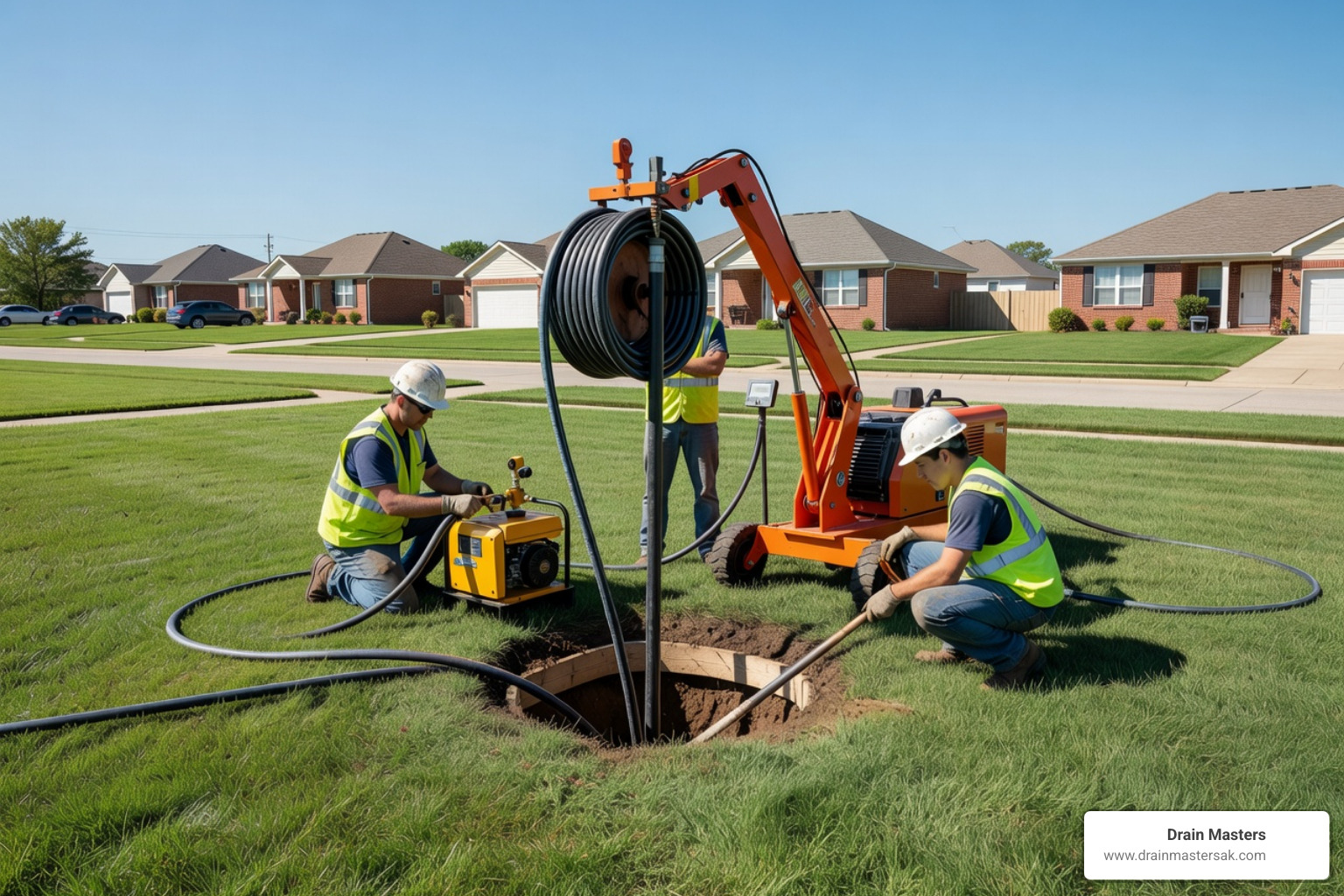
Traditional sewer repair meant days of heavy equipment, torn-up driveways, and a yard that looked like a construction zone. Trenchless technology changed that. Technicians access your pipe through one or two small entry points and restore it from the inside out, leaving your lawn, driveway, and foundation largely untouched.
I’m Debra Blouin, General Manager of Drain Masters, and with over two decades in the plumbing and sewer industry, I’ve seen how understanding how does trenchless sewer repair work can save homeowners thousands of dollars and weeks of headache. Let me walk you through exactly what happens during a trenchless repair and help you figure out whether it’s the right fix for your situation.
What is Trenchless Sewer Repair and Why is it Better?
At its core, trenchless sewer repair is a “no-dig” method of fixing underground pipes. Instead of excavating the entire length of your sewer line, we use specialized equipment to repair the pipe from within. In the past, if a pipe under your driveway cracked, we’d have to bring in a backhoe and break the concrete. Today, in April 2026, those days are largely behind us.
The comparison between traditional excavation and trenchless methods is stark. Traditional digging is labor-intensive and destructive. Once the plumbing work is done, you’re often left with a massive bill for landscaping, repaving, or foundation repair. Trenchless methods prioritize property preservation. By using small entry points, we keep your prize-winning peonies and your paved driveway intact.
Many homeowners find that choosing a trenchless option is the most logical path forward because it addresses the root cause of the leak without creating a secondary disaster in the yard. Our team at Drain Masters specializes in modern trenchless sewer line repair because it aligns with our goal of providing efficient, high-quality service with minimal disruption to your daily life.
How Does Trenchless Sewer Repair Work?
The mechanics of trenchless repair rely on precision rather than brute force. We don’t need to see the pipe with our own eyes from the surface; instead, we use technology to “see” and “work” underground.
The process begins with identifying the exact location of the problem. We utilize existing access points, like a sewer cleanout, to enter the system. If a cleanout isn’t available, we may need to create a small access hole, but this is a far cry from a 50-foot trench.
A professional sewer camera inspection is the most critical part of the initial phase. Without it, we’re flying blind. The camera tells us if the pipe is cracked, infested with tree roots, or if it has completely collapsed. This diagnostic data dictates the technical process of sewer repair we choose to implement.
The Step-by-Step Process of Modern Pipe Restoration
Restoring a pipe without digging is a methodical process. We follow a strict three-step protocol to ensure the new pipe lasts for the next half-century.
Step 1: Diagnostic Camera Inspection
We start by feeding a high-definition CCTV camera into your sewer line. This allows us to see the internal condition of the pipe in real-time. We’re looking for structural integrity. Is the pipe still round? Are there “bellies” or sags where water pools? This inspection is how we help you decide between a simple repair and a full replacement. If the pipe has completely lost its shape or is severely misaligned, trenchless might not be an option, but for most cracks and root issues, it’s a perfect fit.
Step 2: Cleaning and Preparation
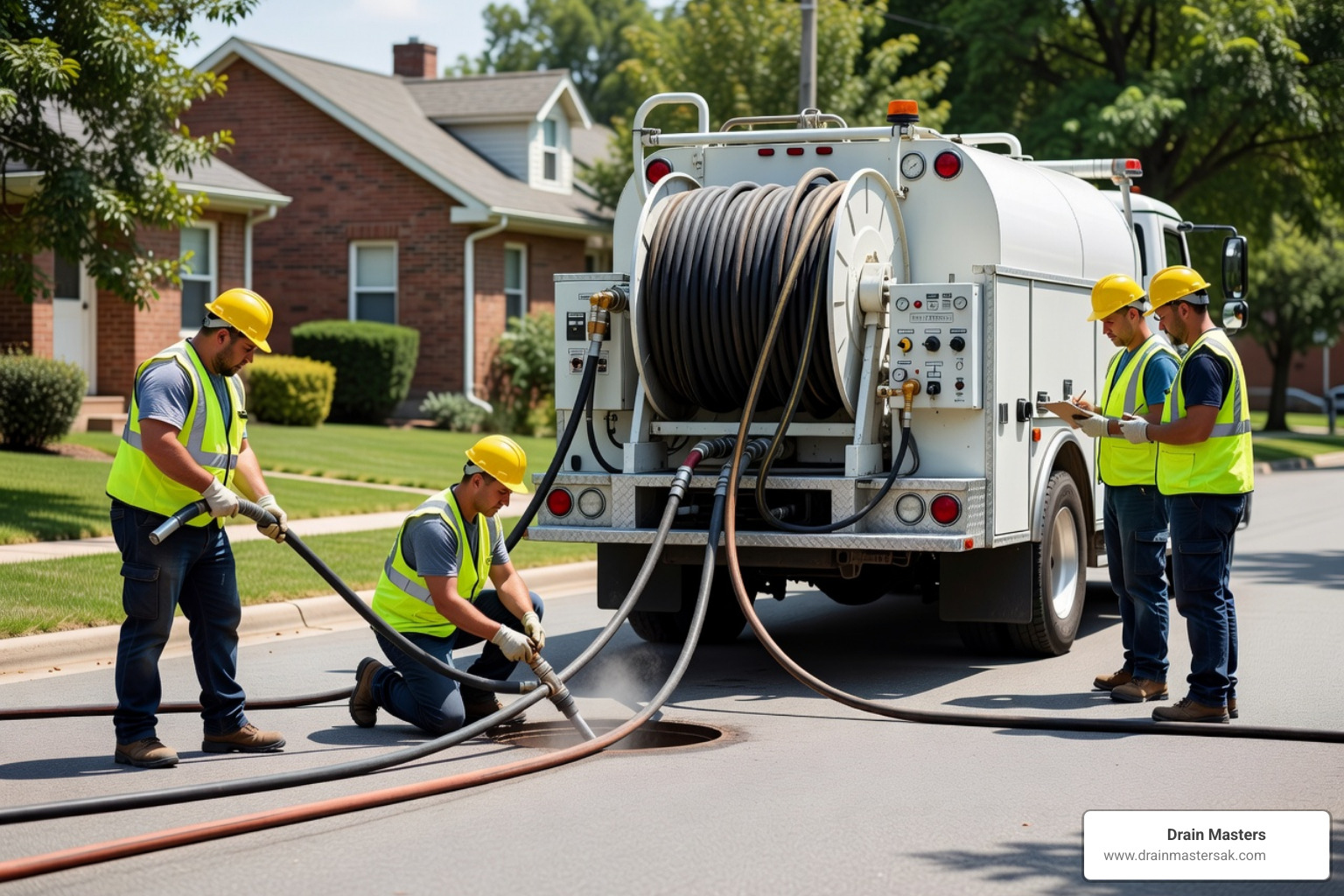
A new liner won’t stick to a dirty pipe. Before we can repair anything, we have to clear out years of grease, scale, and root intrusions. We use hydrojetting services to blast the inside of the pipe with high-pressure water. This scours the pipe walls, returning them to their original diameter. Comprehensive sewer clearing and cleaning ensures that the repair material bonds perfectly to the host pipe or that the pipe bursting head can pass through without snagging.
Step 3: Executing the Repair Method
Once the pipe is clean, we move to the actual repair. Depending on the damage, we will either use CIPP (Cured-In-Place Pipe) or pipe bursting. In CIPP, we pull a flexible, resin-soaked liner into the pipe. In pipe bursting, we pull a brand-new HDPE pipe through the old one.
This technical guide to trenchless pipe repair highlights that while the methods differ, the goal is the same: a seamless, durable pipe that prevents future leaks and root growth.
Common Methods Used in Trenchless Technology
Not all sewer problems are the same, so we use different tools for different jobs. Here is a deeper look at the three primary ways we fix pipes from the inside.
How does trenchless sewer repair work using CIPP lining?
CIPP, or Cured-In-Place Pipe, is essentially creating a “pipe within a pipe.” We take a felt tube saturated with epoxy resin and pull it into the damaged section. Once in place, an internal bladder is inflated, pressing the resin against the walls of the old pipe.
Understanding how cured-in-place pipe lining works involves knowing about the curing process. We use heat, steam, or UV light to harden the resin. Within a few hours, the resin turns into a solid, structural pipe that is just as strong as a new one. For a better look at this, you can check out this visual guide to the sewer repair process.
How does trenchless sewer repair work with pipe bursting?
If the original pipe is too damaged for a liner, we turn to pipe bursting. We pull a large, cone-shaped “bursting head” through the old line. As it moves, it shatters the old pipe (usually clay or cast iron) and pushes the fragments into the surrounding soil. Attached to the back of the bursting head is a brand-new HDPE (High-Density Polyethylene) pipe.
Adhering to engineering standards for trenchless technology ensures that the new pipe is perfectly seated. When comparing pipe lining and replacement, bursting is often preferred when you want to increase the diameter of your sewer line or if the old pipe is too corroded to hold a liner.
Slip lining and spin casting
Slip lining is one of the oldest trenchless methods. We simply “slip” a smaller diameter pipe into the larger existing pipe and fill the gap between them with grout. While effective, it does reduce the overall diameter of your sewer line.
Spin casting is another specialized technique, often used for oddly shaped pipes or vertical stacks. A robotic machine “spins” as it moves through the pipe, spraying a cementitious or epoxy coating onto the walls to reinforce them.
Pros, Cons, and Suitability Factors
While we love trenchless technology, we always give our Anchorage neighbors the full picture. It is a fantastic tool, but it isn’t a magic wand for every single plumbing disaster.
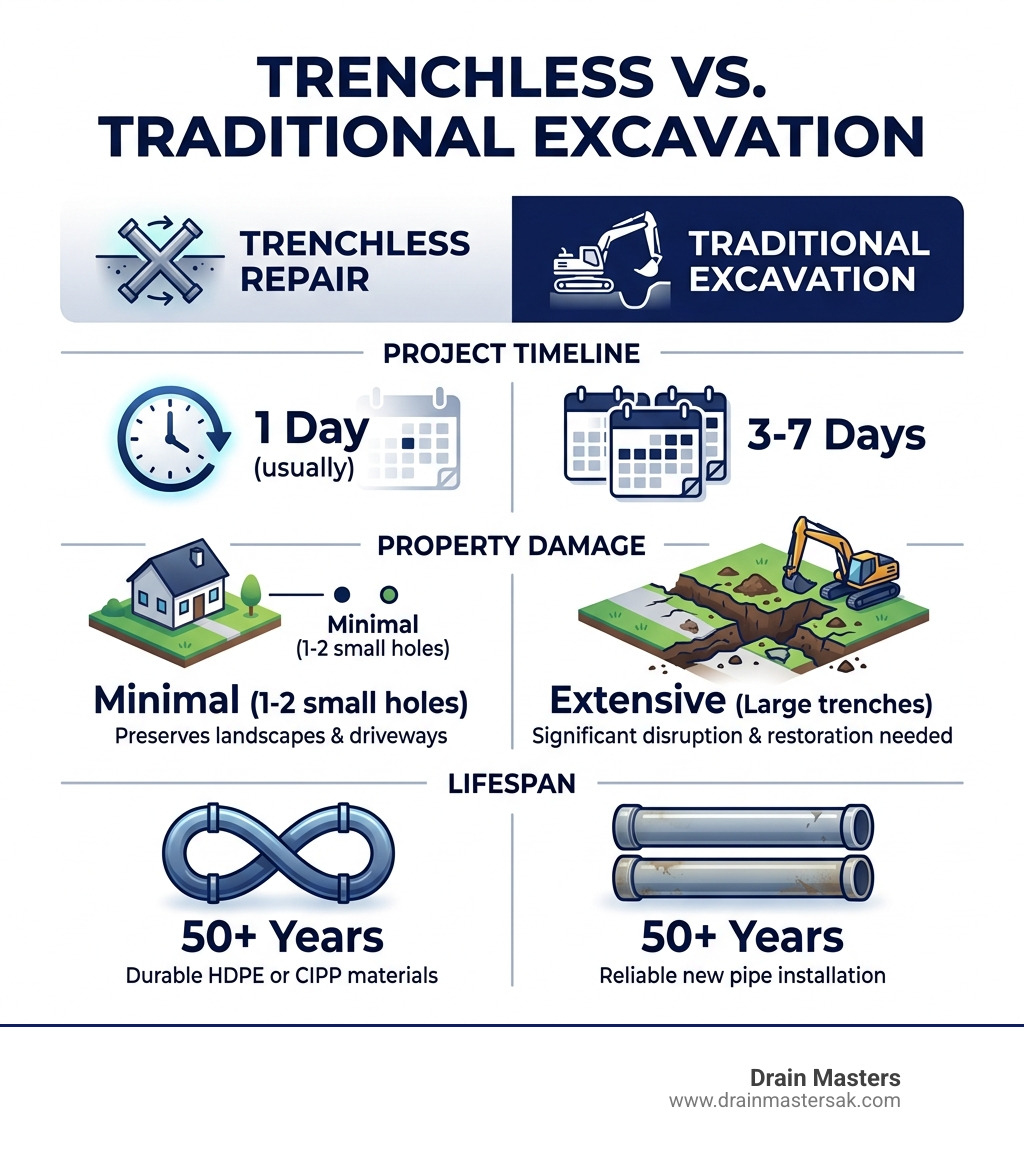
| Feature | Trenchless Repair | Traditional Excavation |
|---|---|---|
| Project Timeline | 1 Day (usually) | 3–7 Days |
| Property Damage | Minimal (1-2 small holes) | Extensive (Large trenches) |
| Lifespan | 50+ Years | 50+ Years |
| Upfront Cost | Moderate to High | Lower (Labor only) |
| Restoration Cost | Near Zero | High (Lawn, Pavements) |
| Best For | Under driveways/gardens | Collapsed or sagging pipes |
The Pros:
- Speed: Most of our jobs are done in a single day.
- Durability: The materials used, like HDPE and epoxy resin, are rated to last 50 years or more.
- Savings: You save a fortune on “secondary costs” like replacing your driveway or re-sodding your lawn.
- Environmentally Friendly: Less heavy machinery means a smaller carbon footprint and less soil disruption.
The Cons:
- Not for Collapsed Pipes: If the pipe has already pancaked, we can’t get a liner or a bursting head through it.
- Sags and Bellies: Trenchless lining follows the path of the old pipe. If your pipe has a “belly” (a dip where water sits), the liner will also have that dip. To fix the grade, we usually have to dig.
- Specialized Equipment: This isn’t a DIY project. It requires highly trained technicians and expensive machinery.
If you are weighing your trenchless sewer repair and replacement options, we recommend starting with an inspection to see which category your pipes fall into.
Frequently Asked Questions about Trenchless Repair
How long does a trenchless project take?
Most trenchless projects are completed within a day. Smaller repairs can take as little as three to four hours. Even complex projects rarely hover around more than seven or eight hours. Because there is no massive hole to fill and compact, you can usually go back to using your water the same evening.
How much does trenchless repair cost?
On a per-linear-foot basis, trenchless can seem more expensive than traditional digging, often ranging from $100 to $250 per foot. However, when you factor in the thousands of dollars you don’t have to spend on a new driveway, a new porch, or professional landscaping, trenchless is almost always the more cost-effective choice in the long run.
Is the new pipe as durable as the old one?
Actually, it’s usually better. Modern resin pipes and HDPE are immune to the corrosion that kills cast iron and the joint failures that plague clay pipes. Because the new pipe is seamless (jointless), tree roots have no way to get inside. These repairs are routinely rated to last for 50 to 100 years.
Conclusion
Sewer problems are stressful, but they don’t have to be destructive. Understanding how does trenchless sewer repair work gives you the power to choose a solution that protects your home and your bank account. At Drain Masters, we’ve spent over 20 years serving the Anchorage community, completing over 4,000 jobs annually with the same family-owned care we started with.
We use the most advanced tools available in 2026 to ensure your sewer line is fixed right the first time, with upfront pricing and no hidden “digging” surprises. If you suspect your sewer line is failing, don’t wait for a backup to happen. Reach out to our team to schedule your trenchless sewer repair or replacement today and let us show you how easy a “no-dig” fix can be.