
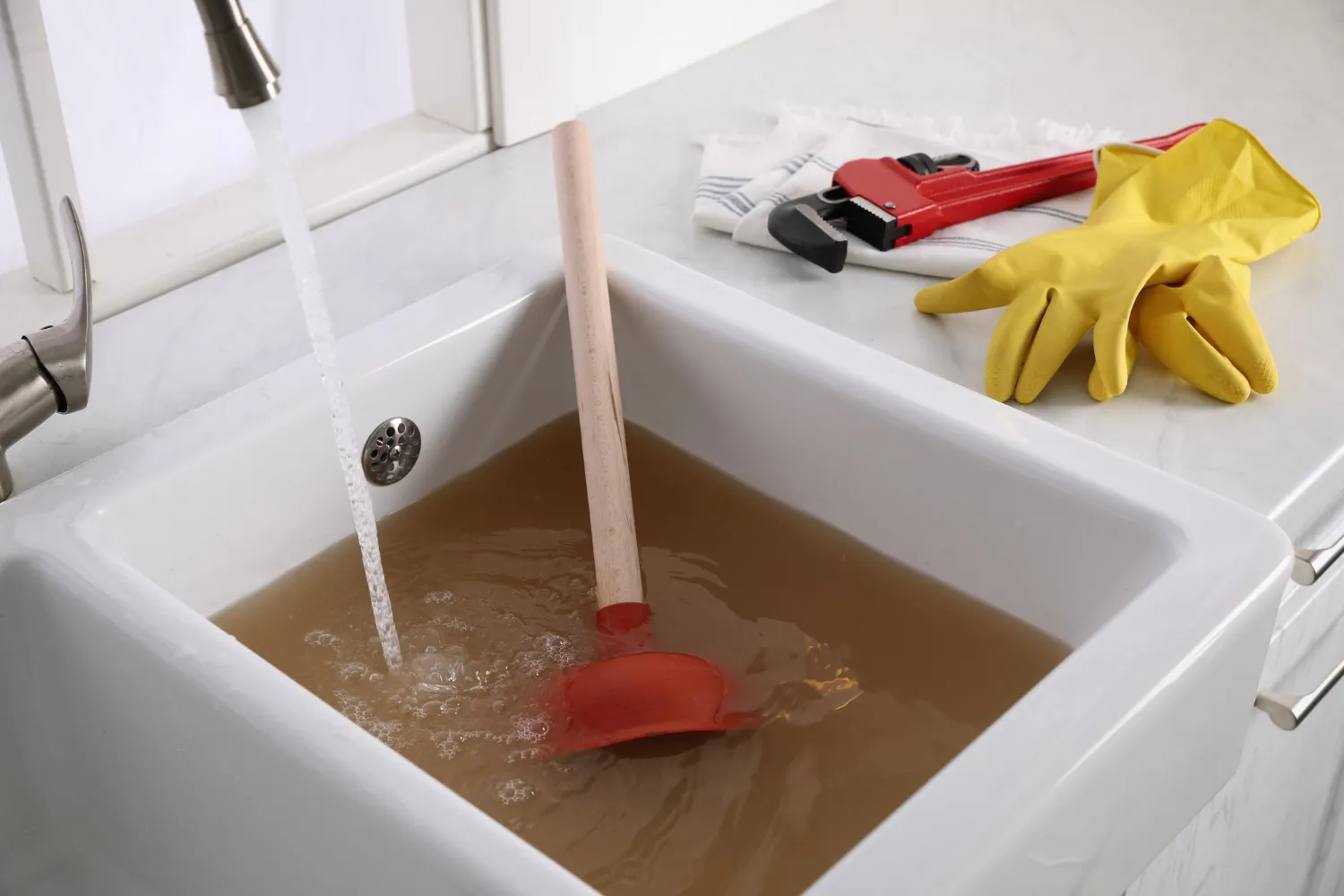
Warning Signs of a Main Sewer Line Clog vs. a Fixture Clog
Understanding the difference between a minor fixture blockage and a structural failure deep underground can save thousands of dollars and protect your home from devastating water damage. Every sink, shower, and toilet in your home connects to branch lines that feed into a central drain-waste-vent (DWV) system. This system relies on gravity and proper venting to carry wastewater away into the municipal main or private septic tank.
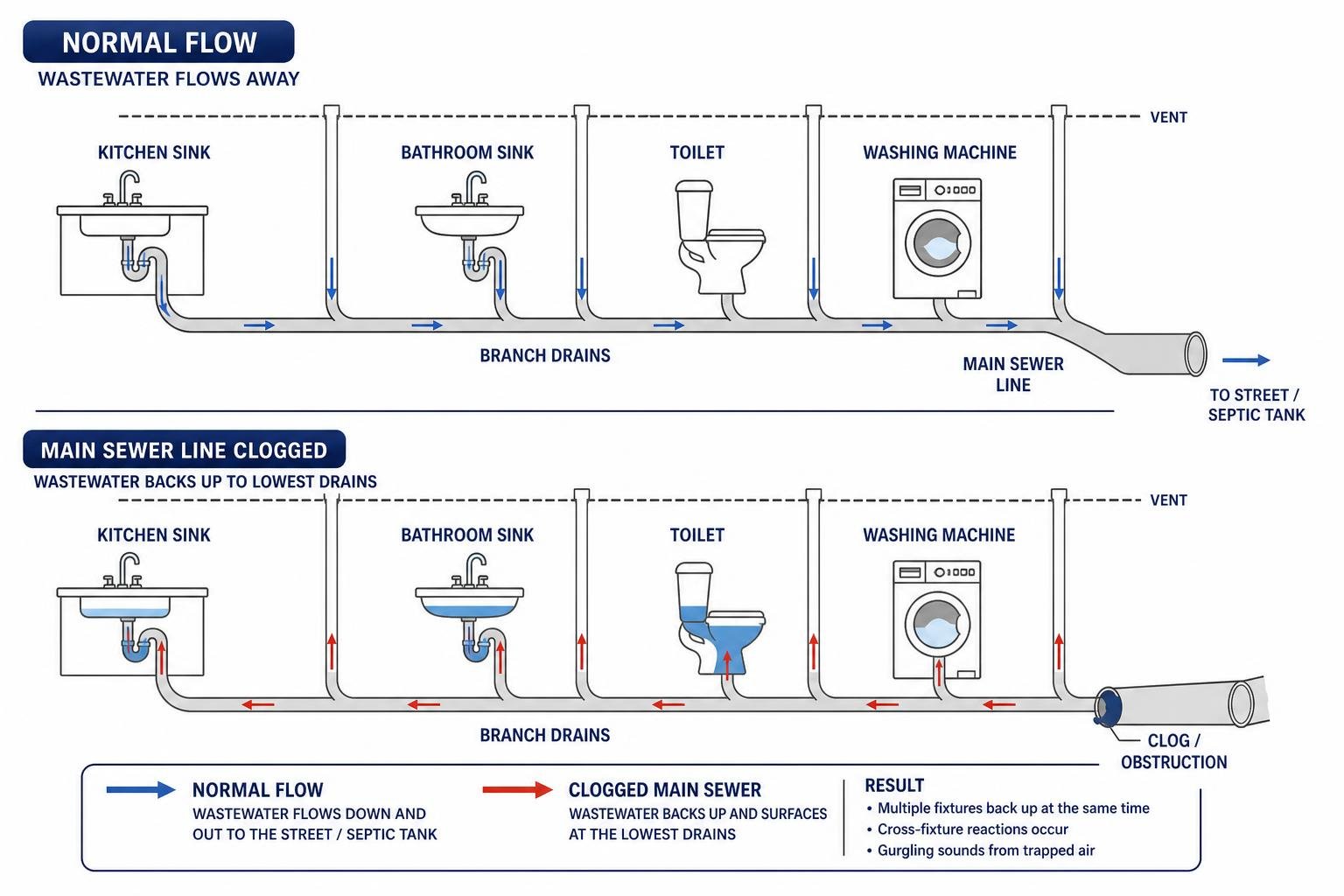
When an isolated branch pipe clogs, wastewater simply stops leaving that specific sink or shower. However, when the central sewer pipe becomes obstructed, wastewater has nowhere to go. Because water always seeks its lowest physical level, wastewater quickly reverses direction and surfaces at the lowest architectural drain points in your house. Learning how quickly these system-wide warnings escalate gives homeowners a clearer look at home drainage dynamics and the early signs of a larger sewer problem.
Single-Fixture Drain Blockage Symptoms
A single-fixture clog is localized. It happens directly inside or immediately downstream of an individual appliance trap.
Key indicators of an isolated fixture issue include:
- Water draining slowly from only one bathroom sink, while the adjacent shower and toilet function without issue.
- A sudden overflow in a kitchen sink caused by localized food debris or soap scum resting inside the curved P-trap beneath the counter.
- A single toilet that fails to flush after excessive toilet paper usage, with no secondary reactions in nearby bathtubs or floor drains.
- Simple, localized fixes, such as a standard cup plunger, a closet auger, or clearing hair from a pop-up assembly, resolving the drainage speed immediately.
Isolated clogs rarely cause cross-fixture reactions. If using your kitchen sink does not create gurgling sounds in the powder room, the blockage is isolated to that specific branch.
Whole-House Lateral Sewer Line Failure Signs
When the main lateral sewer line becomes compromised, symptoms appear across multiple fixtures simultaneously. Because wastewater cannot reach the street, running high-volume water appliances triggers dramatic backups.
Watch for these whole-home system indicators:
- The Multi-Fixture Rule: Multiple fixtures drain slowly or fail to drain at the exact same time across different rooms or floors.
- Cross-Fixture Reactions: Flushing a main-floor toilet forces dirty water or bubbling air upward into the adjacent bathtub or shower stall.
- Washing Machine Backups: The high-volume discharge cycle of a clothes washer forces suds and gray water up through the nearest basement floor drain or utility sink.
- Persistent Gurgling Sounds: Trapped air pockets migrate past dry or displaced P-traps, creating loud bubbling or percolating noises in toilets and sinks when entirely separate taps run.
- Basement Floor Drain Flooding: Raw wastewater and contaminated sewage backup pool around basement or crawlspace drains.
- Foul Odors: Persistent, sulfuric sewer gas odors waft from drains or linger in low-lying areas of the yard near the foundation.
Under the Institute of Inspection, Cleaning and Restoration Certification (IICRC) S500 standard, water backing up from a central sewer line is categorized as Category 3 “black water.” This wastewater carries unsanitary pathogenic agents, bacteria, and biohazards, meaning immediate containment is essential to protect residential indoor air quality and structural integrity.
| Symptom / Feature | Single-Fixture Clog | Main Sewer Line Clog |
|---|---|---|
| Number of Fixtures Affected | Exactly one isolated drain | Multiple fixtures across the property |
| Lowest Drain Vulnerability | No effect on basement drains | Wastewater pools in lowest tubs/floor drains |
| Cross-Fixture Reactions | None observed | Running one fixture bubbles another |
| Odor Severity | Mild, localized organic decay | Pervasive, sulfuric sewer gas |
| Appliance Impact | Unaffected | Dishwashers/washers force sewage upward |
| Health Hazard Category | Category 1 (Clean) or Category 2 (Gray) | Category 3 (Black Water / Biohazard) |
Root Causes and Pipe Vulnerabilities
Underground sewer lateral lines face constant physical, environmental, and mechanical pressures. Over time, ground movements, seasonal frost penetrations, soil settling, and material aging weaken the pipe structure.
Homes built before 1970 frequently rely on original cast iron, galvanized steel, or even bituminized fiber (Orangeburg) piping. While durable in their prime, cast iron develops internal rust scale that snags debris, and Orangeburg pipes gradually compress into oval shapes under ground weight until they collapse. Modern homes typically feature schedule 40 PVC or ABS plastic pipes, which offer smoother interiors and better root resistance, yet remain susceptible to joint shifting, heavy ground weight, and installation bellies. For local homeowners dealing with freeze-thaw movement, fixing a clogged sewer pipe in Anchorage, AK often requires attention to both pipe condition and regional soil behavior.
Primary Causes of a Main Sewer Line Clog
Main line obstructions rarely happen overnight; they are typically the culmination of continuous accumulation, external forces, or structural deterioration.
- Tree Root Intrusion: Tree roots are drawn toward moisture, oxygen, and nutrients escaping through micro-fissures or loose pipe hubs. Once fine hair-like roots penetrate a clay, concrete, or cast iron joint, they expand into dense, webbed root balls that catch solids and toilet paper. Tree roots are the leading cause of recurring lateral line blockages in older neighborhoods with mature landscaping.
- Fats, Oils, and Grease (FOG): Warm kitchen grease poured down drains cools and solidifies along the bottom and crown of the sewer lateral. Over time, grease layers petrify into hard scale, constricting the pipe diameter from a standard four inches down to a narrow channel.
- Flushed Unflushables: Items marketed as “flushable wipes,” feminine hygiene products, heavy paper towels, and dental floss do not dissolve in water like toilet paper. They snag on root intrusion or pipe scale, forming impenetrable blockages.
- Structural Bellies and Offsets: Soil settling, deep winter freeze-thaw cycles, and ground shifting can cause a section of pipe to sag, also called a “belly,” or disconnect at a joint, also called an “offset.” Water pools in these dips, causing solids to settle out of suspension rather than floating to the municipal main.
- Structural Pipe Collapse: Severe corrosion, crushed pipes from heavy vehicle traffic, or age-related decay can completely compromise the pipe wall, allowing surrounding soil, gravel, and mud to fall into the line and block all wastewater flow.
Why Chemical Drain Cleaners Make Sewer Problems Worse
When faced with a system-wide drainage failure, pouring liquid or crystal chemical drain cleaners down a sink or toilet is counterproductive and dangerous.
First, standard four-inch residential lateral lines extend anywhere from 30 to 100 feet from your home’s foundation to the municipal main or septic tank. A bottle of liquid drain cleaner poured into a drain becomes heavily diluted by the tens of gallons of stagnant black water sitting inside the blocked pipe. By the time the chemical reaches the clog point, it has lost its active concentration.
Second, chemical drain cleaners rely on caustic chemicals, sulfuric acid, or sodium hydroxide to dissolve organic material through intense heat generation, also known as an exothermic reaction. When trapped in a stationary section of pipe, these boiling temperatures can warp or soften thin-wall PVC joints and accelerate internal corrosion in older cast iron or galvanized lines.
Finally, filling your home’s plumbing system with toxic, acidic chemicals creates a severe safety hazard for service technicians. When technicians open cleanout fittings or insert mechanical cables, exposure to chemically charged wastewater poses severe burn and respiratory risks.
Safe Cleanout Access and DIY Clearing Methods
A building’s sewer cleanout is the designated access point to the main DWV system, bypassing fixture traps and complex internal plumbing networks.
Cleanouts are typically constructed from 3- to 4-inch white PVC, black ABS, or older cast iron pipe fittings. They feature a threaded plug with a raised square nut, a recessed slot, or a rubber compression plug. Older homes may feature an exterior metal “mushroom” cap. Cleanouts are generally installed in two locations:
- Exterior Cleanouts: Located outside the home within 3 to 5 feet of the foundation, often near garden beds or water meters.
- Interior Cleanouts: Located at the base of the primary vertical cast-iron or PVC soil stack in the basement, garage, or utility room.
Relieving Hydrostatic Pressure Safely
Before attempting to open a cleanout, you must prepare for built-up hydraulic pressure. When a downstream obstruction prevents drainage, the entire sewer pipe filling the lateral line acts like a standing column of pressurized wastewater.
Follow this safety protocol:
- Put on heavy-duty rubber gloves, safety goggles, a protective mask, and water-resistant footwear.
- Keep large plastic buckets, old towels, and disinfectant readily available.
- Stand off to the side of the cleanout fitting rather than crouching directly in front of the cap.
- Use a large adjustable wrench or pipe wrench to turn the cleanout plug counter-clockwise very slowly.
- Loosen the threads only a few millimeters at a time. If black water begins to seep or hiss from the threads, stop turning immediately. Allow the trapped liquid to drain slowly into containment buckets until hydrostatic pressure equalizes.
- Once water stops weeping around the threads, remove the plug completely to visually inspect the interior. If the cleanout pipe is full of standing water, the obstruction is located further downstream toward the municipal connection.
Motorized Auger Operation and Limits
Clearing a 4-inch main sewer line requires heavy mechanical power. Standard 1/4-inch or 3/8-inch handheld hand snakes used for bathroom sinks are entirely inadequate; they lack the torsional rigidity required to navigate a 4-inch pipe and will easily twist, kink, or snap under load.
A heavy-duty motorized sewer auger running a 5/8-inch or 3/4-inch continuous inner-core steel cable up to 100 feet in length is the minimum standard for clearing lateral obstructions.
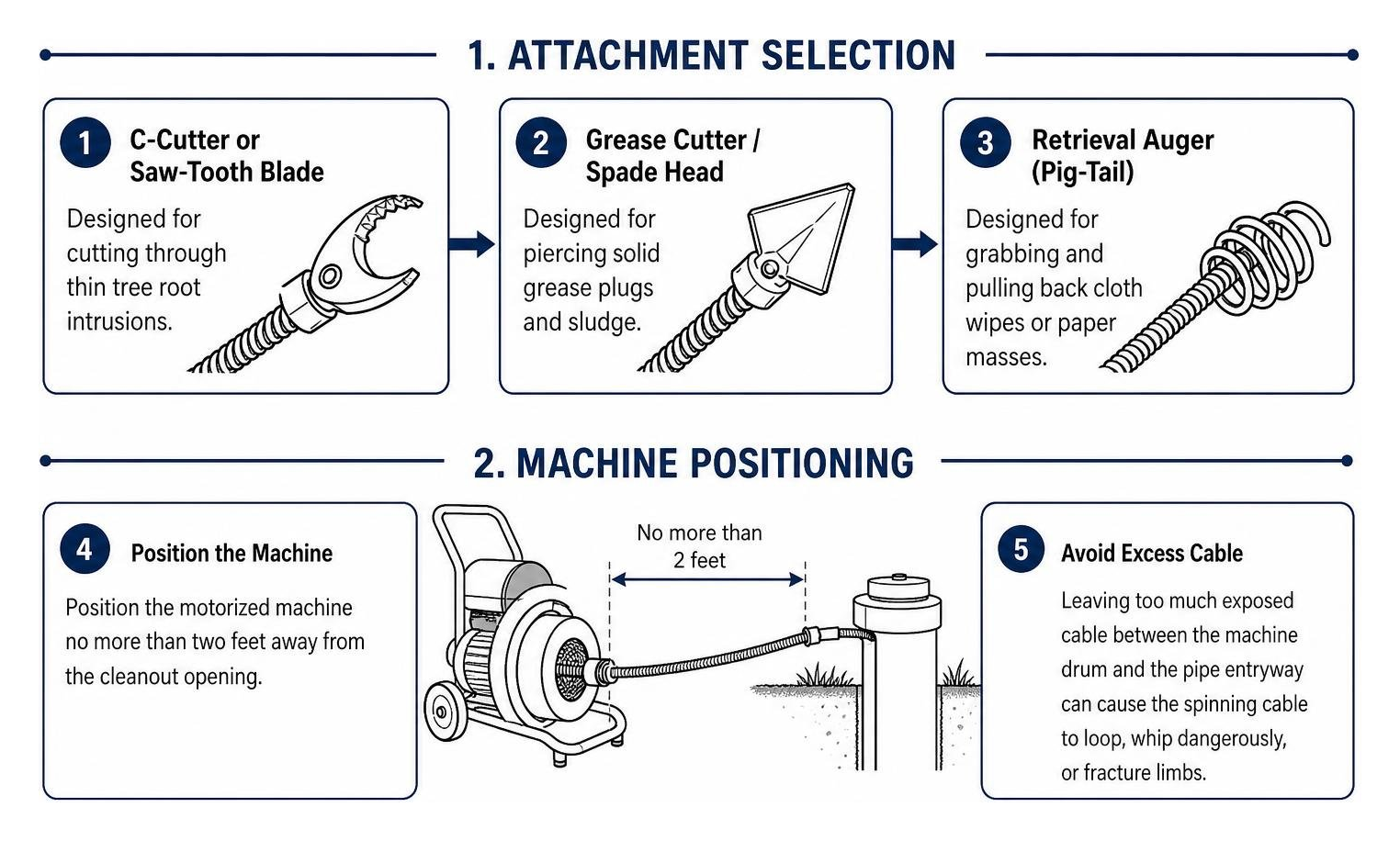
- Attachment Selection: Fit the cable end with an appropriate cutter head:
- C-Cutter or Saw-Tooth Blade: Designed for cutting through thin tree root intrusions.
- Grease Cutter / Spade Head: Designed for piercing solid grease plugs and sludge.
- Retrieval Auger (Pig-Tail): Designed for grabbing and pulling back cloth wipes or paper masses.
- Machine Positioning: Position the motorized machine no more than two feet away from the cleanout opening. Leaving too much exposed cable between the machine drum and the pipe entryway can cause the spinning cable to loop, whip dangerously, or fracture limbs.
- Feeding the Cable: With the motor off, guide the cutter head and first few feet of cable into the cleanout by hand.
- Engaging Torque: Depress the foot pedal to spin the drum in the forward direction. Maintain two gloved hands firmly on the cable, slowly feeding it forward down the line.
- Chewing Through Obstructions: When the cutting head contacts the clog, the cable will slow down and vibrate with increased resistance. Never force the cable forward. Ease back slightly to allow the rotating cutter head to chew through the obstruction at high RPMs.
- Retracting and Flushing: Once the cable breaks through and water visibly drains from the cleanout, reverse the mechanical autofeed to retrieve the cable while running water through the system to wash residual debris downstream.
When to Transition to Professional Sewer Line Clearing
Motorized mechanical augers have practical limitations. If you encounter severe resistance within the first 20 feet that stalls a high-torque motor, the pipe may have experienced a structural offset or collapse. Forcing a steel cable into broken clay or crushed PVC can puncture the pipe wall or permanently wedge the cable underground.
If running a mechanical snake produces only a brief, temporary trickle of drainage before standing water returns, or if the cutter head retrieves thick bunches of woody roots, simple rodding will not solve the underlying issue. In these scenarios, transition to professional sewer main clearing before catastrophic flooding occurs inside the living spaces.
Professional Diagnosis, Hydro Jetting, and Structural Repair
When standard snaking fails or clogs repeatedly return, professional diagnostic tools and industrial-grade clearing equipment are needed to pinpoint and eliminate the underlying failure.
Licensed technicians deploy self-leveling, fiber-optic video cameras attached to flexible, motorized push-rods. The camera head emits a real-time high-definition video feed displaying the exact physical interior of the pipe, complete with on-screen footage counters and radio sondes. This allows the technician to map the exact depth and physical location of pipe defects beneath your lawn or slab without preliminary excavation.
Scheduling a thorough sewer camera inspection reveals whether your backup is driven by soft grease, active root infiltration, pipe sags, or fractured joints.
Hydro Jetting: Deep Scouring Power
While mechanical augers punch a localized hole through soft blockages, they often leave heavy grease scale and root remnants clinging to the pipe perimeter. Industrial hydrojetting service addresses this by scouring the entire circumference of the line clean.
Operating specialized water delivery nozzles at pressures up to 4,000 PSI, hydro jetting machines propel forward using rear-facing water jets that pull the hose down the pipe while forward-facing cutting streams blast through rock-hard grease, mineral scale, and root intrusions. This restores old lateral pipes to their original internal diameter without caustic chemicals.
Homeowners can also compare their symptoms against public sewer guidance before choosing the safest next step. The Municipal Township Municipal Sewer Authority notes that multiple drains backing up, cross-fixture backups, and gurgling sounds are common warning signs of a clogged sewer line, which reinforces why whole-house symptoms should be treated differently from an isolated sink or toilet clog. (source)
Repair vs. Replacement and Trenchless Options
If diagnostic camera imaging identifies broken, collapsed, or severely offset pipe segments, cleaning alone will no longer restore drainage.
Fortunately, modern plumbing technology often avoids destructive landscape trenching across manicured lawns, paved driveways, and patios:
- Cured-in-Place Pipe (CIPP) Lining: Often referred to as trenchless pipe lining, this process pulls an epoxy-saturated felt tube directly into the damaged host pipe. Once in position, the bladder inflates and cures under heat or steam, creating a seamless, joint-free “pipe-within-a-pipe” that seals leaks and locks out tree roots for decades.
- Pipe Bursting: When the existing pipe has collapsed or lost its structural circularity, a hardened steel bursting head is pulled mechanically through the failing line. The bursting head fractures the old clay or cast iron outward into the surrounding soil while simultaneously pulling a new continuous high-density polyethylene (HDPE) pipe into place behind it.
- Traditional Open-Trench Excavation: In cases where severe ground settling has inverted the pipe grade or where municipal utility depths prohibit lining, targeted open-trench excavation remains the definitive method for physically re-grading and laying new schedule 40 piping. Drain Masters can help homeowners weigh cleaning, repair, and replacement options through sewer repair options when a camera inspection shows structural damage.
For homeowners comparing long-term solutions, knowing when a sewer line needs repair or replacement can make the choice clearer before emergency excavation becomes necessary.
How to Prevent a Future Main Sewer Line Clog
Proactive maintenance preserves pipe integrity and prevents emergency sewer backups before they start:
- Enforce Strict Flushing Habits: Only human waste and standard toilet paper belong in toilets. Never flush dental floss, paper towels, facial wipes, or feminine hygiene products.
- Proper Kitchen Disposal: Pour hot cooking fats, pan drippings, and oils into sealable metal cans or containers for solid trash disposal rather than sending them down the garbage disposal.
- Install Drain Strainers: Fit all sink, tub, and shower drains with fine mesh strainers to catch hair and foreign objects before they reach branch lines.
- Apply Preventative Biological Treatments: Use non-corrosive, enzyme- or bacteria-based drain treatments monthly. These live biological cultures consume thin organic slime layers inside pipes without damaging septic bacteria or corroding pipe walls.
- Schedule Routine Diagnostic Checkups: Inspect lateral pipes every 2 to 3 years using high-resolution video equipment, particularly on properties surrounded by mature birch, cottonwood, or willow trees.
Frequently Asked Questions About Main Sewer Line Blockages
What are the most common warning signs of a main sewer line clog?
The most reliable warning signs include multiple drains backing up at the same time, gurgling or bubbling noises coming from toilet bowls and tubs when separate fixtures run, water surfacing in ground-floor showers when a washing machine discharges, and persistent sewer odors around floor drains or in the yard.
How can I tell if a clog is in the main sewer line versus a single fixture?
If only one fixture drains slowly while all other household drains function normally, the blockage is isolated to that single fixture branch or P-trap. If using one plumbing fixture causes wastewater to rise in an entirely different fixture, or if multiple fixtures fail simultaneously, the obstruction is located in the central DWV stack or lateral sewer line.
What causes main sewer line clogs most frequently?
The most common causes are tree root infiltration through aged pipe joints, accumulated cooking fats, oils, and grease (FOG) hardening on pipe walls, flushed non-dispersible items like wet wipes, and structural pipe degradation such as bellied, offset, or collapsed sewer pipes.
How do I locate and safely open the sewer cleanout?
The cleanout is typically a 3- to 4-inch PVC, ABS, or cast iron pipe with a threaded cap located within 3 to 5 feet of the exterior foundation or at the base of the main basement stack. Open it safely by wearing full PPE, standing to the side, and slowly loosening the threaded cap counter-clockwise to allow any trapped, pressurized wastewater to drain gradually into buckets before fully removing the plug.
Can I clear a main sewer line clog without a plumber?
You can clear basic obstructions if you have access to a cleanout and rent a heavy-duty motorized sewer auger equipped with a 5/8-inch or 3/4-inch cable. Hand snakes and chemical cleaners are not effective on 4-inch main lines. If the motorized cable meets solid resistance or roots persist, call a licensed plumber to prevent damaging the pipe or trapping the cable underground.
Why do chemical drain cleaners fail on main sewer line clogs?
Liquid chemical cleaners dilute in the tens of gallons of standing wastewater trapped inside a 100-foot sewer line before reaching the blockage. Additionally, the caustic, exothermic reactions they produce can warp PVC pipe joints, corrode aging cast iron lines, and create dangerous chemical burn hazards for plumbers working on the line.
When should I call a professional plumber instead of attempting a DIY fix?
Call a professional immediately if raw sewage backs up across multiple floor drains, if you lack a dedicated cleanout, if you suspect tree root infiltration or pipe collapse, or if mechanical snaking fails to restore full flow. Professional video camera inspection and hydro jetting provide definitive diagnosis and safe clearing.
What is the typical cost range for professional main sewer line clog repair?
Professional repair costs vary depending on the severity and method required. Basic drain snaking generally represents an affordable baseline service, while advanced diagnostic sewer video camera inspections, high-pressure hydro jetting, and structural trenchless pipe lining or excavation require greater investment based on depth, pipe access, and linear footage.
Is the homeowner or the city responsible for a sewer line clog?
The property owner is typically responsible for the entire lateral sewer line extending from the home’s exterior to the connection at the municipal main or property boundary. The city or municipality is only responsible for maintenance and blockages located within the public main sewer line running beneath the street.
What are the risks of ignoring a main sewer line clog?
Ignoring a sewer line clog leads to Category 3 black water flooding inside your home, causing severe property damage, mold growth, and dangerous biohazard exposure. Unresolved clogs also exert sustained hydrostatic pressure on underground pipe joints, accelerating complete structural collapse and requiring costly excavation.
Conclusion
A compromised main sewer line is a serious plumbing emergency that requires fast, decisive action. Knowing the difference between an isolated fixture clog and a whole-house lateral blockage allows you to stop wastewater flow, safely relieve pipe pressure, and prevent catastrophic biohazard flooding in your home. While minor single-drain issues can often be cleared with a plunger or small hand snake, central sewer lateral blockages demand heavy-duty mechanical equipment, video diagnostics, and structural expertise.
For long-term peace of mind and lasting pipe integrity, trust the experienced team at Drain Masters in Anchorage, AK. Backed by over two decades of local expertise, upfront pricing, and advanced diagnostic technology, our licensed technicians keep your drainage system flowing smoothly. If your drains are gurgling, backing up, or showing signs of a main line blockage, contact our professional sewer repair technicians to resolve the problem at its source.