
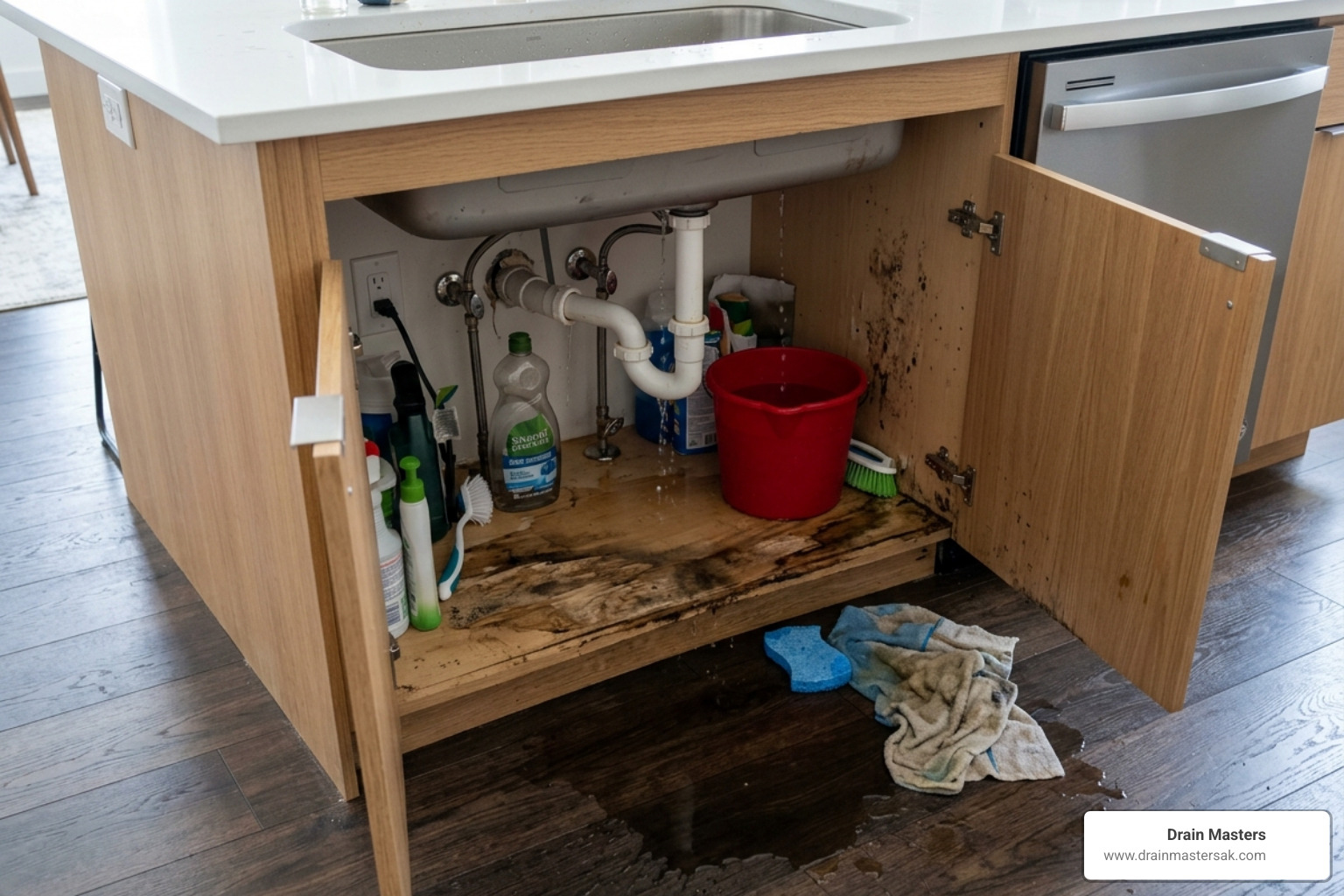
A Leak in Your House Could Be Costing You More Than You Think
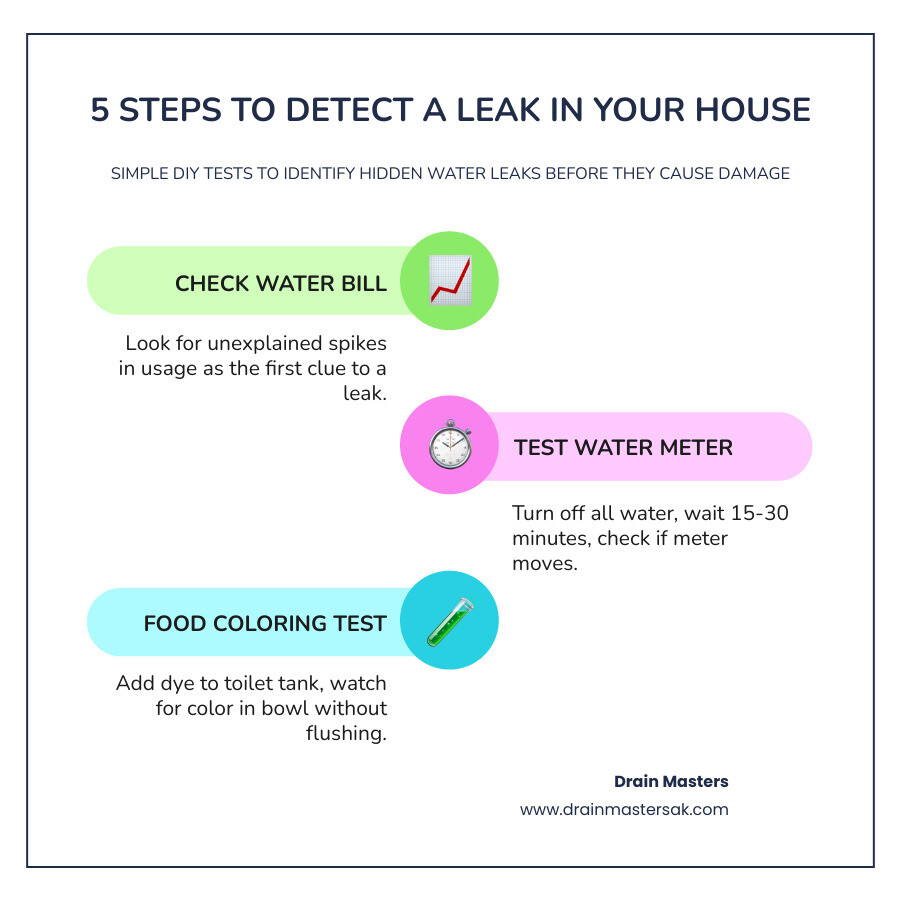
A leak in house plumbing is one of the most common, and most overlooked, problems homeowners face. Before you read any further, here’s a quick overview of how to find one:
How to detect a leak in your house:
- Check your water bill, an unexplained spike is often the first clue
- Test your water meter, turn off all water, wait 15–30 minutes, and see if the meter moves
- Use the food coloring test, add dye to your toilet tank and watch for color in the bowl
- Look for warning signs, stains, musty smells, peeling paint, or soft spots on walls and floors
- Check outdoor areas, soggy soil or unusually green grass patches can signal a buried line leak
Most leaks don’t announce themselves with a spray of water. They hide, inside walls, under floors, and behind fixtures, slowly draining your wallet and damaging your home. According to the EPA, the average home loses nearly 10,000 gallons of water every year from leaks alone. Across the U.S., household leaks waste close to 1 trillion gallons annually, equivalent to the water usage of more than 11 million homes.
That’s not a small problem.
And it’s not just water you’re losing. A single slow-dripping faucet, just one drop every two seconds, can waste more than 1,000 gallons per year. One leaky toilet quietly running in the background can add hundreds of dollars to your annual water bill before you even notice something is wrong.
The good news? Most leaks can be found without tearing open your walls or calling in heavy equipment, if you know where to look.
I’m Debra Blouin, General Manager of Drain Masters, a family-owned plumbing company based right here in Anchorage, Alaska, and with over two decades in the industry, I’ve seen how a small, undetected leak in a house can quietly turn into a major, expensive repair. In this guide, I’ll walk you through exactly how to find a leak, what the warning signs look like, and when it’s time to bring in a professional.
Common Signs of a Water Leak in Your House
Detecting a leak in house structures often requires a bit of detective work. Since most of our plumbing is tucked away behind drywall or under floorboards, we have to rely on secondary clues. In our 20+ years of serving the Anchorage community, we’ve found that the house usually “talks” to you before the catastrophe hits.
Visual Clues on Walls and Ceilings
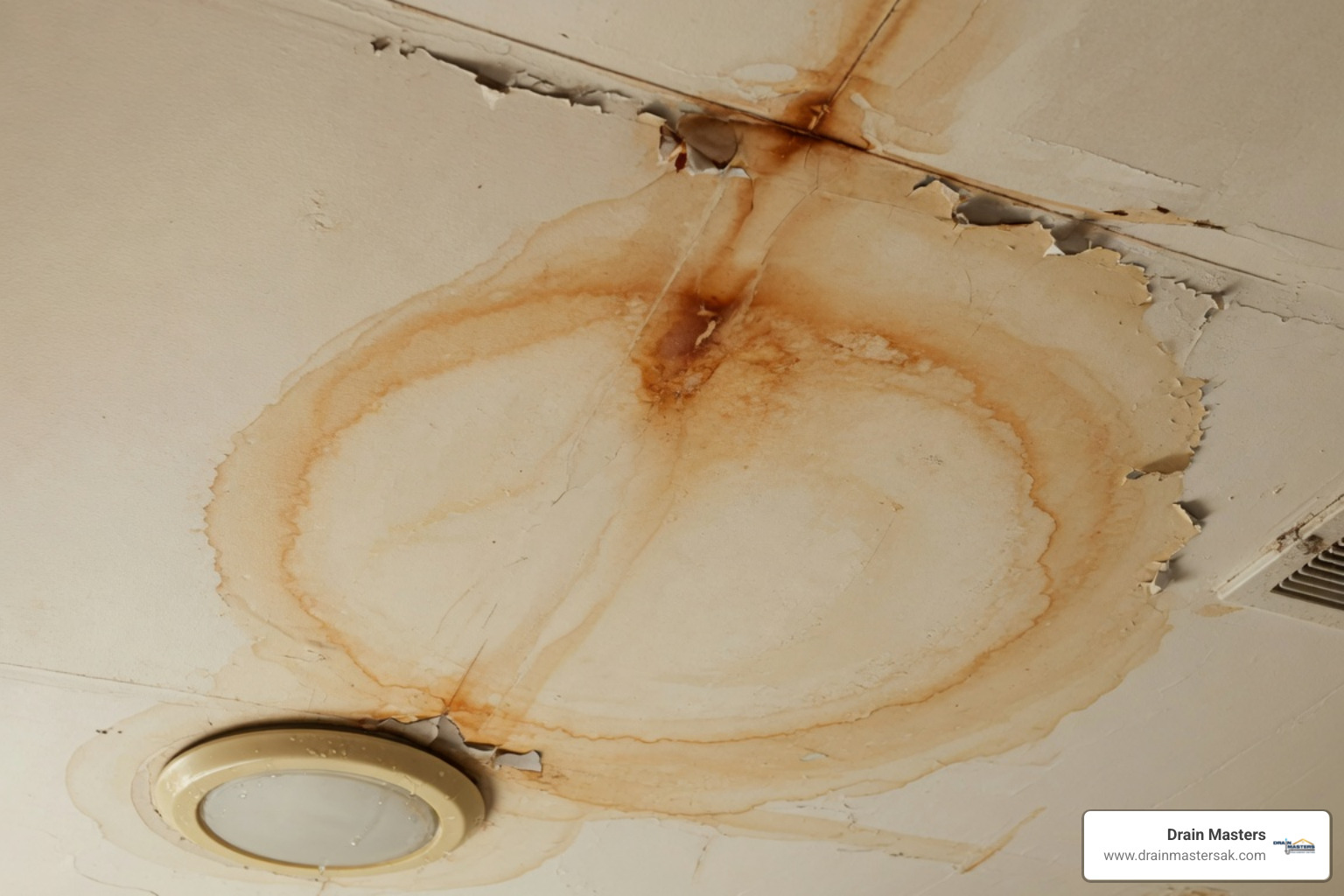
One of the most obvious signs home has water leak is a change in your home’s surfaces. Look for yellowish or brownish water stains on your ceiling. If you see paint that is bubbling or peeling, or wallpaper that looks like it’s bulging, there is likely moisture trapped behind it.
Water is sneaky; it often travels along a wall stud or a ceiling joist, meaning the spot where you see the stain might not be exactly where the pipe is dripping. If you notice these marks, it’s time to learn how to troubleshoot and repair a leaking ceiling before the weight of the water causes the drywall to collapse.
The Nose Knows: Musty Odors
If you walk into a room—especially a bathroom, laundry room, or basement—and smell a persistent earthy or musty odor, you are likely smelling mold or mildew. Mold thrives in damp, dark environments. A hidden leak in house walls provides the perfect breeding ground. If the smell persists even after a deep clean, the water is likely coming from inside the structure.
Utility Bill Spikes and Pressure Drops
Have you noticed your water bill skyrocketing even though your habits haven’t changed? If a family of four in Anchorage is using more than 12,000 gallons per month during the winter, that’s a major red flag for a leak.
Additionally, low water pressure in homes can be more than just a nuisance during your morning shower. While it can sometimes be caused by mineral buildup, a sudden drop in pressure often indicates that water is escaping the system through a crack or a burst pipe before it ever reaches your faucet.
How to Use Your Water Meter to Detect a Leak in House
Your water meter is the single most reliable tool you have for confirming a leak in house plumbing. It doesn’t guess; it measures. Here is how we recommend our customers perform a DIY leak check:
- Shut it all down: Ensure every faucet, showerhead, dishwasher, and washing machine is turned off. Don’t forget the ice maker in the fridge!
- Locate the meter: In Anchorage, your meter is typically located in the basement or a utility crawl space where the main line enters the home to prevent freezing.
- Check the leak indicator: Many analog meters have a small rotating triangle or star-shaped wheel called a “leak indicator.” If that little dial is spinning even slightly while all water is off, you have a leak.
- The 15-Minute Test: If you don’t have a leak indicator, record the current number on the meter display. Wait 15 to 30 minutes (making sure no one flushes a toilet or uses water). Check the number again. If it has moved, water is leaving the system somewhere.
For more complex issues, you may need a water line repair if the leak is located on your main supply line. You can find more methods and solutions for finding water leaks to help narrow down the culprit.
Is the Leak in House or Outdoors?
Once you’ve confirmed a leak exists via the meter, you need to know if it’s inside your walls or under your yard.
- Locate your main shut-off valve (usually near the water meter) and turn it off.
- Check the water meter again.
- If the meter stops moving, the leak in house is somewhere in your interior plumbing.
- If the meter keeps moving, the leak is in the service line between the meter and your house.
In the yard, look for patches of grass that are much greener or grow faster than the rest of the lawn. In our Alaskan climate, soggy soil during a dry spell is a classic sign of an underground issue that may require water pressure repair or a full line replacement.
Confirming a Slow Leak in House Using Meter Readings
Digital meters can be even more precise. Some will show a small faucet icon or a “leak” alert if water has been running continuously for 24 hours. Even a tiny flow rate of 0.15 gallons per minute can waste over 200 gallons a day. If your baseline usage is creeping up without explanation, trust the meter—it’s trying to save you money.
DIY Tests for Toilets, Faucets, and Fixtures
Toilets are the most common source of a silent leak in house plumbing. A leaking flapper can waste hundreds of gallons a day without making a sound.
The Food Coloring Dye Test
This is our favorite “plumber’s secret” for homeowners. Open your toilet tank and add about 10–15 drops of dark food coloring (red or blue works best). Put the lid back on and wait about 15 to 20 minutes. Do not flush. If you see the color seeping into the toilet bowl, your flapper valve isn’t sealing properly. This is a simple plumbing repair that can save you a fortune on your next bill.
Faucets and Showerheads
A dripping faucet might seem like a minor annoyance, but a rate of one drop per second wastes over 3,000 gallons a year. Check under your sinks for puddles or dampness around the P-trap and supply lines. Often, a leak is simply a worn-out rubber washer or a degraded O-ring inside the handle. If you’re struggling to find a plumbing leak, start with these high-use fixtures.
Detecting a Hidden Leak in House Behind Walls or Ceilings
When a leak isn’t visible at a fixture, it’s likely hidden. This is where things get serious, as structural damage can occur quickly.
Advanced Detection Tools
At Drain Masters, we use professional leak detection and repair technology to find these “ghost” leaks without tearing your home apart.
- Acoustic Tools: These act like a doctor’s stethoscope, allowing us to hear the sound of pressurized water escaping a pipe underground or behind a wall.
- Infrared (Thermal) Cameras: These cameras detect temperature differences. Since leaking water usually creates a cool spot (due to evaporation or the temperature of the water itself), we can “see” the moisture through the wall.
- Moisture Meters: These tools confirm if a surface is actually damp, helping us distinguish between an old stain and an active leak.
If you suspect a leak is coming from the city’s side of the meter or if you notice a massive water main break in your neighborhood, you should report a problem to the Anchorage Water and Wastewater Utility.
Spotting a Hidden Leak in House Early
In Anchorage, we have a unique challenge: frozen pipes. A pipe that freezes and thaws can develop hairline cracks that only leak intermittently. Be on the lookout for warped flooring or the sound of water trickling when no one is using the sink.
Also, distinguish between condensation and a leak. If you see moisture on cold pipes during a humid day, it might just be condensation. However, if the area is consistently wet and the water meter is moving, you’ve got a leak.
Immediate Steps and Professional Solutions
If you find a major leak in house pipes, your first move should always be to turn off the water at the main shut-off valve. This stops the damage immediately.
| Feature | DIY Fix | Professional Leak Detection |
|---|---|---|
| Cost | Low ($10 – $50) | Moderate (Investment in home) |
| Accuracy | Good for visible drips | Precise for hidden leaks |
| Tools Needed | Wrench, Plumber’s tape | Infrared, Acoustic, Video sensors |
| Best For | Toilets, Faucets | Slab leaks, Wall leaks, Main lines |
Prevention is the Best Medicine
To avoid a plumbing emergency, we recommend a few proactive steps:
- Insulate your pipes: Follow our winter plumbing tips to prevent frozen pipes to avoid the “freeze-thaw” cracks common in Alaska.
- Replace old hoses: Swap out rubber washing machine hoses for braided stainless steel.
- Install leak detectors: Battery-operated sensors can alert your smartphone the second they detect water near your water heater or under a sink.
Frequently Asked Questions about Household Leaks
How much money can a small leak waste?
Undetected leaks can be a massive drain on your budget. Fixing common household leaks can save you about 10% on your water bill. A single slow drip from a faucet can waste 1,000 gallons a year, while a “moderate” leak can waste 90 gallons or more every single day—that’s enough to wash 300 loads of laundry!
What is the food coloring test for toilets?
It is a simple way to find “silent” leaks. By adding food coloring to the tank and waiting 15 minutes, you can see if the dye seeps into the bowl. If it does, your flapper or flush valve is leaking. This is one of the most cost-effective ways to stop a leak in house water waste.
When should I call a professional plumber?
You should call a pro if:
- The water meter is moving, but you can’t find a single drip.
- You suspect a “slab leak” (warm spots on the floor or the sound of water under the house).
- You have a sudden, major drop in water pressure.
- The leak is located in an inaccessible area like behind a tiled wall or deep in a crawl space.
Conclusion
A leak in house plumbing doesn’t have to be a disaster, but it does require quick action. By keeping an eye on your water bill, performing the 15-minute meter test, and using the food coloring trick in your toilets, you can catch most problems before they cause thousands of dollars in structural damage.
At Drain Masters, we’ve spent over 20 years helping Anchorage homeowners protect their properties. Whether you need a simple fixture replacement or advanced leak detection and repair using our state-of-the-art infrared and acoustic tools, our family-owned team is here to help with upfront pricing and expert service.
Don’t let your hard-earned money drip away. Schedule your leak detection and repair service today with the experts at Drain Masters!