
Why Water Purification Systems Matter for Your Home and Health
Water purification systems are one of the most practical investments you can make for your home’s health and safety. Here is a quick look at the most common types and what they do best:
| System Type | Best For | Key Benefit |
|---|---|---|
| Reverse Osmosis (RO) | Drinking and cooking water | Removes up to 99% of dissolved contaminants |
| Activated Carbon Filter | Taste and odor improvement | Reduces chlorine, VOCs, and sediment |
| UV Purification | Microbial protection | Kills up to 99.9% of bacteria and viruses |
| Gravity-Fed Filter | Portable or off-grid use | No electricity or plumbing needed |
| Whole-House Filter | All household water | Treats water at the main line for every tap |
| Pitcher Filter | Renters or small households | Low cost, no installation required |
Clean drinking water is one of the most basic needs for good health, yet many homeowners are unsure what is actually in their tap water or which system can help. According to global data, 2 billion people worldwide still lack access to safely managed drinking water. Even in cities with treated municipal water, contaminants like lead, PFAS, chlorine byproducts, and microplastics can still make their way into your glass. The global water purifier market is growing fast, projected to reach tens of billions of dollars in the coming years, which reflects just how many people are taking this issue seriously.
Whether you are concerned about the taste of your water, want to protect your family from harmful chemicals, or are simply exploring your options, understanding how different purification technologies work is the right place to start.
I’m Debra Blouin, General Manager of Drain Masters, and with over two decades of hands-on experience in residential plumbing in Anchorage, AK, I have seen how aging pipes and local water quality can affect what comes out of your tap. In this guide, I will walk you through everything you need to know about water purification systems so you can make a confident, well-informed decision.
Understanding the Main Types of Water Purification Systems

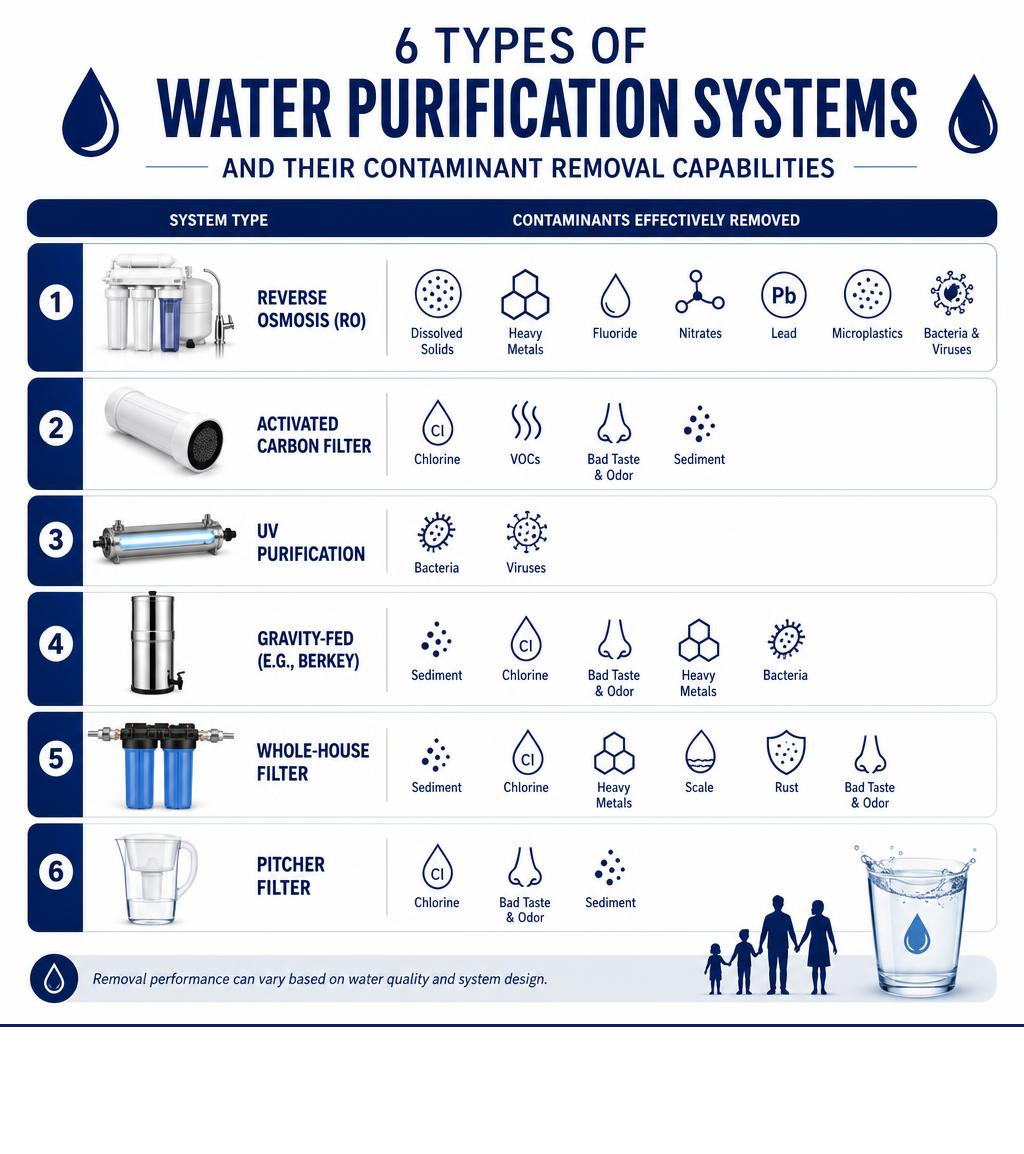
When you start looking into how to make your home’s water cleaner and taste better, the sheer volume of options can feel a bit like trying to drink from a fire hose. To make sense of it all, it helps to understand the difference between point-of-use (POU) systems, which treat water at a single tap, like a kitchen faucet or a pitcher, and point-of-entry (POE) systems, which treat all the water entering your home.
Different systems utilize distinct scientific principles to capture or destroy impurities. If you are experiencing issues with your home’s water quality, integrating a purification system with our comprehensive plumbing services is often the most effective way to protect both your health and your plumbing infrastructure.
Reverse Osmosis (RO) Water Purification Systems
Reverse osmosis, often simply called RO, is widely regarded as the heavyweight champion of residential water purification. It works by using high pressure to force water through a semipermeable membrane with incredibly tiny pores (typically around 0.0001 microns).
This process is exceptionally good at total dissolved solids (TDS) reduction, stripping away up to 99% of dissolved salts, heavy metals, fluoride, arsenic, and organic molecules.
However, because the membrane is so fine, traditional RO systems produce a certain amount of wastewater that carries the rejected contaminants down the drain. This is known as the wastewater ratio. While older systems could waste up to four gallons of water for every gallon of purified water produced, modern high-efficiency tankless RO systems have turned the tables, offering highly efficient ratios where very little water is sent to the drain.
Another important aspect of RO filtration is that it is so thorough it even removes beneficial minerals like calcium and magnesium, which can leave the water tasting slightly flat or tasting weakly acidic. To combat this, many high-quality systems include an alkaline remineralization stage. This post-filter adds healthy minerals back into the water, raising the pH to a crisp, refreshing, and alkaline level that tastes fantastic.
Activated Carbon and Sediment Filters
If reverse osmosis is the heavyweight champion, activated carbon filters are the reliable, hardworking crowd-pleasers of the water world. You will find carbon filtration in everything from simple fridge filters and pitcher filters to complex multi-stage under-sink systems.
Carbon filters work through a process called adsorption. Imagine carbon as a highly porous sponge with a massive surface area. As water passes through, chemical impurities like chlorine, volatile organic compounds (VOCs), pesticides, and industrial solvents stick to the carbon pores. This results in a massive improvement in taste and odor.
To keep these filters from clogging too quickly, they are almost always paired with a sediment pre-filter. Sediment filters are rated by a micron rating, which determines the size of the physical particles, such as rust, silt, sand, and clay, that they can trap. Keeping sediment out of your carbon filters and appliances is a great way to support your routine plumbing maintenance and extend the lifespan of your fixtures.
Ultraviolet (UV) Water Purification Systems
While carbon and RO membranes excel at catching chemical and physical contaminants, they do not always kill living microorganisms. That is where ultraviolet (UV) purification comes in.
A UV system uses a specialized lamp that emits UV-C light. As water flows past this light, the radiation penetrates the cells of bacteria, viruses, and parasites (like Giardia and Cryptosporidium), scrambling their DNA so they cannot reproduce or cause illness.
UV systems provide outstanding microbial protection and are highly recommended for homes relying on well water, or in areas prone to municipal boil-water advisories. Many homeowners choose to install six-stage UV RO systems to get the absolute best of both worlds: molecular-level chemical filtration combined with robust biological sterilization.
Gravity-Fed and Countertop Systems
For renters, frequent travelers, or those who want an emergency backup plan, gravity-fed and countertop systems are highly popular choices. Gravity-fed systems consist of an upper and lower chamber. You pour water into the top, and gravity slowly pulls it down through dense purification elements into the bottom chamber.
Because they require absolutely no electricity or permanent plumbing connections, they are the ultimate tool for emergency preparedness. The key to their success lies in the exceptionally small pore size of their filter elements, which can trap bacteria and sediment while retaining the natural, beneficial minerals that RO systems typically strip away.
Contaminant Removal: What Do Different Filters Actually Reduce?

Not all water filters are created equal, and no single filtration technology removes every single type of contaminant. To give you a clear picture of how these different technologies stack up against common household water issues, we have put together a comparison table based on laboratory testing standards:
| Contaminant Type | Examples | Activated Carbon | Reverse Osmosis (RO) | Ultraviolet (UV) | Gravity-Fed Filter |
|---|---|---|---|---|---|
| Disinfection Byproducts | Chlorine, Chloramines | Excellent | Excellent | None | Excellent |
| Heavy Metals | Lead, Copper, Arsenic | Moderate to High | Excellent | None | High |
| “Forever Chemicals” | PFAS, PFOA, PFOS | High | Excellent | None | High |
| Microorganisms | Bacteria, Viruses, Cysts | None (unless specified) | High | Excellent | High |
| Physical Particles | Microplastics, Silt, Rust | High (with pre-filter) | Excellent | None | Excellent |
| Dissolved Minerals | Calcium, Fluoride, Sodium | Low | Excellent | None | Low |
As you can see, matching your filtration system to your specific water quality concerns is essential. For instance, if you are dealing with municipal tap water that smells strongly of chlorine, a high-quality carbon filter will work wonders. However, if your water contains dissolved heavy metals or complex industrial chemicals like PFAS, investing in a robust reverse osmosis system is a much safer bet.
Certifications and Testing Standards (NSF, WQA, IAPMO)
With so many marketing claims out there, how can you be sure a water filter actually does what the box says? This is where independent, third-party certifications come in. Organizations like the National Sanitation Foundation (NSF), the Water Quality Association (WQA), and the International Association of Plumbing and Mechanical Officials (IAPMO) perform rigorous laboratory testing to verify performance.
When shopping for a system, look for these key certifications:
- NSF/ANSI 42: Covers aesthetic effects, verifying that the system reduces chlorine, taste, and odor.
- NSF/ANSI 53: Covers health effects, certifying that the filter reduces specific harmful contaminants like lead, copper, asbestos, and VOCs.
- NSF/ANSI 58: The gold standard certification specifically for reverse osmosis systems, verifying TDS reduction and safety under pressure.
Choosing a certified system ensures that the flow rate, structural integrity, and contaminant reduction claims are fully backed by scientific testing, giving you peace of mind with every glass you drink.
Point-of-Use vs. Whole-House Water Filtration
One of the biggest decisions you will make when choosing a water purification system is deciding whether you want to treat water only where you drink it (point-of-use) or filter all the water that enters your home (point-of-entry).
A whole-house water filtration system is installed directly on your main water line. This means that every single drop of water running through your home, whether it is going to your kitchen sink, your shower, your washing machine, or your water heater, is clean and filtered.
Whole-house systems offer incredible benefits that go far beyond just drinking water. By removing chlorine, sediment, and hard minerals at the source, you will notice a massive improvement in your skin and hair health, as chlorine will no longer dry them out during showers. Furthermore, removing harsh chemicals and sediment protects your pipes from internal corrosion and prevents scale buildup in appliances, significantly extending the life of your dishwasher, washing machine, and water heater. If you are planning a whole-house installation, it is also the perfect time to inspect your main lines and address any necessary repairing your main water lines to ensure your entire system is in peak condition.
Comparing Pitchers, Faucets, Under-Sink, and Whole-Home Systems
To help you decide which setup fits your lifestyle, let’s break down the practical pros and cons of each common configuration:
Pitcher Filters
- Pros: Very low upfront cost; zero installation; highly portable; great for renters.
- Cons: Low capacity; slow filtration speed; filters must be replaced frequently; only improves drinking water.
Faucet-Mounted Filters
- Pros: Relatively inexpensive; easy to install without tools; switch easily between filtered and unfiltered water.
- Cons: Can lower your kitchen faucet’s flow rate; can look bulky on modern fixtures; not compatible with all faucet designs.
Under-Sink Systems (including RO)
- Pros: High-volume filtration; completely hidden out of sight; delivers highly purified water on demand; long filter lifespan.
- Cons: Higher upfront cost; requires basic plumbing skills to install; takes up cabinet space under the sink.
Whole-House Systems
- Pros: Treats 100% of the water in your home; protects plumbing and appliances; improves indoor air quality by eliminating chlorine vapors in the shower; exceptionally low day-to-day maintenance.
- Cons: Requires professional installation; higher initial investment; does not typically purify to the molecular level of an RO system unless paired with one.
If you are noticing changes in your water flow or pressure after installing a point-of-entry system, it is always wise to consult a professional for a restoring proper water pressure evaluation to balance your home’s flow rate perfectly.
Key Factors to Consider When Choosing a System
Choosing the perfect water filter is not just about picking the one that removes the most contaminants on paper. You also need to consider how the system will fit into your daily life and your household budget over time.
First, look at the balance between upfront costs and long-term operating expenses. A system might seem like a bargain initially, but if the replacement filters are expensive and need to be swapped out every few weeks, it will cost you far more in the long run. On the other hand, some systems have a higher initial price tag but feature robust filters that last for years, making them highly economical over time.
Second, pay attention to the filter lifespan and maintenance requirements. Are you comfortable crawling under the sink every six months to change cartridges, or would you prefer a whole-house system that only requires attention once a year?
Third, consider wastewater production and flow rates. If you have a large family, a slow-filtering pitcher or an inefficient RO system might lead to daily frustration.
Finally, keep an eye out for potential leaks. Any time you install a water-using appliance or filtration system, there is a small risk of a connection coming loose. Regularly checking your system and investing in professional finding and fixing hidden leaks services if you ever spot pooling water under your sink will save you from costly water damage down the road.
Maintenance Best Practices and Professional Installation
To keep your water purification system running safely and efficiently, regular maintenance is absolutely essential. Over time, physical filters clog with sediment, and carbon filters lose their ability to adsorb chemicals. If left unchanged, neglected filters can actually become breeding grounds for bacteria, reducing your water quality instead of improving it.
Here are a few industry best practices for keeping your system in top shape:
- Mark Your Calendar: Always replace your filters according to the manufacturer’s recommended schedule.
- Sanitize the System: When performing filter changes on under-sink or RO systems, take the time to sanitize the filter housings using a mild bleach solution or food-grade sanitizing spray to prevent bacterial growth.
- Wash Your Hands: Always wear clean gloves or wash your hands thoroughly before handling new filter cartridges to avoid transferring germs.
- Schedule Inspections: For complex systems, having a professional inspect your setup ensures everything remains watertight.
While changing a pitcher filter is a simple DIY task, installing under-sink reverse osmosis systems or whole-house filtration units involves cutting into water supply lines and managing wastewater drains. To protect your home from accidental flooding, water damage, or cross-contamination, we highly recommend leaving these installations to the professionals. Additionally, a professional plumber can perform critical testing your backflow prevention systems to ensure that your purified water lines never mix with non-potable water.
At Drain Masters, we have been serving the Anchorage, AK community for over 20 years. Our family-owned business completes over 4,000 jobs annually, and we bring advanced tools, upfront pricing, and deep local expertise to every single project. Whether you need a simple under-sink filter installed or a complete whole-house system integrated into your plumbing, we are here to help. Contact us today for setting up a new filtration system and take the first step toward pristine water throughout your home.
Frequently Asked Questions About Water Purification Systems
What is the difference between a water filter and a water purifier?
While the terms are often used interchangeably, they refer to different levels of filtration. A water filter typically uses physical barriers (like carbon or sediment mesh) to strain out chlorine, sediment, and larger impurities to improve taste and odor. A water purifier goes a step further by removing or destroying microscopic pathogens, viruses, bacteria, and dissolved solids, often utilizing technologies like reverse osmosis or ultraviolet light.
How often do I need to replace my water purification filters?
The replacement frequency depends entirely on the type of system and your household’s water usage. Standard carbon pitcher filters usually last 2 to 3 months, under-sink RO pre-filters typically need replacing every 6 to 12 months, and whole-house sediment filters can last anywhere from 6 months to a year. Always consult your manufacturer’s manual for specific guidelines.
Do reverse osmosis systems waste a lot of water?
Traditional RO systems used to waste several gallons of water for every gallon of pure water produced. However, modern high-efficiency and tankless RO systems have drastically reduced this footprint. Many advanced systems now feature highly efficient pure-to-drain ratios, meaning they waste very little water while delivering continuous, fresh purification.
Can a water purification system remove PFAS and forever chemicals?
Yes, certain water purification systems are highly effective at reducing PFAS (per- and polyfluoroalkyl substances). According to independent laboratory testing, high-quality activated carbon filters and reverse osmosis systems can remove over 98% of these persistent chemicals from your drinking water. Look for certifications matching NSF/ANSI standards to verify these claims.
Is it necessary to install a whole-house water filtration system?
While not strictly necessary for every household, a whole-house system is highly beneficial if your local water has high levels of chlorine, sediment, or hard minerals. It protects your skin and hair from drying out in the shower, prevents chemical vapors from entering your indoor air, and significantly extends the lifespan of your plumbing and appliances.
Does reverse osmosis remove beneficial minerals from drinking water?
Yes, the reverse osmosis process is so thorough that it strips away almost all dissolved minerals, including healthy ones like calcium and magnesium. This can leave the water tasting slightly flat and make it weakly acidic. To solve this, many high-quality RO systems include an alkaline remineralization stage that adds these essential minerals back in.
How do I know if my home water needs a purification system?
The best way to find out is to have your water professionally tested or to review your local municipal water quality report. Common warning signs that you might need a system include a strong chlorine smell, metallic or bitter tastes, visible cloudiness or sediment, and white scale buildup on your faucets and showerheads.
What do NSF and WQA certifications mean for water filters?
These certifications mean that the water filter has undergone rigorous, independent testing by organizations like the National Sanitation Foundation (NSF) or the Water Quality Association (WQA). These tests verify that the system is structurally sound, made of safe materials, and actually removes the specific contaminants that the manufacturer claims it does.
Can I install an under-sink reverse osmosis system myself?
While some homeowners with advanced DIY and plumbing skills can install these systems, it is generally recommended to hire a professional. Correctly installing an under-sink RO system requires tapping into your cold water supply line, drilling a hole for the dedicated faucet, and connecting a drain saddle, which can easily lead to leaks if done incorrectly.
Do water purification systems require electricity to operate?
It depends on the technology. Standard carbon filters, sediment filters, and gravity-fed systems require absolutely no electricity. However, systems that feature UV sterilization lamps, electronic smart monitoring faucets, or built-in booster pumps (often found in high-flow tankless RO systems) will need to be plugged into an electrical outlet.
Conclusion
Investing in the right water purification system is one of the most effective ways to support your household’s health, protect your plumbing system, and enjoy clean, delicious water every single day. From simple point-of-use carbon filters to comprehensive reverse osmosis and whole-house systems, there is a solution tailored to every home and budget.
If you are ready to upgrade your home’s water quality in Anchorage, AK, reach out to the experienced team at Drain Masters. We bring over 20 years of trusted local plumbing expertise, upfront pricing, and advanced tools to every job. Contact us today to schedule your installing a water treatment system and experience the difference that truly clean water can make!