
How an Indirect Water Heater Works (And Why It Matters for Your Home)
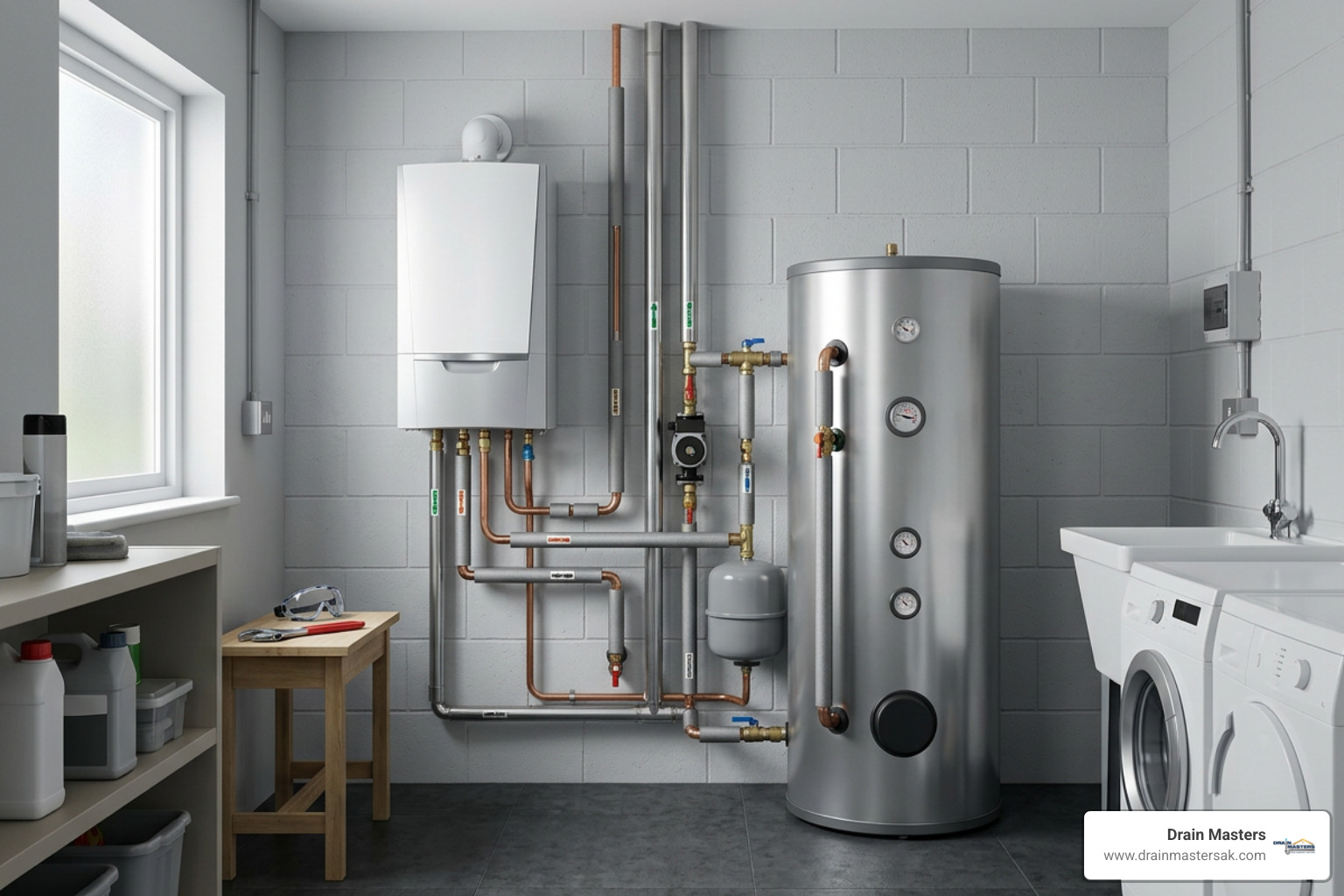
An indirect water heater is a specialized storage tank that utilizes your home’s central boiler to heat your domestic hot water supply. Instead of relying on its own dedicated burner or electric heating elements, this system features an internal heat exchanger coil. Hot water generated by the boiler circulates through this coil, transferring its thermal energy directly to the domestic water stored in the surrounding tank.
Here is a quick summary of how indirect water heaters work:
| Feature | How It Works |
|---|---|
| Heat source | Your existing boiler (gas, oil, propane, electric, or solar) |
| Heat transfer | A coil or heat exchanger inside an insulated storage tank |
| Water separation | Boiler water and household water never mix |
| Controls | An aquastat triggers the boiler when tank temperature drops |
| Efficiency | Matches the efficiency of your boiler, often 80-96% |
This integrated configuration means you only need to run and maintain one primary heating system instead of managing two separate appliances. The U.S. Department of Energy notes that when paired with a high-efficiency boiler and a well-insulated storage tank, an indirect system can be the least expensive way to provide hot water in a residential property.
Water heating represents the second-highest energy expense in most households, trailing only space heating. This reality makes choosing the right water heating system one of the smartest long-term decisions a homeowner can make. This is especially true in cold climates like Anchorage, AK, where your boiler is already working hard for most of the year to keep your living spaces comfortable. Integrating your domestic hot water production with your primary heating system optimizes fuel consumption and reduces overall wear on your home’s mechanical infrastructure.
I’m Debra Blouin, General Manager of Drain Masters in Anchorage, AK, and I’ve spent over two decades in the plumbing and HVAC industry helping homeowners navigate complex decisions exactly like this one. Over the years, I’ve seen firsthand how pairing the right indirect water heater with a quality boiler can dramatically reduce monthly energy use, lower utility bills, and minimize long-term repair costs.
What Is an Indirect Water Heater and How Does It Work?
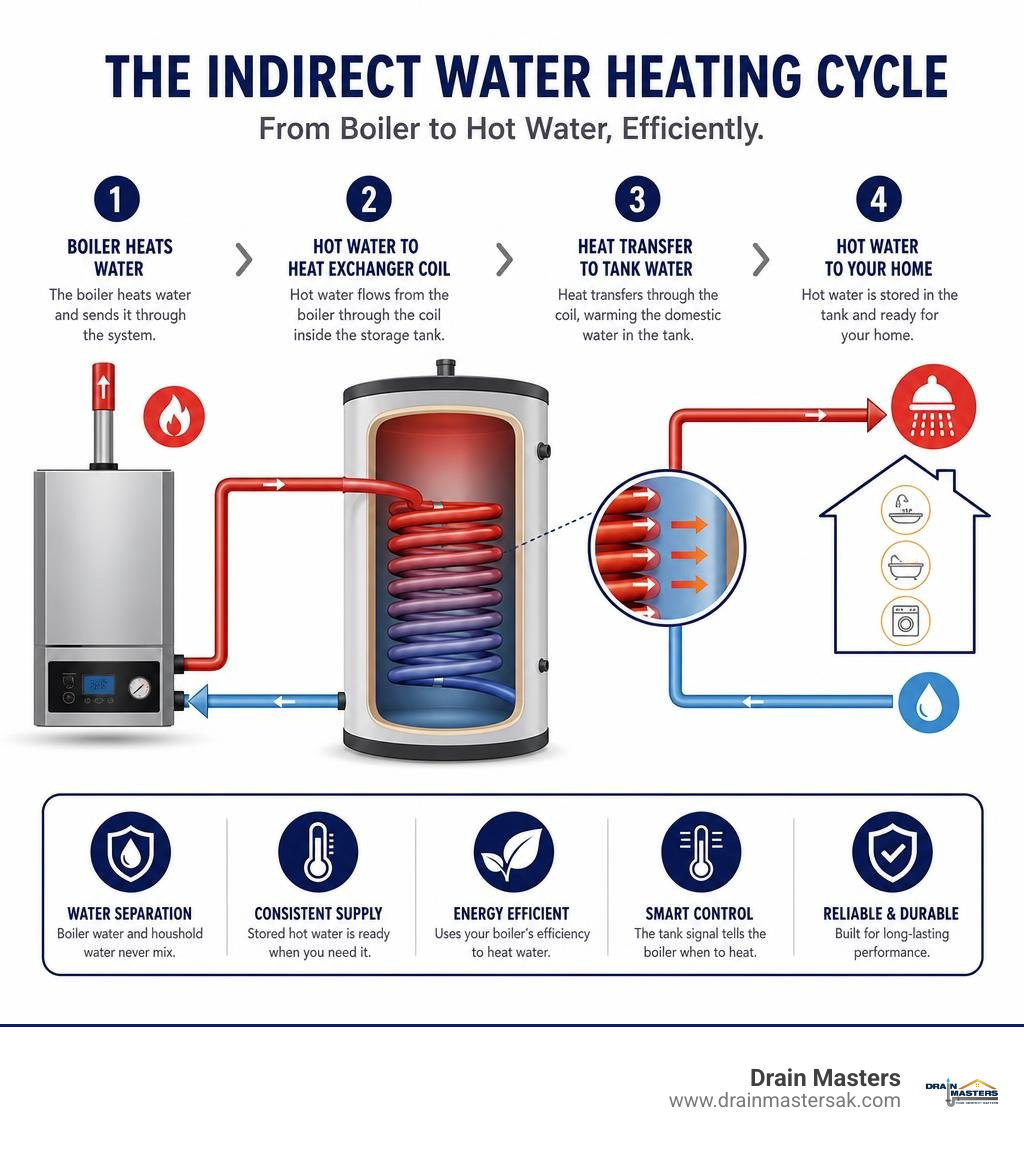
To truly appreciate the engineering behind an indirect water heater, you must first understand that it does not generate its own heat. Unlike a traditional gas or electric water heater, which features a burner at the bottom or electric elements immersed in the water, an indirect unit is essentially a highly insulated storage tank that houses an internal heat exchanger, which is most commonly a coiled pipe made of stainless steel or copper.
When the water temperature inside your storage tank drops below your pre-set limit, an internal thermostat, known as an aquastat, sends an electrical signal to your home’s boiler. The boiler then fires up and pumps hot boiler water through the closed-loop coiled heat exchanger inside the tank. As this heated water circulates through the coil, thermal energy is transferred through the metal walls of the pipe directly into your domestic tap water.
Crucially, the fluids never mix. The water that heats your radiators, baseboards, or radiant floor heating loops stays completely separate from the clean, potable water you use to shower, wash dishes, and run your laundry. This separation is maintained by the solid metal walls of the heat exchanger coil, ensuring your domestic water remains perfectly safe and clean.
Because the boiler serves as the sole heat source, the overall efficiency of the system is tied directly to the efficiency of your boiler. If you own a modern condensing boiler operating at 95% efficiency, your domestic hot water is also being heated at roughly 95% efficiency. For homeowners accustomed to traditional standalone gas tanks that hover around 60% efficiency, this represents a massive upgrade in performance and fuel economy.
Over time, even the most reliable systems can experience wear. If your tank starts showing signs of age, or if you notice a sudden drop in hot water performance, scheduling a timely repairing your water heating system can prevent minor issues from turning into major, expensive failures.
Indirect Systems vs. Tankless Coil Water Heaters
It is easy to confuse an indirect water heater with a tankless coil system, but they operate on entirely different principles and deliver vastly different levels of performance. A tankless coil system is integrated directly into the boiler without any storage tank. When you open a hot water tap, cold domestic water is forced through a coil immersed inside the hot water of the active boiler.
While that sounds convenient, the performance and efficiency differences are stark:
| Feature | Indirect Water Heater | Tankless Coil Water Heater |
|---|---|---|
| Storage Tank | Yes (highly insulated, minimal standby loss) | No (instantaneous, zero storage) |
| Standby Loss | Extremely low (0.3°F to 1.1°F heat loss per hour) | High (requires boiler to stay hot 24/7) |
| Boiler Mode | Cold Start (boiler turns off when not needed) | Warm Start (boiler must maintain high idle temp) |
| Boiler Cycling | Infrequent, long cycles (saves fuel and wear) | High-frequency short cycling (wastes fuel) |
| Chimney Loss | Minimal | Continuous heat loss up the draft hood or chimney |
| Energy Efficiency | Combined rating (CAE) of 0.59 to 0.90 | Low, especially during warmer months |
If you are currently using an older style tankless coil and want to explore modern, energy-saving alternatives, learning about how tankless systems operate can help you weigh your options and choose the best setup for your household.
How the Indirect Water Heater Prevents Boiler Short Cycling
Short cycling is a major enemy of heating equipment longevity. It occurs when a boiler turns on and off rapidly for short periods, which places immense stress on the burner, ignition components, and heat exchanger. A tankless coil forces the boiler to fire up even for small tasks, like washing your hands, rinsing a single coffee mug, or running a brief rinse cycle.
An indirect water heater acts as a giant thermal battery. Because it stores 30, 50, or even 80 gallons of hot water, it easily handles minor hot water demands without needing to fire up the boiler burner. When the boiler does eventually cycle on to reheat the tank, it runs for a sustained, highly efficient period. This longer run-time allows the burner to reach optimal operating temperatures, reducing fuel waste and wear and tear on your system.
Why Tankless Coils Struggle in Modern Homes
Tankless coils require your boiler to maintain a constant internal temperature of around 160°F to 180°F all year long, just in case you turn on a faucet. During the summer, this means your boiler is constantly burning fuel just to stay warm, radiating excess heat into your basement or utility room. This warm start configuration leads to significant chimney and standby heat losses, making it an incredibly inefficient choice for modern, energy-conscious households.
Sizing and Selecting the Right System for Your Home
Choosing the correct size for an indirect water heater involves looking at more than just the physical tank capacity. You must calculate how much hot water your family uses during your busiest hour, which is typically in the morning when multiple showers, laundry, and kitchen appliances are running simultaneously.
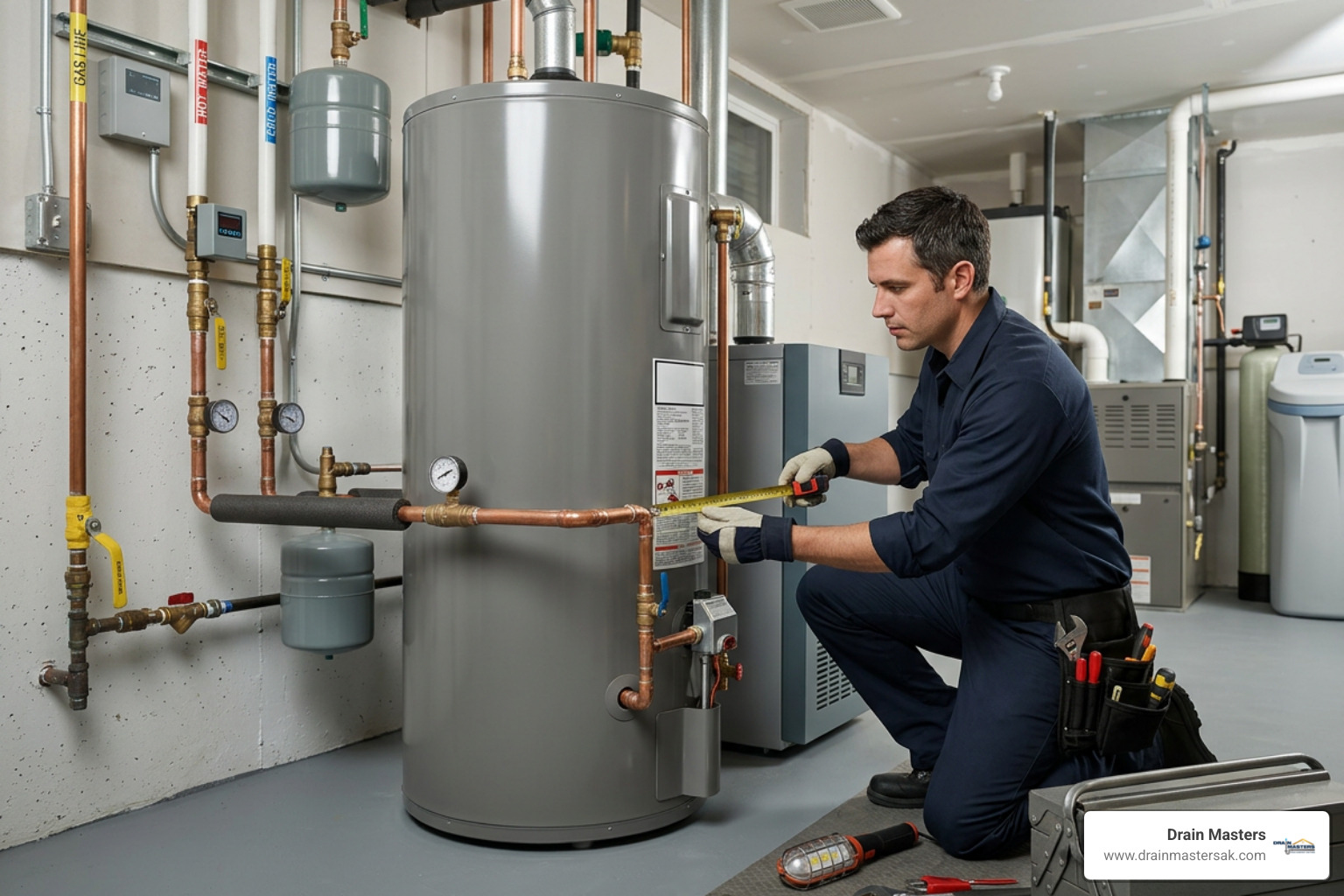
To ensure a reliable installation, professional installers use detailed manufacturer specifications to match the tank’s first-hour rating with your boiler’s BTU output. This ensures that the boiler can supply enough heat to the tank’s coil to keep up with your household’s peak demand.
Calculating Your Household Hot Water Demand
The standard metric for sizing an indirect system is the First-Hour Rating (FHR). This represents the total amount of hot water the system can deliver in a single hour of continuous use, starting with a fully heated tank.
To estimate your peak demand, consider:
- The number of people in your home: Larger families naturally require higher FHR ratings to prevent running out of hot water.
- Fixture count and flow rates: A home with multiple high-flow showerheads, deep soaking tubs, or multiple bathrooms will require a larger tank and a faster recovery rate.
- Appliances: Running a dishwasher and washing machine at the same time as morning showers will rapidly deplete a poorly sized tank.
For example, a 30-gallon indirect tank paired with an appropriately sized boiler can deliver an impressive first-hour rating of over 150 gallons because the boiler can reheat the water almost as fast as you can drain it.
Matching Boiler Output to Your Indirect Water Heater
Your boiler must have enough BTU capacity to satisfy the demands of the indirect tank’s heat exchanger coil. If your boiler is undersized, the water heater will take too long to recover, and you may experience lukewarm water during heavy usage.
To prevent this, we often configure the system with Domestic Hot Water (DHW) priority zoning. This setup momentarily pauses space heating to direct 100% of the boiler’s energy to heating your domestic water whenever the aquastat calls for heat. Since reheating an indirect tank typically takes only 7 to 10 minutes, your home’s air temperature won’t drop noticeably, but you will enjoy an endless supply of hot water.
If you are experiencing issues with water delivery throughout your home, it is also worth investigating if low water pressure throughout your house is affecting your system’s overall performance.
Installation, Maintenance, and Safety Requirements
Because an indirect system involves both your domestic plumbing and your home’s hydronic heating loops, correct installation is vital. According to standard installation guidelines, improper installation can void manufacturer warranties, reduce system efficiency, or create safety hazards.
Essential Maintenance for System Longevity
Indirect water heaters are famous for their longevity, but they are not completely maintenance-free. To keep your system running smoothly for decades, we recommend:
- Annual Tank Flushing: Over time, minerals and sediment settle at the bottom of the tank, which can coat the heat exchanger coil and reduce heat transfer efficiency. Flushing the tank once a year keeps the interior clean.
- Anode Rod Inspection: If your system uses a glass-lined steel tank, it will have a sacrificial anode rod that attracts corrosive elements in the water. We recommend checking this rod annually and replacing it when it is heavily depleted. All-stainless steel tanks do not require anode rods, which simplifies maintenance.
- Water Quality Monitoring: For optimal performance and to protect your warranty, keep your water’s pH level between 6 and 8, and ensure dissolved chlorides remain below 100 parts per million (ppm).
If you notice mineral buildup in your fixtures or suspect issues with your incoming supply lines, scheduling a professional fixing your main water line can protect your heating investments.
Crucial Safety Features to Prevent Scalding and Leaks
Because boilers operate at high temperatures, often 180°F or higher, the water inside an indirect tank can easily reach dangerous levels if not properly controlled.
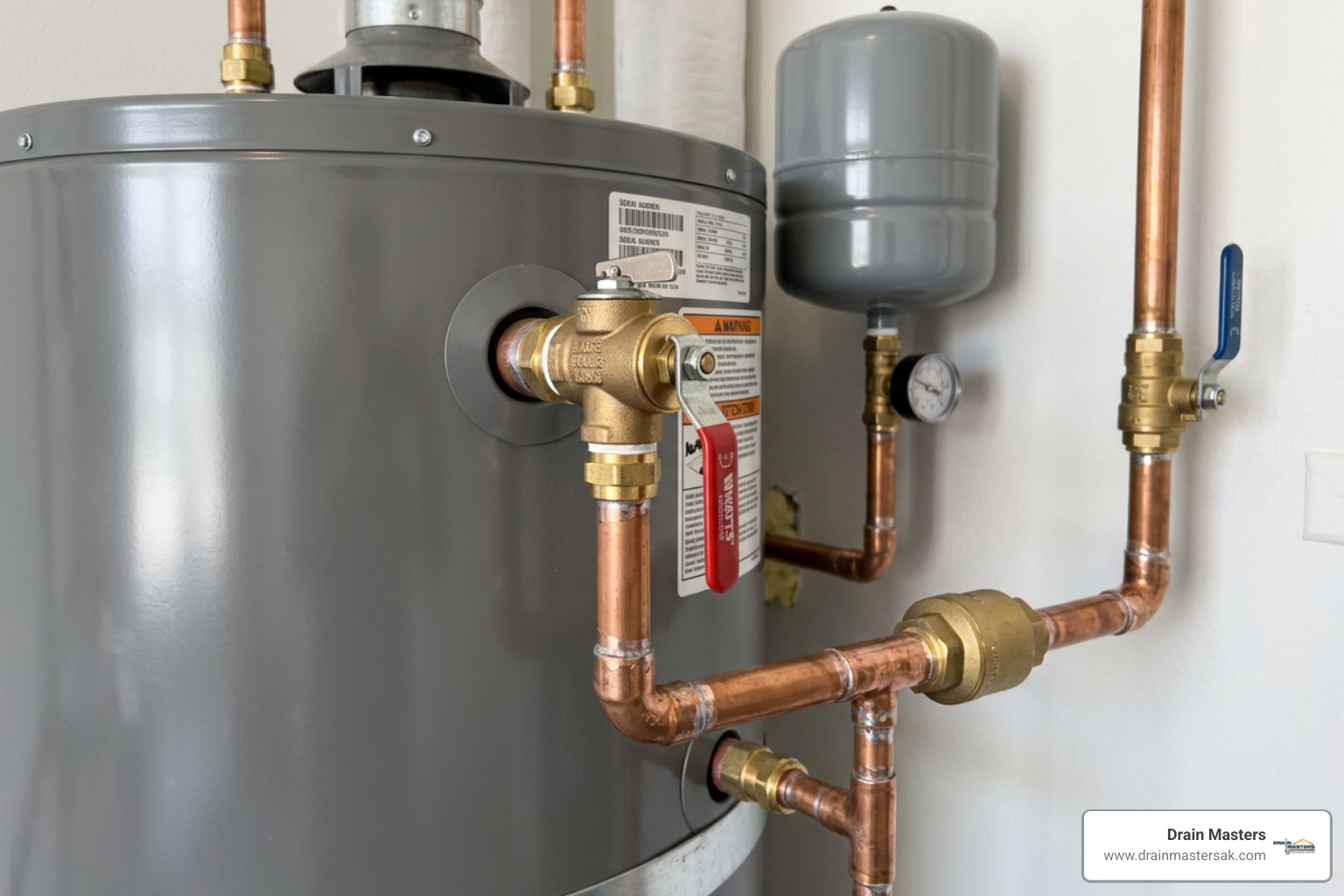
- Thermostatic Mixing Valve (Anti-Scald): We install an ASSE 1017 mixing valve on the hot water outlet. This valve blends cold water with the super-heated water leaving the tank, ensuring the water arriving at your faucets is kept at a safe 120°F.
- Temperature and Pressure (T&P) Relief Valve: This mechanical safety valve automatically opens to release water if the tank’s internal pressure exceeds 150 PSI or if the temperature climbs above 210°F.
- Thermal Expansion Tank: In closed plumbing systems with backflow preventers, heating water causes it to expand, raising system pressure. A dedicated potable expansion tank absorbs this extra volume, protecting your pipes and valves from stress.
To keep your home safe from water damage, keep an eye out for the common signs that point to a hidden leak around your utility area.
Frequently Asked Questions About Indirect Water Heaters
What is an indirect water heater?
An indirect water heater is a highly insulated storage tank that contains an internal heat exchanger coil. It does not have its own burner or heating elements; instead, it partners with your home’s boiler to heat domestic tap water.
How long does an indirect water heater last?
Because they do not have direct burners or electric elements causing localized heat stress, indirect water heaters are incredibly durable. Quality stainless steel models can easily last 20 to 30 years, which is roughly double the lifespan of traditional direct-fired gas or electric water heaters.
Is an indirect water heater more efficient than a tankless water heater?
Yes, in many setups. While a tankless water heater is highly efficient because it eliminates standby loss, its efficiency is limited by its internal burner. An indirect system adopts the efficiency of your boiler. If you have a high-efficiency condensing boiler, your domestic hot water is heated at that same high rate, often making it the most cost-effective option.
Can I use an indirect water heater with a heat pump?
Yes, but it requires careful system design. Traditional heat pumps operate at lower output temperatures than boilers, which means you typically need a specialized indirect tank with an extra-large heat exchanger coil or a dual-coil design to ensure rapid heat transfer.
What is the difference between single-coil and dual-coil designs?
A single-coil tank features one heat exchanger, connecting directly to your primary boiler. A dual-coil tank features two separate heat exchangers, allowing you to connect two different heat sources, such as a solar thermal array and a backup boiler, to heat your domestic water without mixing the fluids.
Does an indirect water heater run in the summer?
Yes. During the summer, your boiler will run occasionally to reheat the storage tank when you use hot water. However, because modern boilers can operate in cold start mode, the boiler only fires up when the tank calls for heat and shuts down completely when finished, minimizing summer fuel waste.
What temperature should an indirect water heater be set to?
We recommend setting the tank’s aquastat to 140°F to prevent the growth of harmful bacteria like Legionella. To prevent accidental scalding at the tap, a thermostatic mixing valve must be installed to bring the water temperature down to a safe 120°F before it reaches your fixtures.
How often should the anode rod be replaced?
If your indirect tank is glass-lined, the sacrificial anode rod should be inspected annually and replaced every 2 to 5 years, depending on your local water hardness. All-stainless steel tanks do not use anode rods, eliminating this maintenance step entirely.
What are the disadvantages of an indirect water heater?
The primary drawbacks include a higher initial upfront cost compared to standard standalone tanks and the space required to install both a boiler and a storage tank. Additionally, because the system relies on your boiler, you will lose hot water if your boiler encounters a mechanical issue.
How much does it cost to install an indirect water heater?
The installation cost for an indirect water heater can vary depending on several factors, including the tank material, the complexity of your existing boiler piping, and whether you need to add new zoning controls or circulator pumps. However, the long lifespan and low operating costs typically provide a strong return on investment.
Conclusion: Partnering with Professionals for Your Home Heating Needs
Investing in an indirect water heater is an excellent way to streamline your home’s energy use, reduce your monthly utility bills, and ensure your family never runs out of hot water during those cold Anchorage winters. However, integrating a storage tank with your existing boiler requires precise sizing, proper hydronic piping, and professional calibration of zoning controls.
At Drain Masters, we bring over two decades of local experience to every job. As a family-owned plumbing company in Anchorage, AK, we take pride in offering upfront pricing, using advanced diagnostic tools, and completing over 4,000 jobs annually with the utmost professionalism. Whether you are looking to upgrade your current system, schedule a routine maintenance flush, or need emergency assistance, our experienced team is here to help.
Contact Drain Masters today to schedule your consultation for premier water heater services in Anchorage, AK and take the first step toward a warmer, more efficient home.