
What Is the Price to Have Septic Pumped in 2026?
The price to have your septic pumped depends on tank size, access, location, and whether the service is routine or urgent. For a standard residential tank, routine pumping is usually a manageable maintenance expense, while emergency calls or difficult access can cost noticeably more.
Here is a quick reference based on tank size:
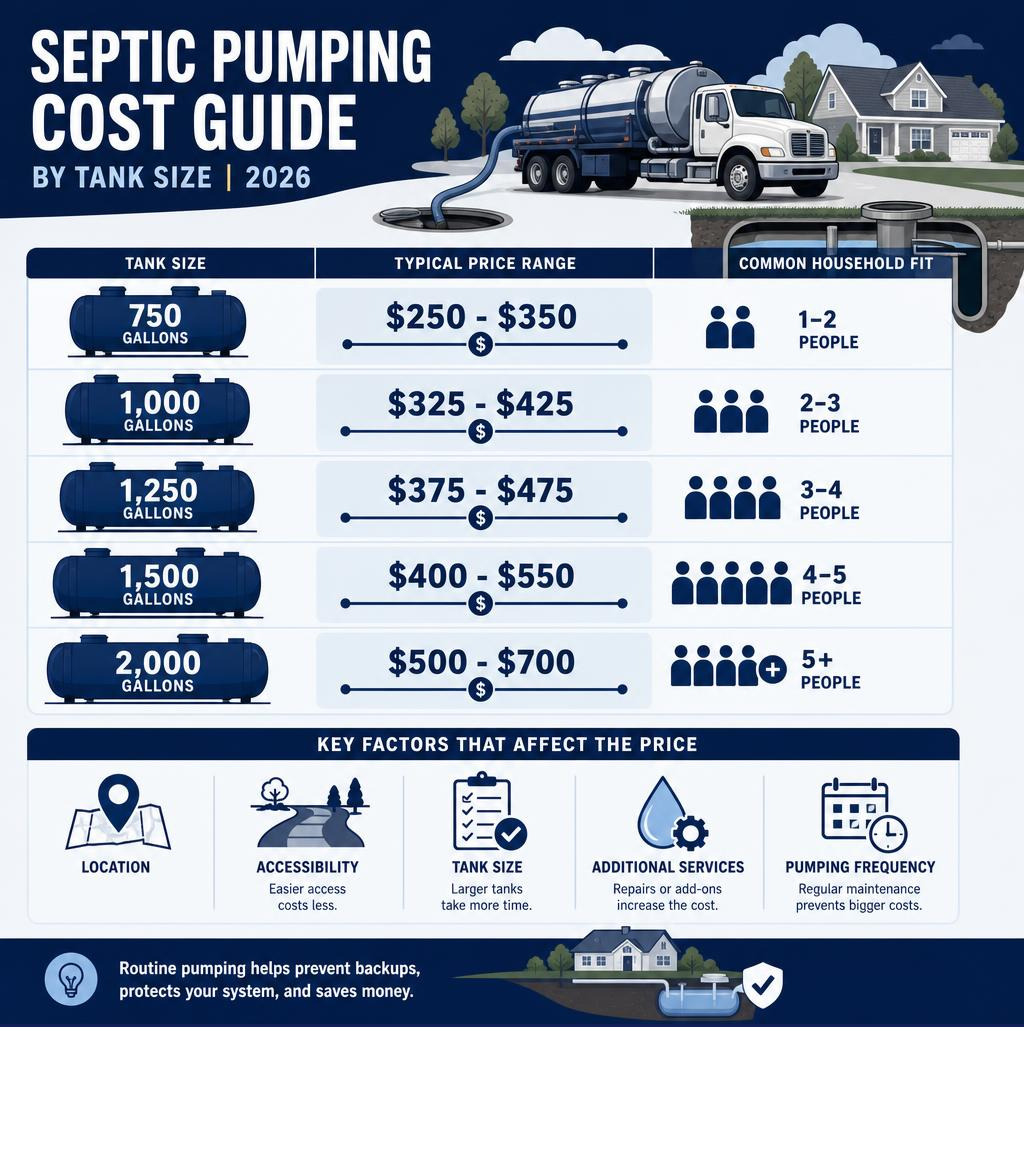
| Tank Size | Typical Cost Level | Common Household Fit |
|---|---|---|
| 750 gallons | Lower | 1-2 people |
| 1,000 gallons | Standard | 2-3 people |
| 1,250 gallons | Standard to higher | 3-4 people |
| 1,500 gallons | Higher | 4-5 people |
| 2,000 gallons | Highest for common residential tanks | 5+ people |
Pricing can vary depending on several factors, including your location, tank accessibility, and whether any additional services are needed.
If you have a septic system, staying on top of routine pumping is one of the most important things you can do for your home. Skip it long enough, and what starts as a simple maintenance task can turn into a costly emergency. A homeowner who pumps on a regular schedule over time is usually protecting the system from the much larger expense and disruption of drainfield failure.
Most households need pumping every three to five years, but the right schedule depends on how many people live in your home, how much water you use, and the size of your tank. Understanding what drives the cost upfront helps you budget confidently and avoid surprise fees.
I’m Debra Blouin, General Manager of Drain Masters, and with over two decades of hands-on experience in the plumbing and sewer industry, I’ve helped countless Anchorage, AK homeowners understand the real price to have their septic pumped and avoid the costly mistakes that come from waiting too long. In the sections below, I’ll walk you through everything you need to know to make a smart, informed decision.
The Real Price to Have Septic Pumped in 2026
The real price to have septic pumped depends on more than the size printed on your tank records. In 2026, national cost guides generally place routine residential pumping in a moderate maintenance-cost category for standard tanks, with emergency or complicated jobs costing more. One national home-maintenance guide explains common septic pumping cost factors, including tank size, access, and service needs: review this septic cost overview.
For homeowners in Anchorage, AK, the biggest thing to remember is that scheduled service is almost always easier to budget for than emergency service. When a tank is accessible, records are available, and the job is planned before there is sewage in the tub, everyone has a better day. That includes your plumber.
Average Price to Have Septic Pumped for a Standard Residential Tank
For a standard residential tank, most published estimates describe routine pumping as a common maintenance expense rather than a major repair. A 1,000 to 1,500 gallon tank is common for many homes, and a standard service often takes about 30 to 60 minutes once the crew has access to the tank.
That time can change if the lid is buried, the tank is unusually deep, the hose run is long, or the tank has not been pumped in many years. Pumping is not just “sucking out water.” A proper pump-out removes liquid, sludge, and scum so solids do not escape into the drainfield.
Price to Have Septic Pumped by Tank Size
Tank size matters because larger tanks hold more wastewater and solids. More volume can mean more time, more disposal weight, and sometimes a larger truck capacity requirement.
| Tank Size | Relative Cost Level | Typical Household Fit |
|---|---|---|
| 750 gallons | Lower | 1-2 people, small homes, cabins |
| 1,000 gallons | Standard | 2-3 people, many standard homes |
| 1,250 gallons | Standard to higher | 3-4 people |
| 1,500 gallons | Higher | 4-5 people |
| 1,750 gallons | Higher | Larger homes or higher use |
| 2,000 gallons | Highest common residential level | 5+ people or larger systems |
These are planning categories, not guaranteed quotes. In Anchorage, AK, local access, weather, tank condition, and travel time can all affect the final estimate.
When a Low Quote Becomes an Expensive Job
A very low quote can look great until the fine print shows up wearing muddy boots. Ask what is included before you schedule.
Common add-ons or surprises include:
- Partial pumping instead of a full pump-out
- Buried lids that require digging
- Tank locating fees
- Extra hose distance
- Deep access points
- Disposal fees
- Heavy sludge or hardened solids
- After-hours or weekend service
- Frozen ground or snow-covered access
- Extra time needed to expose unsafe or damaged lids
The lowest number is not always the best value. A fair quote should explain what the service includes, what could change the price, and how the company handles surprises.
How Tank Size and Household Size Affect Pumping Frequency
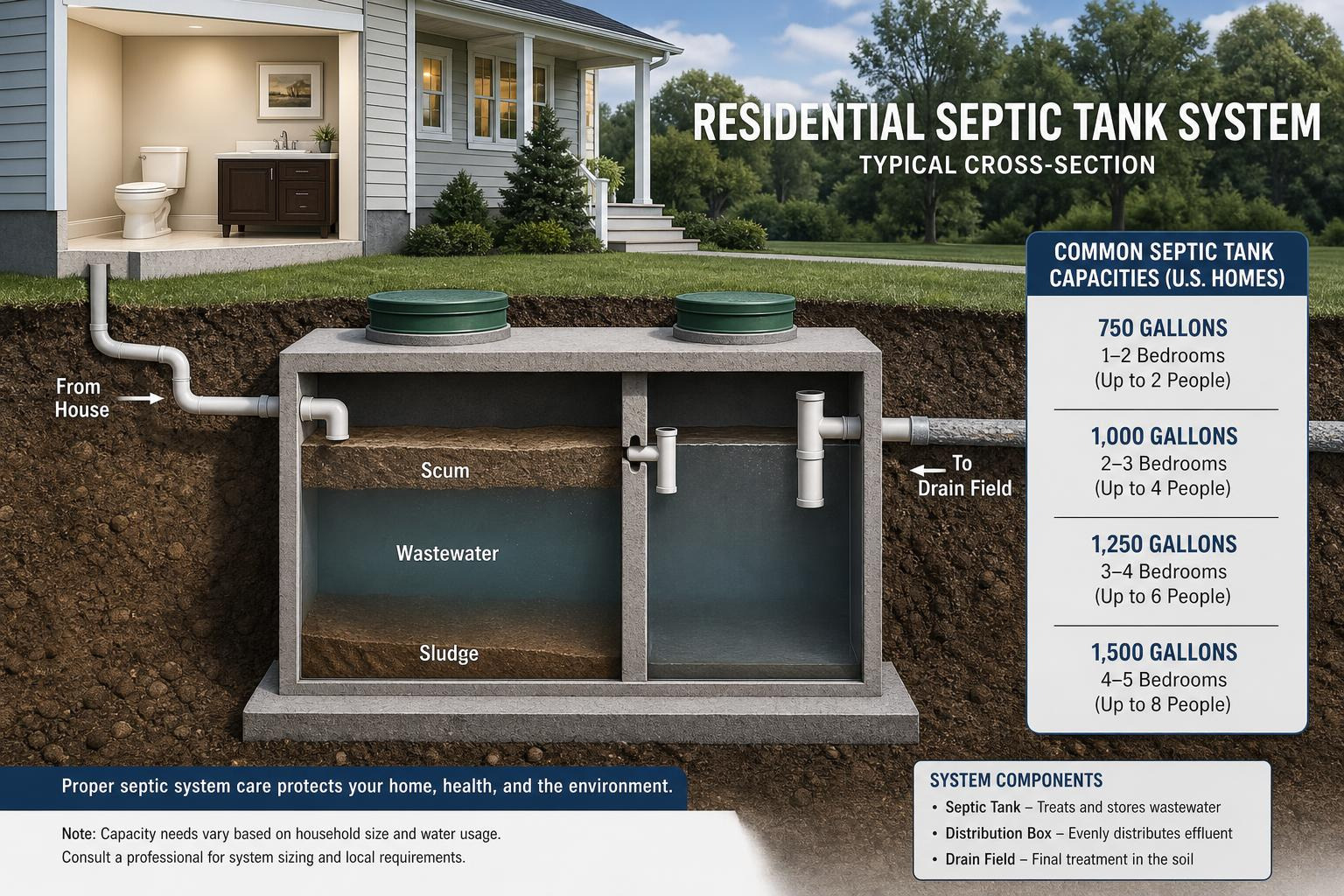
Most homes need septic pumping every three to five years, but that is a guideline, not a magic law of plumbing nature. The right schedule depends on tank capacity, household size, water use, and how much solid waste enters the system.
The Environmental Protection Agency recommends regular septic care and inspections to prevent system failure and protect groundwater. A consumer cost guide also explains how size, usage, and pumping frequency affect overall maintenance needs: see this septic system care guidance.
Pumping Schedule by Tank Capacity and Number of People
Here is a practical way to think about timing:
| Household Size | 750 Gallons | 1,000 Gallons | 1,250 Gallons | 1,500 Gallons |
|---|---|---|---|---|
| 1-2 people | About 3-5 years | About 4-5 years | About 5 years | About 5+ years |
| 3 people | About 2-3 years | About 3-4 years | About 4 years | About 4-5 years |
| 4 people | About 1-2 years | About 3 years | About 3-4 years | About 4 years |
| 5+ people | Often yearly checks | About 2 years | About 2-3 years | About 3 years |
Annual checks are smart, especially if you do not know the last pumping date. A technician can measure sludge and scum levels and help decide whether pumping is needed now or can safely wait.
Why Usage Can Matter More Than Tank Size
Two homes can have the same tank size and very different pumping schedules. Usage is the wild card.
Your tank may fill with solids faster if you have:
- Large laundry days instead of spread-out loads
- Long showers and high daily water use
- Frequent guests
- A rental or short-term occupancy pattern
- A home business that increases water use
- Heavy toilet paper use
- A garbage disposal
- Grease, fats, or oils going down the drain
- “Flushable” wipes, which are about as flushable as a raccoon in a rain gutter
Garbage disposals can add a lot of extra solids. Grease can cool and harden. Wipes do not break down like toilet paper. All of these make the tank work harder.
When to Pump Sooner Than the Calendar Says
Do not wait for your calendar reminder if your home is showing warning signs.
Call for service if you notice:
- Slow drains throughout the home
- Gurgling toilets or pipes
- Sewage odors indoors or outside
- Wet or spongy areas near the tank or drainfield
- Unusually lush green grass over the drainfield
- Toilets that struggle to flush
- Sewage backup in tubs, showers, or floor drains
- Standing water near septic components
- Multiple drains acting up at the same time
A single slow sink may be a local clog. Whole-house drainage trouble can point to the septic tank, main line, or sewer line. Either way, it deserves attention before it becomes a mop-and-regret situation.
What Changes the Price Besides Tank Size?
Tank size is only one part of the estimate. The real cost can shift because of access, weather, distance, disposal requirements, system condition, and whether the visit is routine or urgent.
Accessibility, Digging, and Tank Location

Easy access helps control cost. Hard access adds time.
Common access issues include:
- Lids buried under soil, snow, landscaping, or decks
- No risers installed
- Concrete or heavy covers
- Long driveways
- Narrow access for service trucks
- Long hose runs
- Tank lids that are damaged or unsafe
- Unknown tank location
Installing risers can make future service easier because the lid is brought closer to the surface. It can also reduce digging each time the tank is pumped.
Seasonality, Weather, and Cold-Climate Challenges
In Anchorage, AK, weather matters. Frozen ground, snow cover, ice, and limited winter access can make septic work more complicated. Spring can also bring high demand and wet ground. Heavy rain or a high water table can create its own problems, so pumping immediately after major saturation may not be ideal in some situations.
If possible, plan routine service before winter conditions make access difficult. Fall scheduling is often practical because it helps homeowners prepare before freezing weather arrives.
Regional and State Cost Differences
Septic pumping costs vary across the country because of labor rates, disposal rules, distance to approved treatment facilities, climate, and local competition. Alaska often has higher service-cost pressures than many lower-48 areas because of travel, weather, access, and operating conditions.
For Anchorage, AK homeowners, the better question is not “What does someone pay somewhere else?” It is “What does my tank need, how accessible is it, and what is included in the quote?”
That is why a local estimate matters.
Local Sewer and Drain Issues That Can Mimic Septic Problems
Not every backup means your septic tank is full. Main line clogs, root intrusion, damaged pipes, and drain blockages can look like septic trouble.
If you have recurring backups or multiple fixtures draining poorly, we may recommend diagnosis before assuming pumping will solve everything. Our team can help sort out a sewer line issue or clear the drain instead when the issue is in the line instead of the tank.
Ongoing Septic Maintenance Costs, Warning Signs, and Ways to Save
Septic pumping is only one part of system care. Inspections, filter cleaning, baffle checks, drain cleaning, pipe repairs, and drainfield protection all matter. The goal is simple: keep solids where they belong and keep wastewater moving through the system safely.
Common Add-On and Long-Term Septic Costs
Depending on the system, a homeowner may eventually need:
- Septic inspection
- Effluent filter cleaning or replacement
- Baffle repair
- Clog removal
- Hydro-jetting for certain line issues
- Yard restoration after excavation
- Drainfield evaluation
- Septic tank repair
- Full system replacement in severe cases
- Camera inspection for lines connected to the system
A camera does not inspect the inside of a full septic tank the same way pumping does, but it can be extremely helpful for finding pipe problems, roots, bellies, cracks, or blockages. If symptoms point toward the line, we can use a sewer camera to investigate before recommending repair.
What Happens If You Delay Pumping?
When pumping is delayed, sludge and scum layers grow. Eventually, solids can move toward the outlet baffle and into the drainfield. That is where the expensive problems begin.
Delaying septic pumping can lead to:
- Outlet blockages
- Sewage backups
- Strong odors
- Slow drains
- Drainfield clogging
- Groundwater contamination risk
- Emergency service calls
- Drainfield failure
- Full system replacement risk
Routine pumping is much less painful than drainfield failure. Think of it as flossing for your property. Nobody throws a parade for it, but ignoring it has consequences.
How to Save Money Without Neglecting the System
You can reduce septic expenses without gambling with your drainfield.
Smart ways to save include:
- Keep a regular pumping schedule
- Install risers for easier access
- Mark and clear tank lids before service
- Keep vehicles off the drainfield
- Spread laundry throughout the week
- Fix running toilets and leaky faucets
- Avoid flushing wipes, hygiene products, and paper towels
- Keep grease out of drains
- Limit garbage disposal use
- Keep service records
- Schedule before an emergency
- Ask what is included in your quote
Good whole-home habits matter too. We can help you keep your plumbing on track and catch issues that strain drains and wastewater systems before they become larger problems.
When a Camera Inspection or Drain Repair May Be Needed
If pumping does not solve the problem, or if backups return quickly, the issue may be in the piping.
A camera inspection may help when you have:
- Recurring backups
- Slow drains after pumping
- Suspected root intrusion
- Cracked or collapsed pipe concerns
- A bellied or sagging line
- Real estate inspection needs
- Unknown pipe routing
- Repeated clogs in the same area
What a Professional Septic Pumping Service Includes and How to Choose a Fair Quote
A professional septic service is more than a truck and a hose. A proper job involves safety procedures, specialized vacuum equipment, licensed waste handling, and a trained eye for problems.
What Should Be Included in a Proper Pump-Out
A quality pump-out typically includes:
- Locating the tank if needed
- Exposing and removing the lid safely
- Pumping liquid, sludge, and scum
- Agitating or backflushing to remove solids
- Checking baffles where accessible
- Checking or cleaning the effluent filter if present
- Looking for cracks, corrosion, or visible damage
- Noting sludge and scum levels
- Hauling waste to an approved facility
- Providing a service record or invoice
Ask whether filter cleaning, baffle checks, and disposal are included. These details can make one quote very different from another.
Why DIY Septic Pumping Is Unsafe and Usually Illegal
DIY septic pumping is not a weekend project. Septic tanks can contain methane, hydrogen sulfide, harmful bacteria, and low-oxygen conditions. The tank is a confined-space hazard, and the waste must be transported and disposed of legally.
Trying to pump your own tank can create:
- Serious injury or death from toxic gases
- Contamination exposure
- Environmental violations
- Illegal disposal problems
- Damage to the tank or lines
- Missed defects that a pro may catch
If you suspect your tank is full or backing up, contact a professional. Septic systems are not the place to learn by trial and error.
Questions to Ask Before Hiring a Septic Service Provider
Before you schedule, ask:
- Are you licensed and insured for this work?
- Is disposal included in the quote?
- Is this a full pump-out or partial pumping?
- Are digging or locating fees separate?
- Do you inspect baffles and filters?
- Do you provide a written service record?
- Are there extra charges for long hose runs?
- Do emergency, weekend, or after-hours rates differ?
- What happens if the lid is buried or damaged?
- Can you explain what would change the estimate?
- Do you have experience with Anchorage, AK conditions?
A reputable provider should answer clearly. If the answer to every question is “probably,” keep asking.
How to Tell Whether You Need Septic Pumping, Sewer Cleaning, or a Scope
Here is a simple way to triage symptoms:
- One slow drain: likely a local clog
- Several slow drains: possible main line or septic issue
- Gurgling toilets plus odors: possible septic or venting issue
- Sewage backup at low fixtures: urgent main line or septic concern
- Wet drainfield: possible septic overload or drainfield issue
- Recurring clog after cleaning: camera inspection may be needed
If the problem may be in the line, it can help to review what can affect sewer scope pricing before deciding on the next step.
Frequently Asked Questions About the Price to Have Septic Pumped
1. What is the average price to have septic pumped in 2026?
The average price to have a septic tank pumped in 2026 is usually treated as a routine home maintenance cost for a standard residential tank, not a major repair. Your actual cost can vary based on tank size, access, sludge buildup, location, and whether the service is scheduled or urgent.
2. How much does it cost to pump a 1,000-gallon septic tank?
A 1,000-gallon tank is one of the most common residential sizes. The cost usually depends on access, condition, disposal requirements, and how long the tank has gone without service. In Anchorage, AK, weather, disposal logistics, and tank accessibility can affect the final quote.
3. How much does it cost to pump a 1,500-gallon septic tank?
A 1,500-gallon tank usually costs more to pump than a 1,000-gallon tank because it holds more volume and may take longer to service. Heavy sludge, buried lids, or difficult access can also increase the job complexity.
4. How often should a septic tank be pumped?
Most households should plan on pumping every three to five years. Smaller tanks, larger families, heavy water use, garbage disposal use, or frequent guests can shorten that schedule. Annual checks are helpful if you do not know the last service date.
5. What are the signs that a septic tank needs pumping?
Common signs include slow drains, gurgling pipes, sewage odors, wet spots near the tank or drainfield, unusually green grass over the drainfield, toilet flushing problems, and sewage backup. Whole-house symptoms should be handled quickly.
6. Why does septic pumping cost more in some states?
Costs vary because of labor rates, travel distance, disposal fees, regulations, weather, competition, and access challenges. In cold-climate areas like Anchorage, AK, frozen ground, snow, and seasonal access can also affect service complexity.
7. Is emergency septic pumping more expensive?
Yes, emergency septic pumping is usually more expensive than scheduled service. After-hours, weekend, holiday, or urgent backup calls often come with premium pricing because crews must respond quickly and may work in more difficult conditions.
8. Does septic pumping include an inspection?
Many professional pump-outs include a basic visual check of accessible components, such as baffles, filters, sludge levels, and visible tank condition. A full septic inspection is more detailed and may be a separate service, especially for real estate or troubleshooting needs.
9. Can I pump my own septic tank?
No, homeowners should not pump their own septic tanks. Septic pumping requires specialized vacuum equipment, legal waste disposal, safety training, and knowledge of confined-space hazards. Toxic gases and contamination risks make DIY pumping unsafe.
10. How can I get a fair septic pumping quote?
Ask for a written estimate that explains what is included. Confirm whether disposal, filter cleaning, baffle checks, digging, locating, travel, and emergency rates are included or separate. Choose a licensed, insured provider with local experience and clear communication.
Conclusion
The real price to have septic pumped is not just a number on a quote. It is the cost of protecting your tank, drainfield, yard, plumbing, and peace of mind. A routine schedule, clear access, smart water habits, and early attention to warning signs can help you avoid messy emergencies and expensive system failures.
For Anchorage, AK homeowners, local experience matters. Weather, access, soil conditions, and sewer or drain issues can all affect what your system needs. With more than two decades of experience, upfront communication, advanced tools, and thousands of jobs handled each year, our family-owned team is here to help you make the right call.
If your drains are slowing down, your septic schedule is overdue, or you simply want a professional opinion, contact Drain Masters to schedule septic pump support.