

What is a Septic Drain Field and How Does It Work?
A septic drain field is a subsurface wastewater disposal facility designed to remove contaminants from the liquid emerging from your septic tank. Its primary function is to safely disperse partially treated wastewater back into the environment without contaminating local groundwater, surface water, or water wells.
The process begins inside the home. All wastewater drains into the septic tank, where primary treatment occurs. Inside the tank, heavy solids settle to the bottom as sludge, while lighter greases and oils float to the top as scum. Anaerobic bacteria break down organic solids over time. The relatively clear liquid in the middle, known as effluent, then exits the tank and flows toward the drain field for final purification.
The Biological Ecosystem of a Septic Drain Field
The true treatment work happens biologically. As effluent trickles out of the distribution pipes and into the surrounding soil, it encounters a complex microbial ecosystem.
At the interface where the gravel aggregate meets the natural soil, a dark, gelatinous layer of organic material called a biomat naturally forms. This biomat acts as a physical and biological filter, slowing the flow of water and feeding on organic compounds suspended in the effluent.
Once the water passes through the biomat, it enters the unsaturated soil zone where aerobic, oxygen-breathing microbes take over. These microbes help destroy disease-causing pathogens, bacteria, and viruses. Soil particles also filter out remaining micro-particles, while chemical reactions bind nutrients like phosphorus to the soil.
Some nutrients, such as nitrates, are highly mobile and do not easily bind to soil. This is why maintaining a safe vertical distance between the bottom of your drain field trenches and the local water table is critical to preventing environmental contamination.
Key Components of a Traditional Leach Field
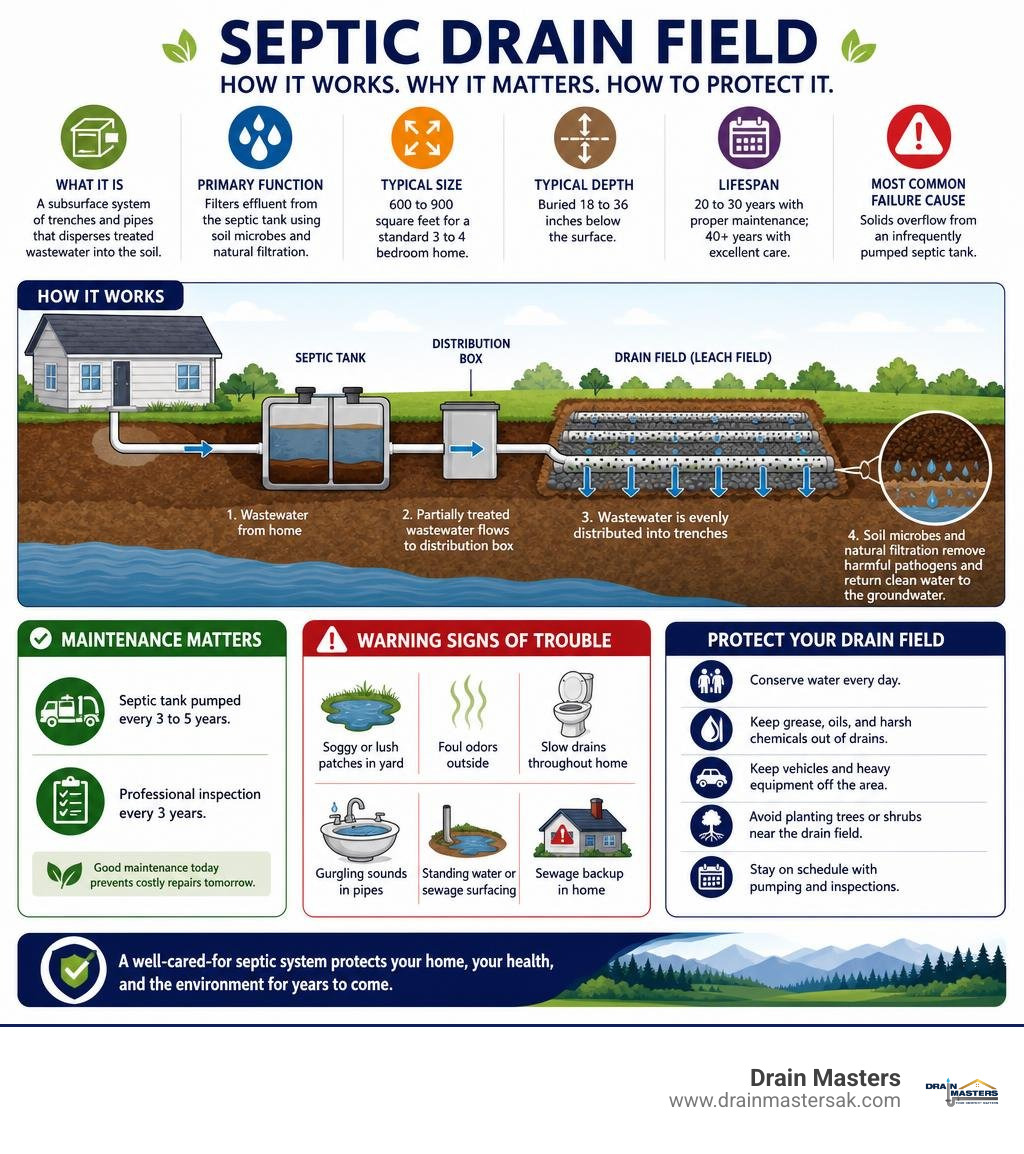
A conventional gravity-fed leach field relies on several key components working together:
- The septic tank outlet baffle and effluent filter: Located at the exit of the septic tank, the baffle prevents scum and floating solids from escaping. Modern systems include an effluent filter inside this baffle to catch fine suspended solids before they can travel downstream.
- The distribution box: This concrete or heavy-duty plastic box receives effluent from the septic tank and distributes it evenly among the lateral pipes of the drain field. If the box is not level, one trench can receive too much water, leading to localized soil saturation and premature failure.
- Perforated lateral pipes: Typically made of 4-inch PVC, these pipes have pre-drilled holes designed to face downward. They distribute effluent along the length of the trenches.
- Filter media: Washed gravel or crushed stone surrounds the perforated pipes. This media supports the trench, helps prevent soil from collapsing into the pipe, and provides surface area for biomat growth.
- Geotextile fabric: A layer of permeable geotextile fabric is placed over the gravel bed before backfilling. This fabric allows air and moisture to pass through but helps prevent fine sand and dirt from migrating downward and clogging the clean stone.
- Soil: The native soil surrounding and beneath the trenches is the final and most important component of the treatment process.
For a clearer look at the treatment process, Drain Masters can use sewer camera inspection technology when drain field symptoms overlap with line or sewer concerns.
Designing and Sizing a Septic Drain Field
Designing a soil absorption system is a regulated process that combines soil science, civil engineering, and local environmental health codes.
Soil Percolation and Site Conditions
Before any system design can be approved, a professional must conduct a soil evaluation and a soil percolation test. The perc test measures how quickly water drains through saturated soil, expressed in minutes per inch.
| Rate | Suitability & Action Required |
|---|---|
| Less than 1 minute per inch | Too fast for untreated dispersal and may require a suitable liner or alternative design. |
| 1 to 5 minutes per inch | Strong drainage for many standard trench designs. |
| 5 to 60 minutes per inch | Common acceptable range for conventional systems, subject to local rules. |
| Greater than 60 minutes per inch | Too slow for many standard fields and may require an alternative system. |
If the soil drains too quickly, wastewater may reach groundwater before microbes can destroy pathogens. If the soil drains too slowly, water can back up, causing surface ponding and plumbing failures.
Another critical factor is the limiting zone. This refers to the depth at which bedrock, seasonal high water tables, or restrictive clay layers limit downward water movement. Regulations often dictate a minimum separation between the bottom of the drain field and the limiting zone to ensure adequate filtration.
In Anchorage, AK, Drain Masters also works with northern soil conditions, such as glacial till, gravelly soils, and silty clay, alongside extreme winter temperatures. That makes depth, insulation, drainage, and local code requirements especially important.
Sizing Calculations and Trench Specifications
The physical size of a leach field is determined by the daily volume of wastewater the home produces and the soil’s absorption capacity.
To estimate wastewater volume, regulatory bodies often look at the number of bedrooms in a home rather than only the current number of occupants. The final design depends on local code, soil results, and professional calculations.
If a home is built on moderately draining soil, the installer may need multiple parallel trenches to spread wastewater evenly across enough absorption area. The goal is steady distribution rather than overloading one part of the yard.
Standard trench specifications usually account for:
- Width: Trench width must match the approved design.
- Depth: Trench depth must support treatment, drainage, and freeze protection.
- Slope: Gravity-fed pipes must be sloped gradually so water does not rush to one end of the trench.
- Separation: Adjacent trenches need enough undisturbed soil between them to prevent lateral water overloading.
Routine septic pumping helps protect the field by reducing the chance that solids will leave the tank and clog the absorption area.
Different Types of Septic Drain Field Systems
Depending on your property’s soil profile, space availability, and local regulations, a conventional system may not be the best fit. Several alternative designs may be considered after professional evaluation.
Conventional Gravel and Stone Systems
This is the traditional design described above. It has been the industry standard for decades because it is simple and reliable in suitable soil conditions. Conventional systems require a large physical footprint and a significant amount of clean aggregate, which can affect installation logistics.
Chamber Systems and Gravelless Alternatives
Chamber systems replace gravel trenches with interlocking, open-bottom plastic arches.
Because these chambers are hollow, they provide more storage volume for effluent surges. The slotted sidewalls allow water to filter directly into the soil.
Chamber systems offer several distinct advantages:
- Lower installation disruption: Lightweight chambers can reduce the amount of heavy gravel-hauling equipment needed on the property.
- Flexible layout options: Some sites can use chamber systems where access or yard conditions make gravel delivery difficult.
- Design efficiency: Local health departments may allow design adjustments when approved chamber systems meet code requirements.
For homeowners who want to understand the broader system options, the EPA overview of types of septic systems explains how different designs treat and disperse wastewater.
Advanced Dispersal: Mound and Drip Distribution Systems
When native soil is too shallow, rocky, or clay-heavy, advanced dispersal systems may be required.
- Mound systems: If the seasonal water table is too high or bedrock is too shallow, installers may build an elevated sand mound above the natural ground level. Effluent is pumped from a dosing chamber to the mound, where it filters through a constructed sand bed before infiltrating the native soil below.
- Drip distribution systems: These systems use flexible, narrow drip laterals installed near the upper soil zone. A timed-dose pump sends small, controlled amounts of effluent through the tubing. Drip systems can work well for small, wooded, or sloped lots, but they require electrical power and consistent mechanical maintenance.
If you are comparing options, the Drain Masters sewer repair team can help diagnose whether the issue is in the field, tank, or another part of the system.
Signs of a Failing Septic Drain Field
A failing leach field is a serious environmental and health hazard. When a drain field fails, untreated sewage can back up into your home or pool on the surface of your yard, exposing your family and pets to dangerous pathogens.
Warning Signs in Your Yard and Home
Keep a close eye out for these common indicators of system distress:
- Wet, spongy, or soggy ground: Patches of standing water or muddy soil over your drain field trenches during dry weather can mean the soil has lost its ability to absorb water.
- Lush, extra-green grass: Grass over your leach field that is noticeably greener, taller, and faster-growing than the rest of your yard can indicate that effluent is rising to the surface.
- Foul sewage odors: Persistent, sulfur-like odors around your yard or near your septic tank are a clear sign that sewage may be escaping the system.
- Slow drains throughout the home: If every drain, toilet, and shower in your home is sluggish, the entire system may be backed up.
- Gurgling sounds: If your pipes gurgle or bubble when you flush a toilet or run the washing machine, air may be trapped in the plumbing lines due to a backed-up septic system.
- Sewage backups: The ultimate stage of failure occurs when dark, foul-smelling water backs up into low household drains, such as basement showers or washing machine connections.
If you notice these warning signs, scheduling a detailed inspection is the fastest way to determine whether you are dealing with a simple pipe blockage or systemic drain field failure.
Homeowners who want to compare common warning signs with other drainage problems can explore the Drain Masters drainage and pipe resources for practical context before deciding when to call.
Common Causes of Leach Field Failure
Understanding why these systems fail can help you take preventative action:
- Solids overflow from an unpumped tank: This is a leading cause of premature failure. If you do not pump your septic tank regularly, the sludge layer at the bottom grows too thick. Eventually, solid waste can escape the tank, flow into the drain field, and plug pore spaces in the soil.
- Biomat overdevelopment: If the system is constantly overloaded with organic waste or water, the anaerobic biomat layer can grow too thick and gelatinous, creating a barrier that prevents effluent from percolating downward.
- Root intrusion: Trees and large shrubs have aggressive root systems that naturally seek out the moisture and nutrients inside septic pipes. Roots can penetrate pipe joints, causing physical blockages and structural collapses.
- Soil compaction: Driving vehicles, parking heavy equipment, or repeatedly driving a heavy riding lawnmower over the leach field compacts the soil. This destroys soil structure, reduces absorptive capacity, and can crush buried PVC pipes.
- Hydraulic overloading: Flooding the system with too much water in a short period, such as running several loads of laundry back to back, saturates the soil and leaves no room for effluent to filter down.
When symptoms begin inside the home, professional drain cleaning can help separate ordinary clogs from deeper septic or sewer problems.
Maintenance and Prevention: Extending Your System’s Lifespan
A properly designed and well-maintained conventional leach field can last for decades. A neglected system may fail much sooner. Protecting your investment requires a combination of smart water habits and routine professional care.
Best Practices for Homeowners
- Pump your tank regularly: The EPA recommends having your septic system inspected at least every three years by a qualified professional, with the tank pumped every 3 to 5 years. If your household is large, you may need to schedule regular septic pump services more frequently to prevent solids from escaping into your leach field.
- Conserve water: Reduce the hydraulic load on your soil by installing low-flow toilets, showerheads, and faucet aerators. Space out water-intensive chores like laundry and dishwashing throughout the week. Investing in preventative plumbing maintenance can also help identify hidden leaks that put unnecessary strain on your system.
- Watch what you flush: Never flush non-biodegradable items, feminine hygiene products, paper towels, wet wipes even those labeled “flushable”, grease, or coffee grounds. Avoid using a garbage disposal, as it dramatically increases the volume of solids entering your tank.
- Divert surface water: Ensure that roof gutters, downspouts, sump pumps, and driveway runoff are directed far away from your drain field area to prevent the soil from becoming oversaturated.
- Avoid harsh chemicals: Large quantities of bleach, ammonia, antibacterial soaps, and chemical drain openers kill the beneficial bacteria inside your septic tank and soil. If you experience a household clog, opt for professional drain cleaning or safe hydrojetting solutions instead of pouring corrosive chemicals down your pipes.
- Landscape wisely: Plant only grass or shallow-rooted native plants over your leach field. Keep trees and large shrubs a safe distance away from the system to prevent root damage. Never pave over, build structures on, or drive vehicles across any part of your septic system.
The Drain Masters plumbing blog is a helpful place to learn more about home maintenance habits that can reduce preventable drain, sewer, and septic problems.
Alternative Septic Options When Space is Limited
If your property has failed a percolation test, has a high water table, or simply lacks the physical space required for a traditional leach field, you still have options.
- Advanced treatment units: These systems act like miniature municipal sewage plants. By using an electrical pump to inject oxygen into the treatment chamber, these units foster the growth of highly efficient aerobic bacteria. The effluent leaving the unit is significantly cleaner than that from a standard septic tank, allowing for a much smaller drain field footprint.
- Compact biofilters: Systems like peat moss or coconut husk biofilters replace the soil’s treatment role internally. Effluent trickles through the organic filter media inside a watertight container, purifying the water before it is discharged. This allows for safe installation in clay-heavy or rocky soils.
- Holding tanks: In extreme cases where no soil absorption is legally permitted, a sealed holding tank can be installed. This tank simply stores household wastewater and must be pumped out entirely by a professional pumper on a regular basis. While holding tanks have lower initial installation costs than some alternatives, long-term operating costs can vary depending on usage and pump-out frequency.
For broader home service help, the Drain Masters team can coordinate maintenance before small drain field issues become major repairs.
Frequently Asked Questions About Septic Drain Fields
1. What is the average lifespan of a septic drain field?
With proper care and regular pumping, a standard residential drain field often lasts for decades. Under ideal soil conditions and meticulous maintenance, some systems can function even longer. Conversely, neglect can cause a system to fail much sooner.
2. Can a clogged drain field be repaired without replacing it?
It depends on the severity of the damage. If the failure is caught early and is caused by minor biomat buildup, professional biological remediation or soil aeration can sometimes restore soil porosity. However, if the field has been heavily contaminated with solid waste from an unpumped tank, the damage is usually irreversible, and a partial or full replacement is required.
3. How much does it cost to replace a septic drain field?
Replacing a leach field is a major excavation project. A conventional gravel trench system can cost a significant amount, depending on the size of the home and local soil conditions. If your property requires an engineered alternative, such as an elevated sand mound or a pressure-dosed drip system, overall pricing can vary depending on design complexity and site accessibility.
4. Why is driving over a drain field so dangerous?
The weight of vehicles, heavy machinery, or even large livestock compacts the soil. This compaction destroys the delicate pore spaces that allow water to filter downward and oxygen to reach aerobic bacteria. Heavy weight can also misalign, crack, or crush the buried PVC distribution pipes.
5. How far should trees be planted from a leach field?
As a general rule, trees and large shrubs should be planted at least 30 feet away from any part of your septic system. Aggressive water-seeking trees, such as willows, elms, birches, and maples, should be planted even further away, as their roots can travel great distances to infiltrate and clog drainage pipes.
6. What is a biomat, and is it bad for my system?
A biomat is a naturally occurring, gelatinous layer of anaerobic bacteria and organic matter that forms where the gravel meets the soil. It is not inherently bad; in fact, it is a crucial component that filters out fine particles and pathogens. However, if the system is overloaded with water or organic waste, the biomat can grow too thick, sealing off the soil and causing the system to back up.
7. Do septic tank additives eliminate the need for pumping?
No. Independent university and government research has consistently shown that chemical or bacterial additives do not eliminate the need for regular professional pumping. Some chemical additives can actually harm the natural bacterial ecosystem in your tank or cause settled solids to liquefy and float into your drain field, causing premature failure.
8. What is a soil percolation test, and why is it required?
A soil percolation (perc) test measures the rate at which water drains through saturated soil, measured in minutes per inch. It is a strict regulatory requirement because it proves whether your property’s soil can safely absorb and purify wastewater. The results of this test directly dictate the type and physical size of the septic system you are legally allowed to install.
9. Can I install a septic drain field myself?
In almost all jurisdictions, installing a septic system requires a licensed, certified professional. The process involves precise grading, heavy excavation equipment, environmental permits, and mandatory inspections. Even a small grading error can cause the entire system to fail. If you are considering any hands-on septic work, handling untreated wastewater poses severe biohazard risks and is highly regulated; always contact a licensed professional for septic installations and repairs.
10. How does cold weather or freezing affect a drain field?
In cold northern climates like Anchorage, AK, freezing temperatures can pose a serious threat to septic systems. If pipes are not buried deep enough or lack proper snow cover (which acts as natural insulation), standing water in the lines can freeze, causing blockages and pipe ruptures. In these regions, installers must place systems below the local frost line or use specialized insulation to ensure continuous operation throughout the winter.
Conclusion
Your home’s soil absorption system is a sophisticated biological filter that works beneath your lawn. While it is easy to ignore what lies underground, proactive maintenance is the key to protecting your property, your family’s health, and your budget. From scheduling regular pump-outs to practicing smart water conservation, the small steps you take today can add years to your system’s lifespan.
When you suspect your system is struggling, or if you are dealing with slow drains, sewage odors, or soggy patches in your yard, DIY troubleshooting is never the answer. Working with raw sewage carries significant health risks, and improper repairs can lead to fines, environmental damage, or extensive plumbing and sewer repairs. Always trust these complex systems to certified professionals with the diagnostic tools and excavation experience required to do the job safely.
For septic drain field concerns in Anchorage, AK, Drain Masters is ready to help protect your home and property. As a family-owned business serving Anchorage, AK, for over 20 years, our team brings upfront pricing, advanced diagnostic tools, and experience from thousands of successful jobs annually to every project. Whether you need a routine inspection, a professional pump-out, or a complete system diagnostic, contact our professional septic drain field technicians for honest, high-quality service.