
Why Drain Cleaning Before Winter Is Critical for Your Home
To effectively prevent winter drain blockages, homeowners should prioritize routine drain cleaning before winter arrives. The most reliable strategy involves clearing outdoor runoff drains, insulating pipes in unconditioned spaces, removing interior grease and scale with professional hydro jetting, and practicing clean indoor disposal habits. Taking these preventative measures before freezing weather sets in eliminates standing water, prevents pipe-bursting ice expansion, and avoids destructive sewer backups.
When autumn winds sweep through Anchorage, AK, homeowners naturally focus on furnace checkups and sealing window drafts. Yet, your subterranean and indoor wastewater lines face extreme mechanical stress the moment sub-zero weather takes hold. During warmer months, a sluggish drain might seem like a harmless nuisance, such as a slow bathroom sink or a kitchen pipe that takes a few extra seconds to clear. When winter arrives, that minor restriction transforms into a severe liability.
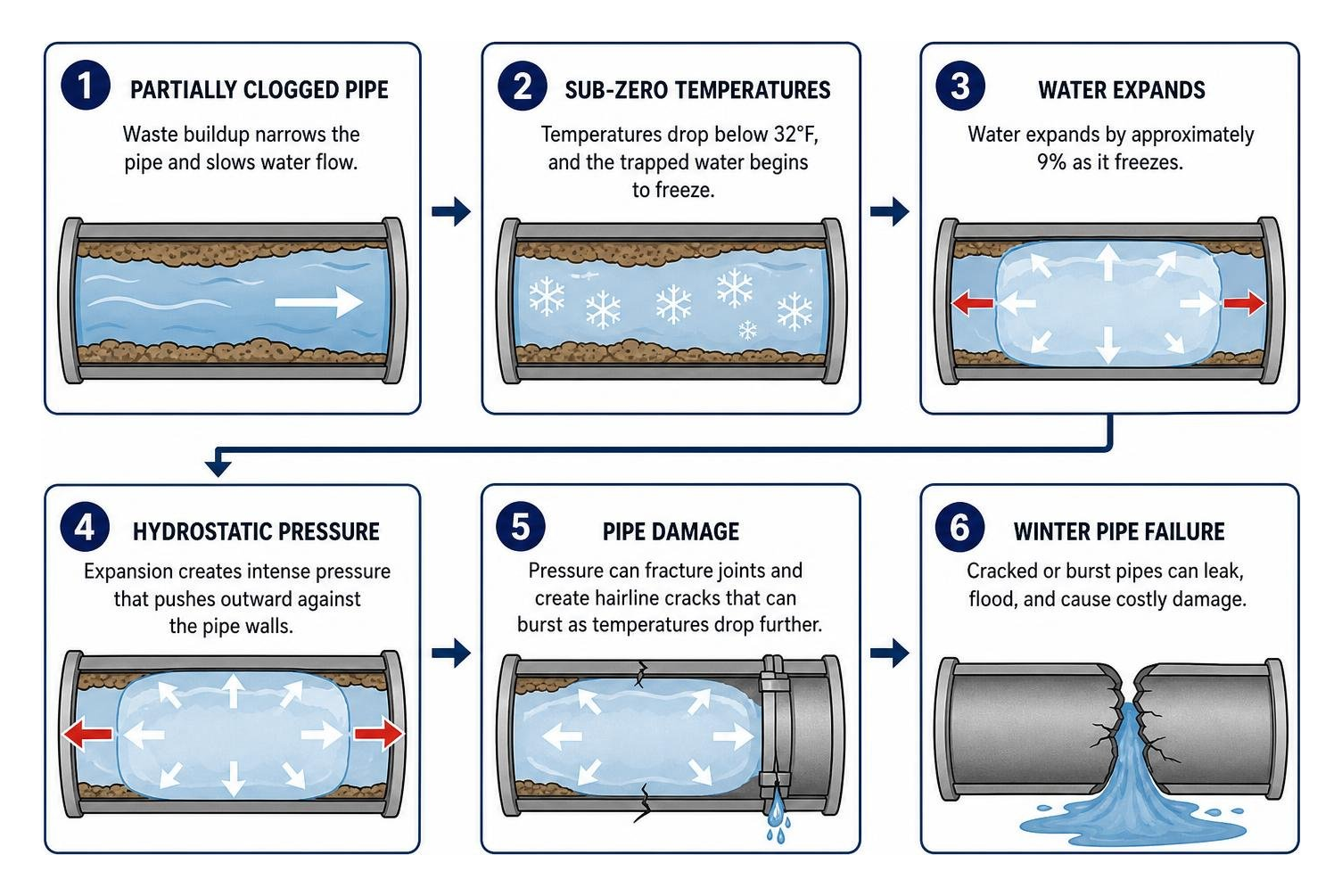
The primary physical trigger behind winter plumbing failures is the science of freezing liquid. As temperatures plummet, the water trapped inside partially obstructed lines transitions from liquid to solid. Water expands by approximately 9% upon freezing. In a completely open, free-flowing pipe, waste and graywater run smoothly out of the thermal danger zone into municipal mains or septic systems. In a pipe coated with accumulated waste, water slows down, pools, and creates standing traps. The resulting expansion produces immense hydrostatic pressure, which pushes outward against pipe walls, fractures joint fittings, and creates hairline fissures that burst once temperatures drop further.
Understanding how thermal stress on subterranean lines develops helps explain why northern plumbing systems require dedicated seasonal attention. The repeated shifting of frozen soil surrounding buried lines adds external mechanical strain on top of internal pressure spikes.
Furthermore, fats, oils, and grease, commonly known as FOG, behave drastically differently when exposed to cold pipe walls. Grease that enters your drain warm in summer quickly congeals into a rock-hard layer when the surrounding earth drops below 32°F. Keeping grease and non-dispersible debris out of drainage networks is critical to maintaining wastewater flow. In sub-zero conditions, accelerated solidification traps hair, food scraps, and paper products, rapidly narrowing the pipe’s interior diameter.
| Plumbing Parameter | Warm-Weather Conditions | Cold-Weather / Winter Conditions |
|---|---|---|
| Grease & Oil Behavior | Remains relatively viscous; moves toward main lines | Solidifies rapidly upon contact with chilled pipe walls |
| Water Volume Expansion | 0% expansion; flows without phase change | Expands ~9% when frozen, creating intense radial force |
| Drainage Velocity | Faster baseline flow due to ambient pipe warmth | Sluggish flow caused by thickened sludge and debris |
| Ground Dynamics | Stable, permeable soil conditions | Frost heave and shifting ground apply pressure to joints |
| Repair Complexity | Standard access via excavation or outdoor cleanouts | Frozen ground and snowpack require specialized thawing gear |
Understanding Cold-Weather Risks and Frozen Pipes
Sub-zero temperatures do not treat plumbing systems gently. When wastewater flow stalls behind an obstruction, the stationary liquid rapidly loses thermal energy to the surrounding air or frozen foundation walls. Once ice crystals begin forming around a blockage, they serve as a dam, capturing subsequent trickles of water until an entire section is completely frozen solid.
The danger is not limited to water supply lines; waste stacks, p-traps under unheated crawl spaces, and perimeter lines are equally vulnerable. When ice completely seals a drainage run, any attempt to use indoor fixtures forces contaminated wastewater backward. If left unaddressed, the continuous radial pressure can split PVC, rupture ABS, or crack brittle cast iron lines. Dealing with severe pipe freezing during an Alaskan deep freeze is hazardous, destructive, and disruptive to household routines.
The Hidden Dangers of Skipping Drain Cleaning Before Winter
Neglecting seasonal drain clearance creates cascading household risks. First and foremost are indoor sanitary sewer backups. In the fall and early winter, households typically experience heavier plumbing usage due to indoor gatherings, holiday cooking, and increased laundry demands. When high-volume surges hit a partially blocked line that has narrowed from cold-induced buildup, wastewater has nowhere to go but up through the lowest plumbing fixtures, such as garage floor drains, basement sinks, or bathtub basins.
Beyond direct structural water damage, unresolved blockages degrade indoor air quality. During colder months, homes are sealed tightly to retain heat, minimizing ventilation. Partially blocked lines trap organic matter that rots inside the drainage stack. In addition, dry or compromised p-traps allow methane, sewer gases, and foul odors to migrate upward into living areas. Preparing your plumbing before winter ensures that wastewater drains instantly, keeping sewer gases safely vented outside.
5 Essential Steps to Prepare Your Drains for Freezing Temperatures
Proactive winterization is all about systematically eliminating blockages and insulating vulnerabilities. By following these five steps in the autumn, you safeguard your entire drainage infrastructure before hard freezes set in.
1. Clear Outdoor Runoff Lines, Gutters, and Sump Pump Discharges
Outdoor drainage systems are your property’s first defense against moisture damage. As autumn foliage drops, fallen leaves, pine needles, twigs, and roofing grit wash into gutters and catch basins. If these materials settle inside surface drains, trench drains, or downspout extensions, they form dense, organic plugs.
When freezing weather arrives, this trapped organic sludge freezes solid. Subsequent snowmelt or late-fall rain cannot escape away from the home, backing up against the foundation and creating ice sheets across walkways.
- Walk the property perimeter to inspect every exterior grate and trench drain.
- Remove surface grates and scoop out accumulated silt, soil, and leaves manually.
- Ensure all downspout extensions direct runoff several feet away from foundation walls to prevent frost heaving near sewer lateral lines.
- Test your basement sump pump discharge line by pouring water into the sump basin to confirm that the check valve works freely and the external outlet pipe drains without obstruction.
2. Inspect and Winterize Uninsulated Plumbing Fixtures
Pipes located in unconditioned spaces, such as unheated crawl spaces, exterior wall cavities, garages, and attics, are the first to experience thermal shock. Even a tiny air draft through a foundation crack can freeze a slow-moving drain line in sub-zero weather.
Taking time for winterizing vulnerable plumbing lines helps homeowners address thermal weak points before freezing weather settles over Anchorage, AK:
- Fit exposed drainage runs and water lines with high-density foam sleeves or self-regulating electric heat tape.
- Seal perimeter draft sources near foundation vents, sill plates, and rim joists using expanding foam or caulking.
- Disconnect, drain, and store all exterior garden hoses. Leaving a hose attached keeps water trapped inside the sillcock, splitting the pipe inside your wall.
- Shut off the dedicated interior isolation valves for all exterior hose bibs, then open the outside spigot to drain any remaining water from the line.
3. Eliminate Grease and Buildup with Professional Hydro Jetting
While plunging and household snaking can punch a small hole through an immediate clog, they leave behind thick layers of grease, mineral scale, and sludge clinging to the pipe walls. Over time, this residual buildup acts like a sponge, catching hair and paper until the pipe closes up again.
The most thorough method for clearing sewer lines before winter is professional hydro jetting. This specialized process utilizes forward- and reverse-facing water nozzles that deliver pressurized water streams against the interior pipe circumference. The intense pressure slices through hardened grease, scours away calcified scale, and flushes organic sludge out of the system without damaging structural pipe walls.
Homeowners who invest in comprehensive hydro jetting services eliminate the internal friction that slows drainage down before freezing temperatures set in. Scheduling this advanced scouring before winter begins provides peace of mind that your primary lateral line operates at maximum capacity throughout the cold season.
4. Schedule a Video Camera Line Inspection
Many serious plumbing failures originate deep underground where visual spot-checks are impossible. Over decades of service, underground clay, cast iron, and PVC lines can suffer from settlement cracks, bellies (low spots where water pools), offset joints, and invasive root intrusions. During late summer and autumn, tree root systems aggressively seek out moisture, entering micro-fissures in sewer pipes and expanding rapidly inside the pipe.
A high-definition, fiber-optic video camera line inspection involves inserting a flexible, illuminated camera probe through your home’s main cleanout. The real-time video feed allows technicians to evaluate the structural integrity of your lines, identify corrosion, locate low spots where standing water could freeze, and spot underground root intrusions before the surrounding earth freezes solid, ensuring that necessary structural repairs are completed proactively.
5. Establish Best Indoor Drainage Habits for the Winter Season
Preventative maintenance is an ongoing household habit. What goes down your sinks, showers, and toilets directly impacts how well your drainage system performs during winter.
Follow these essential habits to keep lines clear:
- The “Three Ps” Rule: Only flush urine, feces, and toilet paper. Never flush wipes (even those labeled flushable), feminine hygiene products, paper towels, dental floss, or facial tissues, which do not break down in cold water.
- Never Pour FOG Down the Sink: Collect cooking grease, meat drippings, melted butter, and oils in a heat-safe container, allow them to solidify, and dispose of them in the trash.
- Utilize Fine-Mesh Strainers: Install stainless steel mesh drain screens in all kitchen sinks, bathroom vanities, and shower drains to capture food debris, hair, and soap fragments before they enter the waste stack.
- Clean Laundry Lint Traps: Ensure your washing machine’s lint screen or drain line filter is cleaned regularly to prevent synthetic fibers from binding with soap scum in the discharge pipe.
Professional Methods vs. DIY: Why Chemical Cleaners Fall Short
When faced with a slow drain, many homeowners reach for chemical drain openers sold at big-box hardware stores. These commercial liquids typically rely on caustic chemical reactions, using sodium hydroxide or concentrated sulfuric acid, to generate intense heat and dissolve organic matter.
While these products may temporarily melt a small opening through a grease clog, they create substantial hazards:
- Pipe Corrosion and Degradation: The chemical heat generated can warp thin-walled PVC pipes and accelerate corrosion inside older cast iron or galvanized lines, weakening joints and causing hidden pinhole leaks.
- Toxic Fumes: Caustic cleaners emit harsh, noxious chemical vapors that linger inside enclosed winter homes.
- Incomplete Blockage Removal: Chemical liquids sink to the lowest point, burning a narrow channel through the bottom of the clog while leaving the rest of the grease and sludge untouched on the pipe walls.
- Safety Risks for Plumbers: If a chemical product fails to clear the blockage, your pipes remain filled with caustic, burning liquid, endangering technicians who must mechanically service the line later.
Professional drain cleaning technicians rely on safe, non-destructive technologies like motorized rotary cabling machines, mechanical descaling chains, and high-pressure water jetting. These tools clean the entire pipe diameter from wall to wall without introducing corrosive chemicals into your plumbing or the local water table.
For routine homeowner maintenance, you can use mild home remedies, such as pouring hot water down the kitchen drain combined with safe enzyme-based biological drain cleaners. However, whenever DIY efforts involve safety hazards, climbing onto icy roofs to check plumbing vent stacks, handling high-voltage equipment, or dealing with persistent backups, you must always stop and contact a licensed plumbing professional.
When to Call a Professional for Drain Cleaning Before Winter
Recognizing early warning signs allows you to intervene before a total system shutdown occurs. You should contact a professional plumber immediately if you observe any of the following symptoms:
- Multiple Slow Drains: When several fixtures across your home drain slowly at the same time, the blockage is in the primary sewer lateral rather than an individual fixture trap.
- Gurgling Fixtures: Bubbling or gurgling sounds coming from your toilet or shower when the washing machine drains indicate trapped air caused by a developing main line obstruction.
- Persistent Sewer Odors: Smelling sewer gas around floor drains, crawl spaces, or yard cleanouts points to a cracked pipe, venting failure, or dried-out trap.
- Water Backups: Any instance of wastewater rising into a shower pan, floor drain, or lowest plumbing fixture requires prompt attention to prevent severe property damage.
Frequently Asked Questions About Winter Drain Care
Why is drain cleaning before winter more important than during other seasons?
Drain cleaning before winter is critical because cold weather hardens grease and sludge clinging to pipe walls much faster. Freezing temperatures also cause standing water trapped behind partial clogs to freeze and expand by roughly 9%, creating high internal pressure that can crack or rupture pipes.
What are the earliest warning signs that my drains need cleaning before winter?
Common early warning signs include slow-draining sinks and bathtubs, gurgling or bubbling noises when water drains, foul sewer odors rising from fixtures, and water backing up into low-lying floor drains or shower pans.
How often should I schedule professional drain cleaning?
Most residential properties benefit from professional drain cleaning once every one to two years. However, older properties with mature trees nearby, large households, or homes with a history of recurring clogs should schedule an annual cleaning every autumn.
Can I use chemical drain cleaners to prepare my pipes for freezing temperatures?
No. Chemical drain cleaners generate caustic reactions that can corrode cast iron, soften PVC pipes, and release hazardous fumes inside a closed home. They only burn small holes through clogs rather than clearing the full pipe diameter. Professional mechanical cleaning or hydro jetting is significantly safer and more effective.
What is the difference between indoor and outdoor drain winterization?
Indoor winterization focuses on scouring grease, hair, and scale from waste lines, insulating pipes in unconditioned crawl spaces, and cleaning fixture traps. Outdoor winterization involves clearing leaves and debris from gutters, trench drains, and catch basins, disconnecting garden hoses, draining outdoor spigots, and checking sump pump discharge paths.
How does hydro jetting protect pipes from freezing in cold climates like Anchorage, AK?
Hydro jetting scours the entire interior surface of the pipe using high-pressure water, removing all grease, sludge, and mineral deposits. By eliminating these restrictions, wastewater flows at full speed out of the home, leaving no standing water inside the line to freeze into solid ice dams.
When is the ideal time of year to schedule pre-winter drain maintenance?
Early to mid-autumn, from late August through October, is the optimal window. Scheduling service before the first sustained hard freeze ensures that lines are clear while outdoor cleanouts are easily accessible and ground temperatures have not yet frozen.
What are the typical costs of preventive drain cleaning compared to emergency winter repairs?
Preventive drain cleaning and camera inspections are usually a predictable maintenance investment compared with emergency winter sewer backups or frozen burst pipe repairs. Emergency work can involve urgent service needs, specialized ground-thawing equipment, and structural water damage restoration.
How do freeze-thaw cycles damage underground sewer lines?
When ground moisture freezes and thaws, the surrounding soil expands, contracts, and shifts. This ground movement puts mechanical stress on underground sewer pipe joints, widening existing cracks and pulling pipe connections apart, especially if lines are already weighed down by heavy clogs.
What steps should I take if an exterior drain line is already frozen?
If a drain line is frozen, never attempt to thaw it using open flames or high-heat torches, which can shatter pipes or create fire hazards. Turn off the main water supply if there is active leakage, avoid running additional water down connected fixtures, and immediately contact a licensed professional equipped with specialized, safe pipe-thawing machinery.
Conclusion
Protecting your residential plumbing system against harsh winter conditions is one of the most cost-effective investments you can make as a homeowner. By clearing outdoor runoff drains, winterizing uninsulated pipes, scheduling advanced hydro jetting, scoping lines with video cameras, and maintaining clean disposal habits, you eliminate the risks of unexpected frozen pipe bursts and catastrophic sewer backups.
Do not wait until the ground freezes and sub-zero temperatures arrive to find out whether your plumbing system is ready. The experienced team at Drain Masters provides family-owned, dependable service with general upfront estimates, advanced diagnostic technology, and practical guidance throughout Anchorage, AK. For seasonal help before winter, contact our professional drain cleaning technicians and enjoy complete peace of mind all winter long.