
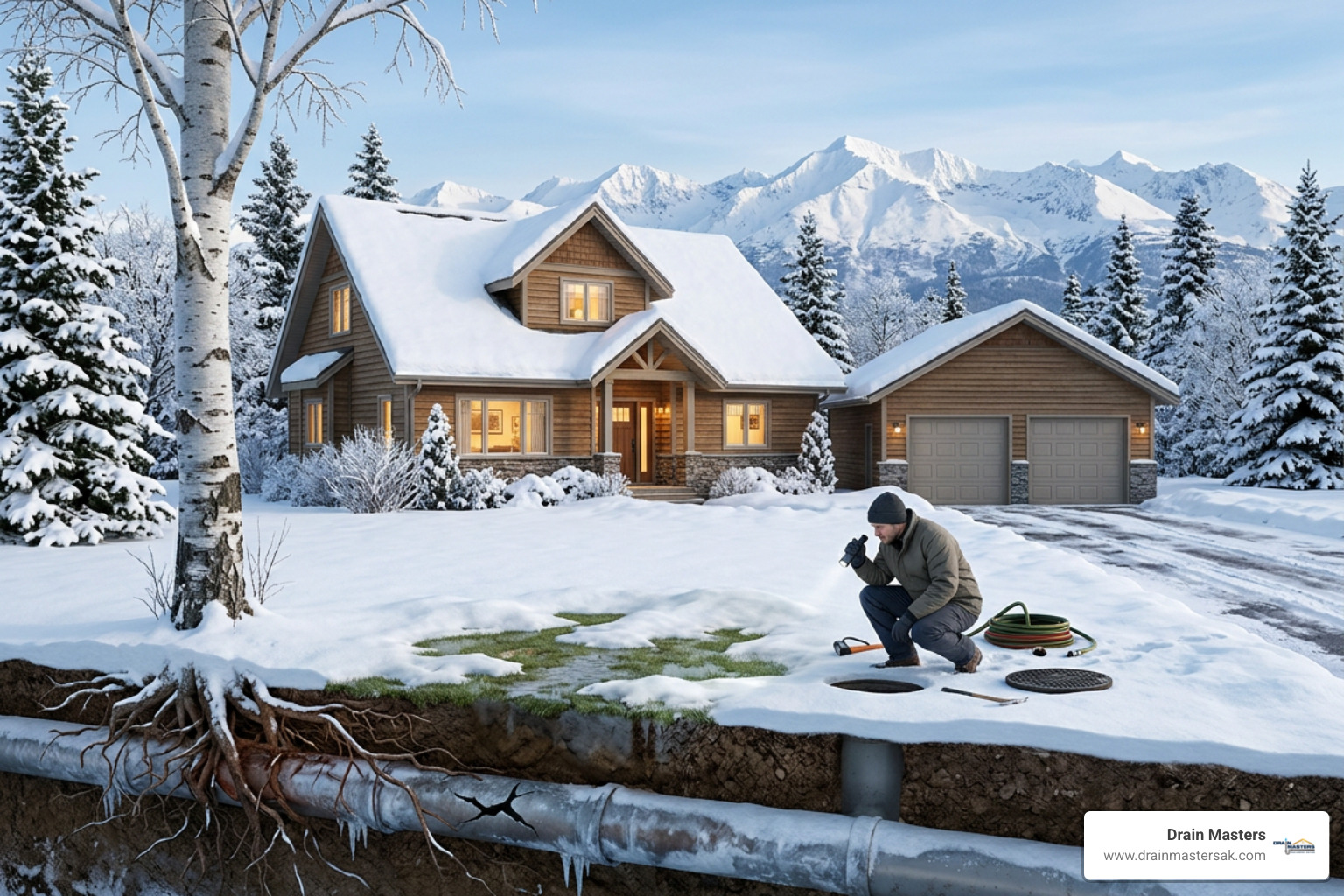
Key Signs Your Sewer Line Is Failing and Needs Replacement
Underground sewer pipes operate out of sight beneath yards, driveways, and building foundations, which makes early detection critical before raw wastewater backs up into living spaces. Recognizing early warning indicators protects your home foundation, interior framing, and indoor air quality from hazardous biological contaminants and extensive structural water damage.
Several distinct symptoms point to deep lateral failure rather than an isolated fixture clog:
- Chronic Whole-House Backups: When wastewater surfaces in basement bathtubs, lower-level showers, or mechanical room floor drains whenever an upstairs washing machine discharges or a toilet flushes.
- Persistent Sewer Gas Odors: Unpleasant sulfur and methane odors lingering in basements, crawlspaces, or yards indicate cracks, loose cleanouts, or unsealed joints allowing hazardous sewer gases to escape underground.
- Soggy, Unexplained Lawn Patches: Overly lush, spongy, or sunken green spots in the yard during summer or unexplained surface pooling during dry spells often signal cracked, leaking underground lines.
- Foundation Cracks or Moisture: Structural water intrusion, shifting soil, or wet spots near building footings and slab perimeters can result from persistent underground line leakage washing away subgrade support.
- Audible Gurgling in Fixtures: Trapped air caused by extensive line restrictions forces displaced sewer gas back upward through trap seals, creating distinct bubbling noises in toilets and sink basins throughout the structure.
When these warning indicators emerge across your plumbing system, evaluating how to tell when your sewer line needs to be repaired vs replaced helps you make an informed, cost-effective decision before a catastrophic failure occurs.
Recurring Blockages and Slow Drains Across Multiple Fixtures
An isolated clog in a single bathroom sink or shower stall usually stems from local hair, soap scum, or foreign debris trapped in an individual branch line. In contrast, when multiple fixtures throughout the lower level of a home drain sluggishly or bubble and gurgle simultaneously, the primary sewer lateral is compromised.
Standard mechanical cable snaking often punches a temporary hole through an obstruction, but if underlying structural damage exists, heavy blockages quickly return. Understanding how to clear a clogged sewer line clarifies why temporary mechanical clearing cannot permanently correct fractured, shifted, or collapsed pipes.
Structural Pipe Damage: Bellies, Offsets, and Root Infiltration
Physical pipe failures require permanent remediation rather than routine drain cleaning. The most common structural sewer defects encountered in residential properties include:
- Pipe Bellies: Differential ground settling creates low spots where standing wastewater, toilet paper, and heavy solids pool, causing chronic sluggishness, buildup, and frequent cold-weather freeze-ups.
- Joint Offsets: Shifting subsoil causes adjoining pipe sections to misalign vertically or horizontally, creating sharp physical ledges that catch solid waste and allow surrounding soil to wash into the line.
- Severe Root Intrusion: Native birch, poplar, and white spruce roots seek underground moisture, penetrating tiny joints or hairline fissures and expanding into dense root masses that shatter piping from the inside.
- Channel Rot and Bottom Degradation: Aging cast iron lines develop longitudinal corrosion along the bottom flow channel, leading to structural thinning, missing pipe bottoms, and complete line failure.
- Crushed or Collapsed Sections: Heavy surface loads, deep frost penetration, and degraded pipe materials can cause older pipes to flatten completely, preventing any wastewater discharge.
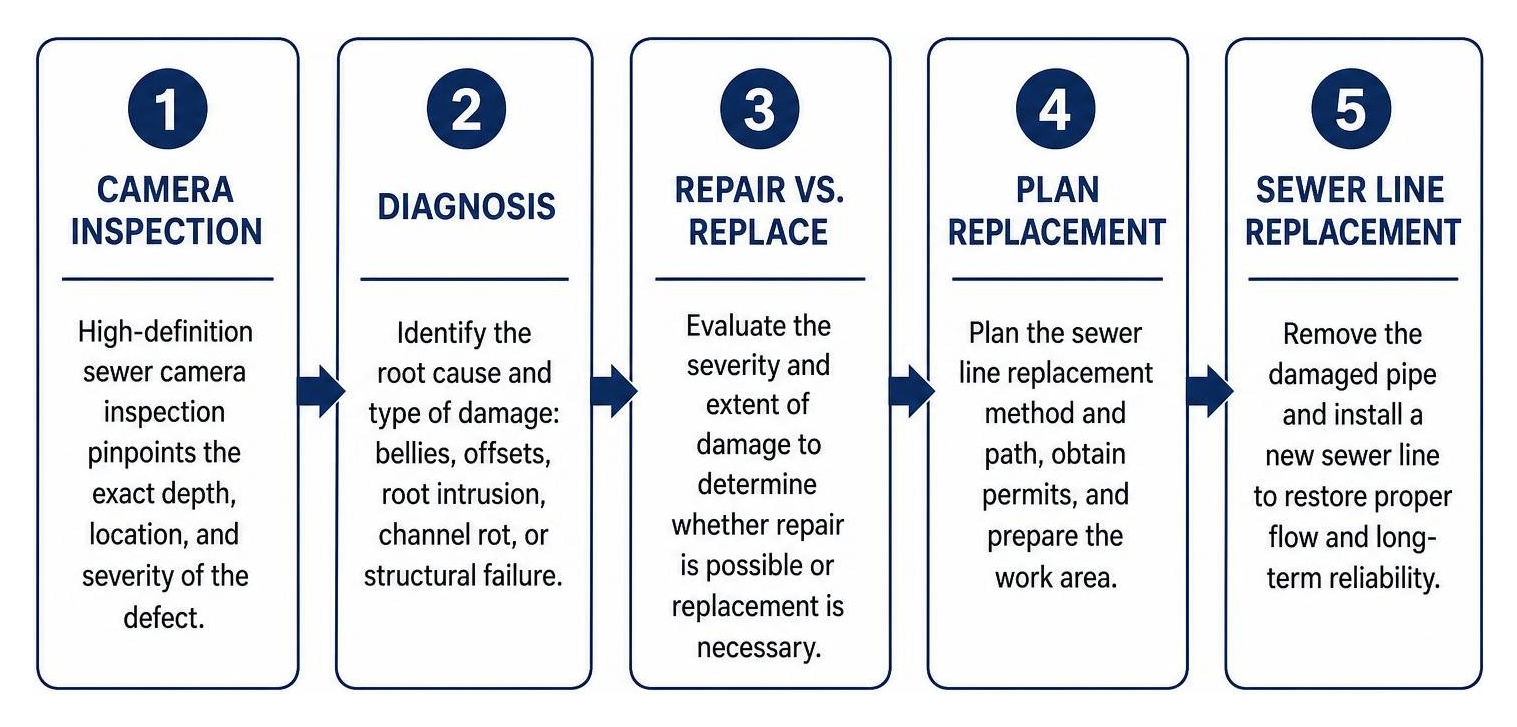
Accurate diagnosis begins by running a professional sewer camera inspection through the line to pinpoint the exact depth, location, structural condition, and severity of the defect.
Why Anchorage Climate and Geology Accelerate Sewer Deterioration
Sub-arctic operating environments place extreme mechanical stress on buried infrastructure. The median residential home in Anchorage, AK, was constructed around 1982, meaning many lateral lines have operated for over four decades in challenging soil conditions. Older neighborhoods, such as Spenard, Mountain View, Rogers Park, and Turnagain, frequently contain aging clay tile, bituminous fiber (Orangeburg), or unlined cast iron pipes that have reached the end of their design lifespans.
Deep Frost Lines, Permafrost, and Ground Shifts
Anchorage, AK, experiences severe seasonal freeze-thaw cycles, glacial soil movement, and intermittent permafrost pockets. As ground moisture freezes during deep sub-zero winter periods, the surrounding soil expands, generating immense frost heave pressure against buried pipes. During the spring breakup season, rapid thawing and runoff cause ground subsidence, erosion, and soil compaction, subjecting rigid pipes to severe bending, shearing, and joint separation.
Additionally, localized high water tables and sub-surface glacial silt create unstable bedding. When the supporting ground moves or erodes beneath a sewer lateral, unsupported pipe spans sag into bellies or crack at the joints. Local plumbing codes mandate deep burial depths, often ten feet or more, to keep wastewater lines below regional frost lines. When severe ground movement causes structural failure at these depths, standard DIY methods are dangerous and inadequate, making licensed professional replacement necessary.
Municipal Utility Regulations and Homeowner Lateral Responsibilities
Under municipal utility guidelines in Anchorage, AK, residential property owners own and maintain the private sewer lateral from the building exterior all the way to the municipal main connection, including the connection fitting or saddle tap.
Homeowners are legally and financially responsible for keeping this private service line unobstructed, structurally sound, and free from leaks. If an older lateral freezes, shifts, collapses, or develops root blockages on private property or within the street right-of-way prior to the city main, scheduling professional sewer repair is required to restore proper sanitation and prevent hazardous ground contamination, following sanitation guidelines established by the United States Environmental Protection Agency.
Sewer Line Replacement Anchorage Methods: Trenchless vs. Traditional Excavation
Choosing the right rehabilitation or replacement method depends on the pipe depth, structural stability, ground condition, and the presence of surface improvements like paved driveways, concrete walkways, mature landscaping, or home additions.
For lines that are cracked, root-invaded, or deteriorating but still structurally stable, drain pipe lining vs replacement explains when lining can restore flow without full excavation and when replacement is the safer long-term choice.
Trenchless CIPP Lining and Pipe Bursting Options
Trenchless technology provides efficient, durable replacements while minimizing surface disturbance across landscaped yards and paved driveways.
- Cured-in-Place Pipe (CIPP) Lining: Technicians insert an epoxy-resin-saturated felt liner into the existing damaged host pipe through a single access point. Once inflated and cured with hot water, steam, or light, it hardens into a seamless, jointless structural pipe that resists root intrusion and seals existing cracks. This approach can reinforce many aging laterals without surface destruction.
- Pipe Bursting: When a pipe lacks the structural integrity for lining due to missing sections or collapsed walls, trenchless sewer replacement via pneumatic or hydraulic pipe bursting offers a robust alternative. A high-powered pulling machine pulls a heavy conical bursting head through the failing host pipe, fracturing it outward into the surrounding soil while simultaneously pulling a brand-new, seamless High-Density Polyethylene (HDPE) pipe directly behind it.
Traditional Open-Trench Excavation for Collapsed Pipes
While trenchless methods are preferred for preserving surface structures, traditional excavation remains necessary under specific site conditions:
- Completely collapsed, crushed, or flattened host pipes that cannot accommodate a pulling cable, bursting head, or liner.
- Severe joint offsets or back-pitched lines where improper physical slope must be manually corrected and re-graded.
- Extremely shallow or improperly bedded lines that require comprehensive sub-base stabilization, gravel bedding, and insulation boards.
- Municipal connection points located deep beneath public roadways where specific utility tie-in requirements dictate full open-cut verification.
During open-trench replacement, hydraulic excavators dig down to the pipe grade, old materials are hauled away, the trench bed is properly pitched with compacted gravel aggregate, new schedule-40 PVC or fused HDPE piping is installed, and the trench is backfilled in compacted lifts.
| Method | Best For | Disruption Level | Surface Preservation |
|---|---|---|---|
| CIPP Lining | Cracked, corroded, or root-invaded pipes with intact shape | Minimal (requires small access point) | Excellent (driveways & yards untouched) |
| Pipe Bursting | Fractured or undersized pipes requiring full replacement | Low (requires two small entry/exit pits) | High (preserves major landscaping) |
| Open Trench | Fully collapsed pipes, severe bellies, or negative grade | High (continuous ground excavation) | Low (requires surface restoration) |
Sewer Line Replacement Costs, Permitting, and Timelines in Anchorage, AK
Planning a sewer lateral replacement requires a clear understanding of project scope, local labor factors, municipal permitting, engineering requirements, and timeline expectations.
Factors Affecting the Cost of Sewer Line Replacement Anchorage Residents Face
Every sewer replacement project is unique, and final project investments are influenced by several technical, geological, and geographic variables:
- Pipe Depth and Total Length: Deeper lines requiring trench shoring, benching, or extended runs across large lots demand additional equipment operating hours, safety shielding, and aggregate backfill.
- Replacement Method Selected: Trenchless options often reduce total project expenditures by eliminating the need to repave asphalt driveways, pour new concrete sidewalks, or replant mature landscaping.
- Surface Hardscaping and Obstacles: Cutting through concrete foundation slabs, asphalt driveways, decorative retaining walls, or working near municipal easements increases equipment and site restoration requirements.
- Sub-Surface Soil and Winter Logistics: Cold-weather excavation, frozen soil handling, thawing equipment, and working around high water tables require specialized heavy machinery.
- Diagnostic Video Scoping: Detailed information about sewer scope inspection costs shows how initial diagnostic camera work provides exact line measurements, depth data, and structural assessments necessary for transparent project estimates.
Municipal Permits, Code Requirements, and Project Workflow
Replacing a sewer lateral in Anchorage, AK, requires strict compliance with local municipal plumbing codes, right-of-way regulations, and utility guidelines.
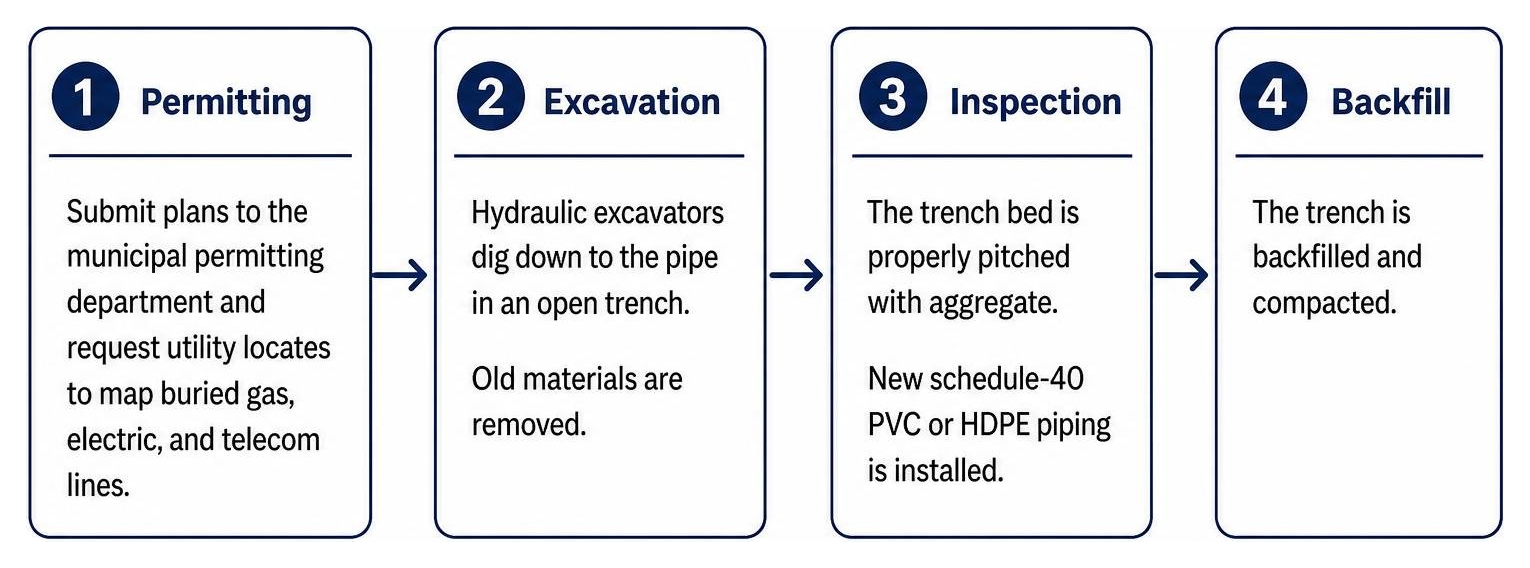
The standard project workflow follows a structured sequence:
- Diagnostic Inspection & Engineering Plan: Identifying failure points with camera telemetry, mapping property lines, and choosing the optimal replacement method.
- Permitting & Underground Utility Locates: Submitting engineering plans to local building authorities and contacting utility locating services to mark buried gas, electrical, telecommunication, and water lines.
- Excavation & Line Installation: Mobilizing equipment, establishing safe trench shoring or trenchless access pits, removing old pipe or bursting new pipe, and laying new piping to proper grade.
- Municipal Plumbing Inspection: A city inspector reviews the exposed pipe assembly, verifying proper pipe slope, compliant materials, and watertight joint seals before backfilling.
- Controlled Backfill & Site Compaction: The trench is backfilled with structural gravel and native soil in compacted layers to prevent future settling, surface dips, and foundational movement.
Most residential sewer replacements in Anchorage, AK, require between one to three working days on-site, depending on burial depth, frozen ground conditions, and municipal inspection scheduling.
Choosing a Contractor and Planning Sewer Line Replacement in Anchorage, AK
Sewer lateral replacement is a major infrastructural project that demands experienced, licensed, bonded, and fully insured trade professionals.
A dependable local team should be able to evaluate the pipe, explain the failure clearly, and recommend a practical repair or replacement plan without pushing unnecessary work. When vetting service companies, confirm:
- State Licensing and Credentials: Confirm the contractor holds active plumbing credentials and specialty trade endorsements through the State of Alaska Department of Commerce, Community, and Economic Development.
- Sub-Arctic Underground Experience: Ensure the team possesses extensive experience managing local freeze-thaw ground shifting, deep frost line installations, and municipal utility standards in Anchorage, AK.
- Transparent Video Diagnostics: Work with contractors who provide unedited, recorded video camera inspections along with detailed, itemized project proposals prior to starting work.
- Versatile Equipment Capabilities: Choose a contractor fully equipped for both advanced trenchless pipe bursting and traditional heavy open-trench excavation.
How to Prepare for a Sewer Line Replacement Project
Proper preparation helps ensure a smooth, efficient installation process:
- Site Access: Clear vehicles, trailers, seasonal equipment, and outdoor furniture from driveways, property gates, and designated excavation zones.
- Utility Markings: Protect all color-coded paint markings and locate flags placed throughout your yard by utility locating technicians.
- Water Usage Planning: Coordinate household water conservation during active line tie-in periods when main water service is briefly paused.
- Financing & Insurance Inquiries: Review your homeowner insurance policy for buried utility service line endorsements, and discuss structured payment plans or financing options with your contractor.
Long-Term Maintenance and Post-Replacement Protection
Protecting your new sewer line investment ensures decades of trouble-free wastewater service:
- Install Dual-Direction Cleanouts: Exterior ground-level cleanouts provide easy access points for future maintenance scoping and clearing.
- Practice Responsible Drain Habits: Avoid flushing wet wipes, paper towels, hygiene products, or pouring cooking fats, oils, and grease down kitchen drains.
- Plant Strategically: Position deep-rooting trees like birches, poplars, and large spruce trees far away from underground sewer runs.
- Schedule Routine Inspections: Conduct periodic video camera scoping every few years to monitor pipe health, verify joint alignments, and catch subtle ground movement early.
Frequently Asked Questions about Sewer Line Replacement in Anchorage
What are the common signs that indicate a need for sewer line replacement in Anchorage, AK?
The most frequent indicators include recurring sewage backups across multiple lower-level fixtures, gurgling toilets, persistent sewer gas odors indoors or outdoors, soggy or sunken areas in the lawn during summer, and chronic pipe freezing during winter due to low spots or bellies holding wastewater.
How much does sewer line replacement cost in Anchorage, AK, and what factors influence the price?
Costs vary based on the total length and burial depth of the lateral pipe, the replacement method selected, soil stability, frost levels, equipment accessibility, and the amount of surface restoration required for driveways, concrete, or landscaping.
What are the different sewer line replacement methods available in Anchorage, AK?
The three primary methods are traditional open-trench excavation, pipe bursting, and Cured-in-Place Pipe lining. Open trench involves digging up the entire line, pipe bursting pulls a new pipe through the fractured old line, and lining creates a new pipe within the existing pipe.
How do Anchorage-specific conditions like permafrost and freeze-thaw cycles affect sewer pipes?
Intense seasonal freeze-thaw cycles cause the surrounding ground to expand and contract. This frost heaving and soil subsidence places high shear stresses on buried pipes, causing rigid clay or cast iron lines to crack, pull apart at the joints, or sag into bellies that trap waste and accelerate freeze-ups.
What is the process and timeline for sewer line replacement in Anchorage, AK?
The process begins with an in-depth video camera inspection, followed by municipal permitting and underground utility locates. The contractor then executes the trenchless installation or open-trench replacement, schedules a municipal plumbing inspection, and performs final backfilling and compaction. Most projects take between one to three days.
How do I choose a licensed plumber for sewer line replacement in Anchorage, AK?
Select a licensed plumbing contractor registered with the State of Alaska Department of Commerce, Community, and Economic Development. Ensure they carry general liability and worker’s compensation insurance, possess specialized trenchless and excavation equipment, offer upfront written scopes, and have extensive experience with local soil mechanics.
What is the difference between drain cleaning, pipe lining, and full sewer replacement?
Drain cleaning clears temporary debris or root clogs using mechanical cables or hydro jetting without repairing the physical pipe. Pipe lining creates a brand-new internal structural pipe inside a cracked host pipe without excavation. Full sewer replacement physically replaces or bursts the entire line when structural collapse, severe offsets, or back-pitch render lining impossible.
Does Drain Masters offer sewer line replacement services in Anchorage, AK?
Yes. Drain Masters provides full-service sewer solutions throughout Anchorage, AK, including high-definition video camera inspections, hydro jetting, trenchless CIPP lining, trenchless pipe bursting, and full open-trench sewer lateral replacements.
What financing options are available for sewer line replacement in Anchorage, AK?
Homeowners can explore various financing pathways, including home equity lines of credit, private home improvement loans, contractor financing payment plans, and private insurance claims if their policy includes buried service line coverage endorsements.
How can I prevent future sewer line problems after replacement?
Prevent future issues by installing accessible outside cleanouts, scheduling periodic video camera scoping, planting deep-rooted trees away from the sewer path, and keeping fats, cooking oils, grease, and non-dispersible wipes out of residential drains.
Conclusion
A failing sewer lateral is a stressful challenge, but identifying early warning signs, understanding local sub-arctic ground dynamics, and choosing the right replacement method ensures a long-term, reliable solution. Whether your home requires modern trenchless pipe bursting, CIPP epoxy lining, or complete structural excavation, an accurate video inspection is the vital first step toward restoring your home’s wastewater flow.
With over two decades of dedicated service handling complex sub-arctic plumbing challenges across Anchorage, AK, Drain Masters delivers reliable upfront pricing, advanced trenchless equipment, and expert sewer repair support to safeguard your home and property for decades to come. If warning signs are appearing in your home or yard, contact our professional sewer line replacement technicians for a practical next step.