

Recognizing the Warning Signs of Sewer Line Failure
As of April 2026, we’ve found that many homeowners in Anchorage still find sewer issues to be a bit of a mystery. However, your plumbing system is actually quite expressive; it will tell you when it’s struggling if you know what to listen and look for.
One of the most frequent indicators is a series of slow-draining sinks or bathtubs. While a single slow drain might just be a hair clog, having multiple fixtures across the house draining sluggishly usually points to a deeper issue in the main line. You might also notice gurgling sounds coming from your toilets. If your toilet bubbles when you run the bathroom sink or the washing machine, it’s a sign that air is trapped in the system due to a blockage.
Foul odors are another dead giveaway. A healthy sewer system is airtight, so if you start smelling “rotten eggs” or raw sewage in your basement or yard, you likely have a crack or a break. Speaking of the yard, keep an eye out for patches of grass that look suspiciously lush and green compared to the rest of the lawn. Sewage acts as a potent fertilizer, and a leak underground will often manifest as a “super-patch” of grass or even a soggy, indented spot in the soil.
In more severe cases, a damaged sewer line can lead to foundation cracks or sinkholes. Because water follows the path of least resistance, a leaking pipe can wash away the soil supporting your home’s structure. If you’ve noticed an uptick in pest activity, such as rodents or insects that seem to be appearing from nowhere, they may be using a breach in your sewer pipe as a private highway into your home. To get a better handle on what’s happening beneath the surface, it is often helpful to look into the specific symptoms of drain failure before the problem escalates.
If you are experiencing frequent backups or if water is coming up through your floor drains, it is time to stop guessing. We recommend consulting a local guide on inspections to understand how professionals diagnose these hidden issues.
Common Causes of Sewer Pipe Damage
Understanding why pipes fail is the first step toward a successful residential sewer repair. In our 20+ years of serving the Anchorage area, we have identified several recurring “villains” in plumbing.
- Tree Roots: This is perhaps the most common cause. Roots are naturally drawn to the moisture and nutrients inside sewer lines. They can find even the microscopic cracks in older clay or cast iron pipes, grow inside, and eventually cause a total collapse.
- Corrosion: Many older homes in Alaska still have cast iron or galvanized steel pipes. Over decades, these pipes rust from the inside out, leading to restricted flow and eventual ruptures.
- Ground Shifting and Freezing: Here in Anchorage, the “freeze-thaw” cycle is brutal on underground infrastructure. As the ground shifts or expands when frozen, it can put immense pressure on pipes, causing them to “belly” (sag) or snap entirely.
- Grease Buildup: Pouring fats, oils, and grease down the kitchen sink is a recipe for disaster. These substances solidify as they cool, creating “fatbergs” that catch other debris and lead to massive clogs.
- Aging Materials: Pipes don’t last forever. If your home was built before the 1980s, you might have materials like bituminized fiber or clay that are simply reaching the end of their natural lifespan.
When dealing with these issues, it’s important to work with a team that understands the local climate. For instance, you can find a plumber in Anchorage, AK who understands how our unique soil conditions affect pipe longevity. Knowing whether you are facing a simple blockage or a structural failure is key, and learning how to differentiate between repair and replacement can help you budget effectively for the work ahead.
Modern Solutions: Trenchless Residential Sewer Repair vs. Traditional Digging
In the “old days,” fixing a sewer line meant bringing in a backhoe and digging a massive trench through your driveway, garden, or porch. While traditional excavation is still necessary in cases where a pipe has completely collapsed or “back-pitched,” modern technology has given us much better options.
| Feature | Trenchless Repair | Traditional Excavation |
|---|---|---|
| Disruption | Minimal; usually 1-2 small access holes | Major; requires a long trench |
| Time | Often completed in one day | Can take several days to a week |
| Landscape Damage | Very low; preserves yards and drives | High; requires restoration/re-paving |
| Cost | Higher upfront, lower restoration cost | Lower labor, high restoration cost |
| Lifespan | Up to 100 years | Depends on material used |
Pipe Bursting is a fascinating trenchless method where we pull a new, high-density polyethylene (HDPE) pipe through the old one. As the new pipe is pulled through, it literally bursts the old, damaged pipe outward, replacing it instantly.
CIPP (Cured-In-Place Pipe) Lining is another favorite. We insert a resin-saturated felt tube into the existing pipe, inflate it, and let it harden. This creates a “pipe within a pipe” that is seamless and incredibly durable. Many homeowners find exploring these trenchless options to be a relief because it means their prize-winning peonies or expensive pavers stay exactly where they are.
This technology is a game-changer for urban areas where digging is either impossible or prohibitively expensive. If you’re looking for a local specialist who utilizes these methods, you can consult a plumber in Anchorage, AK to get insight into which method fits your property’s specific layout.
The Benefits of Trenchless Residential Sewer Repair
The most obvious benefit of trenchless residential sewer repair is speed. Most of these jobs are finished in a single day, meaning you won’t be without water for long. But the benefits go deeper than just convenience.
The materials used in trenchless repairs, like HDPE or epoxy resins, are incredibly resilient. They are resistant to chemicals, won’t corrode like metal, and because they are seamless, they are virtually “root-proof.” When we install these liners, they often come with a projected lifespan of up to 100 years.
For those interested in the technical side, learning more about CIPP lining reveals how this process creates a structurally sound pipe that meets all modern building codes. It’s also often more cost-effective in the long run. While the specialized equipment might make the initial quote look similar to digging, you save thousands by not having to replace your sidewalk, driveway, or landscaping. Before making a final decision, it’s a good idea to compare the pros and cons of lining versus full replacement to see which fits your home’s long-term needs.
Proactive Maintenance for Your Residential Sewer Repair Plan
The best way to handle a sewer emergency is to prevent it from happening in the first place. We recommend that Anchorage homeowners schedule a professional inspection every 1 to 2 years, especially if you live in an older neighborhood with mature trees.
Proactive steps you can take today include:
- Installing Drain Strainers: These simple mesh screens catch hair and debris before they ever enter your pipes.
- Grease Management: Never put grease down the drain. Collect it in a jar and throw it in the trash once it solidifies.
- Root Barriers: If you have a tree near your sewer line, you can install physical or chemical barriers to discourage roots from heading toward the pipes.
- Regular Cleaning: Routine professional cleaning can remove small clogs and scale buildup before they turn into a full-blown backup.
It is a common misconception that chemical cleaners are a good fix for slow drains. In reality, your drains often need more than just a quick cleaning to stay healthy. The most powerful tool in your maintenance arsenal is a professional camera inspection, which allows us to see exactly what’s happening inside the pipe without any guesswork.
Professional Diagnostics and Repair Services
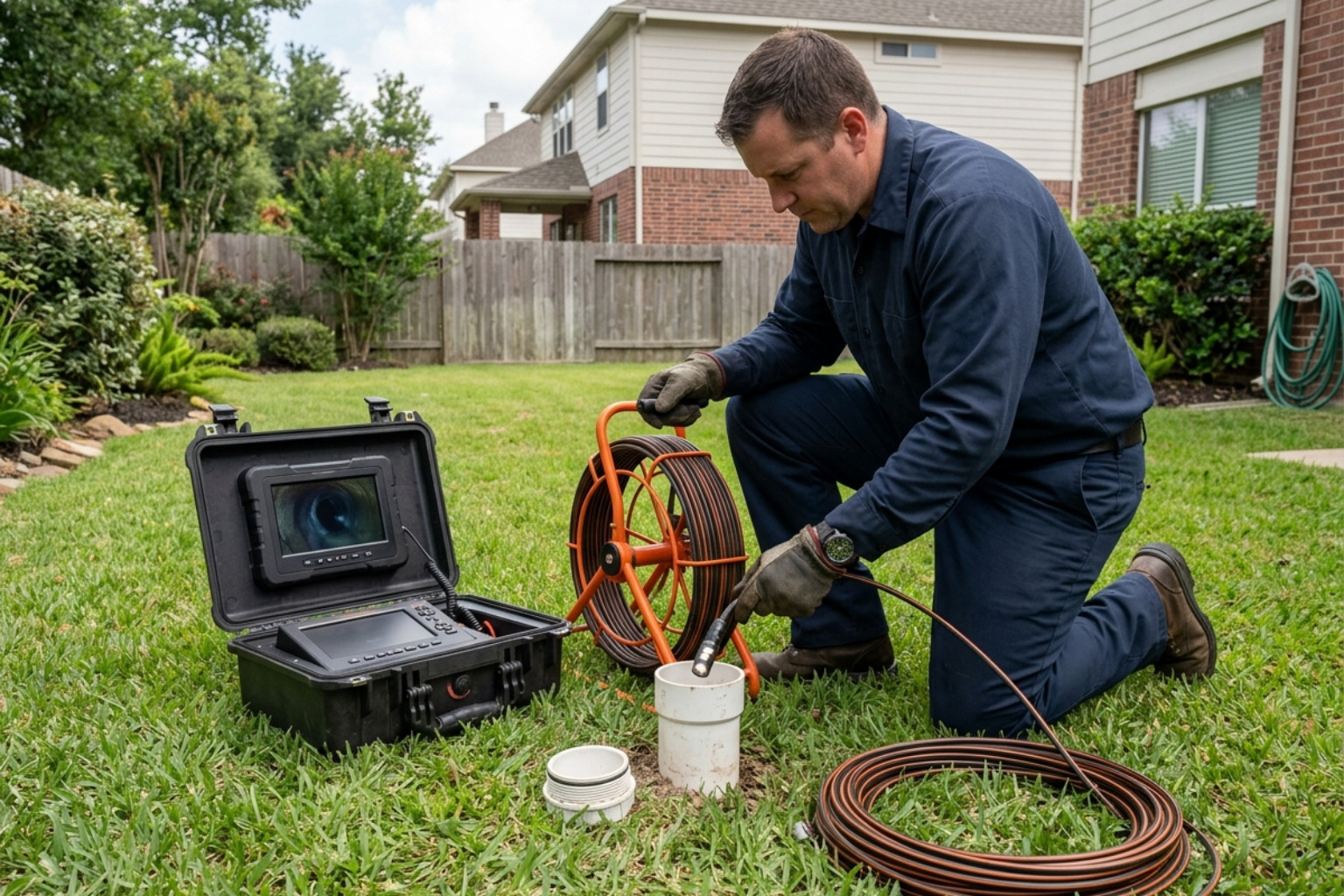
When you call us for a potential residential sewer repair, we don’t start by guessing. We use state-of-the-art video inspections to get a “plumber’s eye view” of the situation. By snaking a high-definition, waterproof camera into your line, we can pinpoint the exact location and nature of the problem, whether it’s a root intrusion, a crack, or a “bellied” pipe.
Once we have a diagnosis, we have several tools at our disposal:
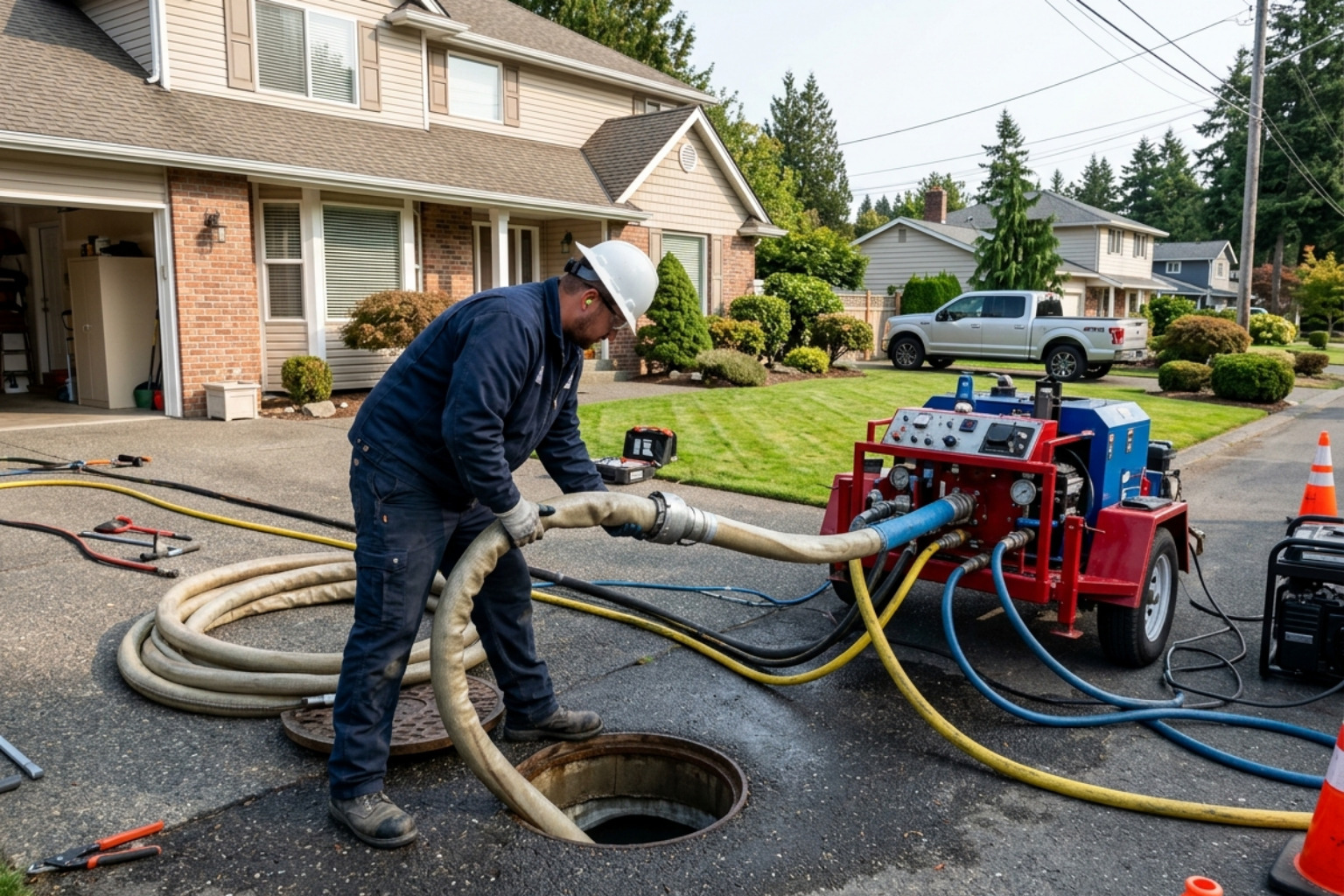
- Hydro Jetting: This uses high-pressure water (up to 4,000 PSI) to blast through clogs, grease, and even small tree roots. It’s essentially a “pressure wash” for the inside of your pipes. This is often the best way for clearing out stubborn main lines and restoring them to original flow capacity.
- Pipe Descaling: For older cast iron pipes that have become “crusty” with rust and minerals, we use specialized milling tools to scrape the interior walls smooth again.
- Camera Locating: Our cameras have signal transmitters that allow us to mark the exact spot on your lawn where the issue is, so if we do have to dig, we only dig exactly where it’s needed.
Modern camera technology for drains has completely changed the industry, making repairs more precise and less expensive. Whether you need a simple cleaning or a more comprehensive sewer care plan, our licensed technicians are trained to handle the specific challenges of the Alaskan environment.
Frequently Asked Questions about Residential Sewer Repair
Who is responsible for repairing the sewer line?
This is a question we get almost every day. In most cases, the homeowner is responsible for the “upper lateral,” which is the portion of the sewer line that runs from your house to the property line or the curb. In some jurisdictions, you may even be responsible for the “lower lateral” that connects to the city’s main line under the street.
The city is typically only responsible for the large public main lines. If the backup is caused by a problem in the city main, they will usually handle the repair. However, if the issue is on your private property, the cost and coordination of the repair fall on you. If you’re curious about what a professional fix looks like, viewing a gallery of completed rehabilitation projects can help you visualize the process.
How much does residential sewer repair typically cost?
There is no “one size fits all” price for residential sewer repair. Several factors influence the final bill:
- The Depth of the Pipe: Deeper pipes require more labor and equipment to access.
- The Method: Trenchless lining often has a higher material cost but lower labor and restoration costs.
- The Location: A pipe under a flowerbed is cheaper to fix than one under a concrete driveway or a structural wall.
- Permits and Inspections: Local regulations in Anchorage require specific permits for sewer work.
We believe in upfront pricing so there are no surprises when the job is done. When you’re facing a major issue, deciding between a repair and a full replacement is often the biggest factor in the final cost.
How long do sewer repairs usually take?
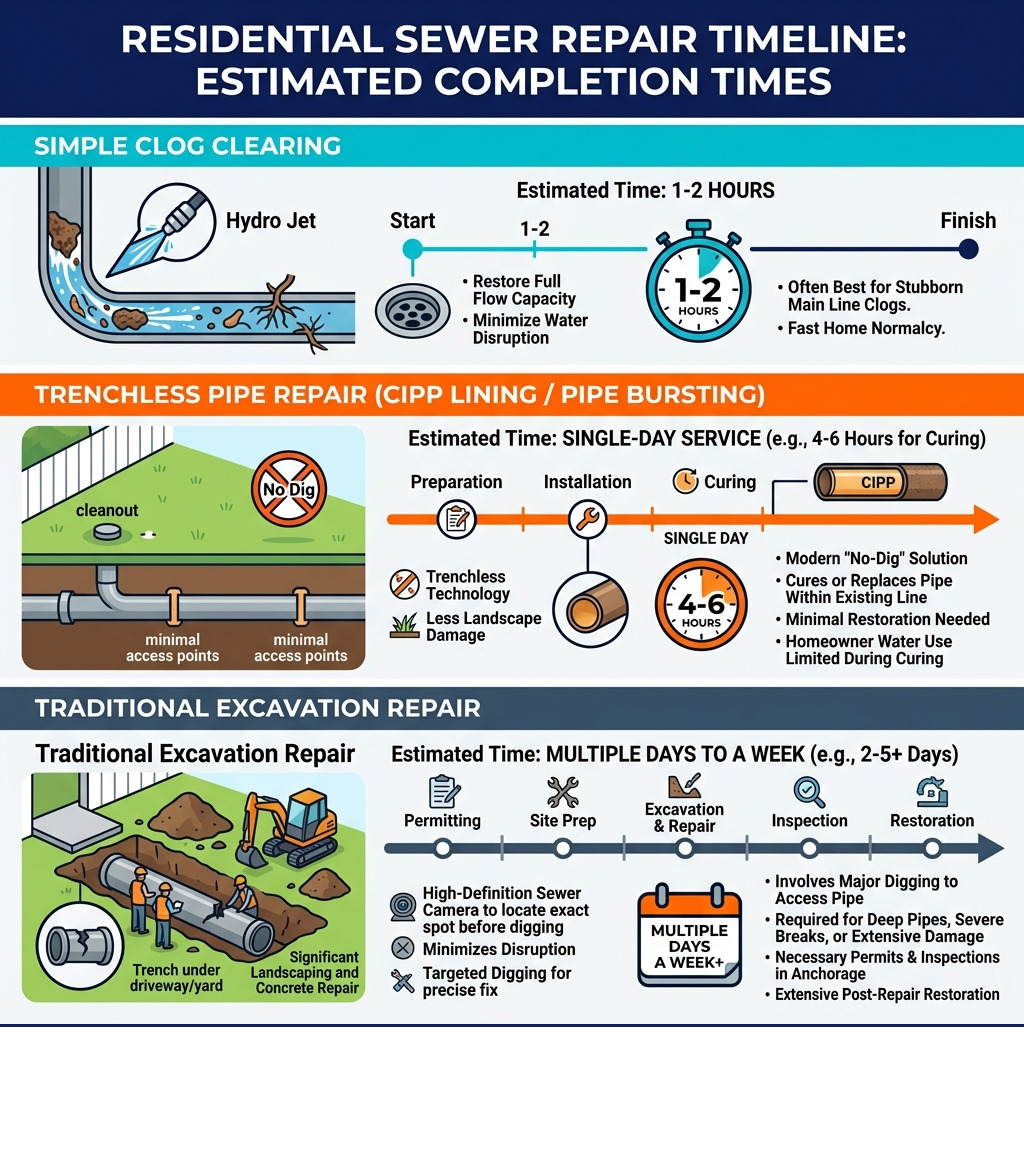
One of the biggest advantages of modern technology is the timeline. Traditional excavation can leave your yard looking like a construction zone for a week or more. In contrast, many of our trenchless projects are “one-day” services.
The CIPP lining process usually takes about 4 to 6 hours to “cure” or harden, during which time you’ll need to limit your water usage. Pipe bursting is similarly fast. If you’re dealing with a simple clog, our clearing and cleaning options can often have your home back to normal in just an hour or two.
Conclusion
Dealing with a sewer line issue is never fun, but you don’t have to face it alone. At Drain Masters, we bring over 20 years of local Anchorage expertise to every job. As a family-owned business, we understand that we aren’t just fixing pipes; we’re protecting your home and your family’s comfort.
With 4,000 jobs completed annually and a commitment to upfront pricing, we use the most advanced diagnostic tools available to ensure the job is done right the first time. Whether you need an emergency repair or a routine inspection to keep things flowing smoothly, we’re here to help. If you’re concerned about the health of your home’s plumbing, we invite you to book a professional evaluation today to protect your property for years to come.