
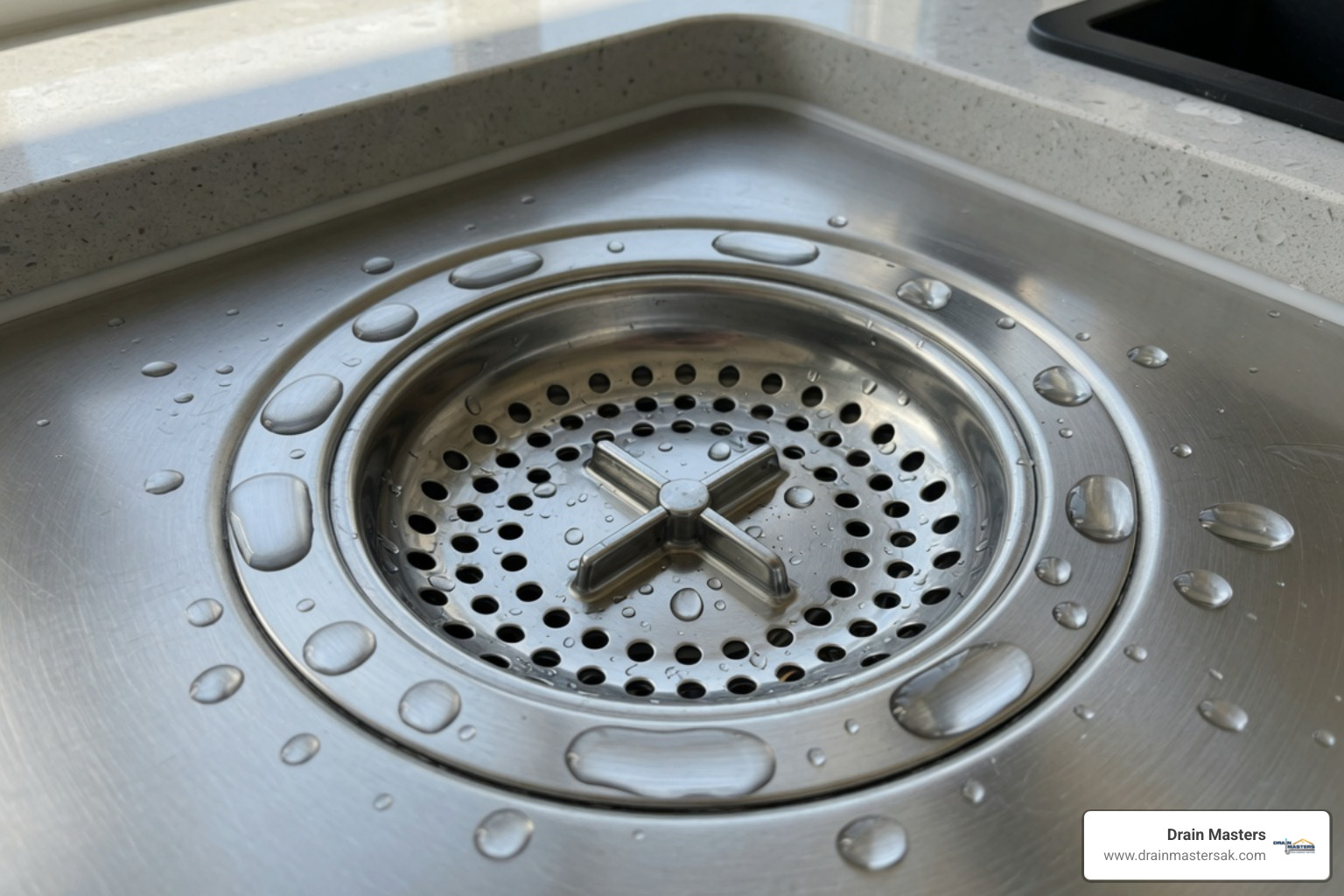
Your Quick Guide to Cleaning Kitchen Sink Drain Buildup and Clogs
Cleaning your kitchen sink drain regularly is one of the most important things you can do to keep your plumbing running smoothly and your kitchen hygienic. If you just need a fast answer, here it is:
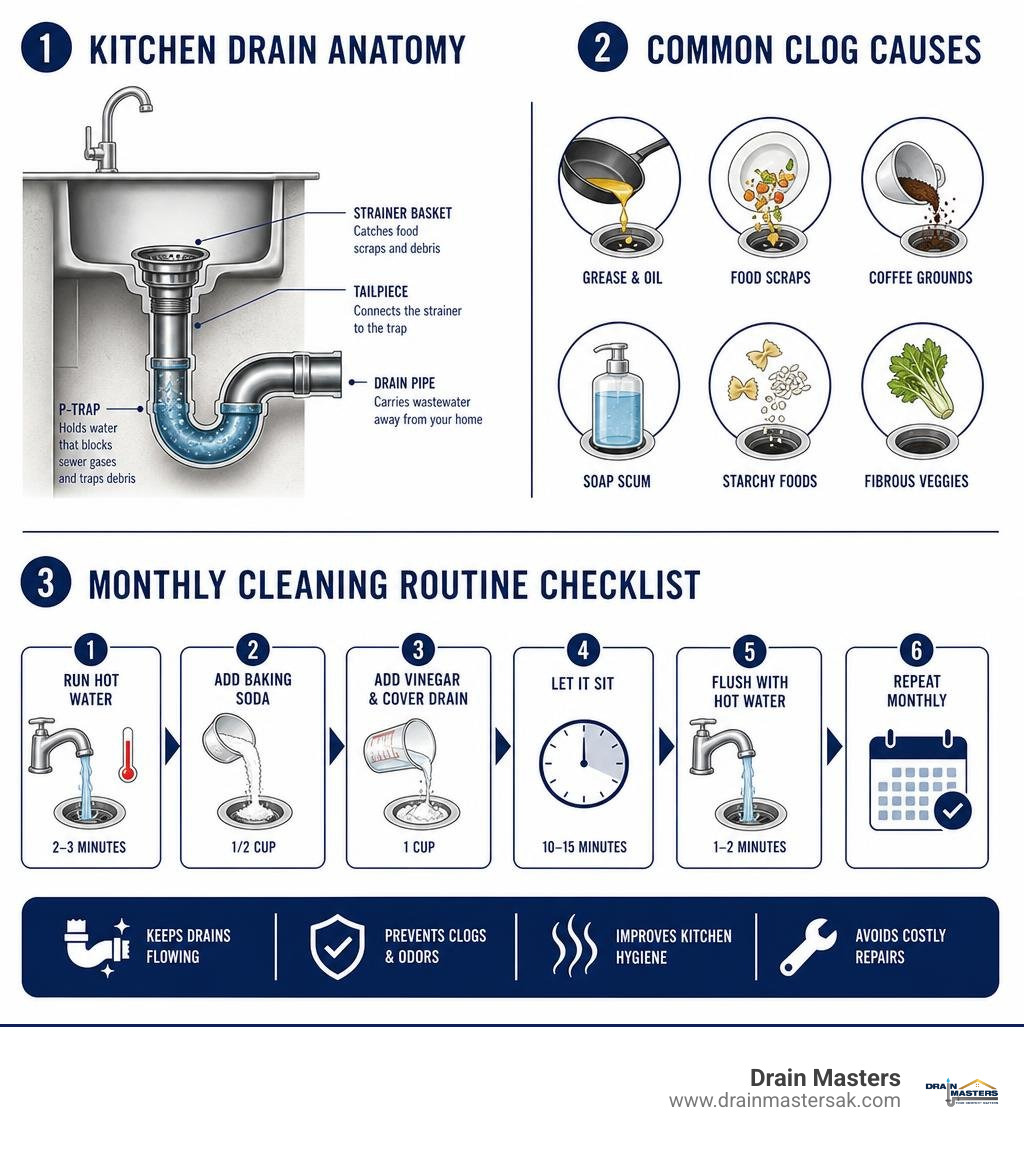
How to clean a kitchen sink drain (quick steps):
- Run hot water down the drain for 2-3 minutes to loosen grease.
- Pour 1/2 cup of baking soda down the drain.
- Follow with 1 cup of white vinegar and cover the drain opening.
- Let it sit for 10-15 minutes, then flush with hot water.
- For stubborn clogs, use a cup plunger or a drain snake.
- Repeat monthly to prevent buildup and odors.
Your kitchen sink sees a lot of action every day. Grease, food scraps, soap scum, and bacteria all pass through it, and over time, they stick to the inside of your pipes. That buildup does not just slow your drain. It can also create a serious hygiene problem. Studies have found that kitchen sink drains rank among the germiest surfaces in the home, with coliform bacteria detected in nearly 45% of kitchen sinks tested. That is higher than bathroom faucet handles and toothbrush holders.
The good news? Most kitchen drain problems are preventable and fixable without an emergency plumber call, as long as you know what you are dealing with and act before things get worse.
I’m Debra Blouin, General Manager of Drain Masters here in Anchorage, AK, and with over two decades of experience in the plumbing and drain service industry, I have seen how a simple routine for cleaning kitchen sink drain lines can save homeowners from costly repairs down the road. In this guide, I will walk you through the safest and most effective methods, from simple DIY fixes to knowing when it is time to call in a professional.
Why Your Kitchen Sink Drain Clogs and Smells
To keep your kitchen sink flowing freely, it helps to understand why it gets backed up or smelly in the first place. Unlike bathroom drains, which mostly deal with hair and soap residue, kitchen drains face a unique onslaught of organic materials.
The primary culprit behind most kitchen blockages is fats, oils, and grease (often referred to in the plumbing industry as F.O.G.). When you rinse greasy pans or plates with warm water, the grease is in a liquid state. However, as soon as it enters your cold sewer pipes, it cools, solidifies, and clings to the pipe walls. Over time, this grease acts like a sticky magnet, catching food scraps, coffee grounds, and soap scum until the opening in your pipe narrows to a tiny pinhole. You can learn more about how these blockages develop in our guide to the common issues that lead to blocked pipes.
When food particles get trapped in this sticky layer, they begin to decompose. This decay is what produces that classic, unpleasant sour smell rising from the sink. For a deeper look at the biological side of this issue, read about how bacteria can rapidly multiply inside your plumbing system.
The Danger of Biofilm and Bacteria Buildup
A dirty drain is more than just an aesthetic nuisance or a source of bad odors; it is a genuine health hazard. The dark, damp environment of a kitchen drain pipe is the perfect breeding ground for microbial colonies. Over time, these bacteria secrete a slimy, protective matrix called biofilm.
Biofilm adheres tightly to the interior of plastic and metal pipes, acting as a shield that protects bacteria from being easily washed away. According to hygiene studies, nearly 46% of kitchen sinks harbor total bacterial counts above 100,000 bacteria per square centimeter. This includes dangerous pathogens such as:
- Coliform bacteria (associated with fecal contamination)
- Salmonella (which can survive on moist surfaces for up to 32 hours)
- E. coli
When you wash fruits, vegetables, or dishes in a contaminated sink, splashing water can aerosolize these bacteria, leading to cross-contamination of your food prep areas.
Common Culprits Behind Kitchen Drain Disasters
While grease is the structural glue of most clogs, certain food items act as the bricks. Many homeowners mistakenly treat their garbage disposals like trash cans, leading to what we call severe plumbing issues that local homeowners frequently face.
The most common food items that should never go down your drain include:
- Starchy foods (pasta, rice, potato peels): These absorb water and swell inside the pipes, forming a thick, glue-like paste that completely blocks flow.
- Fibrous vegetables (celery, onion skins, asparagus): The long, stringy fibers can wrap around garbage disposal blades or catch on pipe joints, trapping other debris.
- Coffee grounds: They do not dissolve in water. Instead, they settle in the P-trap, combining with grease to form an impenetrable, soil-like barrier.
- Soap scum: Modern dish soaps can react with minerals in our local Anchorage, AK water, creating a hard, waxy residue that coats the pipe walls.
Safe and Effective Methods for Cleaning Kitchen Sink Drain Lines
When faced with a slow drain, many homeowners reach for the easiest tool on hand: a bottle of chemical drain cleaner. However, as professional plumbers, we strongly advise against this. Harsh chemical cleaners rely on caustic acids or bases that generate intense heat to melt clogs. This heat can deform modern PVC plastic pipes, weaken the glue at pipe joints, and corrode older metal plumbing. Furthermore, if the chemical fails to clear the blockage, you are left with a sink full of toxic, standing water that poses a severe burn risk to anyone trying to fix it mechanically.
Instead, the safest and most effective first step is a simple hot water and surfactant flush. This method is highly effective for mild grease buildup and is one of our top practical ways to keep your plumbing clear.
The Hot Water and Soap Flush:
- Boil a large pot of water (if you have plastic PVC pipes, use very hot tap water instead of boiling water, as temperatures above 140°F can damage plastic joints).
- Pour half a cup of grease-cutting liquid dish soap directly down the drain.
- Slowly pour the hot water down the drain. The soap acts as a surfactant, breaking down the grease, while the hot water melts it and flushes it out of your home’s branch lines.
The Baking Soda and Vinegar Method for Cleaning Kitchen Sink Drain Pipes
For a deeper, deodorizing clean, the classic combination of baking soda (sodium bicarbonate) and white vinegar (acetic acid) is a highly reliable natural remedy. While it won’t dissolve a solid physical obstruction like a toy or a dense mass of tree roots, the chemical reaction is perfect for breaking down organic slime and neutralizing foul odors.
You can read more about this natural approach in this detailed guide on freshening up your plumbing system naturally.
How the science works: Baking soda is a mild base, and vinegar is a weak acid. When they mix, they undergo an acid-base reaction that produces carbon dioxide gas. This bubbling, foaming action physically loosens the sticky biofilm and grime clinging to the vertical walls of your pipes.
To maximize this effect, always plug or cover the drain opening immediately after pouring the vinegar. This forces the expanding gas and foam downward through the plumbing system rather than escaping out the top of the sink.
Natural Enzyme Cleaners vs. Harsh Chemical Drain Cleaners
If hot water and baking soda do not fully resolve the slow drainage, your next best option is an enzymatic drain cleaner.
Unlike corrosive chemicals, enzyme cleaners contain natural bacteria and concentrated enzymes that feed on organic waste, such as grease, food particles, and hair. They literally eat away the clog over several hours without damaging your pipes, your septic system, or the local environment.
- Pros of Enzyme Cleaners: 100% safe for all pipe materials (PVC, copper, cast iron); safe for septic tanks; eco-friendly; excellent for long-term preventive maintenance.
- Cons of Enzyme Cleaners: They work slowly. Because they rely on biological processes, they often require several hours or overnight to fully clear a pipe. They are not suitable for sudden, complete blockages that require an immediate fix.
How to Unclog a Kitchen Sink Drain Using Mechanical Tools
When liquid solutions are not enough, it is time to clear the physical blockage using mechanical tools. Before you begin, always put on safety goggles and sturdy rubber gloves to protect yourself from splashing dirty water or residual cleaning agents.
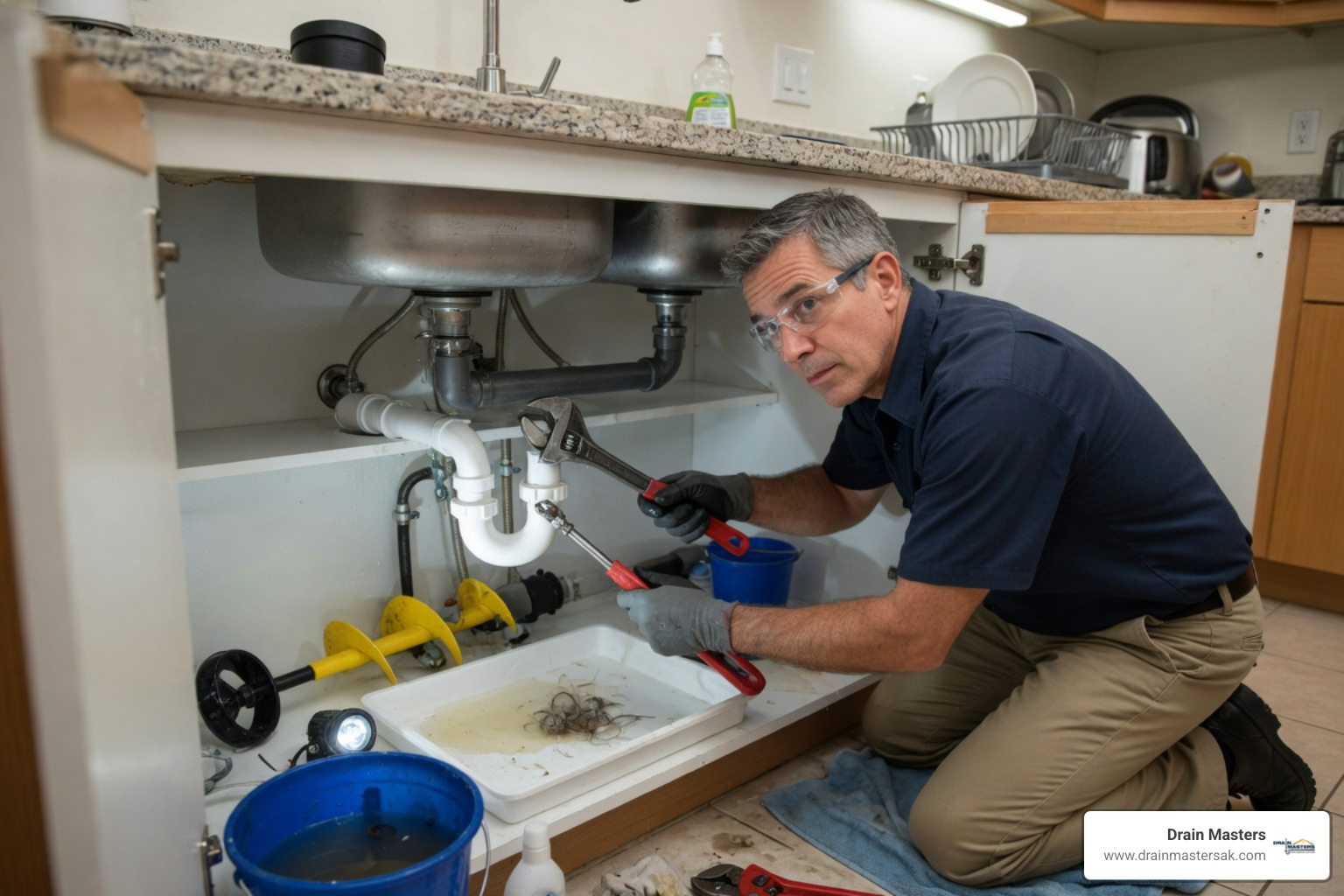
If you are trying to decide whether to tackle this yourself or call in professional help, take a look at our breakdown of when to tackle a plumbing issue yourself versus hiring an expert.
Step-by-Step Guide to Plunging and Snaking
Plunging is the simplest mechanical method and can solve about 90% of minor sink blockages.
- Use the right plunger: Ensure you are using a flat-bottomed cup plunger (designed for flat surfaces like sinks and tubs), not a flange plunger (which is designed for toilets).
- Seal the second drain: If you have a double-basin kitchen sink, you must seal the other drain side with a stopper or a wet rag. If you don’t, the pressure generated by plunging will simply escape out the other side rather than pushing against the clog.
- Fill and plunge: Fill the sink with 3 to 4 inches of water to cover the plunger cup. Place the plunger firmly over the drain, push down slowly to release trapped air, and then pump vigorously up and down for 15 to 20 seconds. Pull the plunger away quickly to dislodge the debris.
If plunging fails, a manual plumbing auger (drain snake) is your next step.
- Remove your sink’s drain strainer or stopper.
- Slowly feed the flexible metal cable down the drain pipe.
- When you feel resistance, you have reached either a sharp bend or the clog itself. Tighten the lock screw on the snake’s handle and turn the crank clockwise. This rotates the auger head, allowing it to either chew through the clog or hook onto it.
- Slowly retrieve the cable, cleaning off any retrieved debris with a rag as you pull it out.
Cleaning the P-Trap Directly
Often, the clog is located right in the curved pipe beneath your sink, known as the P-trap. Cleaning this area directly is highly effective.
- Place a bucket beneath the P-trap to catch any standing water and debris.
- Loosen the plastic slip nuts on either side of the curved trap pipe by hand. If they are tight or made of metal, use slip-joint pliers carefully to avoid cracking the pipes.
- Remove the P-trap and empty its contents into the bucket.
- Inspect the pipe for thick grease or food debris, and clean it out using an old brush and warm, soapy water.
- Reassemble the trap, taking care not to cross-thread the slip nuts or over-tighten them, which can split the plastic.
Special Considerations for Garbage Disposals and Septic Systems
Kitchen drains equipped with garbage disposals or connected to home septic systems require special care to prevent damage and maintain system health.
Maintaining a Garbage Disposal Without Damaging the Unit
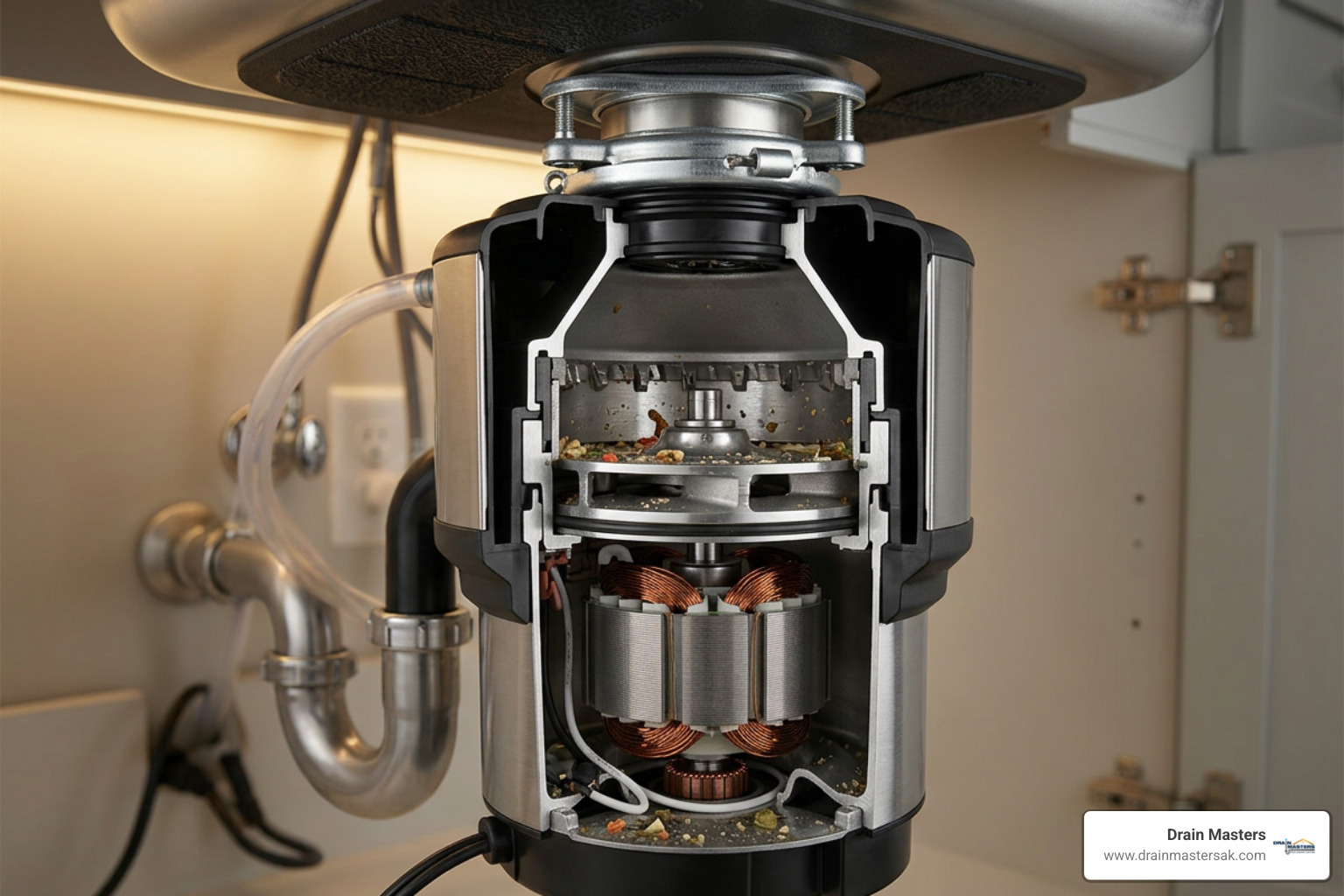
A garbage disposal does not actually have sharp, spinning blades; instead, it uses blunt impellers on a spinning plate to fling food waste against a stationary grinding ring. When grease and food residue coat these internal components, the unit can develop a severe odor and lose its grinding efficiency.
- The Ice and Salt Trick: To clean the grinding components naturally, pour two cups of ice cubes and one cup of coarse rock salt down the disposal. Turn on cold tap water and run the disposal for 30 seconds. The hard ice and abrasive salt will scour away organic buildup from the spinning plate and impellers.
- Deodorizing with Citrus: To freshen the smell, drop a few cut lemon, lime, or orange peels into the disposal while running cold water. The natural oils in the citrus skins will break down grease and leave a clean scent.
- Cleaning the Splash Guard: The black rubber splash guard at the sink opening is a major hotspot for black slime and mold. Pull it out (if removable) or scrub the underside thoroughly with an old toothbrush dipped in grease-cutting dish soap.
Septic System Safety When Cleaning Kitchen Sink Drain Lines
If your home in Anchorage, AK relies on a septic system, you must be incredibly selective about what goes down your drain. Septic systems rely on a delicate balance of live bacteria to break down household waste inside the tank.
Using harsh chemical drain cleaners, heavy bleach, or antibacterial soaps can kill these beneficial bacteria. Without them, solid waste will not break down, leading to rapid tank failure, clogged leach fields, and incredibly expensive repairs. Always stick to septic-safe, enzyme-based cleaners or natural baking soda and vinegar treatments to protect your septic ecosystem.
Preventive Maintenance: Keeping Your Drains Flowing Freely
The absolute best way to handle a clogged kitchen drain is to prevent it from happening in the first place. Understanding the difference between a quick fix and proper maintenance is key; you can read about this in our article on the differences between temporary fixes and long-term maintenance.
A Simple Weekly and Monthly Maintenance Routine
Incorporating a few quick habits into your household chore list will keep your plumbing system pristine for years to come:
- Daily: Always use a fine-mesh sink strainer to catch food particles, and empty it into the trash after every meal. Never pour liquid cooking grease down the sink; instead, let it cool in an old can and dispose of it in your household garbage.
- Weekly: At the end of the week, run hot tap water down your kitchen drain for two minutes to flush away any light grease before it has a chance to solidify.
- Monthly: Perform a deep deodorizing clean using the baking soda and vinegar method, followed by an enzyme-based treatment to keep biofilm and organic slime from coating your pipe walls.
When to Call a Professional Plumber in Anchorage, AK
While DIY methods are fantastic for minor, localized clogs, some plumbing situations require professional expertise and specialized equipment. Attempting to clear a deep sewer line blockage with retail tools can result in broken pipes or flooded homes.
Red flags that mean it is time to call a professional:
- Multiple clogged fixtures: If water backs up into your kitchen sink when you run the washing machine, or if both your kitchen and bathroom drains are slow, the clog is likely deep in your main sewer line.
- Sewer gas odors: A persistent smell of rotten eggs that does not go away after cleaning indicates sewer gas is bypassing your P-traps, pointing to a venting issue or a broken pipe.
- Recurring clogs: If your kitchen sink backs up every few weeks despite regular cleaning, there is likely an underlying structural issue, such as a sagging pipe or a heavy grease restriction deep in the line.
| Feature | DIY Drain Clearing | Professional Drain Cleaning |
|---|---|---|
| Tools Used | Cup plunger, retail hand snake, baking soda | Commercial augers, hydro-jetters, sewer cameras |
| Clog Reach | Typically limited to the first 10-15 feet of pipe | Can reach hundreds of feet down the main sewer line |
| Effectiveness | Breaks a hole through the clog to restore temporary flow | Scrubs pipe walls completely clean to prevent future clogs |
| Risk Level | Risk of pipe damage or chemical burns if done incorrectly | 100% safe when performed by licensed, insured professionals |
If you are experiencing any of these major red flags, we highly recommend scheduling a visit to have your secondary lines cleared out with our experienced team.
Professional Solutions: Hydro Jetting and Camera Inspections
When you call in our team at Drain Masters, we don’t just guess where the problem is. We use advanced diagnostic and cleaning technology to solve your drain issues permanently.
- Sewer Camera Inspections: We feed a high-resolution, waterproof camera on a flexible cable down your plumbing system. This allows us to see exactly what is blocking your drain, whether it is a dense grease clog, a foreign object, or structural damage, without tearing into your walls or yard.
- Hydro Jetting: For heavy grease buildup and stubborn clogs, we use hydro jetting. This process blasts highly pressurized water (up to 4,000 PSI) through your pipes. While a drain snake only punches a small hole through a clog, hydro jetting completely scrubs the interior walls of your pipes clean, restoring them to like-new condition.
Frequently Asked Questions About Cleaning Kitchen Sink Drains
1. How often should I clean my kitchen sink drain?
You should perform a basic hot water flush weekly to prevent grease from solidifying. For deep cleaning and odor prevention, use the baking soda and vinegar method or an enzymatic cleaner once a month.
2. Is baking soda and vinegar safe for all types of pipes?
Yes, the mild reaction between baking soda and white vinegar is completely safe for all common plumbing materials, including PVC plastic, copper, brass, and cast iron pipes.
3. Can I use boiling water to clear a clog in PVC pipes?
No, we do not recommend pouring boiling water (211°F) down PVC pipes. PVC pipes and the glue used at their joints are typically only rated to handle temperatures up to 140°F. Boiling water can soften the plastic and weaken the joints, leading to leaks. Use hot tap water instead.
4. Why does my kitchen sink drain smell like rotten eggs?
A rotten egg smell usually indicates sewer gas is escaping from your drain. This can happen if the water in your P-trap has evaporated (often in sinks that aren’t used frequently), if there is a blockage in your plumbing vent stack, or if organic debris is decomposing inside the pipe.
5. Are chemical drain cleaners safe for septic systems?
No. Chemical drain cleaners contain harsh caustic agents that destroy the beneficial bacteria inside your septic tank. Without these bacteria to break down solids, your septic system can fail, leading to backed-up lines and costly repairs.
6. How do I clean the black slime inside my garbage disposal splash guard?
The best method is manual scrubbing. Put on rubber gloves, apply grease-cutting dish soap to an old toothbrush or sponge, and thoroughly scrub both the top and underside of the rubber splash guard until the black biofilm is gone.
7. What should I never put down my kitchen sink drain?
Never put fats, cooking oils, grease, coffee grounds, eggshells, pasta, rice, potato peels, celery, or paint down your drain. These items are the leading causes of severe plumbing blockages.
8. Does grease-cutting dish soap actually help clear grease clogs?
Yes, high-quality dish soaps are formulated with powerful surfactants that break down grease molecules. Pouring half a cup of dish soap down a slow drain followed by a flush of hot water is an excellent way to clear mild grease buildup.
9. What is the difference between drain clearing and drain cleaning?
Drain clearing is a temporary fix that involves using a tool like a plunger or snake to punch a hole through a blockage to get water flowing again. Drain cleaning is a thorough process, like hydro jetting, that completely scrubs the interior walls of the pipes to remove all residue and prevent future clogs.
10. When should I stop DIY attempts and call a professional plumber?
You should stop DIY attempts if water is backing up into multiple fixtures, if you hear gurgling noises from other drains when using the sink, if you smell sewer gas, or if your DIY snaking attempts fail to clear the blockage after a few tries.
Keep Your Kitchen Flowing Smoothly with Drain Masters
Maintaining a clean kitchen sink drain does not have to be a daunting task. By practicing smart kitchen habits, such as keeping grease out of the plumbing, using sink strainers, and performing a simple monthly baking soda flush, you can prevent the vast majority of clogs and keep your kitchen smelling fresh.
However, when a stubborn clog refuses to budge, or if you are dealing with a deep mainline backup, trying to force a solution can lead to damaged pipes and messy water damage. At Drain Masters, we have served the Anchorage, AK community for over 20 years. As a local, family-owned business, we pride ourselves on providing upfront pricing, utilizing advanced tools like high-pressure hydro jetting and fiber-optic camera inspections, and successfully completing over 4,000 jobs annually.
Don’t let a backed-up sink disrupt your day. Contact the certified team at Drain Masters today for fast, reliable, and professional drain cleaning services that restore your pipes to like-new condition or expert professional plumbing services to keep your home running smoothly to keep your home’s pipes in pristine condition.