
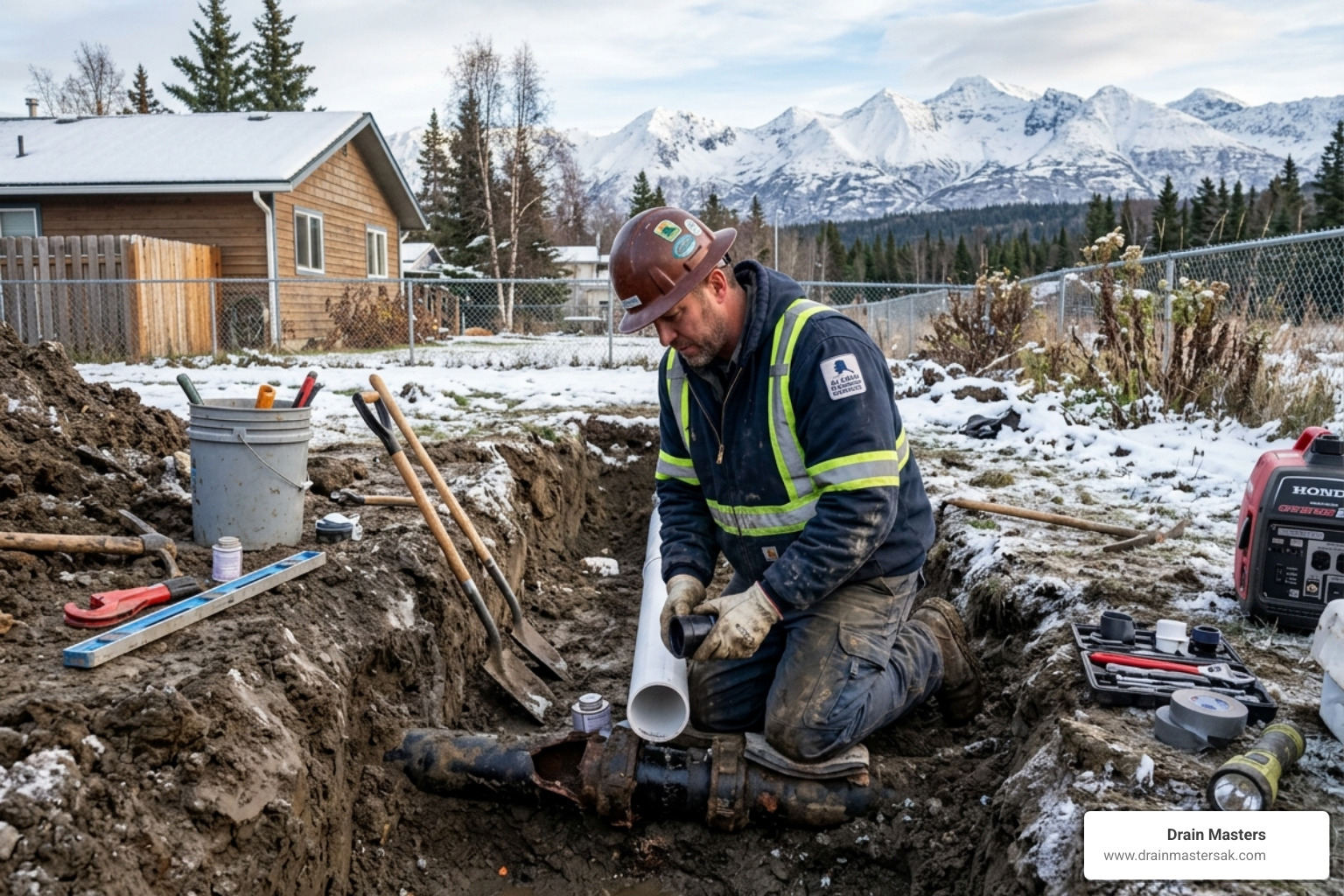
When Your Drains Start Warning You: Sewer Pipe Repair in Anchorage
If you need sewer pipe repair Anchorage homeowners can count on, here’s what you need to know right away:
Quick Answer: Sewer Pipe Repair in Anchorage
| Situation | What to Do |
|---|---|
| Sewage smell or backup | Call a sewer professional immediately |
| Slow drains in multiple fixtures | Schedule a camera inspection |
| Gurgling toilets | Likely a main line issue — don’t wait |
| Cracked or leaking pipe | Ask about trenchless CIPP lining |
| Collapsed or offset pipe | May require partial excavation + lining |
| Frozen or frost-damaged pipe | 24/7 emergency service available |
That smell isn’t just unpleasant. It’s a warning sign. A faint sewer odor, a drain that starts slowing down, or a toilet that gurgles when you run the sink can all signal a serious problem forming underground. In Anchorage, freeze-thaw cycles, deep frost, and shifting soil can put extra stress on sewer lines, making pipe problems both more common and more urgent than in many other places.
The good news? You don’t have to tear up your yard to fix it. Modern trenchless repair methods work year-round, even in Alaska’s harsh winters.
I’m Debra Blouin, General Manager of Drain Masters, a family-owned sewer and plumbing company in Anchorage with over 20 years of hands-on experience in sewer pipe repair Anchorage residents rely on through every season. In this guide, I’ll walk you through everything you need to know to identify, fix, and prevent sewer line problems in your home.
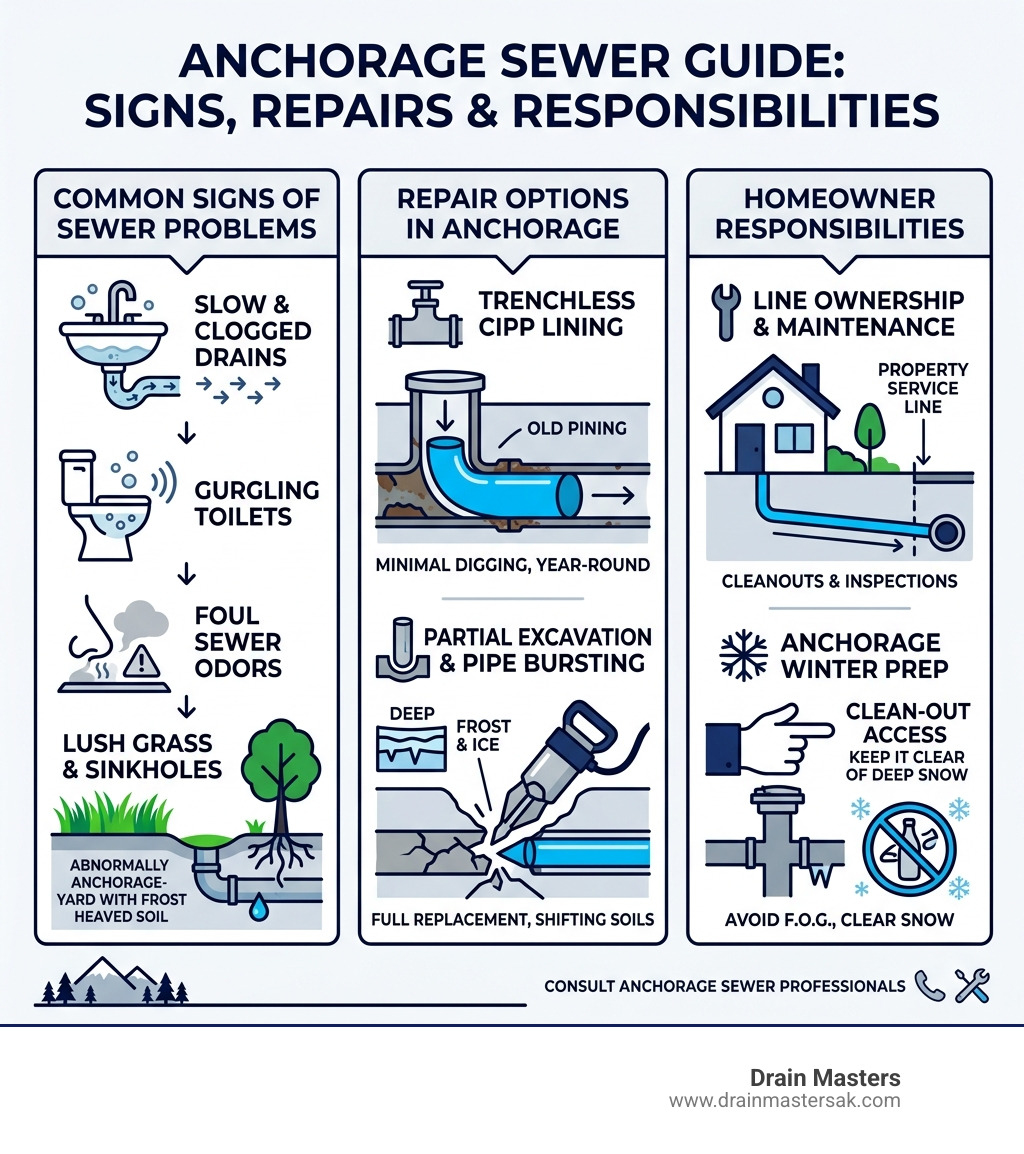
Identifying the Need for Sewer Pipe Repair in Anchorage
In our two decades of serving this community, we’ve seen that sewer lines rarely fail without giving a few hints first. However, in Alaska, those hints can be subtle until they become a full-blown emergency. Because our pipes are buried deep to avoid the frost line, a leak might not manifest as a wet spot in your yard like it would in the Lower 48. Instead, you have to listen to what your home is telling you.
Common Warning Signs
If you notice any of the following, it’s time to investigate:
- Gurgling Toilets: If your toilet bubbles or gurgles when you run the washing machine or take a shower, air is getting trapped in the line due to a blockage or a break.
- Sewage Backups: This is the most obvious sign. If water or raw sewage is coming up through your floor drains or bathtub, you have a main line failure.
- Multiple Clogs: One slow sink is a local clog. If the kitchen, bathroom, and laundry drains are all sluggish at once, the problem is further down the line.
- Persistent Odors: A “sewer gas” smell inside or immediately outside your home usually indicates a crack in the pipe or a dried-out trap that is allowing gases to escape.
The Role of Technology: Sewer Camera Inspections
In the old days, plumbers had to guess where the problem was. Today, we use a sewer camera inspection to see exactly what’s happening. We feed a high-definition, waterproof camera into your line to identify root intrusion, cracks, or collapsed sections. This is a critical step in our Anchorage sewer inspection guide because it allows us to pinpoint the issue without digging a single hole.
Anchorage-Specific Causes of Damage
Why do pipes fail here? Anchorage presents unique challenges:
- Frost Heaves: As the ground freezes and thaws, the soil expands and contracts with immense force. This “ground movement” can snap rigid pipes or cause joints to become “offset,” where two sections of pipe no longer line up.
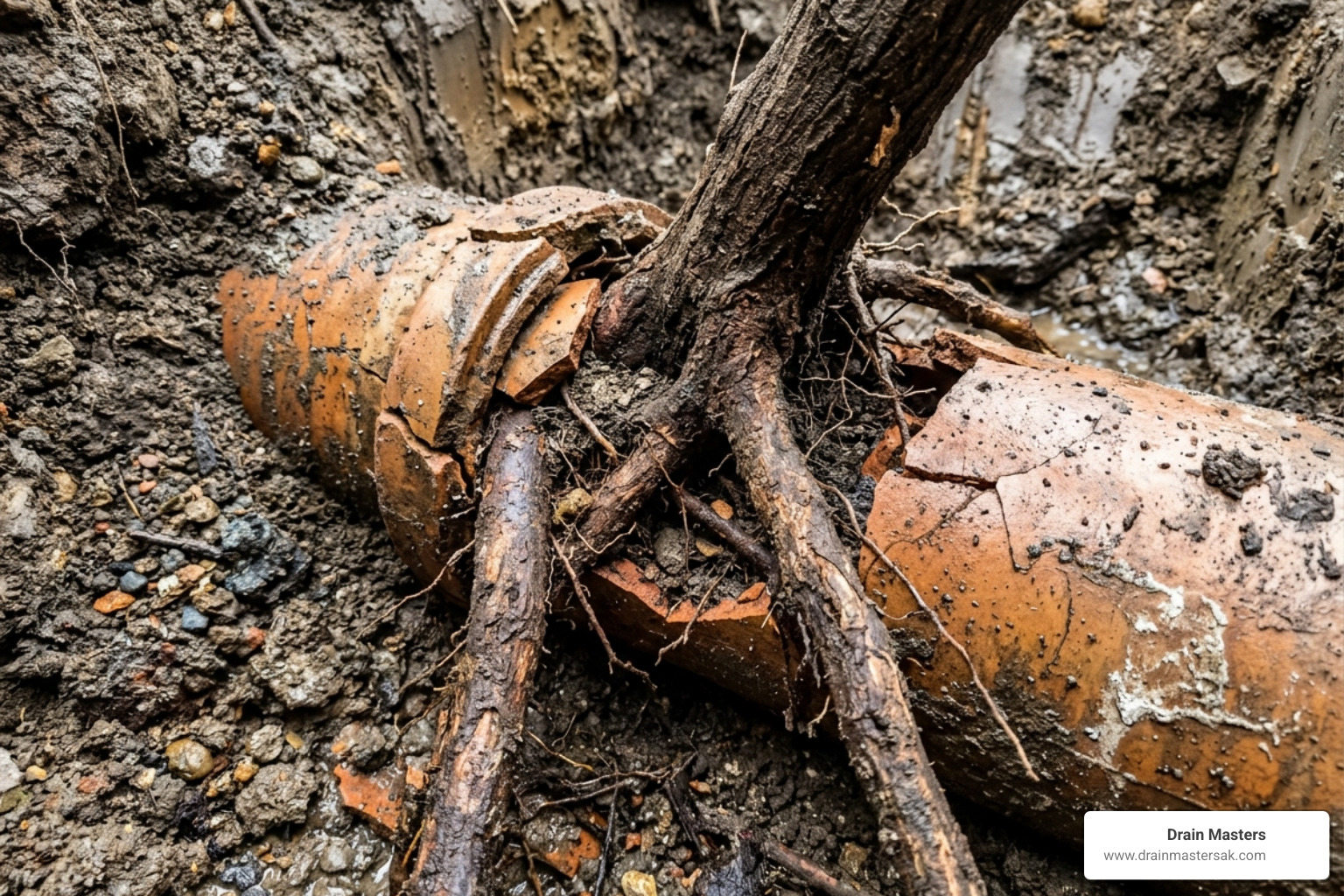
- Tree Root Intrusion: Even in our cold climate, roots seek out the warmth and moisture inside sewer pipes. Once they find a tiny crack or a loose joint, they grow inside, creating a “root ball” that catches debris and eventually shatters the pipe.
- Pipe Corrosion: Many older Anchorage homes still have cast iron or Orangeburg pipes. Over 40 to 50 years, these materials naturally corrode or “belly” (sag), leading to frequent backups.
Modern Solutions: Trenchless Sewer Pipe Repair Anchorage
For years, the only way to fix a sewer line was to bring in an excavator, dig a massive trench across your lawn (and likely your driveway), and physically replace the pipe. It was messy, expensive, and destructive.
At Drain Masters, we specialize in sewer pipe repair Anchorage residents prefer: Trenchless Technology. This approach allows us to fix your pipes from the inside out.
What is CIPP Lining?
One of the most effective trenchless methods is Cured-In-Place Pipe (CIPP) lining. So, what is Cured-In-Place Pipe (CIPP) lining? Essentially, we take a flexible, resin-coated tube and pull or “blow” it into your existing damaged pipe. Once in place, we inflate it so it presses against the old pipe walls.
Using hot water or steam curing, we turn that resin into a strong, seamless pipe within a pipe. Because heat cures the liner, this is a year-round service, so repairs can still be completed even when the ground is frozen solid.
Pipe Bursting
If the old pipe is too damaged for a liner (for example, if it has completely collapsed), we use “pipe bursting.” We pull a new HDPE (high-density polyethylene) pipe through the old one. A special “bursting head” breaks the old pipe apart and pushes the fragments into the surrounding soil, making room for the brand-new line. You can learn more about these options on our trenchless sewer line repair page.
When to Choose Trenchless Sewer Pipe Repair Anchorage
Trenchless isn’t just about saving your grass; it’s about efficiency. We recommend trenchless sewer repair/replacement in the following scenarios:
- Landscaping Preservation: If you have expensive landscaping, a paved driveway, or a deck over your sewer line, trenchless saves you thousands in restoration costs.
- Structural Integrity: CIPP lining creates a seamless pipe, which means there are no joints for roots to enter in the future.
- Offset Joints: If your pipes have shifted due to ground movement, lining can often bridge those gaps and restore flow.
- Bellied Pipes: While minor bellies can be lined, severe sags might still require a small “point repair” excavation before lining the rest of the run.
Long-Term Benefits of Sewer Pipe Repair Anchorage
When we perform a trenchless repair, we aren’t just patching a hole; we are installing a solution with a 50-year design life. The new inner pipe is highly resistant to chemical corrosion and root intrusion. Furthermore, the smooth interior of the CIPP liner often improves flow capacity compared to old, scaled cast iron.
Check out our sewer rehabilitation gallery to see real-world examples of how we’ve transformed failing Alaskan sewer lines into high-performing systems. Our comprehensive approach to sewer clearing, cleaning and repair ensures that the underlying problem is solved, not just masked.
Comparing Repair Methods and Costs
One of the first questions homeowners ask us is, “How much is this going to cost?” While every job in Anchorage is unique due to pipe depth and soil conditions, we can provide a general comparison of the two main approaches.
Traditional vs. Trenchless: A Comparison
| Feature | Traditional Excavation | Trenchless (CIPP/Bursting) |
|---|---|---|
| Digging Required | Full-length trench | 1-2 small access pits |
| Property Damage | High (lawn, driveways, trees) | Minimal |
| Repair Time | 3–7 days | 1–2 days |
| Restoration Cost | Significant (re-paving, sod) | Very Low |
| Lifespan | 40–50 years | 50+ years |
| Year-Round? | Difficult in winter | Yes (with steam curing) |
Understanding the Investment
The upfront cost of trenchless technology can sometimes be higher than the “per foot” cost of plastic pipe used in excavation. However, when you factor in the “hidden” costs, trenchless usually wins.
For example, if your sewer line runs under your driveway, a traditional repair requires you to pay for:
- Excavation and pipe replacement.
- Permit fees for street or sidewalk cuts.
- Backfilling and compacting soil.
- Repaving the driveway.
With trenchless, you skip steps 2, 3, and 4. When evaluating drain pipe lining vs replacement, always look at the total project cost, including restoration. We provide upfront pricing so there are no surprises when the bill arrives.
Maintenance Costs
Sometimes, a full repair isn’t needed yet. Regular sewer cleaning or sewer main clearing can extend the life of a pipe by removing grease and scale buildup. However, if the pipe is structurally compromised, cleaning is only a temporary fix.
Homeowner Responsibilities and Preventative Maintenance
A common point of confusion in Anchorage is: “Who is responsible for this pipe?”
According to Anchorage Water and Wastewater Utility (AWWU) regulations, the homeowner is responsible for the service line. This is the pipe that runs from your house all the way to the connection at the sewer main (usually located under the street or in a utility easement). If there is a clog, a freeze-up, or a break in that service line, it is the property owner’s job to fix it.
How to Prevent Future Issues
You can avoid the need for emergency sewer pipe repair Anchorage by following these local maintenance tips:
- Watch Your Flushing Habits: The only things that should go down your toilet are human waste and toilet paper. “Flushable” wipes are a leading cause of backups in Anchorage, as they don’t break down and often snag on small pipe imperfections.
- Grease is the Enemy: Never pour fats, oils, or grease down the drain. In our cold ground, grease solidifies almost instantly, creating “fatbergs” that are incredibly difficult to clear.
- Seasonal Inspections: If you live in an older neighborhood like Spenard or Rogers Park, consider a camera inspection every few years. Catching a small crack before the frost hits can save you a winter emergency.
- Locate Your Cleanout: Know where your sewer cleanout access point is. This is usually a pipe with a cap located in your basement or crawlspace, or sometimes in your yard. Keeping this accessible saves us time (and you money) during a service call.
If you aren’t sure of the condition of your pipes, read our guide on how to tell when your sewer line needs to be repaired vs replaced. For general information on maintaining your home’s waste system, visit our sewers & drains page.
Frequently Asked Questions about Sewer Repair
What should I do during a sewer emergency in Anchorage?
If you have sewage backing up into your home, stop using water immediately. Do not flush toilets, run the dishwasher, or use the laundry. If the backup is coming from a floor drain, you may need to shut off your main water valve to ensure no one accidentally adds more water to the system.
Sewer backups pose serious health risks due to bacteria and pathogens. Call for emergency plumbing service immediately. At Drain Masters, we offer 24/7 response to stabilize the situation, perform a professional diagnosis, and get your life back to normal.
Are financing options available for major sewer repairs?
We understand that a sewer failure is often an unexpected expense. We provide upfront pricing so you know the exact cost before work begins. To help manage the investment, we offer financing options and payment plans for qualified homeowners.
Additionally, check your homeowner’s insurance policy. Some plans include a “sewer backup” or “service line” rider that may cover a portion of the repair costs. We can provide the necessary documentation and project estimates for your insurance claim.
How does the Anchorage climate cause pipe damage?
Our environment is a “perfect storm” for plumbing. The deep freeze in winter can reach several feet into the ground. If a sewer vent on your roof freezes over with frost, it creates a vacuum that prevents drains from flowing.
Furthermore, the soil expansion during thawing cycles can put thousands of pounds of pressure on buried pipes. Scientific research on permafrost and infrastructure in the North shows that as the ground shifts, rigid materials like clay or cast iron are the first to fail. This is why we often recommend flexible HDPE pipe or CIPP liners, which can “give” slightly with the ground movement without snapping.
Conclusion
A sewer problem is stressful, but it doesn’t have to be a disaster. Whether you’re dealing with a mysterious smell, a stubborn clog, or a total pipe collapse, the team at Drain Masters is here to help.
As a family-owned business with over 20 years of experience right here in Anchorage, we understand the local soil, the local codes, and the local weather. We complete over 4,000 jobs annually, using advanced tools and trenchless technology to provide lasting solutions with minimal disruption to your life.
Don’t wait for a small smell to become a big flood. Schedule professional sewer service with us today and let us give you the peace of mind that comes with a healthy, reliable sewer system.