
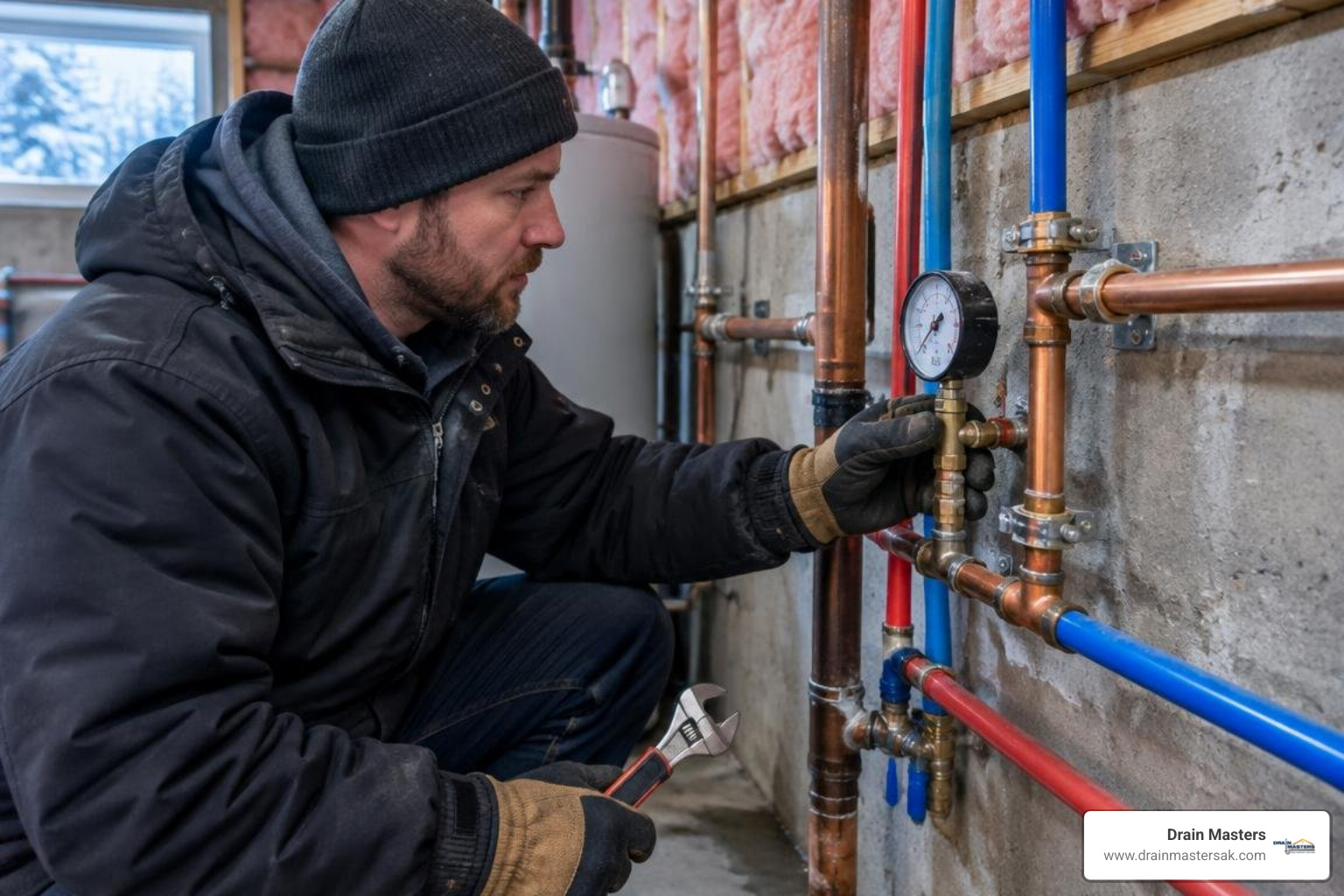
7 Critical Plumbing Problems to Catch Before Anchorage Freezes
A thorough pre-freeze plumbing inspection in Anchorage, AK should focus on seven critical vulnerabilities: trapped water in outdoor hose bibbs, sub-surface sewer lateral fractures, water heater sediment buildup, inadequate crawl space pipe insulation, concealed DWV line slope failures, gas supply line leaks, and failing backflow preventers. Identifying these issues before the first hard freeze gives property owners an opportunity to diagnose hidden vulnerabilities, confirm freeze protection systems, and ensure structural components meet safety guidelines across Southcentral Alaska.
When winter settles across Anchorage, AK, residential plumbing networks face sustained sub-zero temperatures, deep ground freezing, and severe hydraulic stress. Water expands by roughly 9% in volume as it transitions into ice, exerting tremendous mechanical force against copper, PEX, and cast-iron distribution lines. A minor stress fracture, an uninsulated line passing through a cold rim joist, or a sluggish underground lateral can quickly escalate into a catastrophic failure once glacial soils freeze solid. The structural shift of soil during early winter creates substantial lateral strain on subterranean utilities, turning minor misalignments into major structural breaks.
Taking time for scheduling preventive plumbing maintenance before the first hard freeze gives property owners an opportunity to diagnose hidden vulnerabilities, confirm freeze protection systems, and ensure structural components meet safety guidelines. Rather than dealing with destructive mid-winter water emergencies, a targeted diagnostic evaluation isolates mechanical defects before sub-arctic weather locks the ground in place. Unaddressed water leaks inside crawl spaces can saturate structural joists, encourage aggressive mold growth, and lead to substantial structural repair projects.
During a pre-freeze evaluation, professional technicians utilize non-destructive diagnostic tools, such as high-definition fiber-optic cameras, acoustic listening discs, and infrared thermal imaging sensors. These tools allow technicians to identify hidden vulnerabilities behind finished drywall, inside unconditioned crawl spaces, and deep within subterranean lines without unnecessary property demolition. Taking a proactive approach ensures heating appliances, distribution lines, and drainage assemblies operate smoothly through the darkest months of the year. Below are the seven critical plumbing problems every property owner in Anchorage, AK must identify and resolve before freezing temperatures arrive.
The 7 Critical Plumbing Problems Worth Finding Before the Freeze
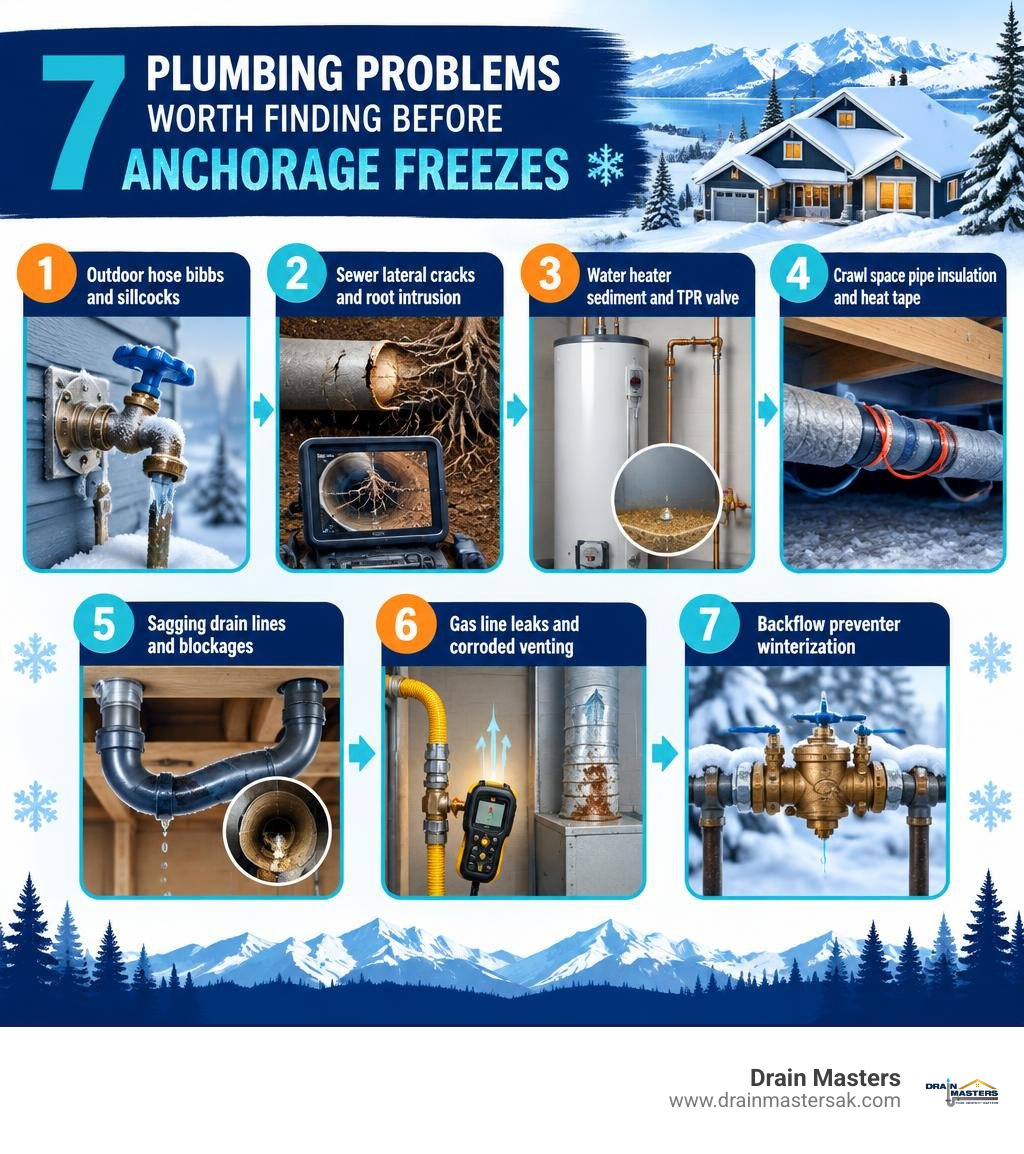
Glacial silt soils across Southcentral Alaska experience dramatic freeze-thaw cycles that trigger ground shifting, pipe shearing, and severe frost heave. Identifying these seven high-risk plumbing failures before freezing weather strikes ensures reliable domestic water flow, protects building structures, and prevents emergency interventions.
Problem No. 1: Trapped Water in Outdoor Hose Bibbs and Sillcocks
One of the most widespread causes of early-winter water damage across Anchorage, AK involves trapped moisture inside exterior sillcocks and hose bibbs. Modern frost-free sillcocks feature an elongated valve stem that positions the shut-off seat well inside the heated envelope of the home. However, if an outdoor garden hose remains attached as temperatures plunge below freezing, residual water cannot drain freely from the brass barrel.
The trapped liquid freezes, expands, and splits the copper casing inside the exterior wall framing. Because the shut-off valve remains closed throughout winter, the homeowner often remains unaware of the rupture until the spigot is turned on the following spring. At that moment, full municipal water pressure discharges directly into wall cavities, floor joists, and crawl space insulation, causing extensive structural rot and mold amplification.
Diagnostic Check and Resolution: Disconnect, thoroughly drain, and store all garden hoses before early autumn freezes arrive in Anchorage, AK. For older non-frost-free spigots, locate the dedicated interior shut-off valve, close it firmly, open the exterior spigot, and open the small bleeder cap on the interior valve body to drain remaining moisture into a bucket. If a homeowner suspects a hairline split, a licensed professional should inspect the wall cavity with thermal imaging to rule out concealed structural leaks.
Problem No. 2: Sub-Surface Sewer Lateral Fractures and Root Intrusion
Your primary building sewer lateral transports all household wastewater to the municipal collection main beneath the street. In Anchorage, AK, seismic shifts, historic ground settlement, and aggressive root systems frequently compromise underground clay, cast-iron, or older plastic sewer lines.
During extreme cold, the frost line penetrates several feet into soil, placing downward loads on misaligned pipe joints. A minor pipe fracture or offset joint quickly catches toilet paper and solid waste, producing sudden, unsanitary sewer backups inside the home. Clearing a frozen or structurally collapsed line during a Southcentral Alaska winter requires emergency excavation through frozen ground. Arranging for detailed sewer camera diagnostics before the ground freezes solid allows technicians to detect hidden offsets, structural bellies, and invasive tree roots so they can be cleaned or restored prior to winter freeze-up.
Problem No. 3: Water Heater Sediment Buildup and Faulty Relief Valves
Water heaters operate under heavy thermal stress during sub-zero weather because incoming municipal supply water drops near 34 degrees Fahrenheit. When hard mineral sediment settles on the tank floor, it creates an insulating barrier between the gas burner or lower electric element and the water. This buildup causes loud popping noises, slow recovery rates, localized tank overheating, and premature metal fatigue.
Simultaneously, the temperature-pressure relief (TPR) valve serves as the vital emergency safety release for excessive pressure and superheated water. Over time, mineral scale can crust over the valve seat or seize the spring mechanism entirely. According to maintenance advisories published by the U.S. Department of Energy, regular sediment flushing and component testing preserve operating efficiency and extend mechanical service life. Technicians manually test the TPR valve discharge line, evaluate the sacrificial anode rod for depletion, and flush sediment deposits to maintain heating reliability.
Problem No. 4: Inadequate Crawl Space Pipe Insulation and Missing Heat Tape
Unconditioned crawl spaces and ventilated perimeter foundations are common throughout residential construction in Anchorage, AK. Domestic water supply lines routed through these spaces depend on high-density closed-cell elastomeric insulation and active electric heat trace cables to prevent instant freezing.
Thermal bridging occurs wherever insulation is missing, torn, or compressed, allowing cold exterior drafts to chill the pipe wall. Furthermore, older resistance heat tapes can quietly fail or short out without displaying external symptoms. During an inspection, specialists use thermal cameras to verify that self-regulating heat trace cables produce consistent wattage along the entire pipe run, ensuring full coverage at high-risk foundation rim joists and wall penetrations. Addressing these vulnerabilities avoids burst pipes and crawl space flooding during deep winter freezes.
Problem No. 5: Concealed DWV Line Slopes and Unchecked Drain Blockages
Your Drain-Waste-Vent (DWV) piping system relies entirely on precise gravity pitch, generally one-quarter inch of downward fall per linear foot, to transport wastewater smoothly outward. When joists settle or hanging brackets loosen, pipe sections can develop low points, commonly called bellies, where standing water continuously pools. An Anchorage sewer inspection guide explains why these hidden sags can contribute to recurring drain trouble when cold weather arrives.
During sub-zero cold snaps, cold atmospheric air descending through the roof vent stack can turn pooled wastewater into solid ice dams. When technicians perform professional drain line video inspections of domestic drainage, they look for low slopes, structural sagging, and accumulated grease that elevate the risk of sudden freeze blockages. Resolving poor drainage slopes in autumn ensures continuous gravity discharge regardless of exterior temperatures.
Problem No. 6: Gas Supply Line Leaks and Corroded Vent Piping
Because residential properties in Anchorage, AK remain tightly sealed against extreme cold throughout winter, fuel gas integrity and combustion ventilation are vital life-safety concerns. Boilers, furnaces, heating and cooling units, dual-fuel air-conditioning systems, and gas-fired water heaters demand unobstructed exhaust pathways to expel toxic combustion byproducts outdoors.
Technicians test black iron and corrugated stainless steel fuel lines using non-corrosive bubbling solutions and electronic combustible gas sniffers to catch loose fittings or micro-fractures. They also inspect galvanized venting for rust pinholes, inadequate upward slope, and loose joint screws to prevent dangerous carbon monoxide from entering the living areas. Making sure gas fittings and heating-system combustion venting remain airtight keeps households safe through months of continuous heating demand.
Problem No. 7: Failing Backflow Preventers and Cross-Connection Risks
Backflow prevention assemblies protect household drinking water from cross-contamination caused by pressure drops in the municipal main. Underground lawn irrigation lines, commercial fire systems, and boiler makeup water feeds utilize testable backflow preventers to keep non-potable water from siphoning into the potable water supply.
If backflow assemblies are not fully isolated, tested, and blown clear with compressed air before freezing weather, trapped water inside the internal check valves, test cocks, and differential relief valves will freeze and rupture the heavy bronze housing. An un-winterized backflow assembly results in immediate flooding when pressurized and leaves the domestic drinking water supply unprotected from hazardous contaminants. Certified technicians shut off supply feeds, clear internal chambers, and seal assemblies before sub-zero weather sets in.
Municipal Compliance and Codes for Resolving Freeze Vulnerabilities
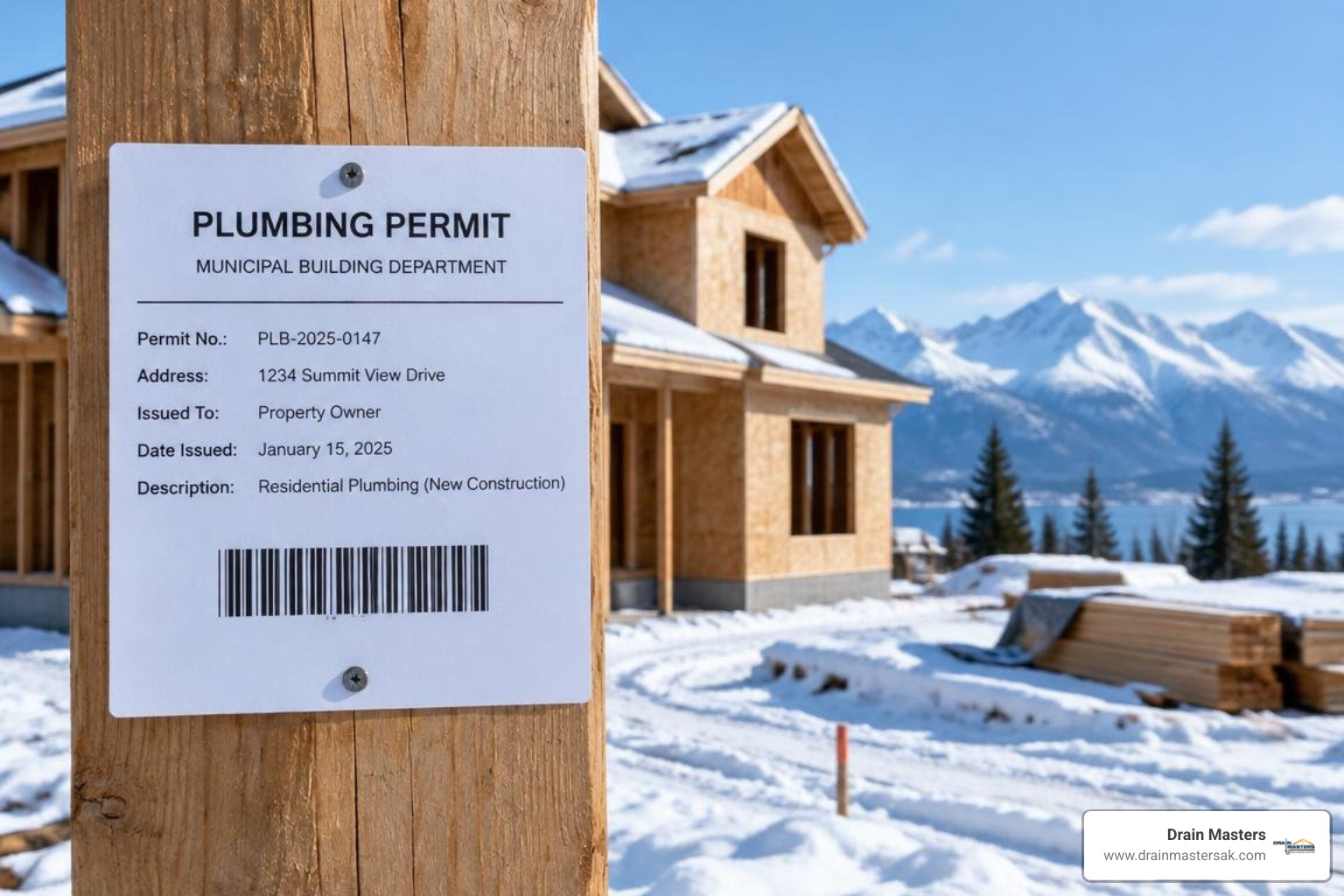
Correcting these seven pre-winter plumbing defects often requires code-compliant repairs, structural pipe realignments, or equipment replacements. Working with licensed contractors specializing in comprehensive residential plumbing solutions ensures all remediation work adheres to municipal safety standards.
Anchorage Plumbing Standards for Freeze Protection
Plumbing repairs in Anchorage, AK must satisfy Anchorage Municipal Code Title 23, which incorporates the International Residential Code and Uniform Plumbing Code alongside local sub-arctic amendments. When evaluating findings from advanced plumbing inspection reports and resolving line defects, plumbers ensure all remediation complies with local burial depth and thermal protection rules.
Routine maintenance, such as draining outdoor spigots, clearing minor clogs, or replacing faucet cartridges, does not require municipal permitting. However, major corrections, such as replacing failed water heaters, repairing fractured underground sewer laterals, installing new gas supply branches, or reconfiguring uninsulated water distribution runs, require formal permits and official municipal sign-offs.
Mandatory Inspection Milestones for Freeze Corrections
When major structural or mechanical repairs are necessary to resolve these freeze vulnerabilities, local building authorities require key compliance checkpoints:
- Underground Verification: Completed prior to backfilling excavated sewer lateral trenches or buried water service repairs to confirm adequate trench depth, gravel bedding, slope, and hydrostatic pressure holds.
- Rough-In Evaluation: Conducted while structural bays and unconditioned crawl spaces remain accessible to inspect supply line support, active heat trace circuits, insulation clearances, and fuel gas piping integrity for connected heating and cooling systems.
- Final Operational Review: Completed once all heating units, freeze protection hardware, and safety relief valves are fully installed, verifying balanced operational flow and life-safety compliance.
Adhering to local code requirements ensures durable protection against sub-zero climate damage, avoids municipal enforcement delays, and guarantees homeowner insurance protections remain intact throughout winter.
Frequently Asked Questions
Why do outdoor hose bibbs freeze and burst even if they are turned off?
Trapped water inside an attached garden hose prevents the internal barrel of a frost-free sillcock from draining. When temperatures drop below freezing, residual water trapped in the casing freezes, expands by 9%, and ruptures the copper pipe within the exterior wall.
How does deep ground freezing cause sub-surface sewer lateral backups in Anchorage, AK?
Freezing temperatures push the frost line deep into Southcentral Alaska glacial silt soils, exerting heavy downward pressure on buried sewer pipes. Misaligned joints, root intrusions, and structural dips catch solid waste, leading to complete blockages and severe sewage backups.
What are the main warning signs of water heater sediment buildup before winter?
Common warning signs include loud popping or rumbling sounds during heating cycles, slow hot water recovery times, fluctuating water temperatures, and mineral buildup around the temperature-pressure relief valve discharge tube.
Why is electric heat tape necessary for crawl space water lines in Anchorage, AK?
Unconditioned crawl spaces frequently experience sub-zero drafts. High-density pipe insulation slows heat loss but cannot generate warmth. Active self-regulating heat trace cables provide continuous thermal energy to keep interior supply pipes above freezing.
How do sagging DWV drain lines lead to solid ice blockages during cold snaps?
When waste pipes sag or lose their required downward slope, wastewater pools in low sections. Cold air circulating through the building vent stack freezes this standing water, forming solid ice dams that halt indoor drainage.
How do technicians detect concealed gas leaks and combustion venting hazards before freeze-up?
Plumbers utilize electronic combustible gas detectors and bubbling solutions on fuel fittings, combined with draft testing and visual inspections of vent piping to verify that toxic carbon monoxide exhausts safely outdoors.
What happens if an outdoor backflow preventer is not winterized before the first freeze?
Trapped moisture inside internal check valves and bronze housings freezes rapidly, splitting the metal assembly. This causes massive water leaks upon repressurization and creates serious cross-contamination hazards for household drinking water.
Can thermal imaging cameras identify freeze vulnerabilities without opening walls?
Yes. Infrared thermal imaging cameras detect temperature differentials through finished walls and ceiling drywall, revealing missing insulation, cold exterior drafts, failing heat tape sections, and concealed moisture leaks non-destructively.
Which pre-winter plumbing repairs require municipal permits in Anchorage, AK?
Permits are required for water heater replacements, underground sewer lateral excavations, gas line extensions, and major water supply repiping. Routine maintenance, spigot draining, and fixture cartridge swaps are exempt from permitting.
What steps should an Anchorage, AK homeowner take immediately if a supply line freezes?
Immediately shut off the main water supply valve to prevent flooding when the line thaws. Keep faucets open, gently apply indirect heat using a space heater or hairdryer, and contact a licensed plumbing professional immediately.
Conclusion
Preparing your plumbing system for the long sub-zero winter is essential for every property owner across Anchorage, AK. Scheduling a seasonal diagnostic evaluation gives you total peace of mind before heavy snow and freezing temperatures arrive.
For complex projects, code-compliant upgrades, or complete whole-home seasonal tune-ups, always rely on experienced licensed professionals who understand the unique climate, soil movements, and local building codes of Southcentral Alaska. Protect your home and keep your water flowing reliably this winter by contacting Drain Masters to contact our professional plumbing inspection technicians today.