
When Pipes Freeze: What Every Anchorage Homeowner Needs to Know
Frozen water pipe repair is something most Alaskan homeowners will face at least once. Here is what to do, fast:
Quick steps to fix a frozen pipe:
- Shut off the main water supply if you suspect a burst or major leak
- Open the faucet connected to the frozen pipe to relieve pressure
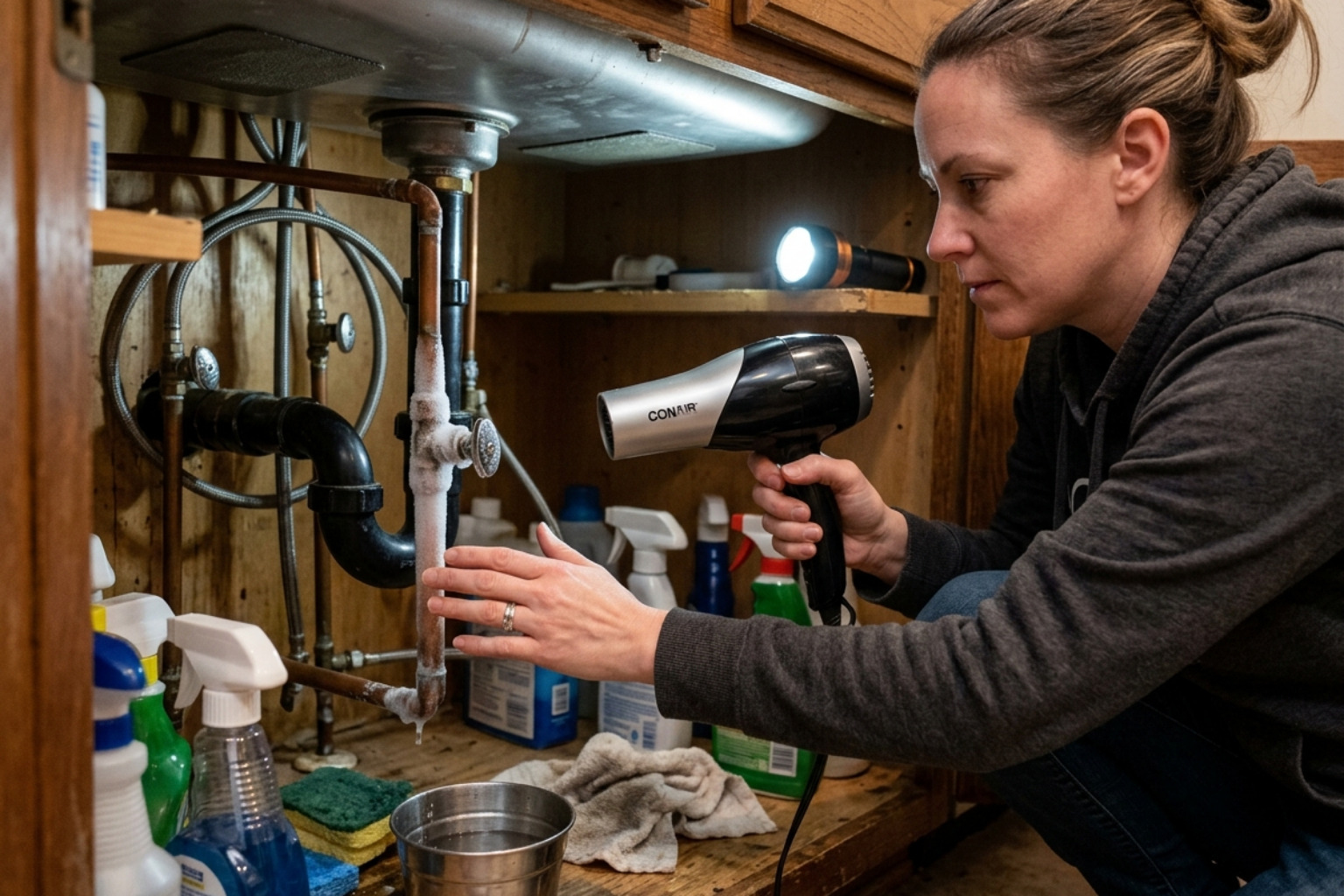
- Apply gentle heat using a hair dryer, electric heating pad, or warm towels, starting near the faucet and working toward the coldest section
- Never use open flames like blowtorches or candles near pipes
- Check for leaks once water starts flowing again
- Call a licensed plumber if you cannot locate or reach the frozen section, or if a pipe has burst
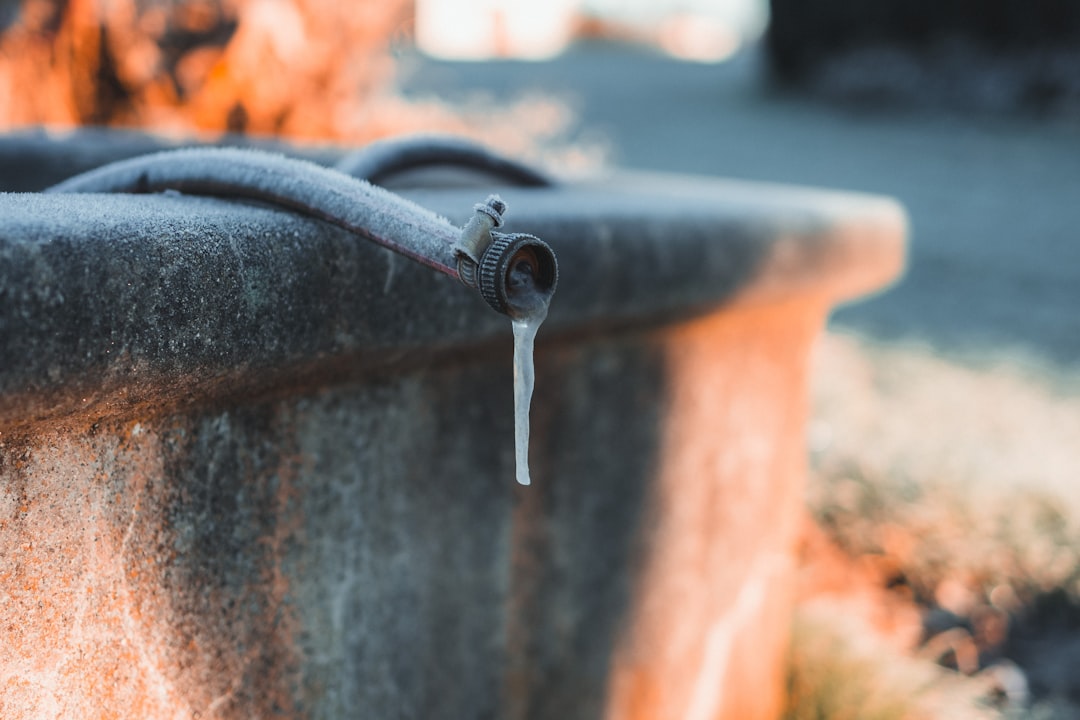
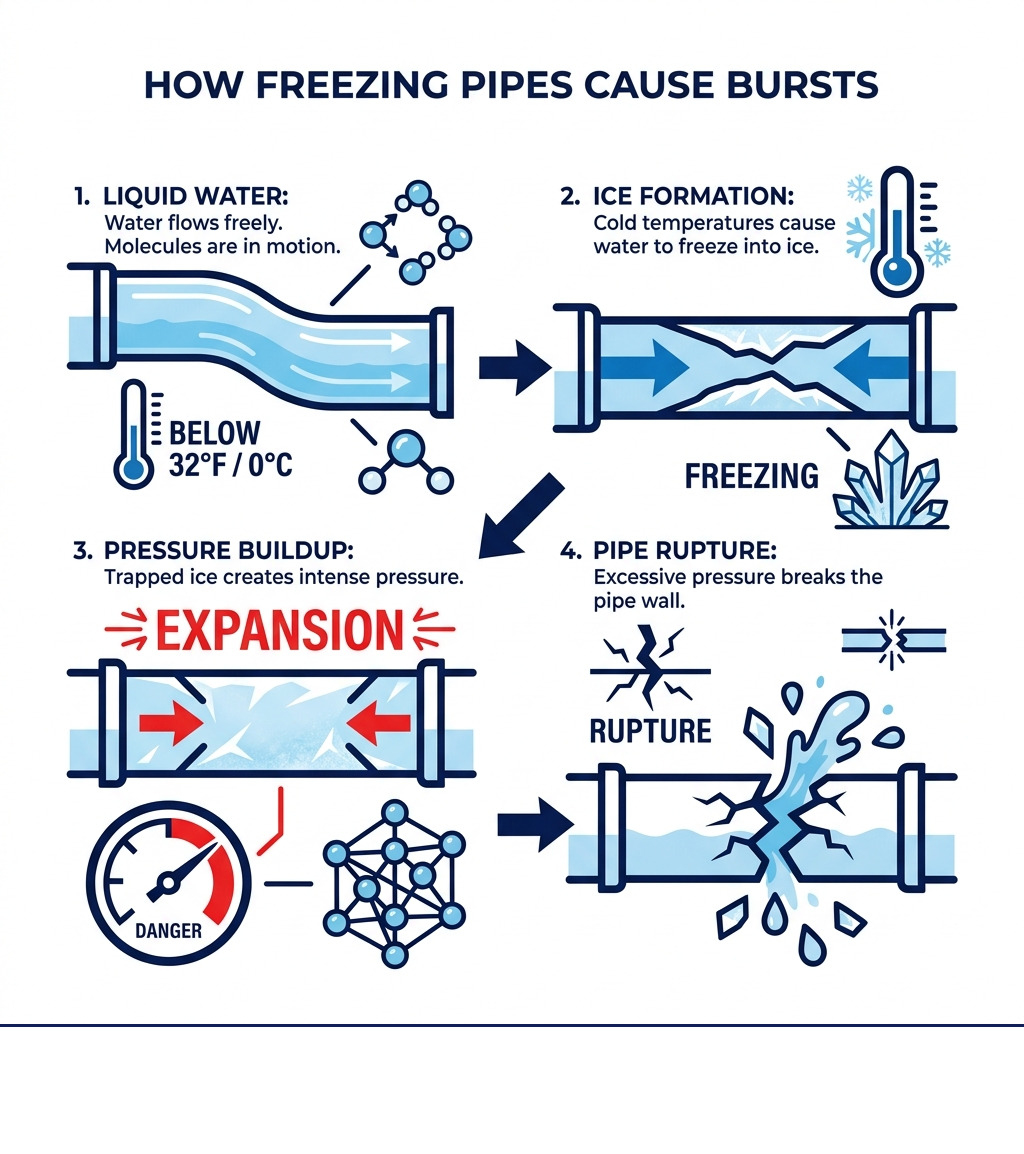
Water is unusual in one important way: it expands as it freezes. That expansion puts enormous pressure on whatever is containing it, whether that is metal, copper, or plastic pipe. In fact, even a tiny crack caused by that pressure can release more than 250 gallons of water in a single day. And in Anchorage, where temperatures regularly drop well below the 20-degree Fahrenheit threshold at which exposed pipes begin to freeze, the risk is very real, very fast, and very costly if ignored.
The good news? Many frozen pipes can be handled at home without an emergency service call, as long as you act quickly and carefully.
I’m Debra Blouin, General Manager of Drain Masters here in Anchorage, and with over two decades of hands-on experience in plumbing, drain, and sewer services, frozen water pipe repair is one of the most common cold-weather challenges I see Alaskan homeowners face. In this guide, I will walk you through exactly what to do, step by step, so you can handle it safely and know when it is time to call in the pros.
Identifying the Signs and Locating the Freeze
Before you can start a frozen water pipe repair, you have to know what you are looking for. Usually, the first sign is a surprise in the morning: you turn on the kitchen faucet, and instead of a steady stream, you get a pathetic trickle or nothing at all.
However, the signs can be more subtle. You might notice:
- Frost on the pipe: If you can see the pipe, look for a light coating of frost or ice on the exterior.
- Bulging metal: As ice expands, it can actually deform the pipe, making it look slightly “swollen.”
- Gurgling drains: Sometimes the issue is not the supply line but the drain. If you hear strange noises or smell sewer gases, you might be dealing with ice blockages in your drainage system.
- Damp spots: If a pipe has already cracked, you might see moisture on drywall or ceilings.
Most freezes happen in specific “danger zones.” These are typically unheated areas like crawl spaces, attics, or garages. Pipes running along exterior walls are also prime candidates, especially if the insulation is thin or missing.
Finding the Source for Frozen Water Pipe Repair
To find the exact spot that needs thawing, start by testing every faucet in the house. If the cold water works in the kitchen but not the bathroom, the freeze is likely in a branch line leading to that bathroom. If no water flows anywhere in the house, the freeze is likely near the main water meter or where the service line enters the home.
You can use an infrared thermometer to scan for cold spots along a wall or pipe. If you do not have one, simply running your hand along the pipe (carefully!) can help you find the section that feels significantly colder than the rest.
Step-by-Step Guide to Thawing Pipes Safely
Once you have located the freeze, it is time to get the water moving again. The golden rule here is patience. You want to thaw the pipe slowly and safely.
- Open the Faucet: This is the most important step. As the ice melts, the water needs a place to go. Opening the tap also helps relieve the pressure buildup between the ice blockage and the faucet, which is often where the actual burst occurs.
- Relieve Pressure: Keep the tap open throughout the entire process. Even a tiny trickle of melting water helps wear away the rest of the ice.
- Apply Safe Heat: Use a hair dryer on a low setting, an electric heating pad wrapped around the pipe, or even a space heater positioned at a safe distance. Always start thawing near the faucet and work your way back toward the frozen area. This ensures the melting water can escape through the open tap.
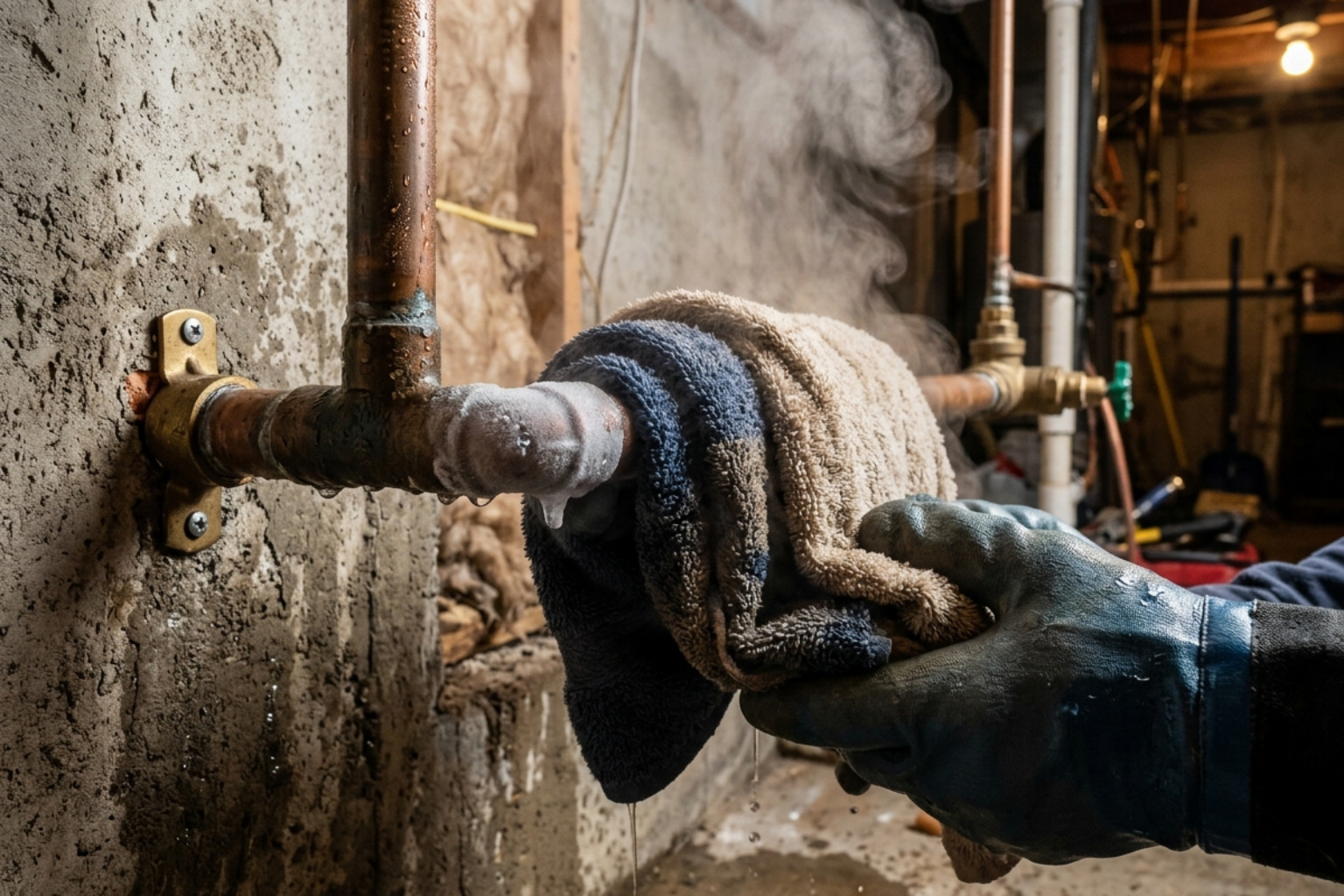
- The “Warm Towel” Method: If you do not have electricity nearby, you can wrap the pipe in towels soaked in hot water. Replace them frequently as they cool down.
It is vital to follow safety protocols for thawing pipes to avoid a disaster. Never use a blowtorch or any open flame. The extreme heat can boil the water inside the pipe, causing it to explode, or worse, start a fire in your walls.
Material Specifics for Frozen Water Pipe Repair
The type of pipe you have changes how you should handle the repair.
- Copper: These are highly conductive, meaning they freeze quickly but also thaw relatively fast. However, they are prone to rigid cracking.
- PEX: This flexible plastic is much more forgiving and can often expand without breaking. However, it can still fail at the fittings.
- PVC: Common in drain lines, PVC becomes very brittle in Anchorage winters. A frozen PVC pipe is very likely to shatter if hit or stressed.
If your pipes are old or have frozen multiple times, you might want to look into modern repiping solutions to replace vulnerable sections with more durable materials.
What to Do if a Pipe Bursts During Thawing
Sometimes, despite your best efforts, the pipe is already broken before you even start thawing. You will know this has happened when water starts spraying out as the ice melts.
Immediately head to your main shut-off valve and turn it off. In Anchorage, this is usually located in the basement or a utility closet near the front of the house. If you cannot find it, you are risking a massive flood. Remember, a burst pipe can dump 250 gallons of water into your home in a single day.
Once the water is off, turn off the electricity to the affected area if there is any risk of water contacting outlets or appliances. If you are facing a flood, you will need emergency assistance with leak detection to find every crack.
Temporary vs. Permanent Repairs
| Repair Type | Method | Best For | Durability |
|---|---|---|---|
| Pipe Clamp | Metal sleeve with rubber gasket | Small pinholes or straight cracks | Temporary |
| Rubber Patch | Heavy rubber held by hose clamps | Emergency leaks on straight pipe | Temporary |
| Epoxy Putty | Hardening compound | Small leaks in tight corners | Short-term |
| Section Replacement | Cutting out pipe and installing new | Major bursts or shattered PVC | Permanent |
While temporary fixes can save your basement in the middle of the night, you should always follow up with professional plumbing repairs to ensure the line is sound for the rest of the winter.
Understanding the Costs of Frozen Water Pipe Repair
In 2026, the average cost to repair a burst pipe is around $500, though this can range from $150 for a simple fix to over $5,000 if the damage is extensive or involves underground lines. A mainline burst typically costs around $1,100.
That plumbers often charge an hourly rate for emergency calls, which can average $330 per hour during a deep freeze when everyone’s pipes are failing at once. Investing in prevention is always cheaper than an emergency repair.
Long-Term Prevention Strategies for Cold Climates
In Anchorage, the best frozen water pipe repair is the one you never have to do. We recommend a multi-layered approach to winterizing your home.
- Insulate Everything: Use foam pipe sleeves or UL-listed heat tape on any pipe in an unheated area. In a pinch, even wrapping pipes in 1/4 inch of newspaper can provide significant protection during a cold snap.
- Seal the Leaks: Cold air whistling through a crack in the foundation can freeze a pipe in hours. Use caulk or spray foam to seal gaps where pipes enter the home.
- Thermostat Settings: Never let your home drop below 55 degrees Fahrenheit, even if you are heading out of town.
- The “Pencil Stream”: When temperatures drop below zero, let a faucet furthest from the main shut-off drip at a steady “pencil-lead” thickness. This keeps water moving and prevents the static freeze.
You can find more detailed advice on protecting your plumbing from the cold on our blog, or check out the Red Cross winter prep guide for a comprehensive checklist.
Frequently Asked Questions about Frozen Pipes
How long does it take for pipes to thaw naturally?
If you choose to wait for the weather to warm up, it can take 12 to 24 hours once temperatures rise above 32 degrees. However, we do not recommend this. Waiting increases the time the pipe is under pressure, which significantly increases the risk of a burst. Experts suggest internal plumbing should be addressed immediately to prevent property damage.
Can I use a space heater to unfreeze my plumbing?
Yes, but you must be extremely careful. Keep the heater at least three feet away from any flammable materials (like wooden studs or insulation) and never leave it unattended. Space heaters in cramped crawl spaces are a major fire hazard.
Will pouring hot water down the drain help?
Generally, no. If the supply line is frozen, pouring water down the drain does nothing. If the drain itself is frozen, boiling water can cause “thermal shock,” which can crack PVC pipes or porcelain fixtures. If you suspect your sewer lines are the problem, you need to identify the specific signs of a frozen sewer before taking action.
Conclusion
Handling a frozen water pipe repair on your own is possible with the right tools and a lot of caution. By opening your faucets, applying gentle heat, and acting fast, you can often avoid a major plumbing disaster.
However, DIY has its limits. If the freeze is behind a wall, if you see a major crack, or if you simply cannot get the water flowing after an hour of effort, it is time to call in the experts. At Drain Masters, we have been serving the Anchorage community for over 20 years. As a family-owned business, we understand exactly how harsh our winters can be, and we come equipped with advanced thawing machines and video inspection tools to solve the problem fast.
If you are dealing with a stubborn freeze or a major leak, our team can help you with professional water line repair to get your home back in order. Give us a call, we provide upfront pricing and perform over 4,000 jobs a year, so you can trust we have seen (and fixed) it all.