
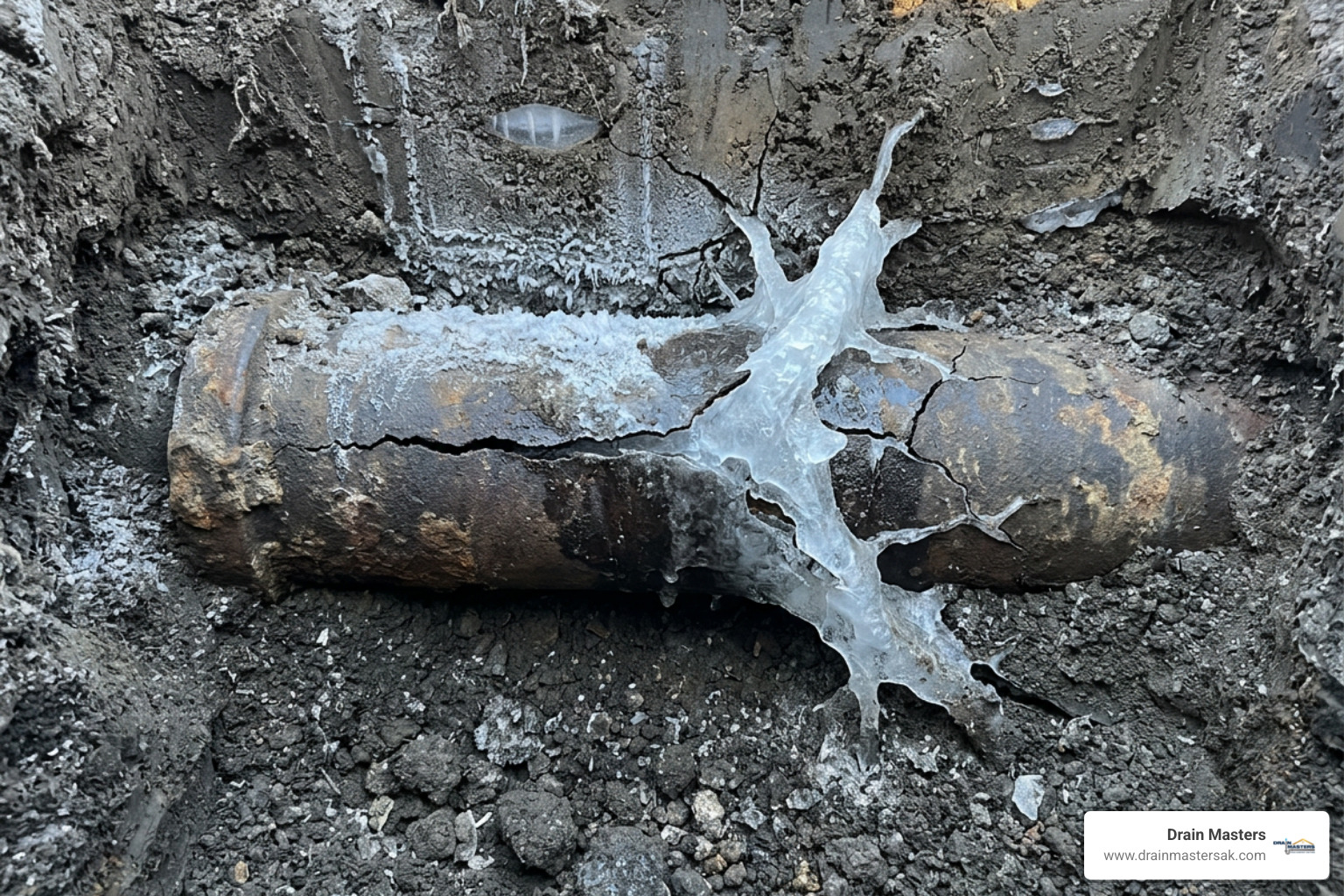
Understanding How Underground Drain Pipes Freeze in Anchorage, AK
Many homeowners assume that because wastewater runs warm and contains organic matter, buried drainage pipes are naturally protected from sub-zero conditions. In Southcentral Alaska, however, extended cold snaps can drive freezing temperatures deep into the earth. When soil drops below 32°F around a pipe, any slow-moving or pooled moisture inside begins to crystallize along the pipe walls. Understanding the physics behind these freeze events helps explain why winter backups occur so quickly across our community.
The ground around your home acts as a giant thermal battery, absorbing summer warmth and slowly releasing it throughout the autumn. As winter deepens, a freezing front moves downward from the surface. In our northern climate, natural geothermal heat rises from deeper subterranean layers to balance this surface loss. When extreme atmospheric cold persists and surface insulation is stripped away, the downward freeze overpowers the rising geothermal energy, causing the frost line to penetrate deep underground and trigger severe damage when freeze-thaw cycles affect underground pipes.
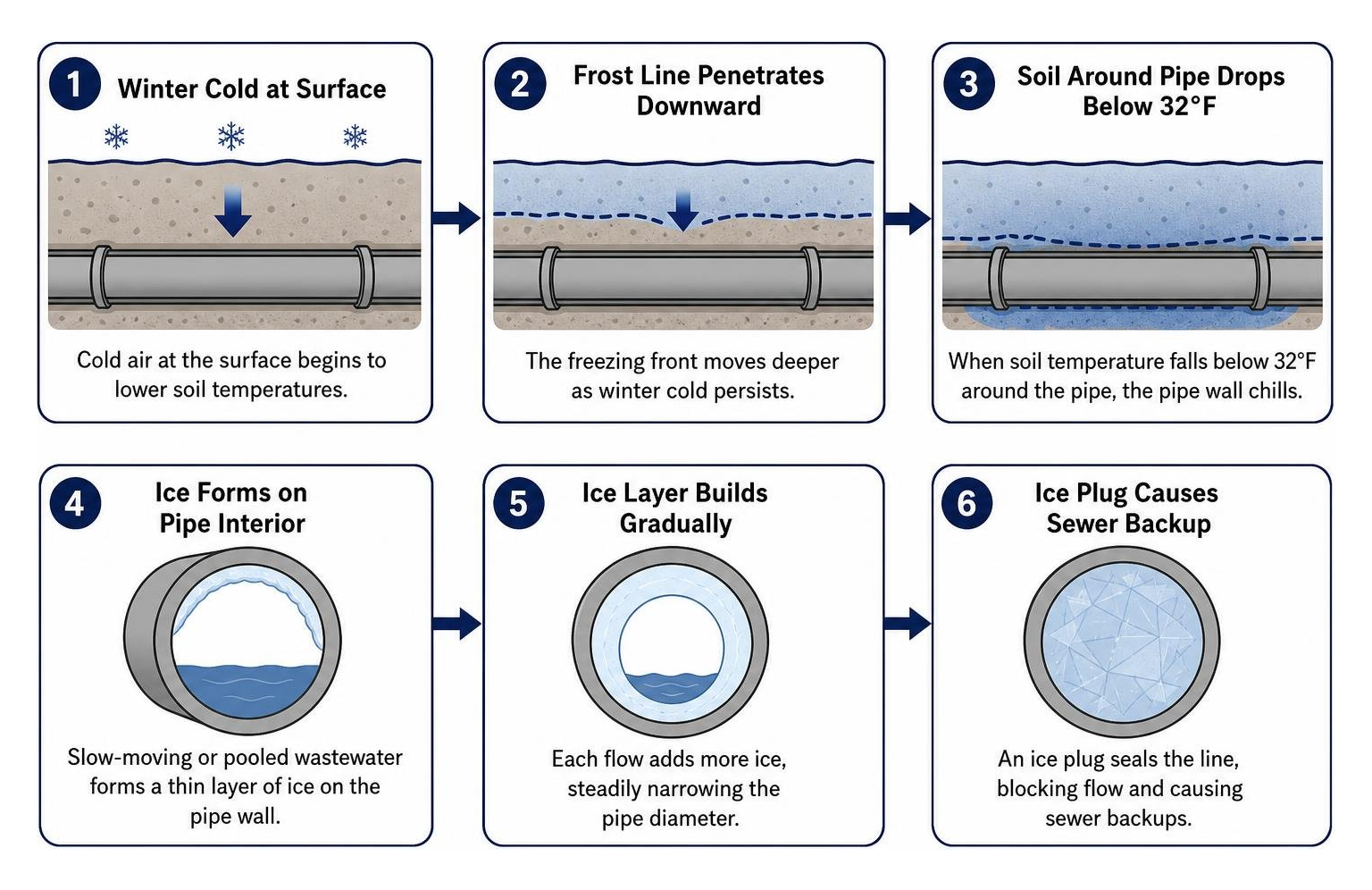
Ice damming within a drainage line rarely occurs in a single instant. Instead, it develops through gradual thermal transfer. When wastewater glides across a pipe surface that has dropped below freezing, a micro-thin layer of ice solidifies against the interior circumference. Successive flows deposit additional moisture over this chilled boundary. If the water velocity is low, each discharge adds another thin layer of frost, steadily narrowing the pipe diameter until an impassable ice plug seals the lateral shut.
Soil Conditions and Frost Depth in Anchorage, AK
Subsurface soil composition plays an immense role in how fast cold air compromises buried sewer lines. Throughout Anchorage, AK, soil characteristics range from fine glacial silt to coarse, gravelly loam. Densely packed, moist glacial silts conduct cold downward much faster than dry, aerated substrates. When early winter rain saturates the ground immediately before a severe freeze, the moist soil turns into a thermal bridge that pulls heat away from buried infrastructure.
Undisturbed snow cover serves as an essential thermal blanket for underground utilities. Fresh, light snow contains trapped air pockets that provide remarkable insulating value. In fact, ten inches of fresh, fluffy snow with roughly 7% moisture content delivers an insulation rating of approximately R-18, matching a six-inch batt of fiberglass insulation. When yards retain a thick, undisturbed snowpack, subterranean geothermal warmth stays trapped around the sewer lateral. Conversely, when snow cover is thin, blown away by high winds, or shoveled away, frost penetration plunges much deeper into the ground.
Pipe Slope and Gravity Flow Dynamics
Residential sewer laterals rely strictly on gravity to transport waste out to the municipal collection system. The standard installation requirement calls for a downward gradient of approximately 1/4 inch per foot. This precise slope allows liquids and solid waste to move at a scouring velocity of roughly two feet per second, leaving the pipe interior empty and dry between fixture uses.
When ground settling, seismic shifts, or poor bedding cause a pipe to lose its uniform slope, low spots known as “bellies” form along the run. Stagnant wastewater collects inside these depressions rather than draining away. During sub-zero weather, standing water in an uninsulated pipe belly freezes rapidly. As water turns to ice, it expands by roughly nine percent, creating immense radial pressure against the pipe walls while forming an anchor point for expanding ice dams.
Common Causes of a Frozen Sewer Line in Sub-Zero Climates
Underground drain pipes freeze due to a combination of sub-freezing soil, structural imperfections, and specific water-use patterns within the home. Recognizing these primary triggers can help you prevent catastrophic winter plumbing failures.
One of the most frequent catalysts for frozen drain lines is a continuous, low-flow trickle of water. When an upstairs toilet has a slow flapper leak, or a high-efficiency HVAC system constantly drains condensation, a tiny, steady stream of moisture trickles through the sewer lateral. Because this trickle moves with minimal thermal mass and virtually zero velocity, it sheds its heat instantly upon meeting chilled pipe walls outside the foundation. The trickling water freezes layer-by-layer at the pipe exit, building a frozen barrier that eventually seals off the entire line.
Another major driver is insufficient burial depth combined with surface snow compaction. If a lateral pipe sits less than four feet below the surface without supplemental insulation, it operates dangerously close to the winter frost line. Driving cars, snowmobiles, or ATVs over the buried pipe line crushes the air pockets out of the snowpack, destroying its natural R-value. Compacted snow drives sub-zero temperatures several feet deeper into the earth, freezing pipes that would have remained protected beneath loose, undisturbed snow.
The Role of Existing Clogs and Structural Pipe Damage
Mechanical blockages and frost penetration frequently work together to shut down a sewer lateral. Over time, grease, soap scum, hair, and non-flushable wipes accumulate along pipe walls. While wastewater might still trickle past these obstructions in warmer months, the debris significantly slows down the drainage flow. This sluggish velocity gives the surrounding frozen ground plenty of time to absorb the wastewater’s heat, turning a slow drain into a solid ice dam. Homeowners looking to address these sluggish conditions before winter sets in can learn how debris accumulates and when professional clearing is needed in our guide to clearing a clogged sewer line.
Structural pipe compromises also accelerate underground freezing:
- Hairline Fractures: Tiny cracks allow frigid groundwater and freezing sub-surface air drafts to enter the drainage channel directly.
- Offset Pipe Joints: Misaligned pipe sections catch solids, creating standing pools that freeze during cold snaps.
- Root Infiltration: Tree roots break through older clay or cast iron lines, creating dense internal webs that hold water and foster ice growth.
- External Corrosion: Corroded pipe exteriors thin out the structural wall, eliminating the pipe’s natural thermal resistance.
Low Occupancy and Intermittent Water Usage
The volume and frequency of warm water entering a plumbing system directly impact its ability to resist freezing. Regular household activities, such as taking warm showers, running dishwashers, and washing laundry, introduce significant thermal energy into the lateral line, warming the pipe interior and clearing out minor frost accumulations.
When a property sits vacant during a winter vacation, or when water usage drops drastically, that protective thermal cycle stops. Wastewater sitting in drain traps or lingering along unheated crawl space piping drops to ambient temperatures. Without regular flushes of warm water, foundation exit points become vulnerable to freezing air drafts, allowing frost to bridge across the pipe diameter.
Warning Signs and Immediate Action for Winter Backups
When an underground lateral freezes, the blockage halts all outgoing wastewater. Recognizing the early symptoms of a freeze allows you to take defensive measures before raw sewage floods your living spaces.
Critical Warning Signs of a Frozen Sewer Line
Unlike an isolated clog in a single sink trap, a frozen main sewer line affects your entire home’s drainage network simultaneously. The earliest indicator is typically a widespread slowdown across multiple fixtures on different levels of the house.
Watch for these primary indicators of a frozen lateral:
- Simultaneous Multi-Fixture Backups: Using an upstairs sink or running the washing machine causes wastewater to bubble up into ground-floor bathtubs or basement floor drains.
- Gurgling Sounds from Lower Fixtures: As wastewater struggles to pass the ice restriction, displaced air bubbles backward through toilet traps and floor drains, producing distinct bubbling noises.
- Pungent Sewer Gas Odors: An ice blockage can siphon water out of plumbing traps or force sewer gases backward through vent stacks into living areas.
- Frost-Locked Exterior Cleanout Caps: Visible frost, ice buildup, or heavy vapor freezing around your outdoor sewer cleanout indicates freezing conditions inside the pipe riser.
- Dry Cleanout with Indoor Flooding: If indoor fixtures are actively backing up but the outdoor yard cleanout is completely dry, the freeze is located right where the pipe exits your foundation wall.
Immediate Emergency Steps for Homeowners
The moment you suspect your main drainage line has frozen, quick action is vital to prevent extensive structural water damage. Winter water damage claims can be costly, and the safest response is to stop the backup from worsening while help is on the way.
Follow these immediate steps to protect your property:
- Halt All Water Usage: Immediately stop running sinks, showers, dishwashers, and laundry appliances. Any water introduced into the drains will have nowhere to go except backward into your lowest living spaces.
- Turn Off the Main Water Supply: Shutting down the primary water shutoff valve prevents accidental water use and stops automated appliances, such as ice makers or humidifiers, from discharging into frozen drains.
- Isolate Electrical Fixtures in Flooded Areas: If wastewater has pooled near basement electrical outlets or floor-mounted appliances, switch off the corresponding circuit breakers to eliminate shock hazards.
- Check the Cleanout Safely: Locate your main interior or exterior cleanout. Carefully inspect whether standing water or visible ice is present, which provides essential diagnostic clues for service technicians.
- Contact Professional Assistance: Severe subterranean blockages require specialized industrial equipment. When wastewater threatens your home, connecting with emergency plumbing technicians in Anchorage gives you access to cold-weather thawing support and sewer diagnostics.
| Diagnostic Feature | Localized Fixture Clog | Frozen Main Sewer Line |
|---|---|---|
| Number of Affected Drains | Single isolated sink, shower, or toilet | All household fixtures simultaneously |
| Lowest Fixture Reaction | No reaction in other rooms | Wastewater backs up into basement drains or tubs |
| Outdoor Weather Correlation | Occurs in any season or temperature | Almost always coincides with sub-zero cold snaps |
| Cleanout Status | Cleanout remains dry and clear | Cleanout is filled with standing waste or solid ice |
| Gurgling Behavior | Isolated to the blocked fixture | Spreads across multiple fixtures when water runs |
| Remediation Method | Standard plunging or hand snaking | Specialized hot water jetting or thermal steaming |
Thawing and Repairing Underground Sewer Blockages
Clearing an underground ice blockage requires specialized mechanical and thermal techniques designed to melt dense ice without damaging delicate, frozen pipe walls.
Professional plumbers utilize commercial hydro jetting for frozen sewer blockages systems engineered specifically for cold-weather operations. These truck-mounted units heat water to controlled temperatures and deliver high-velocity streams through specialized forward- and rear-facing nozzles.
Technicians feed the self-propelling nozzle into the drainage line through an accessible cleanout, working from the downstream side of the freeze toward the upstream end whenever possible. This orientation allows melted water and dislodged ice chunks to flow freely away down the municipal main rather than accumulating behind the tool and refreezing. The focused thermal spray cuts through solid ice plugs without subjecting pipe walls to extreme point-source stress.
Specialized equipment used for subterranean line thawing includes:
- Truck-Mounted Hot Water Hydro-Jetters: High-output boilers paired with high-pressure pumps to dissolve long ice blocks quickly.
- Commercial Dry Steam Generators: Low-pressure, high-temperature steam delivery probes engineered for clearing fragile or shallow plastic lines.
- Self-Propelled Penetrating Nozzles: Stainless steel heads with front-facing cutting jets designed to bore pilot holes through dense ice dams.
- Thermal Diagnostic Cameras: Infrared sensors used to track subterranean temperature gradients and locate underground freeze boundaries.
Why DIY Methods to Thaw a Frozen Sewer Line Can Backfire
Attempting to thaw an underground sewer line with improvised homeowner techniques often creates catastrophic secondary damage. Sewer lateral pipes sit surrounded by rigid, frozen earth, making them highly susceptible to mechanical and thermal stress.
Dumping boiling water down toilets or drains is a common mistake. Boiling water experiences rapid heat dissipation as it travels through cold indoor pipes, arriving at an underground ice block as tepid water that cools instantly, compounding the volume of trapped liquid. Furthermore, pouring boiling water into cold porcelain fixtures or PVC piping triggers extreme thermal shock, which can crack toilet bowls and warp plastic drainage fittings.
Never use open flames, propane weed burners, or high-output heat guns inside cleanouts or near sewer vent pipes. Buried sewer lines naturally contain sewer gas, which includes highly flammable methane. Introducing an open flame or high-heat ignition source into a drainage line creates a severe explosion hazard.
Additionally, chemical drain cleaners rely on corrosive chemical reactions that generate localized heat. These caustic chemicals cannot penetrate large ice blocks, and when the drain inevitably remains blocked, the caustic liquid pools inside your plumbing, posing chemical burn risks to technicians during extraction.
Post-Thaw Structural Assessment and Pipe Restoration
Once an underground line is successfully cleared of ice, evaluating the structural condition of the pipe is essential. Because water expands by 9% when freezing, expanding ice exerts thousands of pounds of outward radial pressure, frequently cracking clay pipes, splitting cast iron seams, or dislodging PVC solvent joints.
After thawing, many homeowners schedule a camera inspection through the same sewer team to confirm whether ice, soil movement, or an older clog damaged the line. High-definition waterproof cameras travel the entire length of the lateral, documenting pipe integrity, checking for joint separations, and identifying low spots where standing water could refreeze during the next cold snap.
Long-Term Strategies to Prevent Winter Sewer Freezes
Protecting buried sewer laterals from harsh sub-zero winters requires proactive exterior insulation, sound grading practices, and sensible winter home maintenance habits.
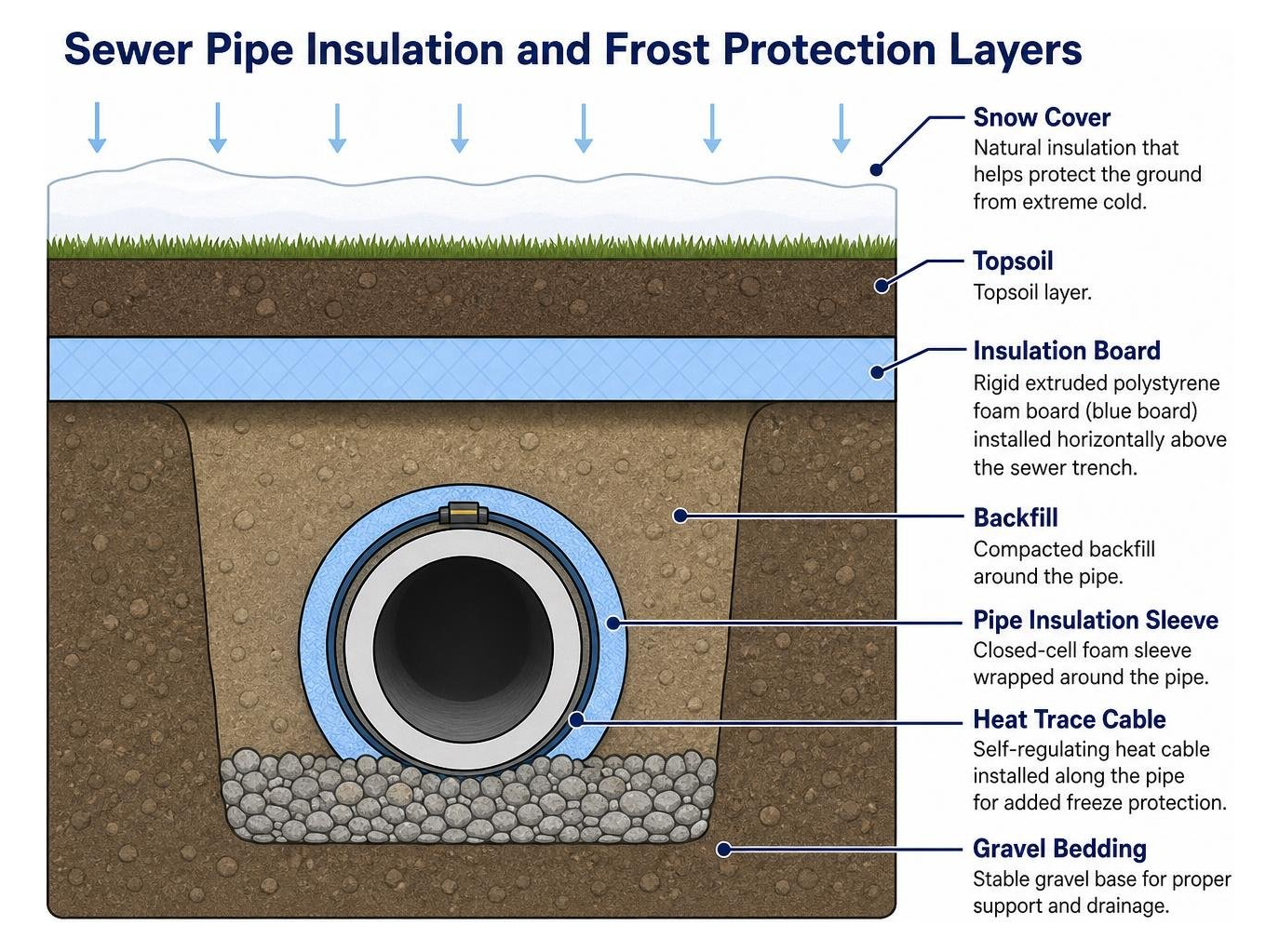
For shallow pipes that sit above the local frost line, supplemental subterranean insulation is essential. Installing rigid extruded polystyrene foam boards, often referred to as blue board, horizontally above the sewer trench creates a protective “thermal shadow.” This horizontal insulation layer deflects descending frost outward toward the sides while trapping rising geothermal heat around the pipe bed. Exposed pipe sections traversing unheated crawl spaces or exterior foundation walls should be wrapped in moisture-resistant closed-cell foam sleeves combined with commercial-grade, self-regulating heat trace cables.
Property owners can also implement simple landscaping adjustments. Avoid clearing snow away from the ground above your sewer lateral path. If wind consistently strips snow cover from your yard, erecting seasonal snow fences along the windward boundary will capture drifting snow, naturally maintaining an insulating snowpack over your underground utilities. For seasonal preparation that applies across drains, fixtures, and exposed piping, our team explains practical winter plumbing protection tips Anchorage, AK homeowners can use before the next cold snap.
North Dakota State University Extension also recommends fixing leaky fixtures, correcting low spots, and maintaining insulating snow cover around vulnerable wastewater systems during harsh winter conditions. Those same prevention principles apply to Anchorage, AK homes with shallow sewer laterals, low winter occupancy, or recently disturbed soil near the sewer path, especially when a slow leak keeps sending small amounts of water into a cold line during extended freezes.
Deep Burial and Proper Pipe Grading
The permanent solution for recurring sewer line freeze-ups is ensuring the lateral rests below regional frost penetration depths with an unimpeded downward slope.
- Sub-Frost Line Depth: In Southcentral Alaska, regional frost lines can extend deep into the soil during severe winters. Ensuring new or replacement laterals are buried deeply or protected with engineered frost shielding prevents sub-zero temperatures from reaching the pipe.
- Grading and Slope Correction: Re-bedding settled pipes eliminates sags and bellies, ensuring wastewater drains out immediately at a consistent 1/4-inch per foot slope.
- Modern Pipe Material Upgrades: Replacing rough cast iron or fragile clay lines with smooth Schedule 40 PVC or high-density polyethylene (HDPE) reduces internal friction, preventing waste accumulation and eliminating catch points for ice formation.
Winterization Habits for Sub-Zero Cold Snaps
During sustained sub-zero conditions, daily household routines significantly influence sewer line reliability:
- Eliminate Low-Flow Leaks: Inspect all toilet tanks and repair leaking flappers promptly. A tiny, continuous trickle is the primary cause of ice damming at foundation exit points.
- Reroute Auxiliary Condensation Drains: Ensure high-efficiency HVAC condensation lines do not discharge continuous trickles into cold, uninsulated crawl space drain pipes.
- Perform Periodic Warm Water Flushes: If your home has low occupancy or will be vacant for several days, run warm water through sinks and tubs periodically to introduce thermal energy into the lateral.
- Maintain Crawl Space Temperatures: Keep crawl space access doors sealed tight, close foundation vents before winter, and ensure ambient temperatures around exposed drainage pipes stay well above freezing.
For broader protection strategies across underground drainage systems, Anchorage, AK homeowners can work with the team on sewer repair and winter line protection when recurring freezes point to deeper grading, damage, or burial-depth issues.
Frequently Asked Questions About Frozen Sewer Lines
How can I tell if my main sewer line is frozen versus clogged?
A frozen main line typically affects all household drains simultaneously during sub-zero weather, often causing backups in lowest-level bathtubs or floor drains and showing visible frost or ice around the exterior cleanout. A standard mechanical clog usually affects only one isolated fixture and happens regardless of outdoor temperatures.
Can pouring boiling water down the toilet thaw an underground ice blockage?
No. Pouring boiling water down a toilet can crack the porcelain fixture from thermal shock and warp plastic seals. Additionally, boiling water cools down quickly as it travels through cold plumbing, reaching an underground ice dam as cold water that adds volume to the existing backup.
How deep do sewer lines have to be buried in Anchorage, AK to prevent freezing?
Sewer lines in Anchorage, AK should ideally be buried well below local frost penetration levels, which can reach 5 to 10 feet deep depending on soil moisture and snowpack. If site conditions require a pipe to sit shallower than 4 feet, supplemental rigid insulation boards or self-regulating heat trace systems are necessary.
Will a frozen sewer pipe thaw on its own once temperatures rise?
Buried sewer lines rarely thaw quickly on their own because deep soil remains frozen long after surface air temperatures warm up. Relying on a natural thaw can take weeks or months, leaving your home without functional drainage and increasing the risk of structural pipe fractures from expanding ice.
Does homeowners insurance cover damage from a frozen sewer line backup?
Standard homeowners insurance policies often exclude sewer backups unless you have added a specific water backup endorsement. If coverage applies, claims typically help repair internal water damage to living spaces, but repairing or replacing the subterranean exterior pipe itself is usually the property owner’s responsibility.
Can running a continuous trickle of water prevent sewer line freezes?
While running a slight faucet stream can protect pressurized water supply lines, running a slow trickle into a sewer line can actually accelerate ice dam formation. A continuous low-flow trickle moves slowly, losing its heat at the foundation exit and freezing layer-by-layer into a solid ice blockage.
Is it safe to use chemical drain cleaners to melt ice in a sewer pipe?
No. Chemical drain cleaners generate caustic chemical reactions that cannot dissolve large subterranean ice dams. The caustic chemicals remain trapped in the standing backup, corroding pipe walls and creating dangerous exposure risks for service technicians working to clear the line.
How does hydro jetting thaw underground sewer pipes without bursting them?
Professional hydro jetting units use temperature-controlled hot water delivered through specialized dispersion nozzles. The hot water streams melt the ice interface directly rather than heating the pipe wall itself, rapidly dissolving the ice plug while avoiding the thermal shock that can crack cold pipes.
Why does snow compaction over a yard increase the risk of frozen drain lines?
Undisturbed snow contains millions of tiny air pockets that act as natural insulation, trapping rising geothermal warmth. When vehicles, snowmobiles, or foot traffic pack snow down over a sewer pipe run, the insulating air is crushed out, allowing sub-zero temperatures to drive frost much deeper into the soil.
What should I do immediately if raw sewage starts backing up during a freeze in Anchorage, AK?
Immediately stop running all water inside the home, shut off your main water supply valve, isolate electrical breakers near any standing water in basements, and contact a licensed sewer professional equipped for emergency cold-weather thawing and camera diagnostics.
Conclusion
A frozen drainage lateral can quickly disrupt your entire household, creating unsanitary living conditions and threatening your property with costly water damage. Recognizing the early warning signs of multi-fixture backups, understanding the critical insulating role of undisturbed snow, and avoiding dangerous DIY thawing techniques are essential steps for protecting your home during severe winter weather. Long-term defense relies on maintaining proper pipe gradient, sealing foundation drafts, and installing adequate subterranean frost shielding.
When freezing temperatures compromise your main drainage system, relying on experienced professionals ensures safe and lasting results. Drain Masters brings more than two decades of dedicated local plumbing experience to every call in Anchorage, AK. Our licensed team utilizes commercial-grade hot water jetting, steam thawing equipment, and advanced video diagnostic cameras to clear subterranean ice plugs safely and verify your line’s structural integrity. Contact our professional frozen sewer line technicians to schedule your winter sewer inspection or request urgent help.