Early Warning Signs Your Pipes May Be Starting to Freeze in Anchorage
If you think your pipes may be starting to freeze, watch for early clues such as reduced faucet flow, frost on exposed lines, gurgling fixtures, or unusual sewer odors. Catching these warning signs early gives Anchorage, AK, homeowners time to protect vulnerable plumbing, use safe thawing methods when appropriate, and shut off the main water valve immediately if a rupture occurs.
Living in Alaska means dealing with extreme sub-zero weather for extended stretches of the year. When sustained sub-zero temperatures settle into the Cook Inlet region, the frost line drives deep into the earth. This severe climate places immense strain on residential and municipal plumbing infrastructure alike.
Understanding why pipes freeze requires looking at local building practices, geology, and weather patterns. In Anchorage, AK, several unique factors contribute to frozen plumbing:
- Frost Heave and Soil Movement: As moisture in the ground freezes, the soil expands and shifts. This continuous movement can bend, displace, or crack underground water and sewer lines, leaving them exposed to freezing temperatures.
- Shallow Water Lines: Due to rocky terrain or older construction standards, some water supply pipes and sewer connections were buried without adequate depth or insulation, making them susceptible to deep ground freezing during long cold snaps.
- Lack of Insulating Snow Cover: When severe cold hits before a heavy snowfall, the lack of an insulating snow blanket allows the frost layer to penetrate much deeper and faster into the ground.
- Vulnerable Routing: Indoor plumbing lines routed through unconditioned crawlspaces, unheated basements, exterior walls, or unheated garages are at high risk when indoor heat drops or fails to circulate properly.
During recent winters, local utilities recorded record spikes in freezing emergencies. The Anchorage Water and Wastewater Utility handled roughly 250 reports of frozen pipes in a single season, representing a dramatic surge compared to previous years where fewer than 25 calls were typical. This sharp increase highlights how shifting weather patterns and severe deep freezes can quickly overwhelm standard plumbing systems.
Cold-Snap Impacts on Frozen Pipes Anchorage Plumbing and Infrastructure
When the ambient temperature surrounding a pipe drops below 32°F, the water standing inside starts to solidify. As water transitions from liquid to ice, it expands by approximately 9% in volume. According to the Environmental Protection Agency, unaddressed plumbing leaks and freeze damage can waste thousands of gallons of water while causing major structural destruction.
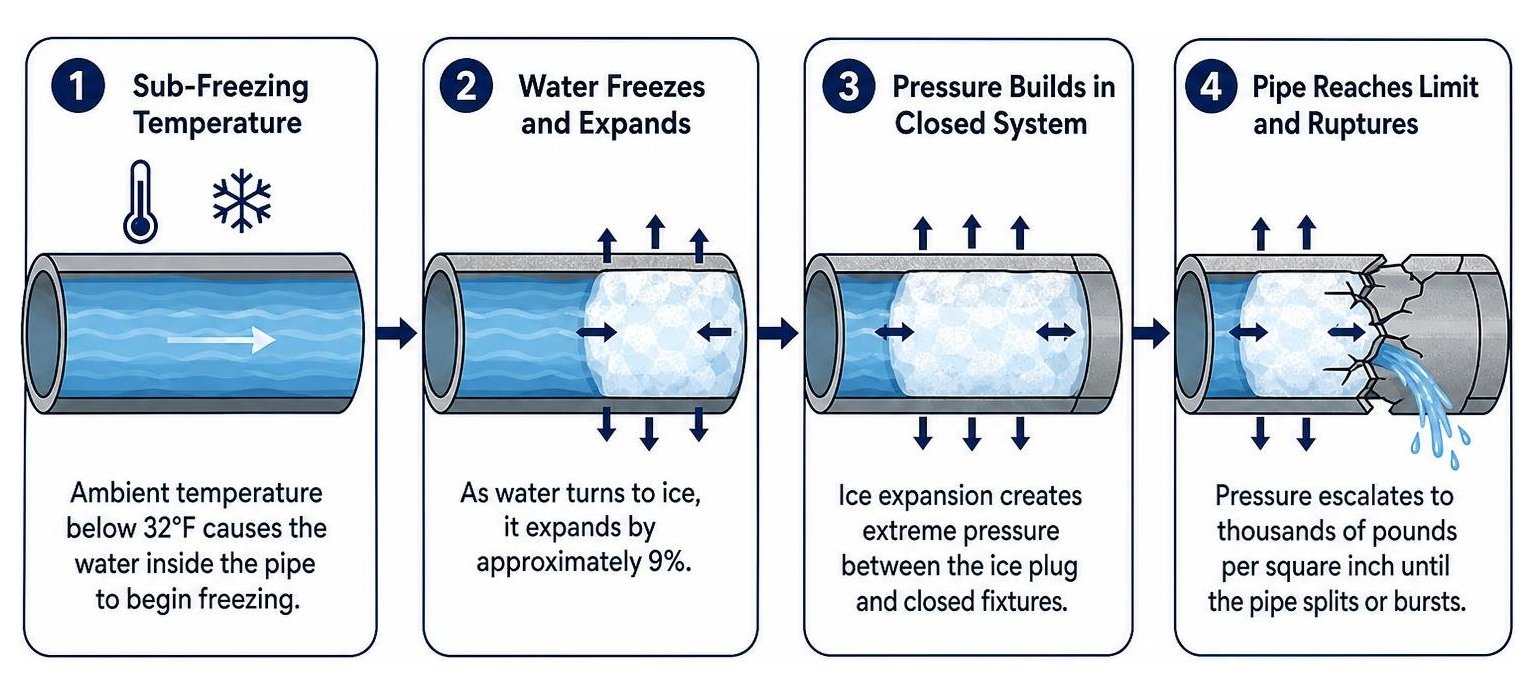
This expansion does not merely create a localized blockage; it creates extreme hydraulic pressure throughout the closed plumbing system between the ice plug and closed fixtures. As the ice continues to expand, the trapped water pressure escalates to thousands of pounds per square inch. Eventually, the pipe wall reaches its tensile limit and splits.
Both metal and plastic lines are vulnerable to winter freezes, though they fail differently:
- Metal Pipes (Copper and Galvanized Steel): Metal conducts cold rapidly, making it freeze quickly. Copper lines often split along longitudinal seams or rupture near rigid solder joints under pressure.
- Plastic Pipes (PEX and PVC): While PEX has some flexibility to expand under freezing conditions, fittings and connections remain vulnerable. PVC drains become brittle in sub-zero temperatures and shatter easily under pressure.
Repeated freeze-thaw cycles also place hidden stress on drainage systems. Our explanation of how freeze-thaw cycles affect drains and sewers shows how shifting soil can weaken structural joints over time.
Warning Signs of Frozen Water and Sewer Lines
A pipe rarely freezes without giving some indication that cold is taking hold. Paying attention to changes in water flow, pipe surfaces, fixture sounds, and indoor odors can help homeowners respond before a minor freeze turns into a damaging plumbing emergency.
Watch for these common signs that pipes may be starting to freeze:
- Dramatically Reduced Water Flow: A faucet that produces only a slight trickle, or no water at all, can signal that ice is restricting the supply line.
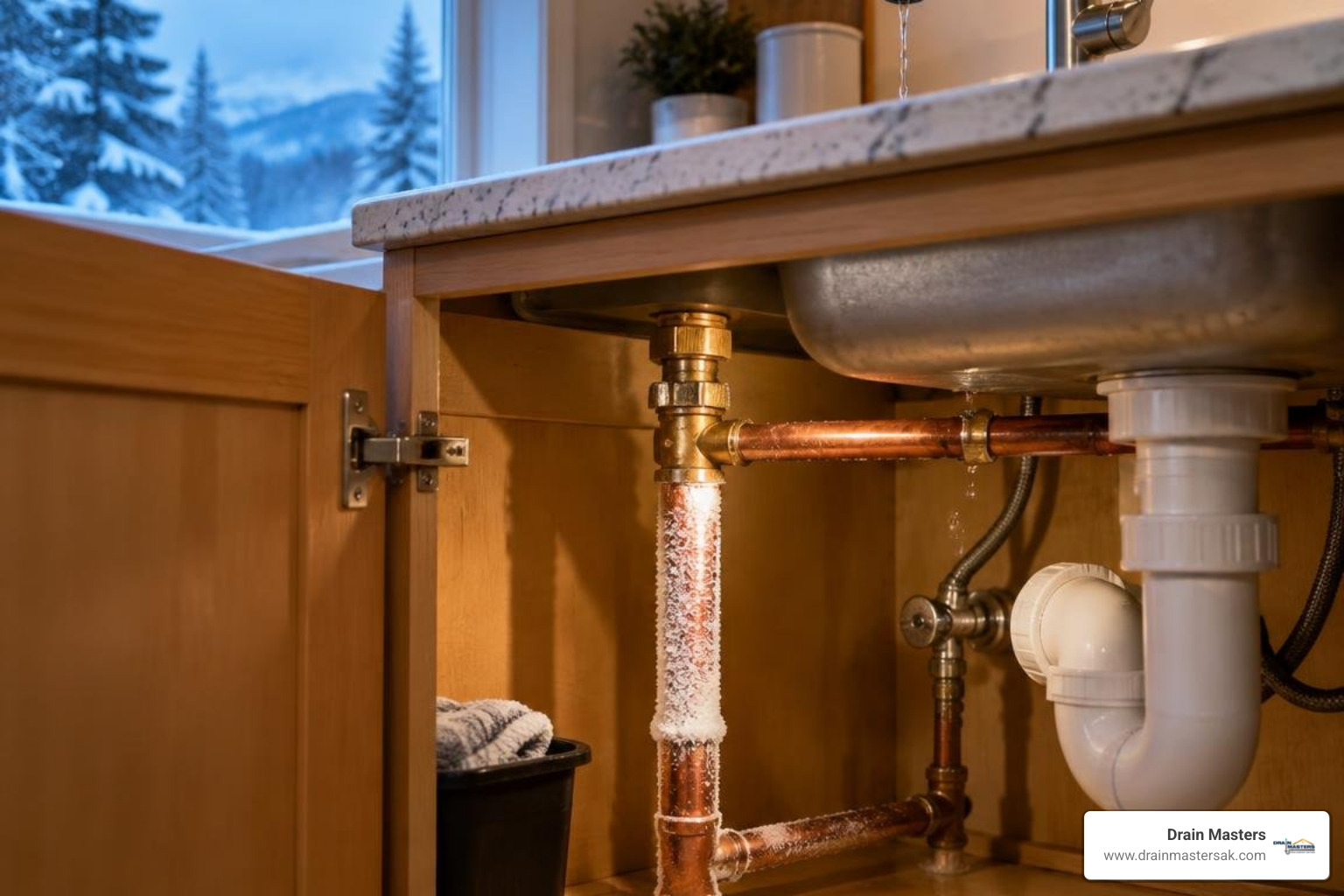
- Visible Frost on Exposed Pipes: Frost or heavy condensation on pipes in a basement, crawlspace, or under cabinets can indicate that the line is actively freezing.
- Unusual Gurgling Sounds: Bubbling or gurgling when a sink runs or a toilet flushes may mean ice is restricting air and water movement in drain stacks.
- Foul Sewage Odors: A frozen sewer line or plumbing vent can prevent sewer gases from venting through the roof and push odors back into the home.
If you notice slow flow, frost, odd sounds, or drainage problems as temperatures drop, treat them as early warnings and contact a licensed plumber if the frozen area is inaccessible, the cause is unclear, or water flow does not return safely.
Safe Thawing Procedures and Critical Warnings for Frozen Lines
If you discover a frozen pipe that has not split, you can often thaw it safely using controlled, gentle heat. Safety is paramount during this process because improper thawing methods cause structural fires and burst pipes across Alaska every winter.
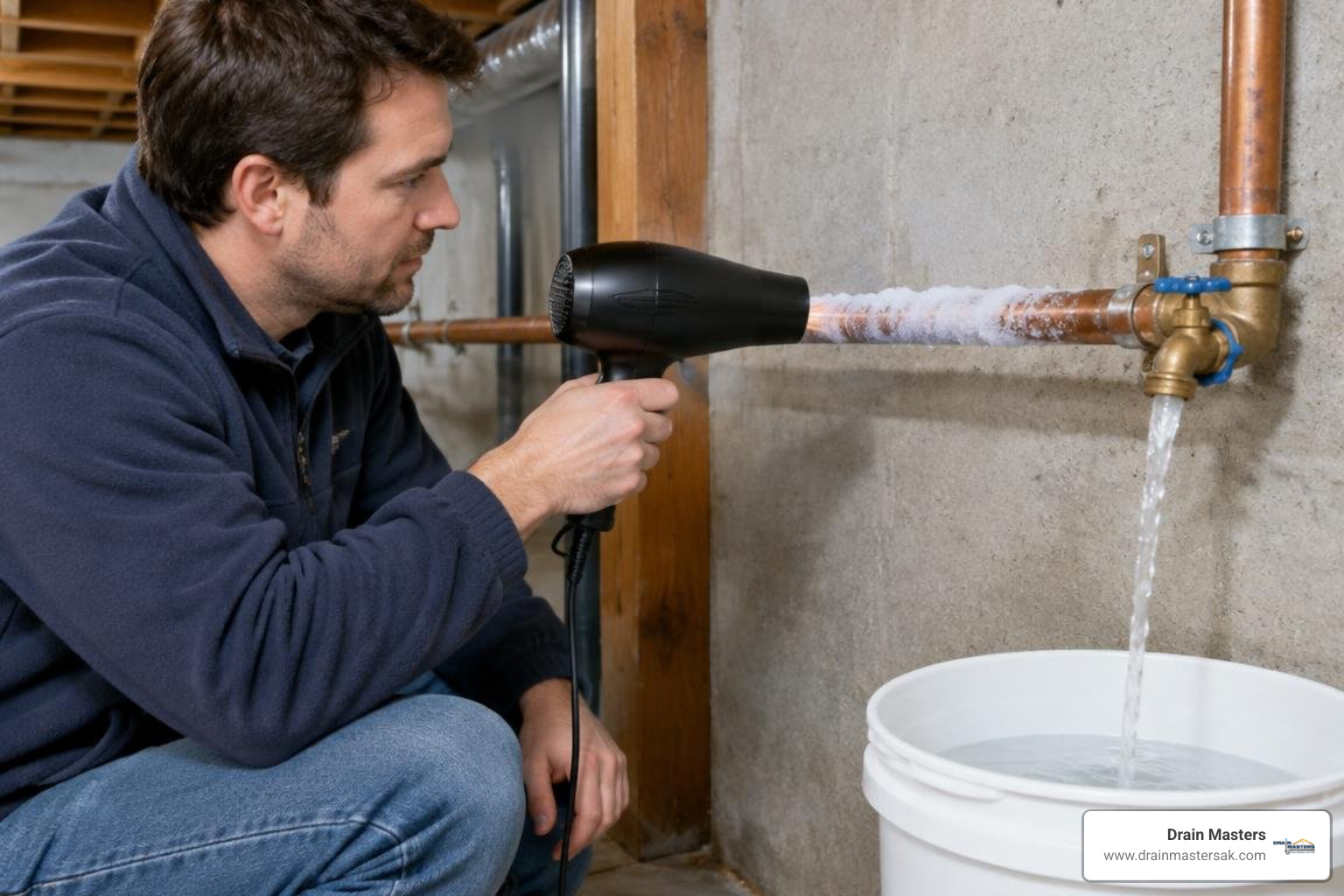
Follow this safe step-by-step procedure to thaw accessible indoor pipes:
- Open the Faucet: Open the faucet connected to the frozen pipe. As the ice melts, running water helps dissolve the remaining blockage, and opening the fixture relieves built-up steam and water pressure.
- Work from the Faucet Toward the Freeze: Always apply heat starting at the open faucet end of the pipe and work your way backward toward the frozen blockage. This allows melting water and steam to escape safely without getting trapped behind an ice dam.
- Use Safe, Controlled Heat Sources:
- A standard handheld hair dryer moved steadily along the pipe length.
- A portable space heater positioned at a safe distance to warm the entire room or crawlspace.
- Warm, damp towels wrapped around the frozen section.
- Electric heating pads or approved heat tape wrapped evenly around the pipe.
CRITICAL SAFETY WARNING: Never use an open flame or blowtorch to thaw frozen pipes. Propane torches pose an extreme fire hazard to surrounding wood framing, insulation, and vapor barriers. Open flames also generate localized superheated steam, which can cause the pipe to burst violently and cause serious personal injury.
If DIY thawing attempts do not restore water flow within 30 to 45 minutes, turn off the heat source immediately and contact a licensed plumber to avoid permanently damaging your plumbing system.
Proven Prevention Methods for Frozen Pipes Anchorage Homeowners Should Use
Preventing frozen pipes is far easier and safer than dealing with a burst pipe in the middle of a sub-zero night. Implementing a few reliable winterization strategies will protect your plumbing throughout the cold season.
- Apply Pipe Insulation Sleeves: Fit high-density foam or fiberglass pipe insulation over all accessible supply pipes in unheated areas, including basements, crawlspaces, and exterior wall cavities.
- Install Self-Regulating Heat Tape: Apply thermostatically controlled heat trace cables directly to high-risk pipes before insulating them. Ensure heat tape is installed according to manufacturer guidelines and never overlapped.
- Maintain Steady Indoor Heat: Keep your thermostat set to at least 55°F to 60°F day and night, even when away from home. Consistent indoor heat prevents internal wall cavities from cooling down to the freezing mark.
- Open Under-Sink Cabinet Doors: During severe cold snaps, open cabinet doors under kitchen and bathroom sinks situated on exterior walls. This allows warm household air to circulate directly around the pipes.
- Let Faucets Drip: Allow a small, steady trickle of cold water to run from faucets served by exposed or vulnerable pipes. Moving water freezes much more slowly than standing water.
Before severe weather arrives, these winter plumbing prevention tips can help homeowners prepare vulnerable pipes, identify the main shut-off valve, and reduce avoidable freeze risks.
Thawing Drain and Sewer Lines Safely
Water supply lines are not the only plumbing components at risk; waste lines, traps, and main sewer laterals can also freeze. When drains freeze, wastewater backs up quickly into bathtubs, showers, and low-lying floor drains.
If you notice slow-draining sinks or standing water in tubs during cold weather:
- Flush with Warm Water: Pour hot (not boiling) tap water down the affected drain to gradually melt ice in P-traps and shallow waste arms.
- Avoid Caustic Chemical Drain Openers: Never pour commercial liquid drain cleaners into a frozen or blocked line. These chemicals are corrosive, ineffective against solid ice, and create dangerous splash hazards for plumbers who must service the line later.
- Clear Underlying Debris: Fats, oils, grease, and hair restrict drain diameter and trap standing water, making drains freeze much faster.
If simple warm water flushes do not clear the blockage, a frozen sewer line may need professional sewer clearing and cleaning. Our guide to frozen sewer line warning signs in Alaska explains when slow drains and backups call for prompt service.
Emergency Protocol: What to Do When Frozen Pipes Burst
When a frozen pipe splits, water may remain frozen in place until the room warms up. As soon as the ice plug melts, pressurized water will flood the surrounding area. Taking fast, decisive action minimizes water damage and protects your home’s structural integrity.
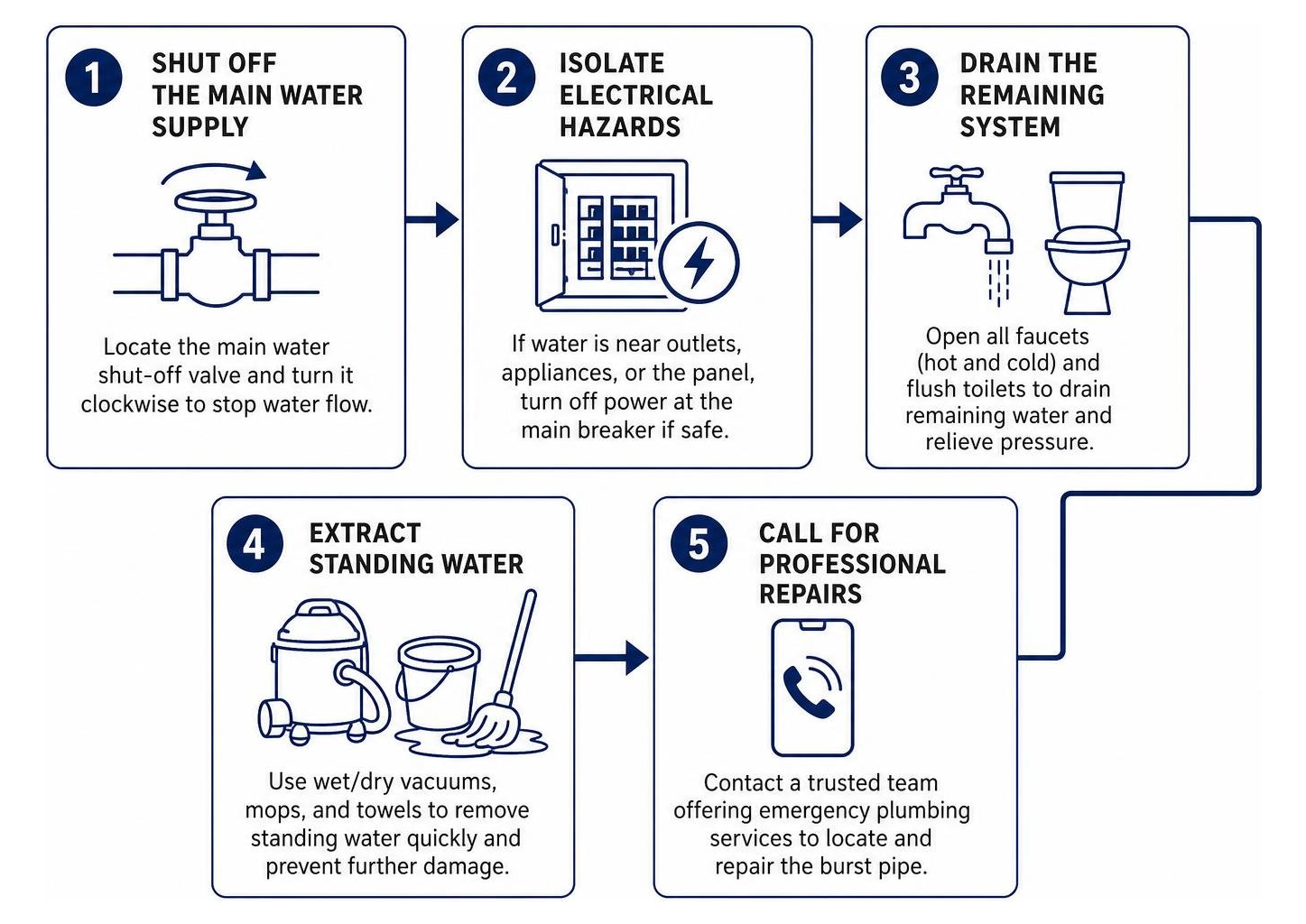
Follow this emergency action plan immediately:
- Shut Off the Main Water Supply: Locate your home’s main water shut-off valve, typically located in the basement, utility closet, or where the main line enters the foundation, and turn it completely clockwise to cut water flow to the house.
- Isolate Electrical Hazards: If flooding occurs near electrical outlets, appliances, or your service panel, turn off power to those zones at the main breaker box if it is safe to do so. Never step into standing water to reach an electrical panel.
- Drain the Remaining System: Open all faucets (both hot and cold) and flush toilets to drain any remaining water from the home’s plumbing lines, relieving pressure on the ruptured section.
- Extract Standing Water: Use wet/dry vacuums, mops, and towels to remove standing water quickly. Rapid water extraction prevents structural rot and toxic mold growth.
- Call for Professional Repairs: Contact a trusted local plumbing team right away to locate and repair the split line. For urgent water-control guidance, see our emergency plumbing advice for Anchorage homeowners.
If the leak is hidden inside a wall or ceiling, prompt leak detection ensures the source is pinpointed without unnecessary structural demolition.
Water Line and Slab Leak Repairs
Once the burst pipe is identified, the damaged section must be repaired or replaced to restore safe water service to your home. Depending on where the rupture occurred, different repair approaches are required.
- Water Line Sectional Replacement: For accessible copper or PEX supply lines, technicians cut out the ruptured pipe section and install durable, freeze-resistant replacement piping using reliable press or expansion fittings. Our team provides targeted water line repairs tailored to sub-zero Alaskan conditions.
- Slab Leaks: When pipes buried beneath concrete foundation slabs freeze and rupture, water can undermine the subgrade soil and erode the foundation. Specialized slab leak repair techniques allow technicians to pinpoint sub-slab leaks with acoustic sensors and make repairs with minimal disturbance to your flooring.
Be sure to thoroughly document all damage with photos and video before and during the repair process for homeowner insurance claims.
Advanced No-Dig Rehabilitation for Damaged Pipes
When underground sewer laterals or primary drain lines crack due to severe frost heave or freezing, traditional excavation can be difficult during winter when the ground is frozen solid.
Modern trenchless technology offers a non-invasive alternative for repairing cracked or displaced pipes:
- Cured-in-Place Pipe Lining: An epoxy-saturated felt tube is inserted into the damaged pipe, inflated, and cured in place. This creates a seamless pipe within a pipe that restores structural integrity without digging up lawns or driveways.
- Epoxy Coating: Liquid epoxy resins are applied to the interior pipe walls, sealing pinholes, small cracks, and minor joint separations caused by freeze-thaw ground shifting.
These innovative trenchless sewer repair options allow for long-lasting structural restoration even during cold Alaska winters.
Professional Thawing Services, Costs, and Diagnostic Solutions
When a pipe is frozen deep within a wall, underneath a crawlspace, or in an underground utility line, DIY methods are ineffective. Professional plumbers use specialized commercial machinery designed to thaw frozen pipes quickly without damaging your home.
Professional thawing methods include:
- Commercial Hot Water Jetters: High-pressure jetters pump heated water through flexible lines into sewer and drain lines, melting ice blocks safely.
- Electrical Resistance Thawing Machines: Safe, controlled electrical current is passed through continuous metal pipes, heating the entire line evenly from the inside out to melt ice dams.
- High-Definition Inspection Cameras: After thawing a line, plumbers use a comprehensive sewer camera inspection to inspect the interior pipe walls for hairline cracks, offset joints, or hidden ruptures.
Comparing DIY Thawing Methods vs. Professional Equipment
| Feature / Method | DIY Hair Dryer / Space Heater | Professional Jetting & Thawing |
|---|---|---|
| Best Used For | Exposed, easily accessible indoor pipes | Underground, in-wall, and sewer lines |
| Thawing Speed | Moderate (30 to 90 minutes per section) | Fast (15 to 45 minutes with direct application) |
| Safety Level | Safe when kept away from water | High; operated by licensed technicians |
| Damage Detection | Visual only; hidden splits are easily missed | Video camera diagnostics inspect internal pipe integrity |
| Reach / Capability | Limited to visible, open pipes | Can reach hundreds of feet into buried lines |
Understanding Frozen Pipe Repair Costs in Anchorage, AK
The overall cost to service and thaw frozen pipes in Anchorage, AK, depends on several key factors: the freeze location, pipe accessibility, severity of the ice blockage, and whether the line ruptured.
In general, basic thawing of an accessible line is relatively straightforward, while complex underground thawing or repairing multiple split pipes behind finished walls requires additional labor and equipment. If a frozen line bursts, total project costs will include pipe repairs, water extraction, and structural drying.
Investing in timely professional thawing and preventative seasonal maintenance helps avoid major water restoration expenses down the road. If you are dealing with a frozen water or sewer line, our team provides specialized frozen pipe thawing options to resolve your freeze safely and quickly.
Frequently Asked Questions About Frozen Pipes in Anchorage
What Causes Pipes to Freeze in Anchorage?
Pipes freeze when surrounding temperatures drop below 32°F, allowing standing water inside the line to turn to ice. In Anchorage, common causes include prolonged sub-zero temperatures, inadequate insulation in unheated crawlspaces or basements, high winds penetrating exterior wall cavities, and shallow buried water lines exposed to deep frost penetration.
How Can I Prevent Frozen Pipes in Anchorage?
You can prevent frozen pipes by insulating exposed pipes with high-density foam sleeves, installing self-regulating heat tape on vulnerable lines, maintaining consistent thermostat settings of at least 55°F to 60°F, opening under-sink cabinet doors during cold snaps, and letting faucets drip a small stream of water on sub-zero nights.
What Should I Do If My Pipes Are Frozen?
If your pipes are frozen, turn on the affected faucet to relieve pressure, keep your home warm, and inspect all visible piping for cracks or bulges. If accessible, gently warm the pipe using a hair dryer, starting near the faucet and working backward toward the freeze. If the pipe is split or located behind walls, shut off your main water valve immediately and call a professional plumber.
Is It Safe to Use a Blowtorch on Frozen Pipes?
No, it is never safe to use a blowtorch or open flame on frozen pipes. Open flames pose an extreme fire hazard to building materials and insulation. The intense, localized heat can also boil trapped water, creating dangerous steam pressure that can cause pipes to explode and crack fittings.
How Long Does It Take to Thaw Frozen Pipes?
Thawing times vary based on the pipe material, freeze severity, and the method used. Using a hair dryer on an accessible indoor pipe typically takes between 30 minutes and a few hours. Professional hydro-jetting or electrical resistance thawing equipment can clear deep or underground blockages in 30 to 60 minutes.
When Should I Call a Plumber for Frozen Pipes in Anchorage?
You should call a plumber immediately if you cannot locate the frozen section, if the freeze is inside a wall, crawlspace, or underground, if you see visible cracks or bulges on the pipe, or if DIY thawing attempts do not restore water flow within 45 minutes.
How Much Does Frozen Pipe Service Cost in Anchorage?
Service costs depend on the location and complexity of the freeze. A straightforward thawing job for an accessible pipe is relatively modest, while complex jobs involving deep sewer jetting, underground excavation, or post-burst pipe replacement and water mitigation require a larger investment. Professional plumbers provide clear, upfront estimates before beginning work.
Which Pipes Are Most Likely to Freeze in Anchorage?
Pipes most likely to freeze include those running through exterior walls, unheated crawlspaces, unconditioned basements, unheated garages, outdoor hose bibbs, and shallow buried water or sewer laterals that sit above the local frost line.
What Should I Do When My Frozen Pipes Burst?
When a pipe bursts, immediately turn off your home’s main water shut-off valve to stop incoming water. Next, turn off electricity to flooded areas at the breaker box, open faucets to drain remaining water, take photos of the damage for insurance purposes, and call an emergency plumber right away.
Why Do I Need an Expert for Frozen Pipes in Anchorage?
Dealing with frozen pipes in Alaska requires specialized diagnostic tools, commercial-grade thawing machinery, and in-depth knowledge of sub-zero plumbing dynamics. Professional plumbers safely thaw lines without fire hazards, pinpoint hidden leaks behind walls or under slabs, and inspect pipes for structural damage using video diagnostic cameras.
Conclusion
Alaska winters present unique challenges for residential plumbing systems. Taking proactive steps, such as applying pipe insulation, using approved heat trace cables, maintaining steady indoor heating, and keeping cabinet doors open during severe cold snaps, will significantly reduce the risk of frozen lines in your home. When freezing does occur, fast action and safe thawing practices prevent small ice blockages from turning into major structural flooding.
For dependable, comprehensive service, turn to Drain Masters. As a family-owned plumbing company with more than 20 years of experience serving Anchorage, AK, our team handles thousands of jobs each year with advanced diagnostic equipment. Contact our professional frozen pipe technicians to keep your home safe, warm, and dry all winter long.